 Cykeo RFID IoT Solution Products R&D Manufacturer
How to Extend RFID Chip Antenna? What We Learned From Breaking Tags.
358Trying to solder your way to more range? We explain why the method for how to extend RFID chip antenna is a full redesign, not a simple mod, and what really works.
MoreAll RFID Product
RFID tracking software collects, processes, and visualizes data from RFID devices, enabling real-time tracking, accurate inventory control, and automated asset management.
That’s the clear answer. But in daily operations, the real shift is subtle—less time spent searching, fewer “unknowns,” and decisions made on live data rather than yesterday’s report.
And yes, even questions like “how long do led tennis court lights last” tend to evolve into something broader: how long assets last, where they are now, and whether the system reflects reality.
Author: Cykeo RFID Software & Systems Team
In a multi-site warehouse rollout (~25,000㎡ total area):
What changed wasn’t just speed—it was trust in the data.
RFID tracking software is the system layer that connects RFID hardware (tags and readers) with business applications, transforming raw scan data into actionable insights.
Core functions include:
According to RAIN RFID Alliance , RFID systems can process hundreds of tag reads per second, requiring robust software to manage and interpret this data effectively.
RFID hardware generates large volumes of data. Without software, it’s just noise.
RFID tracking software:
In one deployment, raw scan events were initially overwhelming. After implementing filtering rules, actionable data became clear—and usable.
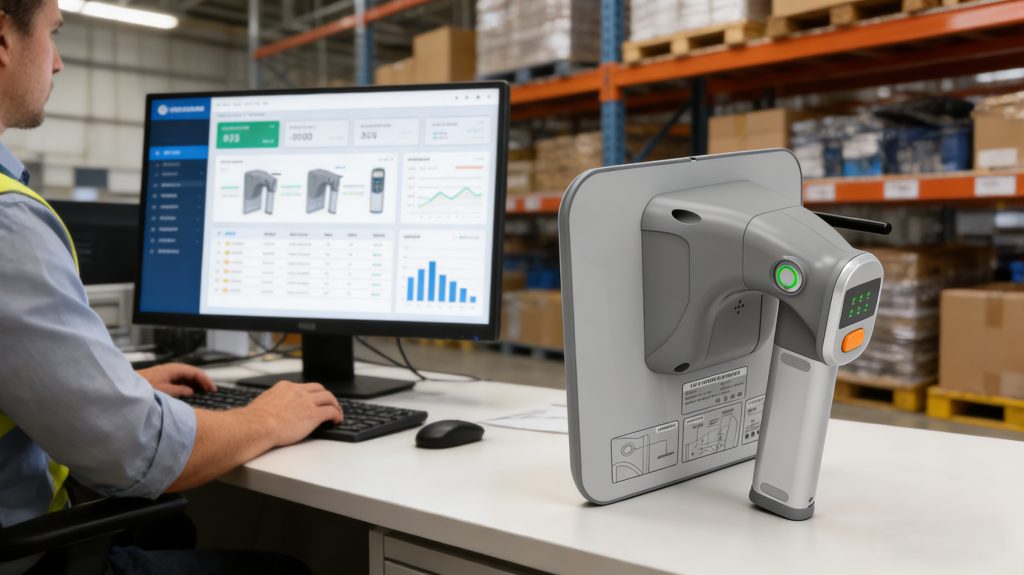
RFID-enabled systems can achieve inventory accuracy above 95%, significantly improving data reliability.
| Feature | Description |
|---|---|
| Real-time tracking | Live asset location updates |
| Data filtering | Eliminates duplicate or noisy reads |
| Integration | Connects with ERP/WMS systems |
| Reporting | Generates analytics and insights |
| Alerts | Notifies anomalies or missing assets |
RFID tracking software often determines project success more than hardware.
From field experience:
In one case, operators ignored the system initially—not because it failed, but because dashboards were unclear. After UI adjustments, usage increased immediately.
Yes. Without software, RFID hardware cannot deliver meaningful insights or automation.
Yes. Most modern systems provide near real-time updates depending on infrastructure.
Yes. Integration is a key feature for enterprise deployments.
RFID tracking software doesn’t just organize data—it defines how data is understood.
When implemented well, it turns scattered signals into clear visibility. When overlooked, even the best hardware underperforms.
And as with many projects, even when the starting point is “how long do led tennis court lights last,” the real destination becomes clearer:
Not just how long assets last—but how well they’re tracked while they do.

Trying to solder your way to more range? We explain why the method for how to extend RFID chip antenna is a full redesign, not a simple mod, and what really works.
More
RFID chip reading requires a compatible RFID reader, correct frequency, suitable environment, and software processing to convert wireless signals into useful...
More
Discover if iPhones support NFC/UHF enabled RFID. See how Bluetooth readers like Cykeo's solution unlock warehouse scanning and access control.
More
Learn how to design and tune RFID antenna matching for better read range and system stability. This hands-on guide explains impedance principles, matching steps, real examples, and common pitfalls — perfect for RFID engineers and solution provider...
More