 Cykeo RFID IoT Solution Products R&D Manufacturer
RFID Tag vs Barcode: Which Technology Wins for Inventory Tracking?
1129Confused about RFID tag vs barcode? Discover how RFID and barcode tech differ in speed, cost, and efficiency. Learn which suits your business needs with Cykeo insights.
MoreAll RFID Product
An rfid inventory tagging system enables real-time item identification and bulk scanning, improving inventory accuracy, reducing manual errors, and increasing operational efficiency.
That’s the direct answer. But in the field, the shift is less about “technology upgrade” and more about removing friction—especially in environments where inventory never really sits still.
Interestingly, discussions that begin with “how long do led tennis court lights last” often lead to a broader operational question: how long assets last, where they are, and whether the data about them is reliable.
Author: Cykeo RFID Inventory Systems Team
In one distribution center rollout (~20,000㎡, mixed SKU environment):
What changed wasn’t just the numbers—it was how teams interacted with inventory data.
An rfid inventory tagging system uses RFID tags attached to items, combined with RFID readers and software, to automatically track inventory in real time.
Core elements include:
According to RAIN RFID Alliance (https://rainrfid.org), RFID systems can read hundreds of tags per second, making them suitable for high-density inventory environments.
Traditional inventory relies on periodic counts—often outdated the moment they’re completed.
With RFID:
In one warehouse, operators stopped scheduling full inventory days. Instead, they ran short scans during daily operations—less disruption, better data.
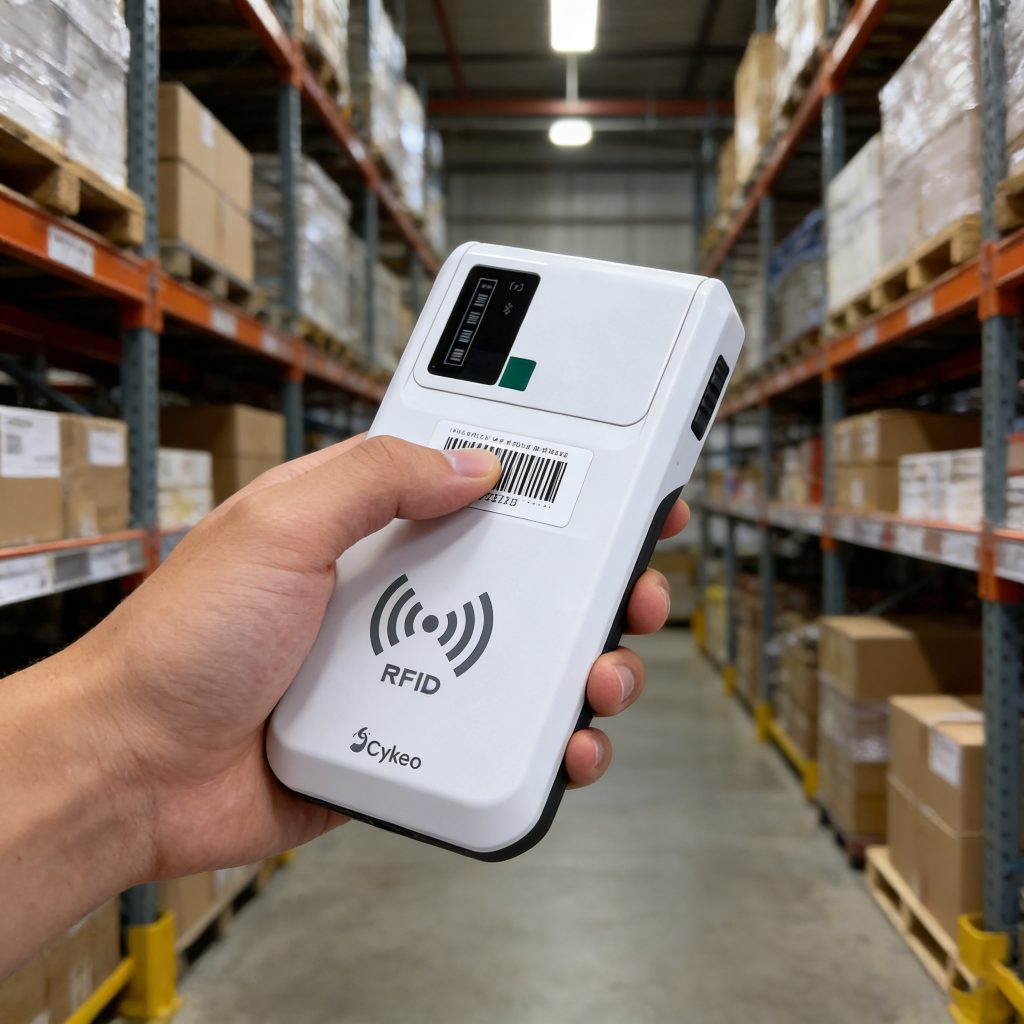
According to RFID systems can achieve inventory accuracy exceeding 95%, compared to significantly lower rates in manual processes.
In practice, weekly counts often shift to daily rolling checks.
RFID creates traceability:
| Feature | RFID Tagging System | Barcode System |
|---|---|---|
| Line-of-sight required | No | Yes |
| Bulk reading | Yes | No |
| Speed | Very high | Moderate |
| Accuracy | High (>95%) | Variable |
| Automation capability | Strong | Limited |
RFID systems don’t fail because of hardware—they fail because of overlooked details.
From field experience:
In one case, read accuracy improved from ~78% to 95% after adjusting tag orientation. No equipment change—just implementation refinement.
Yes, especially in large-scale environments. RFID allows bulk scanning without line-of-sight.
Yes. With proper reader setup, inventory data updates continuously or near real-time.
Some types (like hard tags) are reusable, while labels are typically single-use.
An rfid inventory tagging system doesn’t just speed up inventory—it changes how inventory is understood.
Instead of static snapshots, teams work with continuous data. Instead of assumptions, they rely on visibility.
And as with many projects, even when the conversation begins with “how long do led tennis court lights last,” it often ends somewhere more operational:
“How accurate is our inventory—right now?”
Confused about RFID tag vs barcode? Discover how RFID and barcode tech differ in speed, cost, and efficiency. Learn which suits your business needs with Cykeo insights.
More
Explore how rfid jobs improve tool tracking, workforce accountability, and inventory automation with Cykeo UHF RFID systems for industrial workplaces.
More
Get a clear answer to how far can RFID be read. We break down the real ranges for LF, HF, and UHF systems and what factors actually affect reading distance.
More
New to RFID? Learn how to operate a handheld RFID scanner with this step-by-step guide—setup, scanning best practices, troubleshooting, and more.
More