 Cykeo RFID IoT Solution Products R&D Manufacturer
How to Use RFID Module with Arduino LED Projects
618Discover how to use RFID module with Arduino LED projects with our step-by-step beginner's guide. Learn wiring, coding, and project ideas for interactive RFID-based LED control.
MoreAll RFID Product
Radio frequency identification sensors enable automatic, wireless detection of objects and conditions, supporting real-time tracking, data collection, and operational visibility across industries.
That’s the clear answer. But on-site, these sensors don’t feel like “technology layers”—they behave more like silent observers, capturing what people usually miss.
And yes, even discussions starting with “how long do led tennis court lights last” often lead to a deeper question: how do we monitor assets continuously, not occasionally?
Author: Cykeo RFID Sensor Systems Team
In a cold-chain logistics deployment (temperature-sensitive goods):
The takeaway wasn’t just tracking—it was awareness, continuously available.
Radio frequency identification sensors are advanced RFID devices that combine identification with sensing capabilities such as:
Unlike standard RFID tags, these sensors collect environmental data alongside identity information.
According to RAIN RFID Alliance, RFID technology enables high-speed, non-line-of-sight data capture, forming the foundation for scalable sensor-based systems.
Traditional RFID answers: What is this item?
RFID sensors go further:
In one deployment, temperature-sensitive shipments were monitored continuously. Instead of discovering issues at delivery, alerts were triggered mid-transit.
That changes outcomes—not just reports.
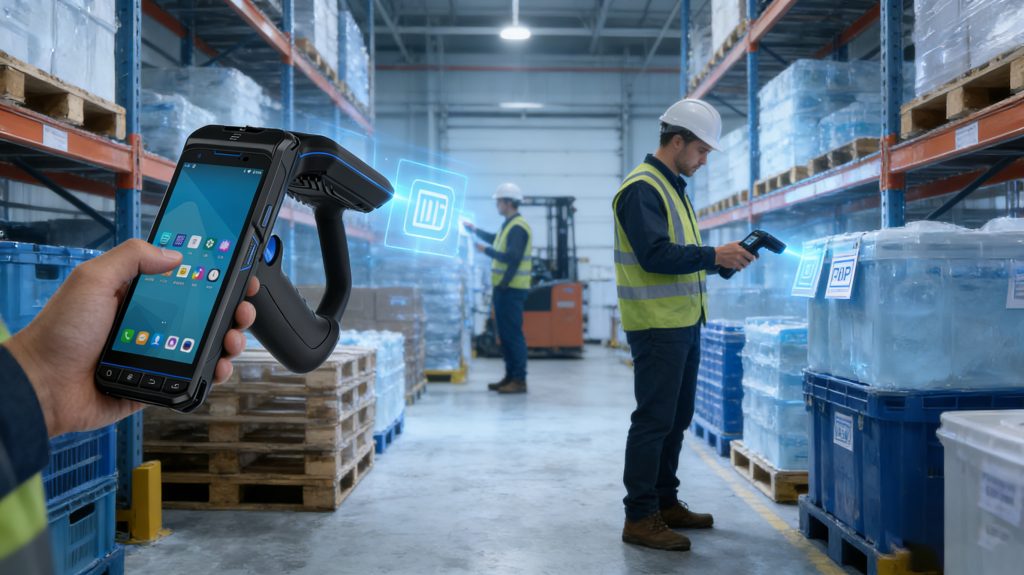
Manual checks are inconsistent. RFID sensors automate the process:
RFID-based systems significantly improve supply chain visibility and accuracy, often exceeding 95% data reliability in structured deployments.
With real-time data:
| Industry | Application Scenario |
|---|
| Cold chain | Temperature monitoring |
| Healthcare | Medical asset condition tracking |
| Manufacturing | Equipment status monitoring |
| Logistics | Shock and movement tracking |
| Facilities | Environmental monitoring |
RFID sensors introduce a different kind of complexity—not in hardware, but in data interpretation.
From field experience:
In one project, alerts were initially too frequent. After adjusting thresholds, the system became usable—and trusted.
Yes. RFID sensors collect environmental data in addition to identification.
Some do (active or semi-passive), while others operate passively with limited sensing capabilities.
Yes, especially when integrated with fixed readers or frequent scanning systems
Radio frequency identification sensors don’t just track assets—they reveal conditions that were previously invisible.
That shift—from identification to awareness—is where operational value actually builds.
And again, even when the starting point is something like “how long do led tennis court lights last,” the real question becomes broader:
What’s happening to our assets right now—and do we know it in time?
Discover how to use RFID module with Arduino LED projects with our step-by-step beginner's guide. Learn wiring, coding, and project ideas for interactive RFID-based LED control.
More
Looking for a UHF RFID reader for warehouse automation or asset tracking? This guide shares practical selection tips, deployment insights, and wholesale considerations for system integrators and distributors.
More
Learn how to use rfid scanner in real work scenarios. Clear, field-tested steps for inventory, access control, and asset tracking using CYKEO RFID solutions.
More
Learn how to make a RFID reader module from scratch. Our guide covers frequency choice, key components like the MFRC522, antenna tuning, and common pitfalls for a functional prototype.
More