 Cykeo RFID IoT Solution Products R&D Manufacturer
What is a Fractal-Based Circularly Polarized UHF RFID Reader Antenna?
139Exploring a fractal-based circularly polarized UHF RFID reader antenna: its design advantages for robust read performance in challenging RF environments.
MoreAll RFID Product
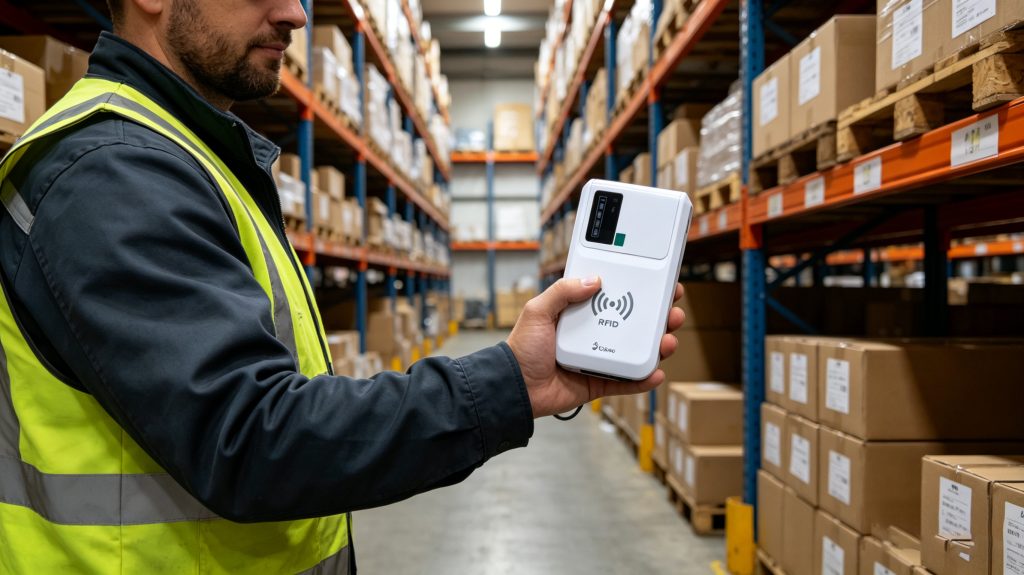
RFID scanners work by emitting radio waves, powering nearby tags, and receiving reflected signals that carry encoded data, enabling fast, contactless identification of multiple items at once.
In real deployments, this happens continuously—hundreds of reads per second without line-of-sight.
In practice, calling them “scanners” is misleading. RFID devices don’t scan like barcode guns—they create an RF field.
Here’s the actual sequence:
This entire loop repeats in milliseconds.
According to RAIN RFID Alliance , modern UHF RFID systems can process hundreds of tags per second, enabling large-scale automation across logistics and retail.
In dense environments—think pallets stacked with tagged cartons—multiple tags respond at once.
Without control, signals would overlap.
RFID scanners solve this using anti-collision algorithms:
From field testing, high-performance readers can exceed 400 reads/sec, maintaining stability even in crowded tag environments.

| Component | Function | Field Note |
|---|---|---|
| RF Module | Generates radio waves | Determines read range |
| Antenna | Transmits & receives signals | Placement critical |
| Processor | Decodes tag data | Handles filtering |
| Interface | Sends data to system | USB, Ethernet, etc. |
In real deployments, antenna placement often matters more than raw reader power.
Using Cykeo scanners in different scenarios highlights how performance translates into reality:
In one deployment, switching from a low-gain antenna to an integrated high-gain reader improved read coverage by ~30% without increasing power output.
| Feature | RFID Scanner | Barcode Scanner |
|---|---|---|
| Line of sight | Not required | Required |
| Multi-read | Yes | No |
| Speed | High (bulk reading) | Single-item |
| Automation | High | Limited |
According to GS1, RFID can improve inventory accuracy to 95–99%, compared to significantly lower manual barcode processes.
From field deployments:
A simple adjustment—like tilting antennas 30°—can significantly improve consistency.
Also, overpowered signals can create “ghost reads” outside intended zones. Balance matters more than brute force.
No. RFID uses radio waves, allowing tags to be read through packaging or at angles.
Depending on the system, up to 10–15 meters for UHF setups.
Yes. Advanced systems can read hundreds of tags per second.
Yes. They operate within regulated radio frequency limits similar to Wi-Fi devices.
The term “scanner” hides the real story. RFID devices don’t just read—they create an environment where tags can respond.
And in production systems, performance isn’t about maximum range. It’s about control:
That’s what defines how do rfid scanners work when systems move from demo to daily operation.
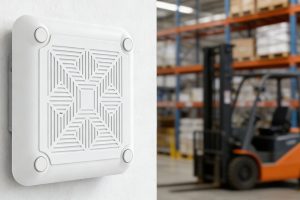
Exploring a fractal-based circularly polarized UHF RFID reader antenna: its design advantages for robust read performance in challenging RF environments.
More
Many ask: can an RFID antenna activate devices? We explain the limitations and possibilities of UHF antenna power transfer for sensors and simple circuits.
More
Explore Cykeo retail security tag system for fast RFID-based self-checkout, anti-theft protection, and multi-item scanning. Ideal for unmanned stores and modern retail efficiency.
More
Wondering "does frequency matter on RFID reader"? Discover how LF, HF, and UHF frequencies impact read range, material penetration, and application performance with CYKEO solutions.
More