 Cykeo RFID IoT Solution Products R&D Manufacturer

Heat Resistant RFID Tag: What Actually Works Under Heat?
303Looking for a heat resistant RFID tag? Learn what temperature RFID tags really survive, where they fail, and how CYKEO selects them for heat-heavy sites.
MoreAll RFID Product
Metal RFID tags are specially designed UHF RFID tags that maintain stable reading performance directly on metal surfaces, making them ideal for industrial asset tracking, warehouse inventory control, and manufacturing equipment management.
A few years ago, during a deployment inside a machining workshop, we tested standard RFID labels on stainless steel containers. The read rate collapsed almost immediately. Tags that worked perfectly on cardboard became inconsistent once attached to metal racks and CNC toolboxes.
That is usually the moment companies realize metal changes everything in RFID.
After switching to dedicated Cykeo anti-metal RFID tags, the read consistency improved dramatically. Inventory scanning that once took nearly two hours became a routine process completed before the morning shift coffee cooled down.
Metal reflects electromagnetic signals. Traditional RFID labels are easily disrupted when mounted directly on conductive surfaces.
Typical problems include:
This is why dedicated metal RFID tags use special antenna isolation structures and shielding materials.
Without those design changes, ultra high frequency RFID simply becomes unreliable around industrial assets.
According to technical documentation from GS1 RFID Standards, environmental interference — especially metal and liquids — remains one of the primary considerations in RFID system performance planning.
That sounds technical on paper. In real factories, it means operators stop trusting the system if scans fail repeatedly.
And once operators lose trust, adoption becomes difficult.
Metal RFID tags contain an internal separation layer between the antenna and the metal surface.
This layer helps maintain proper antenna tuning so the tag can continue communicating with RFID readers efficiently.
Cykeo UHF metal RFID tags are commonly used on:
The difference becomes obvious during dense inventory scanning.
Normal labels produce fragmented reads.
Proper anti-metal RFID tags produce clean data streams.
Last autumn, we supported a warehouse modernization project for a heavy equipment parts supplier. The client originally relied on barcode labels attached to metal engine components.
The environment was harsh:
Barcode labels degraded quickly.
The client tested metal RFID tags in one storage aisle before expanding deployment across the facility.
The improvement surprised even their operations manager.
| Inventory Task | Barcode Process | Metal RFID System |
|---|---|---|
| Manual inventory count | 4.5 hours | 40 minutes |
| Asset search time | 15–20 minutes | Under 2 minutes |
| Read accuracy | Inconsistent | Stable |
| Multiple item reading | Impossible | Supported |
| Label durability | Frequently damaged | Industrial-grade |
The most interesting part was not speed.
It was visibility.
For the first time, supervisors could identify missing industrial assets before production delays occurred.
Factories attach metal RFID tags to machines, molds, fixtures, and reusable containers for real-time visibility.
Metal racks and steel storage systems are difficult environments for standard RFID labels. Anti-metal tags solve that problem.
Data centers frequently use metal RFID tags for server management and maintenance tracking.
Pipes, valves, and outdoor industrial assets require rugged RFID solutions capable of surviving harsh conditions.
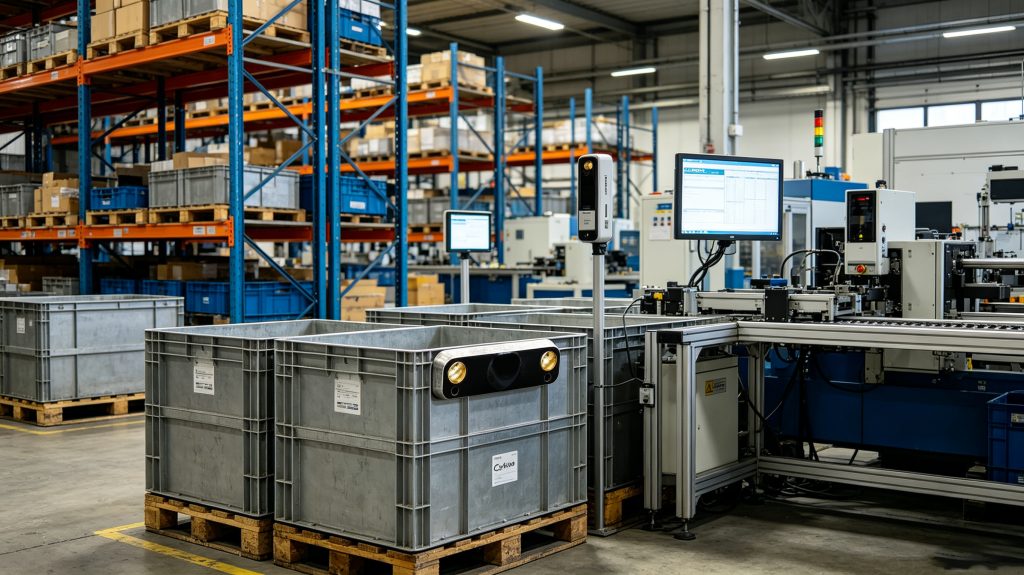
Ultra high frequency RFID allows long-range and multi-tag identification.
Compared with HF systems, UHF technology offers:
According to RAIN Alliance Market Research, global RAIN RFID adoption continues accelerating in logistics and industrial environments because of operational efficiency improvements and automation demand.
That trend is visible inside factories now.
Five years ago, RFID was often experimental.
Today, many industrial operators consider it infrastructure.
Cykeo focuses heavily on industrial reading stability rather than laboratory-only specifications.
Several technical factors matter in real deployment conditions:
One detail many buyers overlook is mounting consistency.
Cheap anti-metal tags sometimes shift or detach after vibration exposure.
In manufacturing environments, that small issue becomes expensive surprisingly fast.
Cykeo designs its industrial RFID tags specifically for continuous industrial use instead of temporary retail deployment.

Standard RFID labels usually perform poorly on metal surfaces. Dedicated anti-metal RFID tags are specifically engineered to maintain stable UHF signal performance.
Manufacturing, warehousing, logistics, IT asset management, automotive, and oil & gas industries commonly use metal RFID tags.
Many industrial-grade metal RFID tags are designed with waterproof and dustproof protection for outdoor and harsh environments.
Most industrial metal RFID systems use ultra high frequency RFID between 860–960 MHz for long-range and multi-tag identification.
Metal RFID tags solve one of the oldest frustrations in industrial RFID deployment: unreliable reading around metal assets.
In real operations, reliability matters more than theoretical read distance.
When inventory teams trust the data, workflows accelerate naturally. Audits become simpler. Missing assets become visible earlier. Production interruptions decrease quietly in the background.
That is why ultra high frequency metal RFID tags are no longer limited to experimental pilot projects. Across manufacturing plants, industrial warehouses, and infrastructure environments, they are becoming part of everyday operational control.
RFID Industry Writer | IoT & Asset Tracking Analyst
James writes about RFID technology, asset tracking, and the practical challenges of digital transformation across warehousing, retail, manufacturing, and logistics.
His work focuses on how RFID is applied in real-world operations—improving inventory visibility, automating workflows, and helping businesses manage assets with greater accuracy and efficiency.
He regularly covers topics including UHF RFID, smart cabinets, RFID portals, tool tracking, warehouse automation, and industrial IoT trends..

Looking for a heat resistant RFID tag? Learn what temperature RFID tags really survive, where they fail, and how CYKEO selects them for heat-heavy sites.
More
Improve brewery efficiency with rfid keg tracking from Cykeo. Track keg location, usage, and lifecycle data with automated RFID identification for smarter beverage logistics.
More
Discover how RFID manufacturing solutions improve production visibility, WIP tracking, inventory accuracy, and asset management. Learn how Cykeo helps manufacturers automate operations.
More
Discover the top 10 advantages of UHF RFID readers for supply chains in 2024. Boost efficiency, accuracy, and ROI with Cykeo’s cutting-edge RFID solutions.
More