How an RFID Antenna Works: It’s Your System’s Translator
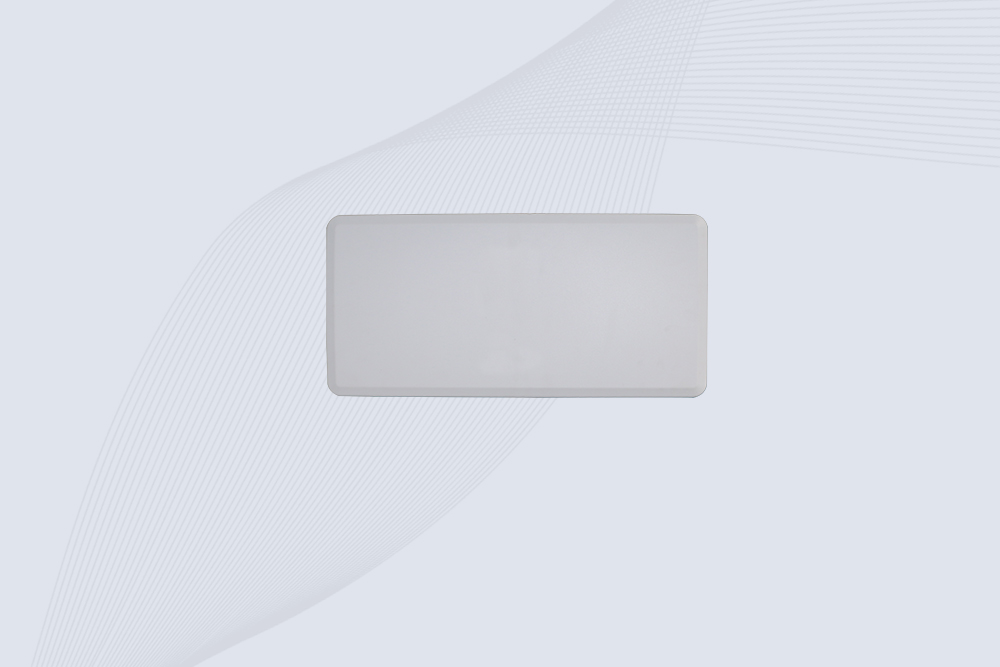
When you think about RFID, you might picture the tags or the handheld reader. But the component that actually enables the wireless conversation is the antenna. So, how an RFID antenna works is fundamental to the entire process. Think of it not as a simple wire, but as a specialized translator. Its job is to take the digital commands from the reader and turn them into radio waves that can travel through the air to the tag, and then do the reverse—listen for the tag’s faint reply and translate it back into data the reader can understand.
Without this translator, the reader and tag are shouting in different languages in separate rooms.
The Two-Way Street: Transmission and Reception
The core of how an RFID antenna works is a dual-function cycle: transmit and receive.
- The Outbound Shout (Transmit): The reader generates a command (like “Who’s there?”) as an electrical signal. This signal travels down a cable to the antenna. The antenna’s internal design then converts this electrical energy into electromagnetic radio waves (RF energy) and broadcasts them into its surrounding area. For passive UHF systems, this broadcast does a crucial extra job: it provides the energy that wakes up and powers any tags within range. This process is called RFID antenna energy harvesting.
- The Inbound Whisper (Receive): When a powered tag responds, it doesn’t have its own battery-powered transmitter. Instead, it cleverly reflects back a modified version of the incoming signal, with its unique data (like a serial number) imprinted on it. This return signal is incredibly weak. The antenna acts like a sensitive ear, capturing these faint reflected waves and converting them back into a precise electrical signal. This signal is sent up the cable to the reader, which decodes it into useful information.
Why Performance Isn’t Just About Power
A common misconception is that a bigger antenna just means a louder shout. While power is a factor, the design determines how it shouts. This is where understanding RFID antenna polarization effect is key.
- Linear Polarized Antennas: Think of these as sending out waves in a single, flat plane—like a horizontal or vertical laser line. They can achieve longer range, but only if the tag’s antenna is aligned to match that plane. If the tag is tilted, the signal is lost.
- Circular Polarized Antennas: These send out waves that spiral outward. They sacrifice a bit of potential range for a huge benefit: they can read tags in virtually any orientation because the spiraling wave will present a matching plane to the tag. This is why circular polarization is the default for most general inventory applications where tag angles are unpredictable.
The antenna’s gain and beamwidth also define the shape and reach of its “shout,” determining if it covers a wide, short area or a focused, long tunnel.
From Theory to Your Warehouse Floor
Understanding how an RFID antenna works helps you make sense of real-world performance. If your system is missing tags on a conveyor, the issue might be tag orientation, requiring a circular polarized antenna instead of a linear one. If you’re getting stray reads from adjacent shelves, you might need an antenna with a different beamwidth or might be over-driving the power.
When selecting the right RFID antenna CYKEO recommends, you’re matching this translator’s “language” (frequency, polarization) and “volume control” (gain) to your specific environment. You need one that shouts clearly in the right direction and listens carefully for the reply, turning a complex radio frequency process into reliable, everyday business data.
RFID Antennas Recommendation
 Cykeo RFID IoT Solution Products R&D Manufacturer