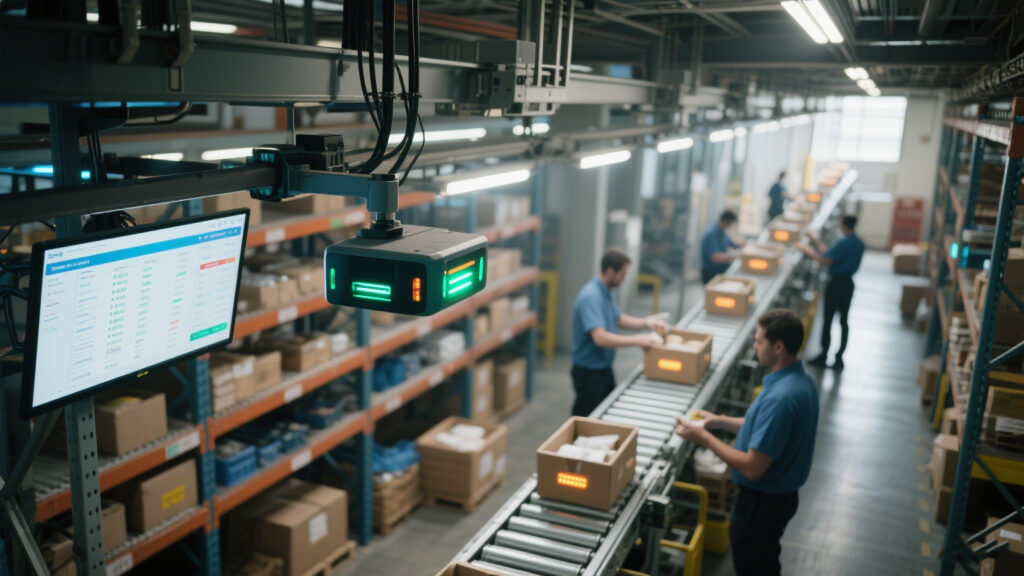
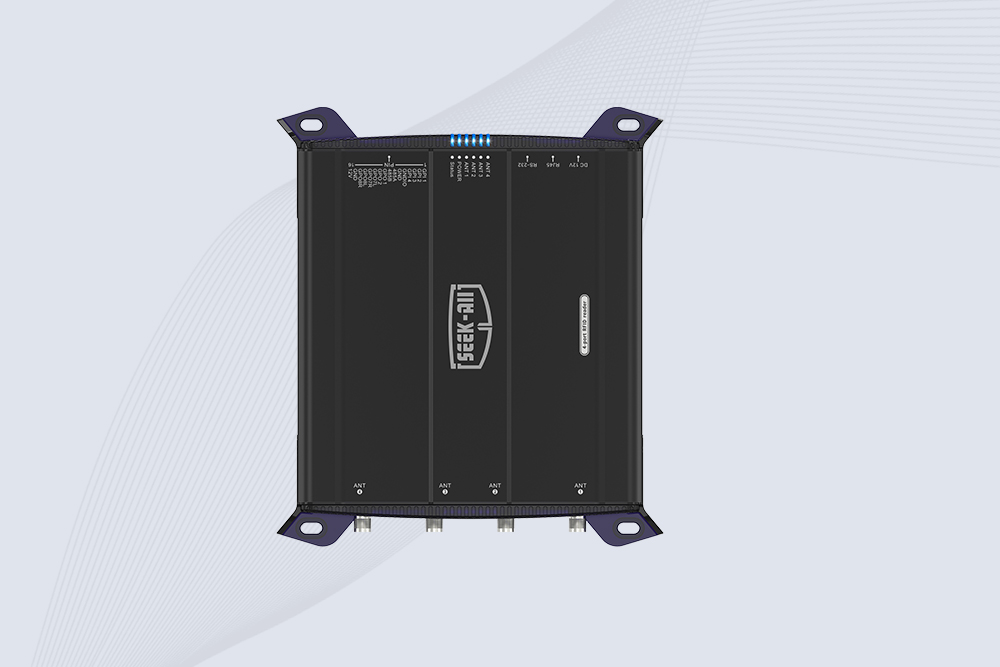
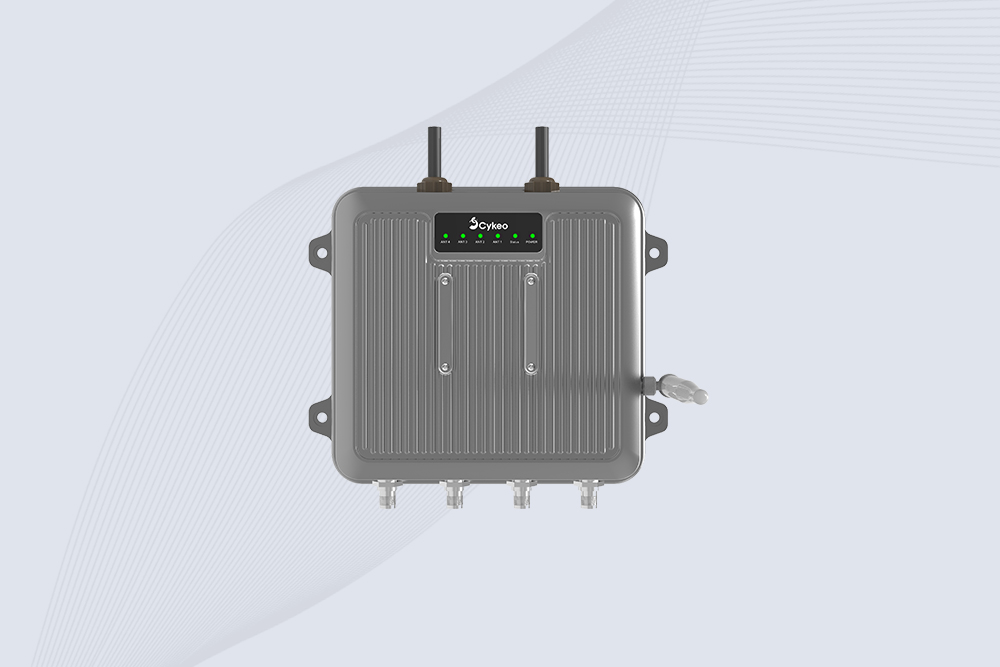
In a warehouse, busyness is almost constant. Forklifts weave between high stacks of shelves, and workers scan inventory one shelf at a time. Missed scans, double scans, and occasional mistakes happen daily. Then I saw the RFID ceiling reader—a silent pair of eyes changing the rhythm of the warehouse.
What exactly is a ceiling reader? In simple terms, it’s an RFID reader mounted on the ceiling or high up, using multiple antennas to read tags from above. Compared with handheld scanners, it has clear advantages: it covers a large area, doesn’t take up floor space, and can almost automatically track inventory.
I visited a medium-sized logistics warehouse in Qingpu, Shanghai, where several ceiling readers were installed above entry and exit aisles. The moment a truck opened its doors, the system displayed the incoming or outgoing goods within seconds. Workers didn’t need to pause their picking tasks, and the warehouse rhythm became noticeably smoother.
Of course, this isn’t magic. Items placed low sometimes get missed, especially in warehouses with very high ceilings or irregular shelf layouts. This is why experience matters—no matter how advanced the technology, it still needs humans to work with it.
Different Approaches and Practical Insights
All-in-One Ceiling Readers These devices integrate multiple antennas and the reader itself, making installation simple; just plug into a PoE network and it’s ready. Ideal for fixed aisles with high throughput. From my visit, the LED status lights are intuitive, but sometimes blocked by cargo, making staff think the device was malfunctioning. Minor angle adjustments solved this.
Systematic Solutions Some warehouses want more than simple item reading—they want a real-time map of warehouse traffic. In this case, ceiling readers are part of a full IoT solution. The backend can display inventory flows and even flag the most congested aisles. In Qingpu, the project took two weeks to fine-tune, but after going live, missed scans dropped below 2%, much to the relief of warehouse managers.
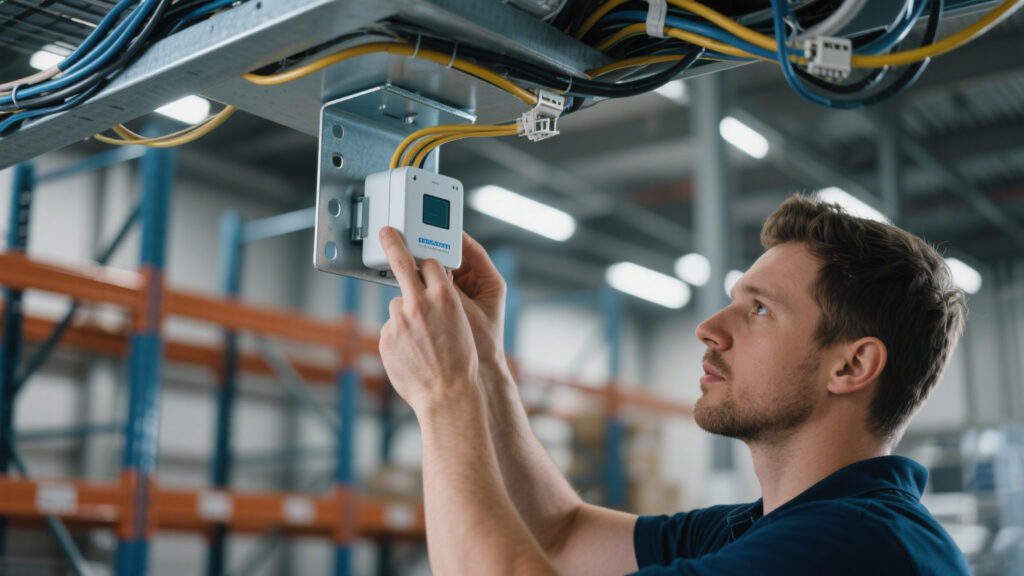
Mounting Brackets and Accessories Steel brackets are essential to securely hang the reader from the ceiling. Cable management often gets messy, so plan carefully with PoE. I once saw a bracket installed loosely; the reader tilted slightly, missing low items until it was adjusted.
Installation and Usage Tips
Ceiling Height: Determines the number of antennas and angles. In a 4-meter-high warehouse, a single aisle can cover roughly 120 SKUs.
PoE Power: Avoids extra outlets but watch cables so forklifts don’t snag them.
Staff Training: At first, employees are skeptical of automatic tracking. A few demonstrations and a few days of use usually get them comfortable.
Data Deviations: Even near real-time, low items may occasionally be missed. Technology isn’t perfect; human experience still counts.
I’ve realized that the best technology leaves space to breathe. Ceiling readers make a warehouse less of a battlefield and more controllable and visible.
Why It’s Worth Trying
RFID ceiling readers don’t just boost efficiency—they make management easier and more intuitive. You can see inventory movements as they happen, catching problems immediately instead of waiting for month-end reports. For small to medium businesses, the initial cost is higher, but savings in labor and reduced errors make it worthwhile.
Looking ahead, ceiling readers may integrate with AI and data analysis, not just “seeing” items, but predicting shortages, optimizing restocking, and even analyzing customer traffic. They won’t replace humans—they’ll let staff focus on higher-value work while preserving human judgment.
Conclusion
If you’re thinking of automating your warehouse, ceiling readers deserve attention. They may not fix everything, but they smooth out workflows and reduce repetitive strain. Real-world experience proves that technology and humans must collaborate for a warehouse to be smart yet human-friendly.
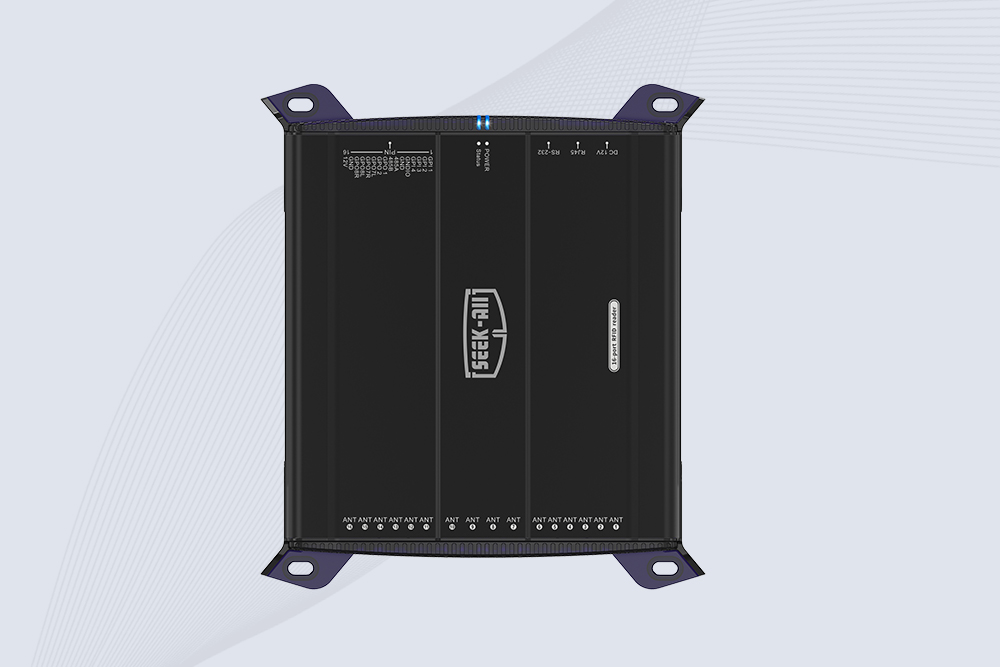
SSD-R16L Multi-Channel RFID Infrastructure for Automated Inventory Management ✔️ 16-Port High-Density RFID Reading Equipped with 16 SMA antenna ports, SSD-R16L supports multi-antenna deployment for warehouses, retail stores, logistics, production lines, and large-area RFID identification. ✔️ High-Speed & Long-Range Performance With up to 33…
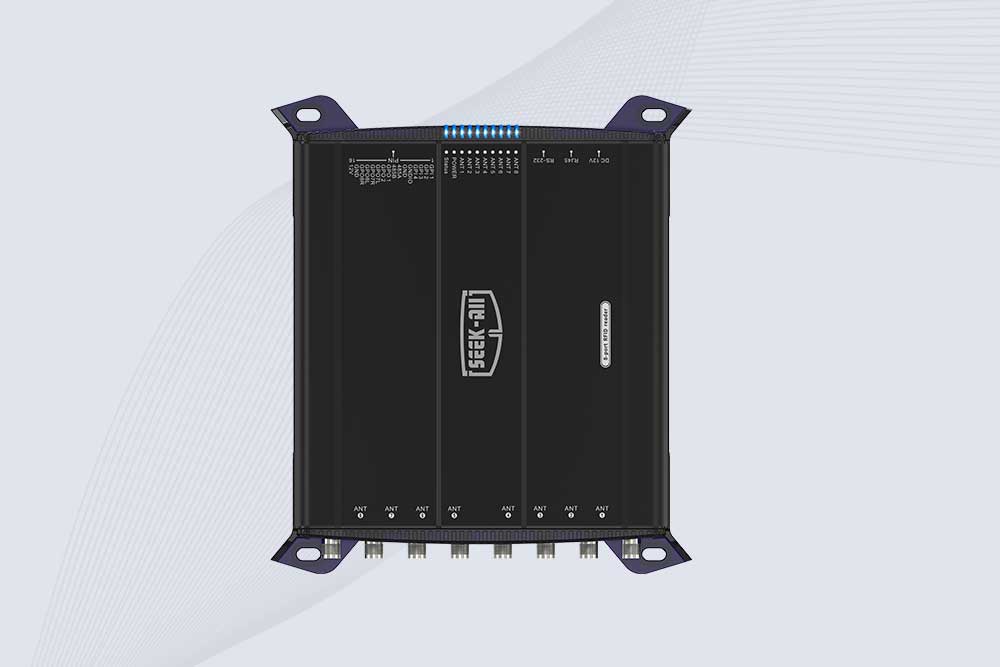
SSD-R8L 8-port UHF RFID reader with 33dBm output, up to 20m reading range and 600+ tags/s recognition. Ideal for warehouse, logistics, retail and asset tracking.
Cykeo CYKEO-C1 industrial Forklift RFID Reader features 20m read range, 600 tags/sec scanning, Impinj R2000 chipset, and IP67 rugged design. Ideal for warehouse logistics and manufacturing. Supports ISO 18000-6C/6B protocols.
Ensure secure, FDA-compliant controlled substance management with the FTNG‑L‑CK‑03 RFID Pharmacy Security Cabinet. Ideal for hospital pharmacies, addiction clinics, emergency departments, and research labs. Supports API integration, SDK for custom...
How does RFID work? Learn RFID tag communication, reader technology, and real applications with Cykeo RFID experts. Discover smarter identification solutions.
Learn how to check if RFID tags, readers, and systems are working correctly. A practical guide for RFID distributors, solution providers, and OEM buyers covering tag tests, reader compatibility, signal issues, and troubleshooting.
can rfid reader read multiple tags at once? Learn how UHF RFID readers identify multiple tags simultaneously and improve inventory, checkout, and tag-writing efficiency.
 Cykeo RFID IoT Solution Products R&D Manufacturer