 Cykeo RFID IoT Solution Products R&D Manufacturer
RFID Passive and Active Tags: What You Need to Know
420Learn the key differences between RFID passive and active tags, how they work, and where each type is used. Find out which RFID tag suits your project best.
MoreAll RFID Product
When people first hear the term backscattering, it often sounds complicated. But at its core, it’s actually quite simple:
It’s not actively transmitting a signal; it’s modulating a reflected signal to carry information.
Backscattering is widely used in RFID, radar, and wireless communication. Let’s break it down step by step, from basic intuition to more advanced concepts—without getting overly technical.
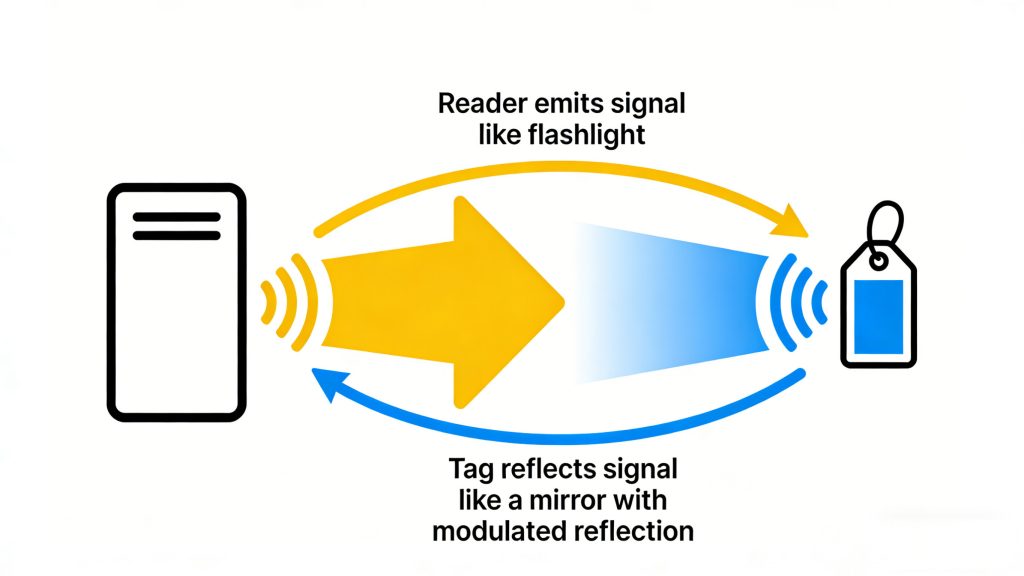
Think of backscattering as:
“Talking through reflection.”
A simple analogy:
This is the essence of backscattering.
A slightly more formal view:
Key point:
The information comes from modulating the reflection, not from actively generating a new signal.
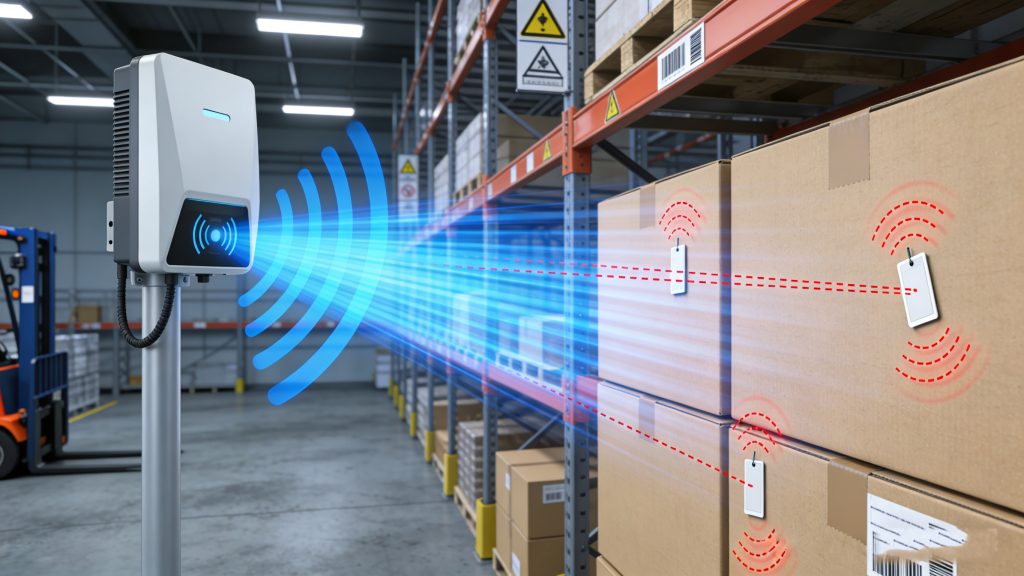
RFID is the most common real-world application.
Key takeaway:
Backscatter avoids the most energy-intensive task:
Active signal generation
Conventional wireless systems (like WiFi or Bluetooth) must:
All of these consume a lot of power.
Backscatter only:
changes antenna impedance to modulate reflection
Which uses minimal energy.
For those wanting a deeper understanding, focus on these concepts:
By toggling between these states, the tag encodes binary 0 and 1.
Common methods:
Essentially, the reflected signal varies in a controlled pattern.
Reflected signals are weak, so they are sensitive to:
Backscatter isn’t limited to RFID. Other applications include:
Radar relies on reflected signals to determine:
Low-power sensors use backscatter to transmit:
Almost no energy required.
Modern research focuses on:
“Battery-free communication devices”
Backscatter is the core principle enabling this.
It’s powerful but has constraints:
Remember this:
Backscatter = borrowing someone else’s signal and reflecting it to send information
Understanding backscatter explains:
Fundamentally:
Signal too weak or interfered with = reading fails
Once you understand backscatter, many RFID “mysteries” become clear. It’s all about how energy gets to the tag, how it’s reflected, and how it’s interpreted.
Learn the key differences between RFID passive and active tags, how they work, and where each type is used. Find out which RFID tag suits your project best.
More
A practical guide to choosing a UHF RFID module that performs reliably in real environments. Learn what affects RF stability, heat management, data handling, and integration.
More
The CYKEO CK-A9 UHF RFID Antenna delivers stable long-range performance with high gain, low VSWR, and rugged outdoor-ready construction. Ideal for warehouses, access control, logistics, and intelligent inventory systems.
More
Discover how RFID scanners streamline tasks like inventory tracking, access control, and supply chain management. Learn their real-world uses and benefits.
More