1. Not Just Another Handheld: What the CYKEO CK-B3L Is Really Built For
In many warehouses and factories, people usually do not care about which chip is inside a device. What they really care about is simple: does it read tags fast, does it keep running for the whole shift, and does it break easily or not. The CYKEO CK-B3L uhf rfid bluetooth handheld reader was designed with this kind of question in mind rather than only looking nice on a spec sheet.
CYKEO did not position the CK-B3L as a toy-like gadget or a consumer phone with a reader attached. It is an industrial handheld that tries to replace several separate tools: a long-range UHF reader, a barcode scanner, an NFC reader and a basic data terminal. In a typical project, this means fewer devices to charge, fewer spare parts to manage, and less training effort for frontline workers.
The CK-B3L is based on Android 13.0 with an octa-core 2.0 GHz processor, so the interface feels familiar to anyone who has used a smartphone. At the same time, it keeps the rugged shell, larger battery and UHF antenna that a normal phone simply does not have.
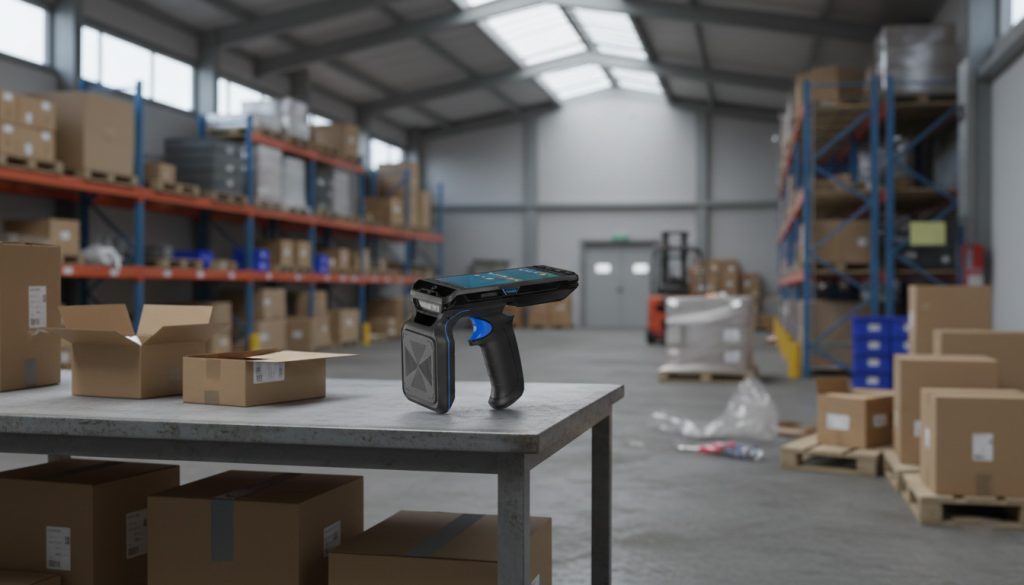
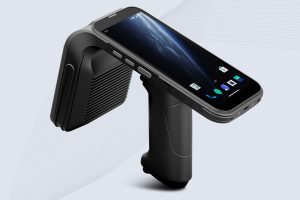
CYKEO CK-B3L combines RFID, barcode and NFC in one industrial handheld terminal.
2. UHF RFID Performance That Actually Matters on Site
On paper, the CK-B3L supports the EPC C1G2 and ISO 18000-6C protocols in the 840–960 MHz range. For many users this line of text does not say much. What it means in practice is that this UHF RFID Handheld Reader can work with common UHF tags used in pallets, cartons, assets and tools in global projects.
The circularly polarized antenna (around 4.65 dBi) helps reduce the “tag angle” problem. In some devices, if the tag is not facing the right direction, the reading becomes unstable, which is quite annoying in real stocktaking. With circular polarization, the CK-B3L can read tags that are not perfectly aligned, which is closer to what happens in a crowded shelf or a mixed carton.
The reading distance can be adjusted up to around 20 meters in optimal conditions. In daily work, project teams usually do not always push to the maximum distance but instead balance between reading range, accuracy and interference. For example, in a narrow aisle, the setting can be tuned to avoid reading the next rack behind the operator.
Group reading performance is also important. The CK-B3L can handle more than 500 RFID tags per second in a circular antenna setup. For a real warehouse inventory counting, this means you can walk down an aisle, pull the trigger once, and capture a large batch of tags without waiting for the screen to catch up.
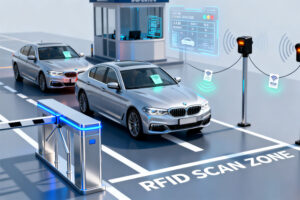
The CK-B3L can read a large number of tags over long distance, ideal for fast stocktaking.
3. More Than RFID: Barcode, NFC and Camera in One Device
In actual projects, it is rare that a team only uses RFID. Many companies still keep 1D and 2D barcodes, especially for incoming goods, supplier labels or consumer-facing packaging. The CK-B3L integrates a Honeywell N6602 series scan engine, so the familiar barcode workflows remain unchanged. UPC, EAN, Code 128, Code 39, QR codes and other common symbologies are all supported.
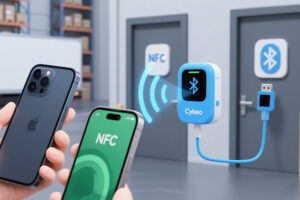
Besides barcodes, the device can also handle 13.56 MHz NFC and contactless card applications, supporting ISO14443A/B and ISO15693 protocols. This is useful when the same handheld is used for:
staff ID verification,
access control checks,
reading smart labels on equipment or documents.
On top of that, a 13-megapixel rear camera with autofocus and flash allows simple photo documentation. For example, when a damaged parcel is found, staff can scan the tag, take a photo on the same device, and link the picture to a record in the backend system.
So instead of carrying one barcode scanner, one RFID reader, and one phone, the operator can walk around with just one uhf rfid bluetooth handheld reader that does all three tasks.
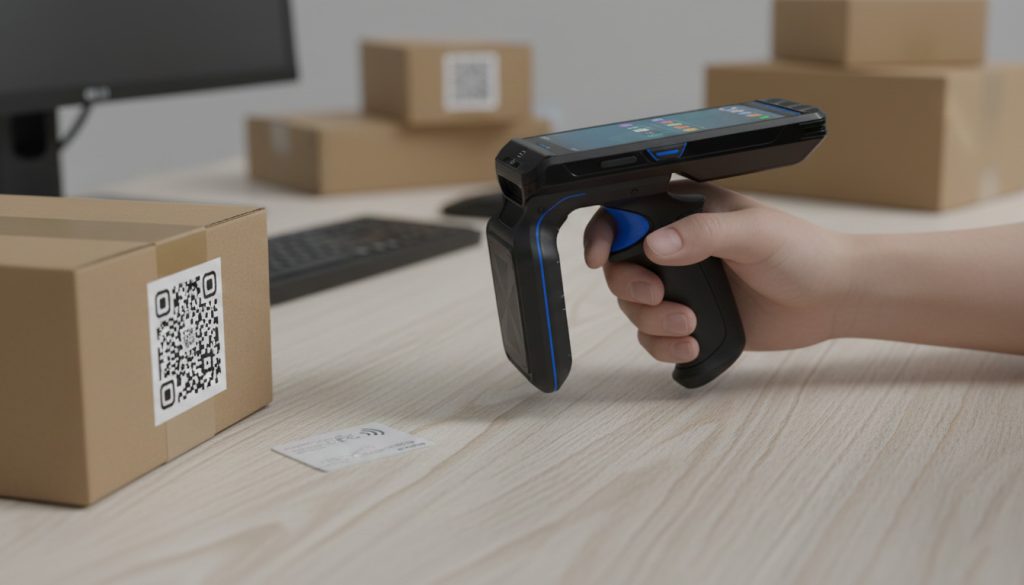
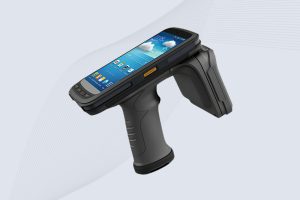
Barcode, NFC and RFID functions are integrated in the same handheld terminal.
4. Performance, Battery and Connectivity for a Full Shift
Specifications alone do not guarantee a smooth day in the field, but they do matter. The CK-B3L runs on an MT6762 8-core 64-bit 2.0 GHz processor with 4 GB RAM and 64 GB ROM, and supports TF card expansion up to 256 GB. With Android 13.0 as the main system (and optional Android 10.0 for legacy environments), most standard business apps can run without major compatibility issues.
Battery life is one of the points that frontline staff notice immediately. The device uses a 7.6 V 4000 mAh battery pack, which is equal to around 8000 mAh at 3.8 V, with working time often exceeding 12 hours in typical use. For example, normal warehouse work with a mix of scanning, WiFi, Bluetooth and 4G data usually finishes a shift without needing to swap batteries, which is helpful for night shifts where spare batteries are sometimes not well managed.
In terms of connectivity, the CK-B3L supports:
dual-band WiFi 2.4 GHz / 5 GHz (802.11 a/b/g/n/ac and related enterprise features),
Bluetooth 5.0 + BLE for connecting to external devices, printers or accessories,
global 4G network bands for mobile data in outdoor or remote environments.
This flexibility lets the same UHF RFID Handheld Reader be used indoors on WiFi and outdoors on 4G without changing hardware.
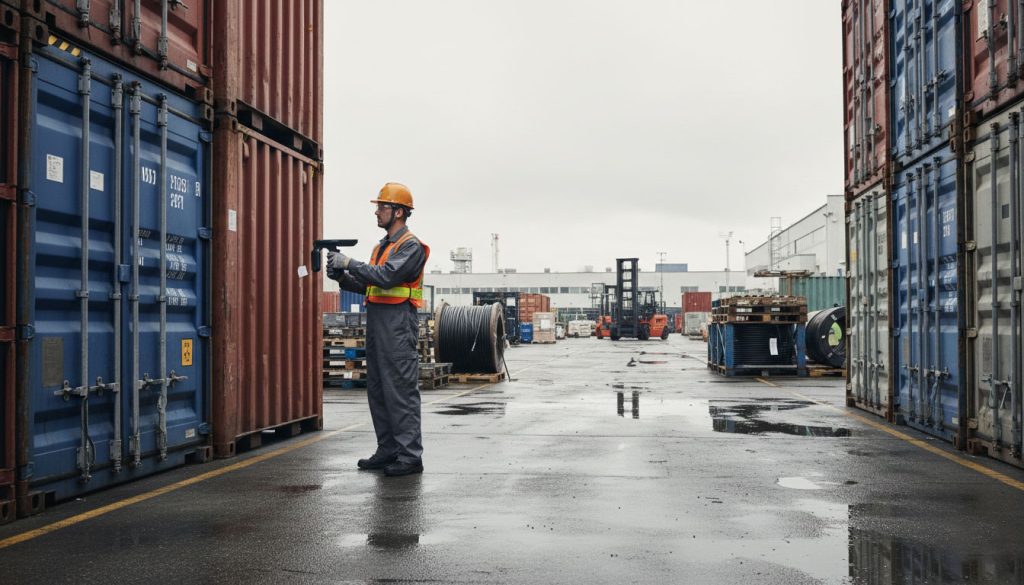
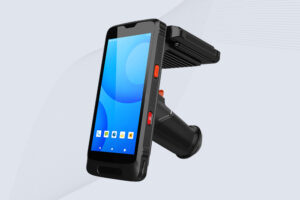
IP65 protection and wide temperature range make CK-B3L suitable for outdoor and semi-harsh environments.
5. Durability and Handling in Everyday Use
A handheld terminal that only works well in a showroom is not very useful. The CK-B3L is built with IP65 sealing, so it can handle dust and splashes that are common in loading bays or production floors. The operating temperature goes from -20°C up to 55°C, meaning it can be used in chilled storage, normal warehouses and many outdoor locations.
Drop resistance is specified at 1.2 meters onto concrete, with multiple drops across different sides, and it also passes a 0.5-meter rolling test. In reality, people may not remember the exact number, but they will quickly notice if a device easily breaks after a single fall. The CK-B3L housing and grip are shaped to reduce the chance of slipping while still being comfortable enough to hold for a long time.
The 5.5-inch capacitive touch screen has a 720×1440 resolution, which is sufficient to display lists, forms and simple dashboards without making text too small. Physical side keys are reserved for power, volume and fast scanning, so workers who wear gloves or have wet fingers can still trigger readings.
6. Integration and Development: Not an Isolated Device
For system integrators, a good device is not just hardware. CYKEO provides development materials in C# and Java and an Android API suited to common RFID and scanning operations. This shortens the time to plug the uhf rfid bluetooth handheld reader into existing WMS, MES, asset management or custom field service systems.
Some projects start with simple CSV or REST-based uploads and later move to more complex messaging. Because the CK-B3L runs a standard Android system with stable connectivity options, this migration path stays open without needing to replace the device.
The CK-B3L is not made to be everything for everyone, but it fits naturally into several types of projects:
mid to large warehouses doing periodic or rolling inventory,
manufacturers managing tools, fixtures and work-in-process items,
retail backrooms and distribution centers tracking cartons and pallets,
public sector users handling asset tags in offices, schools or hospitals,
field service teams doing outdoor inspection and asset verification.
In all these cases, one common pattern appears: people expect the device to last through the day, read tags quickly, and connect to the system with minimal trouble. This is exactly the area where the CYKEO CK-B3L UHF RFID Handheld Reader tries to perform reliably rather than adding features that are rarely used.
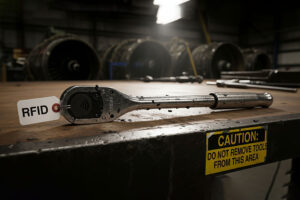
Discover how RFID for tool tracking eliminates FOD risks, cuts manual errors by 85%, and ensures compliance in high-stakes industries. Cykeo’s rugged solutions tested in Singaporean MRO hubs.
Learn how iPhones and Android devices can emulate RFID tags using NFC or third-party tools. Discover Cykeo’s mobile-compatible RFID readers for seamless integration.
 Cykeo RFID IoT Solution Products R&D Manufacturer