RFID hospital systems improve medical consumable tracking accuracy, reduce inventory loss, and automate hospital supply management using real-time UHF RFID identification technology.
Hospitals no longer struggle only with rising patient volume. The real pressure is hidden in cabinets, operating rooms, and supply shelves. Missing consumables, expired implants, unrecorded withdrawals, and delayed replenishment quietly increase operational cost every day.
At Cykeo, we have spent years observing how hospitals actually use RFID systems on-site. Not in presentation rooms. In operating departments. In sterile storage areas at 2 a.m. During emergency procedures where nurses simply do not have time to manually register every consumable item.
That is exactly where UHF RFID changes the workflow.
Why RFID Hospital Systems Matter in Modern Healthcare
Traditional barcode systems depend heavily on manual scanning. In busy hospitals, that process breaks down quickly.
An RFID hospital management system automatically identifies tagged medical consumables without line-of-sight scanning. Cabinets perform inventory checks instantly after the door closes. Staff focus on treatment instead of paperwork.
According to a report published by the U.S. FDA, supply chain visibility and device traceability have become critical priorities for hospitals managing surgical inventory and implant tracking.
Meanwhile, research from McKinsey & Company noted that digitized healthcare supply chains can reduce operational waste significantly through automation and inventory transparency.
In practical deployment, the difference becomes visible within weeks.
One operating room we observed previously required two nurses to complete evening consumable reconciliation manually. After deploying an RFID medical cabinet, the process dropped to under five minutes.
Real-Time Identification Without Manual Registration
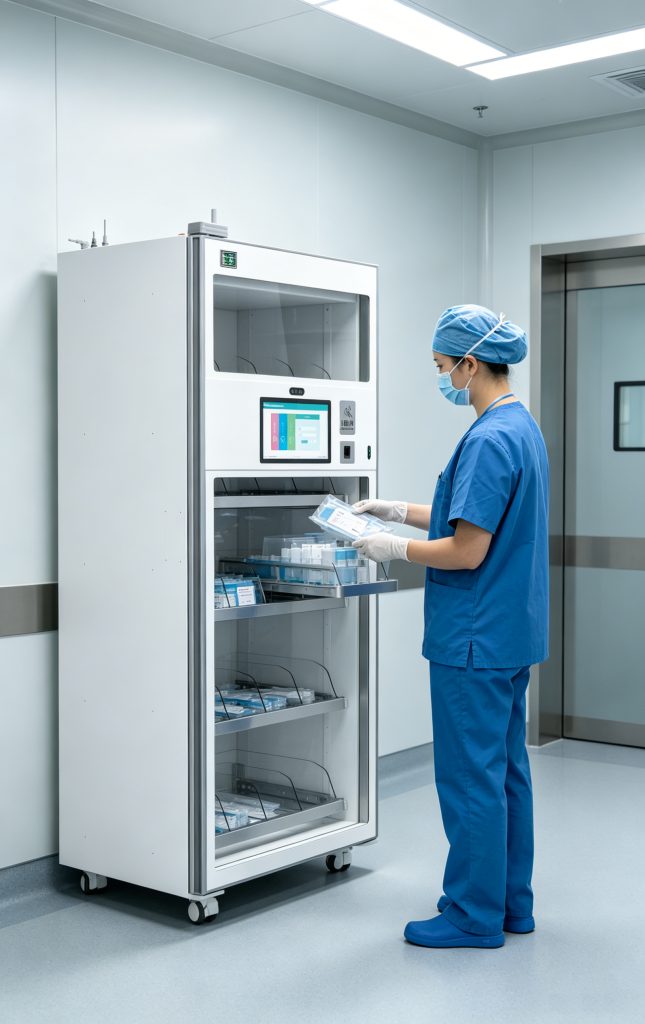
Cykeo’s intelligent UHF RFID medical consumable cabinet is designed specifically for:
Operating rooms
Interventional departments
Clinical laboratories
Hospital supply centers
Smart pharmacies
The cabinet uses ISO18000-6C UHF RFID technology to identify tagged medical items automatically.
Unlike low-frequency systems, UHF RFID supports fast multi-tag reading. The cabinet can scan approximately 250–500 consumables within 5 seconds while maintaining a read accuracy rate of 99.9%.
That matters more than most hospitals initially expect.
During peak operating schedules, even a small counting mistake can delay procedures or create procurement confusion days later.
Key Functional Advantages
Feature
Benefit
Real-time RFID inventory
Continuous stock visibility
One-item-one-code tracking
Full lifecycle traceability
Automatic inventory after door closure
Eliminates manual counting
RFID + IoT integration
Faster replenishment decisions
Smart authorization management
Controlled consumable access
5-second inventory cycle
Reduced nursing workload
Automated UHF RFID consumable management inside a modern hospital operating department.
RFID Hospital Inventory Accuracy in Real Clinical Environments
The Hidden Cost of Manual Consumable Management
Hospitals rarely lose supplies because staff are careless.
Most losses happen because workflows are fragmented.
A catheter removed during surgery may not be registered immediately. An implant transferred between departments may disappear from records temporarily. Expired products remain unnoticed inside storage areas until audit day.
RFID changes visibility.
Every tagged item becomes digitally traceable.
This is especially valuable for:
High-value implants
Sterile surgical kits
Interventional consumables
Laboratory reagents
Emergency medical inventory
According to a GS1 Healthcare study, inventory inaccuracies in hospitals directly affect procurement efficiency and patient safety outcomes.
What surprised many administrators during deployment was not the speed.
It was the reduction in arguments between departments over inventory discrepancies.
The system records movement automatically.
People stop guessing.
UHF RFID Technology for Smart Hospital Management
Why UHF RFID Performs Better for Hospital Inventory
High-frequency RFID works well for access control and short-range authentication, but UHF RFID provides advantages in hospital consumable management because it supports:
Long-distance identification
Simultaneous multi-tag reading
Faster inventory cycles
Larger cabinet coverage
Better scalability
Cykeo’s RFID hospital solution combines:
UHF RFID identification
IoT communication
Real-time database synchronization
Smart inventory alerts
Automated replenishment logic
The practical effect is simple:
Hospitals finally see actual inventory conditions instead of delayed spreadsheet estimates.
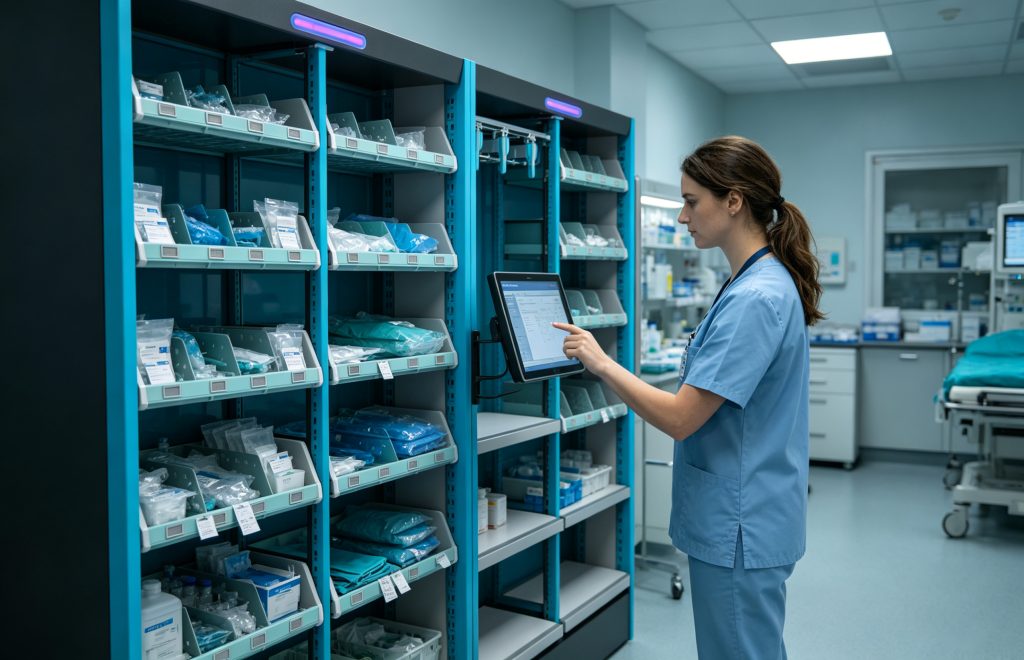
Real-time RFID tracking improves visibility inside hospital supply storage areas.
FAQ About RFID Hospital Systems
What is an RFID hospital system?
An RFID hospital system uses radio frequency identification technology to automatically track medical assets, consumables, and inventory in real time.
Why do hospitals use UHF RFID for consumables?
UHF RFID supports rapid multi-tag reading and longer reading distances, making it ideal for managing large quantities of medical supplies efficiently.
Can RFID reduce hospital inventory errors?
Yes. Automated RFID inventory systems reduce manual registration mistakes and improve traceability accuracy significantly.
Is RFID suitable for operating rooms?
Yes. RFID is widely used in operating rooms for tracking implants, surgical kits, and sterile consumables with real-time visibility.
How fast can RFID cabinets perform inventory?
Cykeo RFID hospital cabinets can complete inventory scanning for hundreds of tagged consumables within approximately 5 seconds.
Conclusion
RFID hospital systems are no longer experimental infrastructure. They are becoming part of the operational foundation of modern healthcare environments.
When consumable visibility improves, hospitals reduce waste, accelerate replenishment, strengthen traceability, and free clinical staff from repetitive inventory work.
Cykeo continues focusing on practical UHF RFID deployment for hospitals because real efficiency gains do not come from complicated software dashboards.
They come from accurate data collected automatically in the background — quietly, continuously, and reliably.
And in healthcare, reliability matters more than presentation.
Explore how RFID gates for library access control integrate RFID readers and RFID antennas to balance security, user experience, and system stability in modern libraries.
how RFID tags work, practical methods to test them using phones or dedicated readers, and their industrial applications. Learn about HF/NFC, UHF, and bulk RFID tag solutions for warehouses, access control, and asset tracking.
Wondering how far a passive RFID reader can read? Learn what really affects RFID read range, including antennas, tags, installation and environmental conditions.
How is RFID used in retail? Discover how RFID improves inventory accuracy, smart checkout, product tracking, and retail automation with Cykeo technology.
 Cykeo RFID IoT Solution Products R&D Manufacturer