 Cykeo RFID IoT Solution Products R&D Manufacturer
how to scan rfid
100how to scan rfid using handheld readers. Learn real-world scanning steps, accuracy tips, and high-efficiency workflows with Cykeo UHF RFID devices.
MoreAll RFID Product
Near field communication rfid enables short-range data exchange, while UHF RFID extends this capability to long-range, high-speed identification, delivering precise and scalable asset tracking across industrial environments.
That’s the straight answer. But in real deployments, especially when combining near-field control with UHF-scale throughput, things get more interesting—and frankly, more practical.
In our lab and warehouse deployments at Cykeo, near field communication rfid is rarely used alone. It becomes powerful when paired with UHF systems.
Take a desktop encoder like CYKEO-D1L. On paper, it’s a near-field device—controlled read/write within 30 cm, stable encoding, minimal interference. In practice, it acts as the “data entry gate” before tags move into UHF environments.
That separation—precision first, scale later—is what reduces system error rates dramatically.
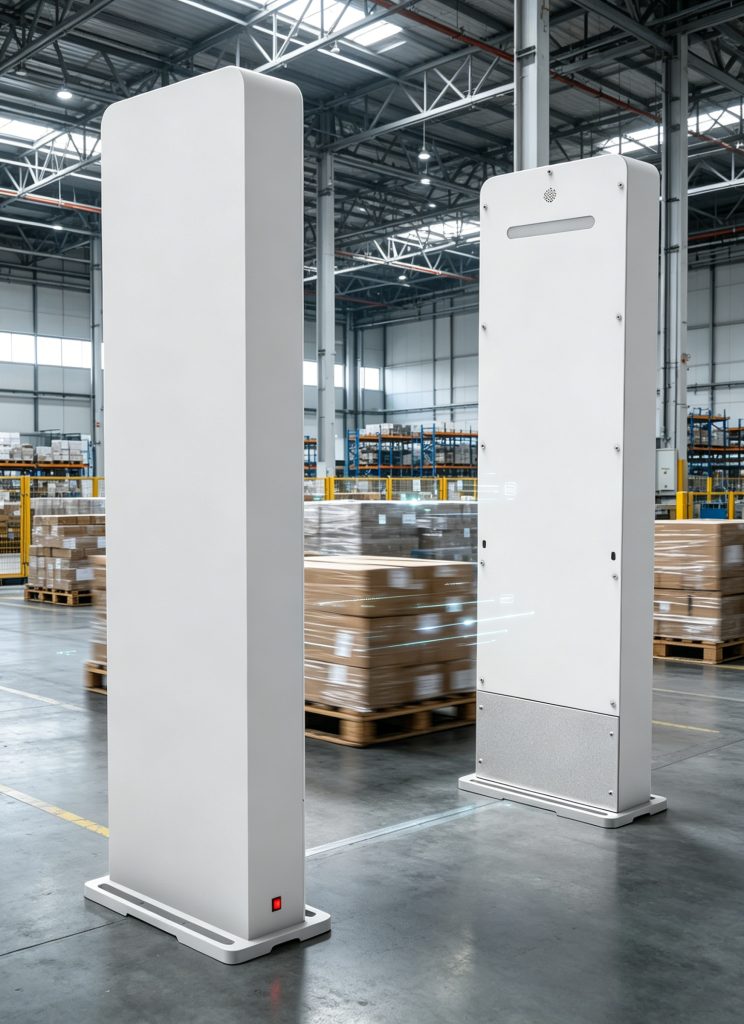
According to GS1 EPCglobal standards, UHF RFID systems can process hundreds of tags per second, while near field communication rfid ensures collision-free encoding accuracy at close range.
RAIN RFID Alliance reports:
These numbers match what we’ve seen in warehouse pilots—especially when combining near field communication rfid encoding with UHF scanning zones.
It’s tempting to skip near-field entirely and rely only on UHF. That usually backfires.
| Function | Near Field Communication RFID | UHF RFID |
|---|---|---|
| Read range | <30 cm | Up to 10–15 m |
| Accuracy | Extremely high | High but environment-dependent |
| Use case | Encoding, authentication | Bulk tracking, inventory |
| Interference | Minimal | Moderate |
Near field communication rfid gives you control. UHF gives you scale.
You need both.
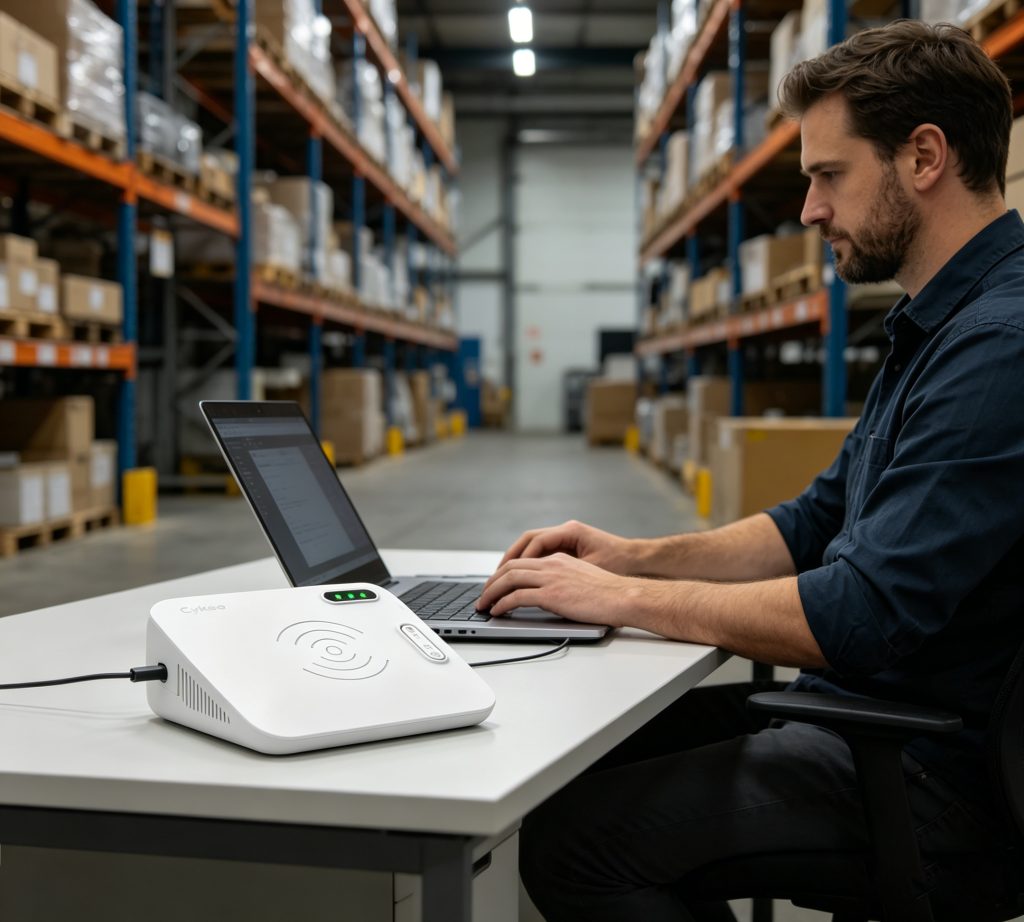
One deployment stands out—a tool management room in a European manufacturing site.
They initially skipped near field encoding. Tags were written using handheld UHF devices. Result?
After introducing a Cykeo desktop near field communication rfid encoder:
Not a theoretical improvement—this was measured over 6 weeks.
Cykeo’s approach is simple: separate precision tasks from scale tasks.
Not exactly. NFC is a subset of HF RFID (13.56 MHz), while near field communication rfid in industrial use refers more broadly to controlled short-range RFID operations.
No. UHF cannot guarantee controlled single-tag encoding without interference. Near field communication rfid is essential for initialization accuracy.
Manufacturing – Healthcare asset tracking – Tool management – Library and archive systems
near field communication rfid isn’t outdated—it’s foundational.
In every high-performing UHF system we’ve deployed, the difference between “working” and “reliable” came down to one thing: whether near-field encoding was done right at the start.
Skip it, and problems show up later.
Use it properly, and the whole system runs quietly, almost invisibly—which is exactly what good RFID should do.
how to scan rfid using handheld readers. Learn real-world scanning steps, accuracy tips, and high-efficiency workflows with Cykeo UHF RFID devices.
More
RFID and healthcare solutions improve medical inventory accuracy, reduce manual workload, and enable real-time UHF tracking for surgical consumables and hospital assets.
More
Discover whether handheld RFID readers can scan through metal or liquid containers. Learn about anti-metal tags, UHF limitations, and best practices for reliable detection.
More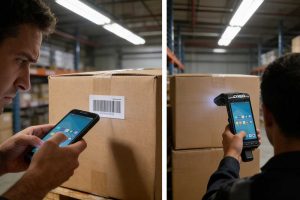
Wondering if you can use your smartphone as a scanner? We explain when a cell phone can read an RFID tag and the major limitations for business use.
More