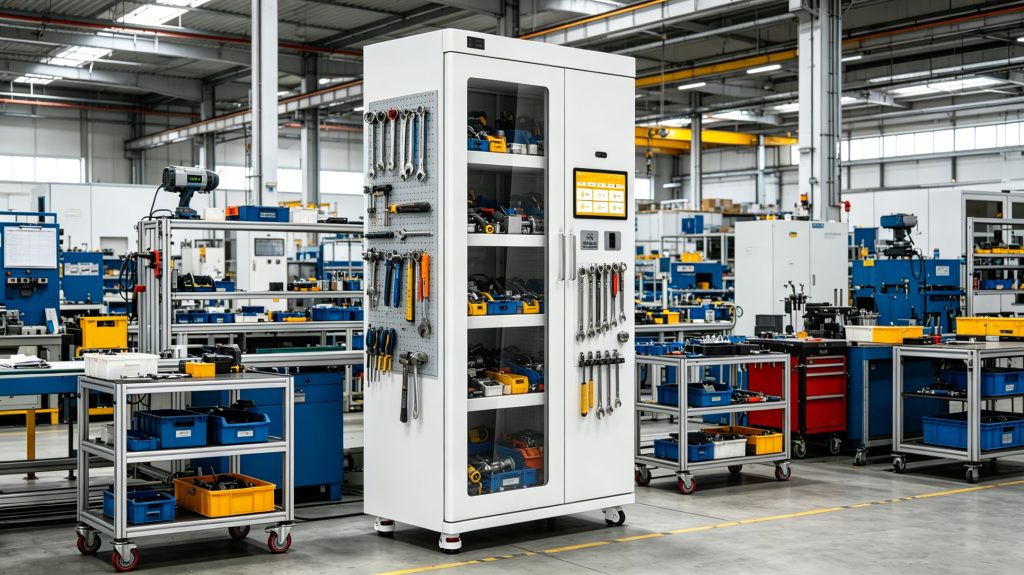
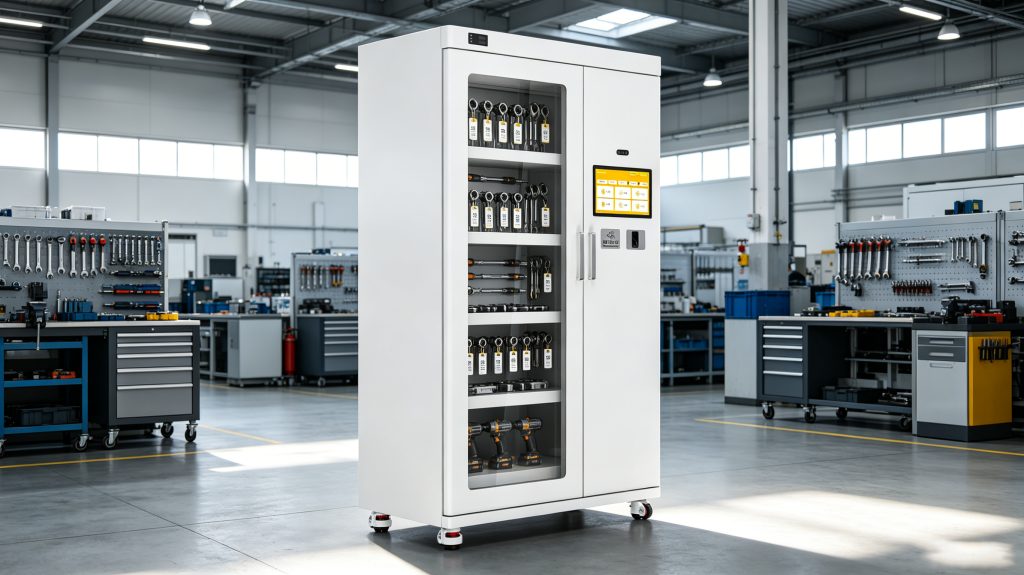
A tool tracker tag is an RFID-enabled identification tag attached to tools and equipment, allowing organizations to monitor location, usage, inventory status, and accountability in real time.
For maintenance teams, manufacturing plants, construction companies, and industrial facilities, misplaced tools are more than a minor inconvenience. They create downtime, delay projects, and increase replacement costs. A properly implemented tool tracker tag system helps eliminate those blind spots by making tools visible throughout their lifecycle.
At Cykeo, our team has participated in RFID deployments involving tool cribs, maintenance workshops, industrial manufacturing sites, and equipment storage facilities. In many cases, the issue wasn’t tool theft. It was simply not knowing where a tool was last used or who checked it out.
What Is a Tool Tracker Tag?
A tool tracker tag is a durable RFID tag designed specifically for tracking tools and equipment.
Unlike standard inventory labels, tool tracker tags are engineered to withstand demanding environments, including:
Oil and grease exposure
High temperatures
Metal surfaces
Vibration
Outdoor conditions
Main Components of a Tool Tracker Tag
Component
Function
RFID Chip
Stores unique identification data
Antenna
Enables wireless communication
Protective Housing
Resists industrial environments
Adhesive or Mounting Method
Secures tag to tool
Management Software
Tracks tool activity
Most industrial tool tracking applications use passive UHF RFID tags because they provide a balance between cost, durability, and read performance.
Why Use a Tool Tracker Tag System?
Tool loss is more common than many organizations realize.
Employees borrow equipment.
Projects move between departments.
Maintenance teams work across multiple locations.
Without visibility, tools gradually disappear into operational blind spots.
Key Benefits
Reduced tool loss
Faster tool audits
Improved employee accountability
Better maintenance scheduling
Increased equipment utilization
Real-time inventory visibility
According to the U.S. National Institute of Standards and Technology (NIST), improved asset visibility and traceability can significantly reduce operational inefficiencies across industrial environments.
The impact becomes especially noticeable in facilities managing hundreds or thousands of tools.
Unlike barcode systems, RFID tags do not require direct line-of-sight scanning.
Multiple tagged tools can be identified simultaneously.
That difference becomes valuable during audits.
Real-World Observation
In one industrial tool room review, technicians spent nearly two hours every week locating missing tools.
After RFID deployment, missing-tool investigations dropped dramatically because the last recorded location was readily available.
The technology itself wasn’t revolutionary.
The visibility was.
RFID technology enables efficient tool management and inventory control.
Tool Tracker Tag vs Traditional Tool Tracking
Many organizations still rely on spreadsheets and manual sign-out logs.
The limitations become apparent as tool inventories grow.
Comparison Table
Feature
Tool Tracker Tag System
Manual Tracking
Real-Time Visibility
Yes
No
Audit Speed
Fast
Slow
Human Error Risk
Low
High
Accountability
Strong
Limited
Scalability
High
Moderate
Labor Requirement
Lower
Higher
The larger the inventory, the greater the difference becomes.
Common Applications for Tool Tracker Tags
Manufacturing Facilities
Track:
Production tools
Calibration equipment
Maintenance assets
Shared resources
Aviation and Aerospace
Monitor:
Precision tools
Safety-critical equipment
Maintenance kits
Tool accountability is especially important in aerospace environments where missing tools can create serious safety concerns.
Construction and Field Service
Manage:
Portable equipment
Power tools
Service kits
Contractor-issued assets
Utilities and Energy Operations
Track:
Inspection equipment
Test instruments
Maintenance tools
According to the RAIN RFID Alliance, RFID technology continues expanding across industrial sectors because it improves asset visibility while reducing manual processes.
Many industrial tools contain metal surfaces that can interfere with radio frequency signals.
Important Selection Factors
Metal compatibility
Environmental durability
Read distance requirements
Mounting method
Temperature resistance
Impact resistance
Common Tag Types
Tag Type
Best Application
On-Metal RFID Tags
Metal tools
High-Temperature Tags
Manufacturing environments
Rugged RFID Tags
Outdoor operations
Compact RFID Tags
Small hand tools
Selecting the proper tag often determines project success more than selecting the reader.
Tool tracker tags improve visibility and accountability for valuable equipment.
Expert Insight From RFID Tool Tracking Projects
Organizations frequently focus on replacing lost tools.
That’s understandable.
Lost tools are visible costs.
The hidden cost is time.
Time spent searching.
Time spent auditing.
Time spent confirming whether a tool is available.
In several deployments, labor savings exceeded the value of the tools being tracked.
That result surprised management teams more than the reduction in losses.
Visibility changes behavior.
When employees know tools are traceable, check-out compliance improves naturally.
FAQ About Tool Tracker Tag
What is a tool tracker tag?
A tool tracker tag is an RFID tag attached to tools and equipment for identification, tracking, and inventory management purposes.
Can RFID tool tracker tags be used on metal tools?
Yes. Specialized on-metal RFID tags are specifically designed for metal tool applications.
What industries use tool tracker tags?
Manufacturing, aerospace, construction, utilities, maintenance operations, and industrial facilities commonly use tool tracker tags.
How durable are tool tracker tags?
Industrial-grade tool tracker tags are designed to withstand harsh environments, including heat, vibration, moisture, and impact.
Do tool tracker tags require batteries?
Most RFID tool tracker tags are passive and do not require batteries, making them low-maintenance and cost-effective.
Conclusion
A tool tracker tag provides a reliable and scalable way to manage tools, reduce losses, and improve operational visibility. Whether deployed in manufacturing, maintenance, construction, or industrial environments, a well-designed tool tracker tag solution helps organizations gain control over valuable equipment while reducing labor-intensive tracking processes.
Is your RFID antenna reading tags in the next room or outside the intended area? Learn the common causes of unstable RFID performance, oversized read zones, and cross-reading, plus practical solutions for gate control and warehouse deployments.
Need a clear answer? Learn what an RFID reader is, how it works in real life, and why businesses use it for tracking and access control. Simple explanations from CYKEO.
Discover the average battery life of handheld RFID scanners and factors that impact longevity. Learn how Cykeo’s solutions optimize power for all-day use.
Can RFID tags be reprogrammed? Learn how EPC and user memory can be rewritten, what lock settings allow, and how Cykeo desktop RFID readers support reliable tag encoding.
 Cykeo RFID IoT Solution Products R&D Manufacturer