Yes. Modern rfid solutions for accurate asset tracking can deliver near real-time visibility of assets, reduce manual counting, improve inventory accuracy, and help organizations locate critical equipment within seconds instead of hours when properly designed and deployed.
In practice, the difference is noticeable almost immediately. During a recent deployment in a European manufacturing facility, I watched maintenance technicians spend less than two minutes locating a tagged calibration tool that previously required a manual search across three production zones. The technology itself was not the breakthrough. The breakthrough was knowing exactly where every tagged asset had been seen last.
Why RFID Solutions for Accurate Asset Tracking Deliver Better Results
Most asset losses are not theft. They are visibility failures.
Organizations often know an asset exists in the system but cannot determine its current location, status, or custodian. RFID closes that gap by automatically capturing asset movement without requiring line-of-sight scanning.
Key Benefits
Real-time asset visibility
Reduced equipment search time
Automated inventory verification
Lower labor costs
Improved compliance records
Faster audits
Reduced asset shrinkage
A field study published in Production and Operations Management found that RFID-enabled visibility reduced inventory record inaccuracies by approximately 26% in participating retail environments.
Another GS1 US and Auburn University RFID Lab pilot reported that RFID-driven supply chain visibility increased order accuracy to nearly 100%, dramatically reducing shipping errors.
Generate alerts for missing or misplaced equipment.
The challenge is not reading tags. The challenge is designing read zones correctly.
I have seen facilities achieve excellent results with only a few carefully positioned portals while others struggled after installing dozens of readers without accounting for metal interference, forklift routes, or asset movement patterns.
Real-World Industries Using RFID Solutions for Accurate Asset Tracking
Manufacturing
Manufacturers use RFID to monitor:
Production tools
Calibration equipment
Returnable transport items
Work-in-process assets
Maintenance inventory
Healthcare
Hospitals commonly track:
Infusion pumps
Wheelchairs
Medical devices
Surgical equipment
Warehousing and Logistics
Warehouse operators track:
Pallets
Containers
Forklifts
High-value inventory
Returnable packaging
According to the U.S. National Institute of Standards and Technology (NIST), RFID systems can automatically read hundreds of tags within seconds and provide real-time tracking information throughout operational processes.
Deployment Lessons from the Field
What Separates Successful RFID Projects from Failed Ones
After working with RFID deployments across industrial environments, several patterns appear repeatedly.
Successful projects focus on:
Clearly defined business objectives
Strategic reader placement
Proper tag selection
Software integration planning
Environmental testing
Failed projects often assume RFID is a plug-and-play solution.
Metal structures, liquids, dense shelving, and poorly positioned antennas can significantly affect read performance. NIST researchers and multiple RFID tracking studies have identified interference and multipath effects as major factors influencing tracking accuracy.
The best-performing installations typically begin with a site survey before any hardware is purchased.
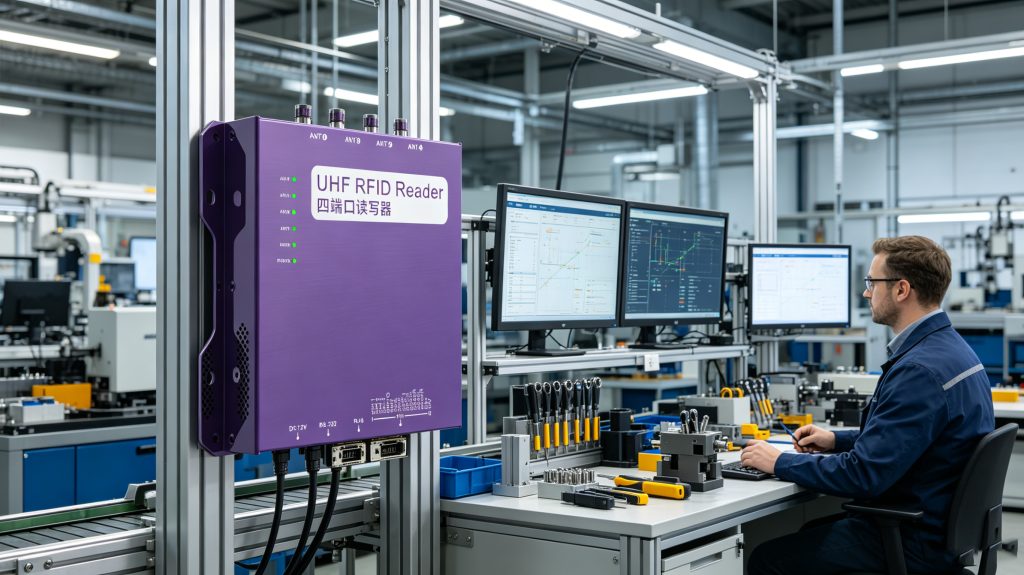
Real-time RFID asset tracking enables manufacturers to locate tools, equipment, and production assets instantly.
RFID vs Traditional Barcode Asset Tracking
Feature
RFID
Barcode
Line of Sight Required
No
Yes
Bulk Reading
Yes
No
Real-Time Visibility
Yes
Limited
Automation Level
High
Moderate
Labor Requirement
Low
High
Tracking Speed
Seconds
Minutes or Hours
This does not mean RFID replaces barcodes everywhere.
For low-value assets and infrequent audits, barcodes may still be sufficient. RFID becomes economically attractive when organizations manage thousands of assets or require continuous visibility.
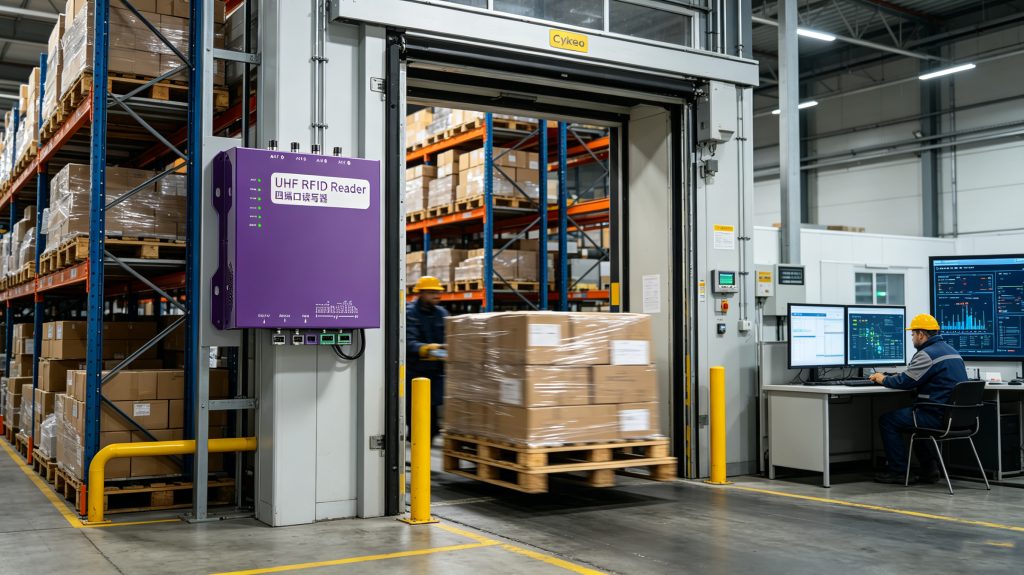
RFID portals automatically capture pallet and asset movement without manual scanning.
Choosing the Right RFID Solution
Selection Checklist
Before selecting an RFID system, evaluate:
Asset type
Asset value
Tracking range requirements
Indoor or outdoor environment
Integration requirements
Existing ERP or WMS compatibility
Future scalability
For most industrial environments, UHF RFID remains the preferred choice because it provides long read ranges and supports large-scale asset management applications.
Cykeo RFID solutions are designed specifically for these operational environments, supporting asset visibility, inventory automation, and industrial IoT integration requirements.
FAQ: RFID Solutions for Accurate Asset Tracking
How accurate are RFID asset tracking systems?
Accuracy depends on system design, environment, and tag placement. Properly engineered RFID deployments can achieve very high read rates and significantly improve inventory accuracy compared with manual methods.
Can RFID track assets in real time?
Yes. Fixed readers continuously capture tag events, allowing software platforms to display near real-time asset locations and movement history.
What industries benefit most from RFID asset tracking?
Manufacturing, healthcare, logistics, warehousing, construction, energy, and transportation sectors typically achieve the strongest returns.
Is UHF RFID suitable for large facilities?
Yes. UHF RFID is widely used in large warehouses, production facilities, and distribution centers because of its extended read range and scalability.
Why choose Cykeo RFID solutions?
Cykeo provides industrial-grade RFID hardware designed for reliable asset visibility, inventory automation, and long-term deployment in demanding operational environments.
Final Answer
rfid solutions for accurate asset tracking provide measurable improvements in visibility, inventory accuracy, and operational efficiency when deployed correctly. Organizations that combine high-quality RFID hardware, proper system design, and process integration consistently achieve faster asset recovery, lower labor costs, and more reliable asset data across their operations.
Learn how RFID retail inventory antenna systems improve shelf monitoring and warehouse inventory accuracy. Discover practical RFID shelf zone control methods and smart inventory solutions for retail and distribution centers.
Learn what RFID cable tie tags are, how they work, and why industries use them for asset tracking, cable management, and inventory control. A practical guide for buyers and engineers.
How RFID asset management improves accuracy, reduces ghost assets, and simplifies audits. Learn the workflow, benefits, and real-world tips for successful implementation.
Learn how to read RFID data correctly. We detail the messy reality of raw data streams and the crucial steps to filter and use them in your business. Get the full process.
 Cykeo RFID IoT Solution Products R&D Manufacturer