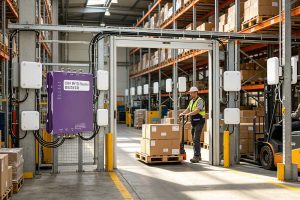
A radio frequency tracking system uses ultra high frequency RFID technology to automatically identify, monitor, and manage tagged assets in real time, improving inventory accuracy and operational efficiency.
A few years ago, during a warehouse audit project, I watched two supervisors spend nearly four hours searching for missing reusable containers that had already left the facility.
The strange part?
The inventory software showed the containers were still inside.
The problem was not software.
It was visibility.
Nothing was automatically recording movement between loading zones, temporary staging areas, and outbound trucks. Workers relied on manual barcode scans, and once the pace increased, people skipped steps.
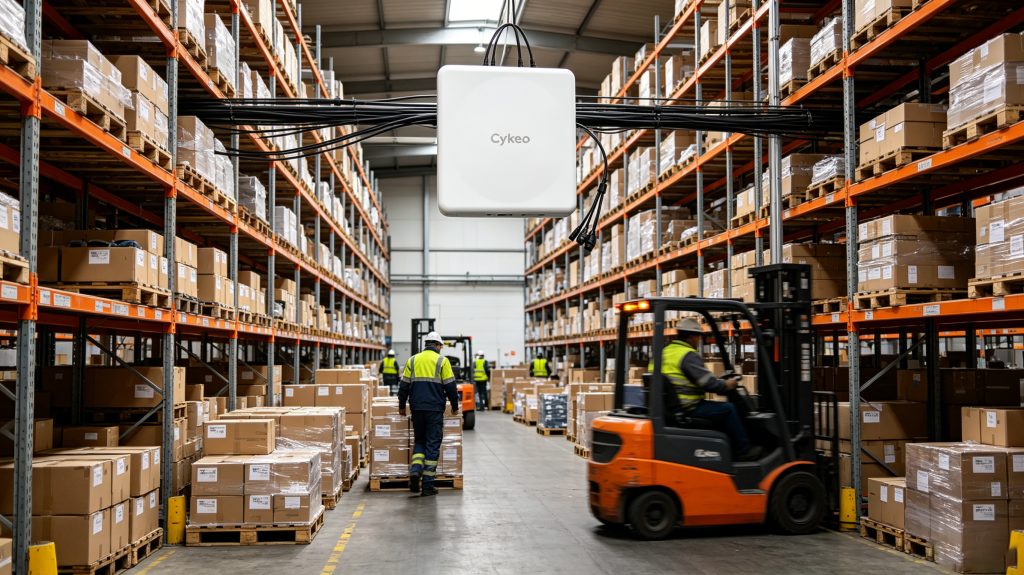
That project later adopted a Cykeo ultra high frequency radio frequency tracking system with fixed RFID readers installed above warehouse passageways.
The effect was immediate.
Forklifts moved naturally.
Inventory updated automatically.
No one stopped to scan anything.
And for the first time, the warehouse manager trusted the movement data.
What Is a Radio Frequency Tracking System?
A radio frequency tracking system uses RFID readers, rfid antennas, and electronic tags to identify assets wirelessly without direct line-of-sight scanning.
Unlike barcode systems, RFID tracking allows:
Automatic asset recognition
Multi-tag reading
Long-distance identification
Real-time movement tracking
Reduced manual labor
Modern ultra high frequency RFID systems are widely used in:
Industry
RFID Tracking Usage
Warehousing
Inventory automation
Manufacturing
Work-in-progress tracking
Healthcare
Medical asset management
Retail
Stock visibility
Logistics
Pallet and shipment monitoring
Libraries
Automated circulation control
The difference becomes obvious in fast-moving environments.
Barcode systems depend on worker behavior.
RFID systems depend on infrastructure.
That changes reliability completely.
Why Ultra High Frequency RFID Matters
Ultra high frequency RFID supports faster reading speed and longer detection range than low-frequency systems.
According to RAIN Alliance, UHF RFID technology enables simultaneous reading of many tags without line-of-sight alignment, making it highly effective for logistics and inventory automation.
In real warehouses, this means:
Entire pallets scanned automatically
Faster inbound and outbound processing
Reduced labor dependency
Fewer inventory discrepancies
One logistics customer once described the upgrade perfectly:
“We stopped chasing inventory.”
That sentence sounds simple, but operationally, it matters a lot.
Real Operational Experience With RFID Tracking
One deployment involved an industrial spare-parts warehouse with more than 18,000 tagged assets.
Before RFID deployment, monthly inventory counting required an entire weekend shutdown.
After installing ceiling-mounted Cykeo RFID readers and automated zone detection, inventory checks became continuous instead of periodic.
That changes behavior inside a warehouse.
Employees stop treating inventory as a separate task.
The system quietly maintains visibility in the background.
There was another unexpected improvement too.
Managers discovered how often assets stayed idle in temporary holding zones.
RFID tracking exposed operational bottlenecks no spreadsheet had previously shown.
That kind of operational visibility is difficult to quantify until you see it happen live.
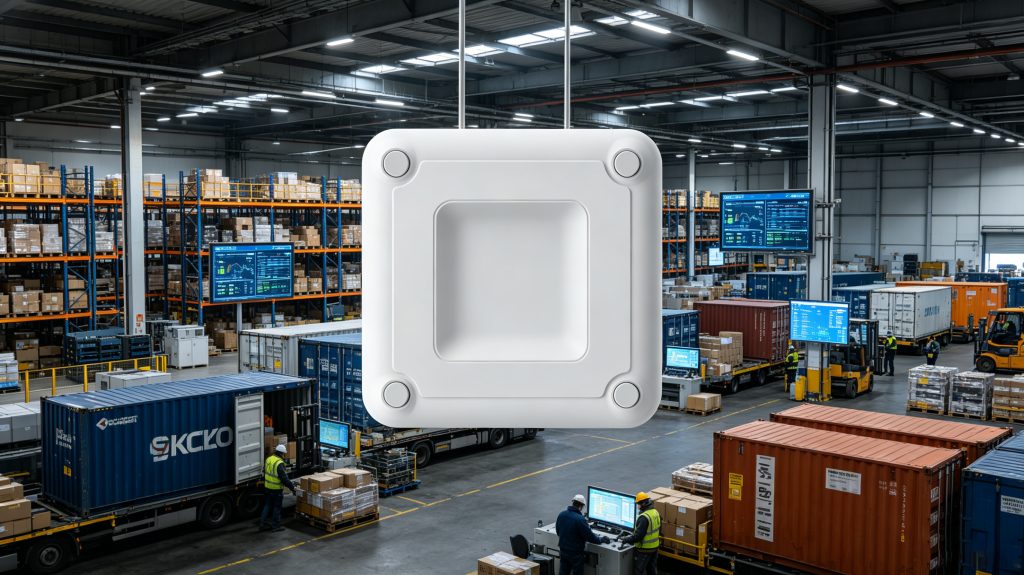
Cykeo RFID tracking systems automate warehouse visibility and inventory movement monitoring.
Key Features of Cykeo Radio Frequency Tracking Systems
Long-Range UHF Identification
Cykeo systems support long-distance RFID reading for automated warehouse and industrial tracking.
Intelligent Multi-Tag Recognition
Advanced anti-collision algorithms allow simultaneous identification of multiple RFID tags.
Automated Inventory Recording
Movement records are generated automatically without manual scanning.
Ceiling-Mounted Integrated Design
Integrated antenna and reader architecture simplifies deployment while saving space.
Real-Time Alarm Capability
Integrated sound and light alarms can detect unauthorized tagged asset movement.
Industry Statistics Supporting RFID Adoption
According to McKinsey & Company Supply Chain Research, advanced digital tracking technologies can significantly improve inventory accuracy and operational transparency across supply chains.
Another study from GS1 US RFID Resources notes that RFID deployments frequently improve inventory visibility levels beyond traditional manual tracking methods.
Those numbers look impressive on paper.
But operationally, the most important improvement is usually simpler:
People stop arguing about where things are.
Automated RFID tracking improves warehouse accuracy while reducing manual scanning workload.
FAQ
What is a radio frequency tracking system?
A radio frequency tracking system uses RFID technology to automatically identify and track tagged assets without direct scanning.
What industries use RFID tracking systems?
Warehousing, manufacturing, healthcare, logistics, retail, and libraries commonly use RFID tracking systems.
Why is UHF RFID preferred for inventory tracking?
Ultra high frequency RFID supports long-range reading and simultaneous multi-tag identification, making it ideal for fast-moving inventory environments.
Can RFID systems reduce inventory errors?
Yes. Automated RFID tracking reduces missed scans and improves inventory visibility compared with manual barcode workflows.
Final Thoughts
Radio frequency tracking systems are no longer experimental infrastructure.
They have quietly become operational necessities in environments where inventory speed, visibility, and accuracy directly affect profitability.
The interesting part is that successful RFID deployments rarely feel dramatic after implementation.
Instead, operations simply become calmer.
Inventory disputes decrease.
Search time drops.
Movement records become trustworthy.
And eventually, teams stop thinking about the tracking system entirely because it becomes part of the environment itself.
RFID Industry Writer | IoT & Asset Tracking Analyst
James writes about RFID technology, asset tracking, and the practical challenges of digital transformation across warehousing, retail, manufacturing, and logistics.
His work focuses on how RFID is applied in real-world operations—improving inventory visibility, automating workflows, and helping businesses manage assets with greater accuracy and efficiency.
He regularly covers topics including UHF RFID, smart cabinets, RFID portals, tool tracking, warehouse automation, and industrial IoT trends..
CYKEO forklift mounted RFID reader designed for software developers integrating real-time warehouse systems. High-speed RFID forklift reader with Ethernet, RS-232 and optional Wi-Fi, built for mobile forklift deployment and dense tag environments.
A long range RFID scanner can significantly speed up warehouse inventory by identifying multiple UHF RFID tags at once. Reliable results depend on tag placem...
Learn how to use an RFID card reader effectively for access control and identification. Our guide covers installation, card presentation, configuration, and system integration.
How to use RFID card: Match the card with a compatible reader, present it within the operating field, and verify that the connected system processes the corr...
 Cykeo RFID IoT Solution Products R&D Manufacturer