All RFID Product

What Is an RFID Tool Tracking System? From Smart Cabinets to Full Industrial Solutions

If you’ve ever managed tools across a workshop, factory, or job site, you already know the problem.

Tools go missing. Inventory takes forever. And no one really knows who took what.

That’s exactly where an RFID tool tracking system starts to make sense.

What is RFID tool tracking system?

At its simplest, an RFID tool tracking system is designed to identify, track, and manage tools automatically within a defined area.

Instead of manual checklists or barcode scanning, each tool is tagged. Once tagged, it can be detected, logged, and tracked without direct line of sight.

This applies to everything from small surgical tools to large industrial equipment.

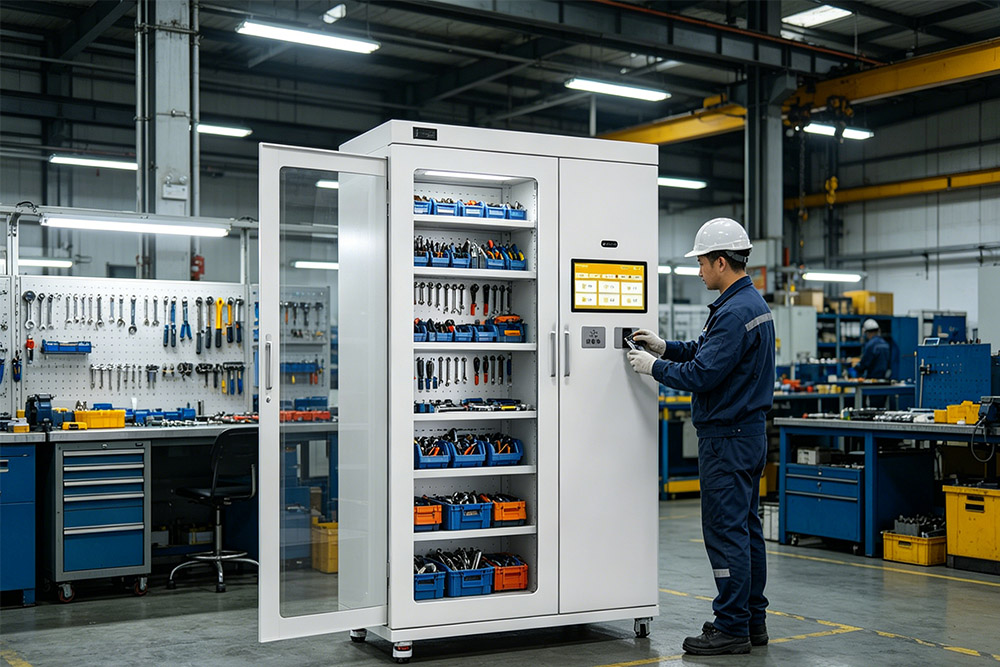
rfid tool cabinet used for tool tracking in industrial environment

Where RFID tool tracking is actually used

This isn’t a niche solution anymore. It’s already widely used in:

  • Manufacturing plants
  • Construction companies
  • Tool rental businesses
  • Hospitals and maintenance teams

Anywhere tools are shared, moved, or frequently lost, RFID tends to pay for itself pretty quickly.

Two common ways to build a tool tracking system

Most systems fall into two setups:

1. Fixed systems (most common)

Fixed RFID systems are installed in:

  • Rooms
  • Shelves
  • Tool cabinets
  • Entry/exit points

They can automatically track tools continuously or when triggered (like when a cabinet door opens).

This is where RFID smart tool cabinets come in.

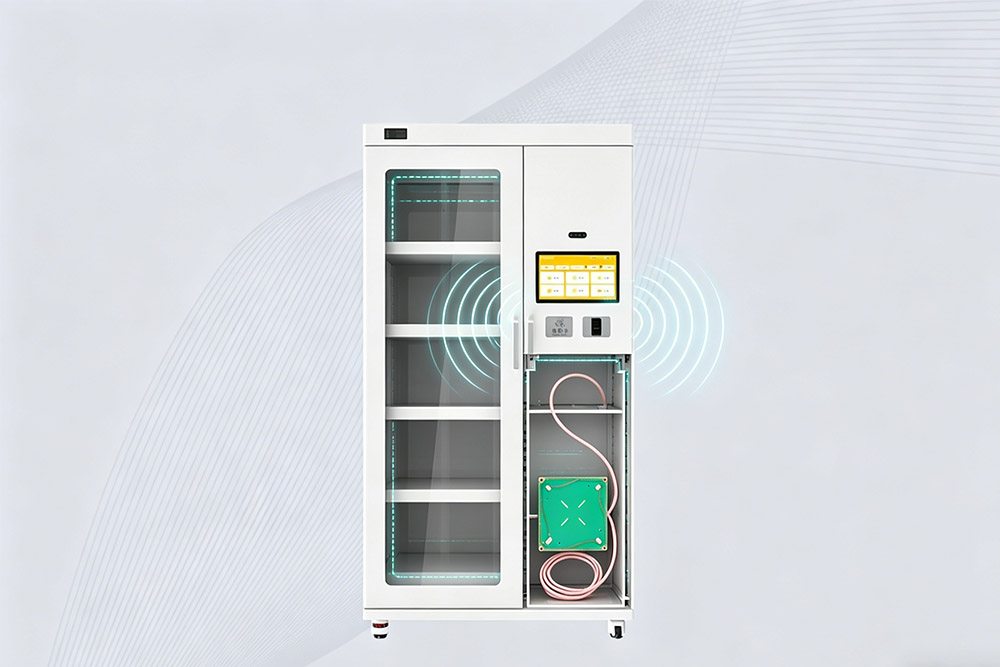
rfid antenna placement inside tool cabinet for accurate tracking

A cabinet-based system gives you a controlled read zone, which means:

  • More accurate reads
  • Clear check-in / check-out records
  • Better accountability

2. Handheld systems

Handheld readers are used for:

  • Periodic inventory
  • Finding missing tools
  • Field operations

They’re flexible, but rely on people to do the scanning.

That’s why most real projects combine both fixed + handheld.

What kind of data can you actually get?

Once everything is tagged, the system can track:

  • Who took the tool
  • When it was removed
  • When it was returned
  • Usage history
  • Maintenance records

This is where RFID really starts to outperform traditional methods.

How RFID tool cabinets fit into the system

A smart tool cabinet isn’t just storage—it’s the core of a controlled tracking system.

Inside the cabinet:

  • Tools are automatically identified
  • Inventory updates in real time
  • Access can be restricted by user

It essentially acts as a mini RFID system in one unit.

The key part most suppliers don’t explain: integration

A lot of people think a tool cabinet is just a box with RFID.

It’s not.

A working system depends on how these parts are integrated:

1. RFID antennas (coverage layer)

Inside a tool cabinet, antennas are responsible for creating a read zone.

They are usually:

  • Embedded in shelves
  • Mounted on cabinet sides
  • Tuned for short-range precision

The goal is simple:
👉 Only read tools inside the cabinet, nothing outside

Without proper antenna design, you’ll get missed reads or false reads.

2. RFID reader module (processing layer)

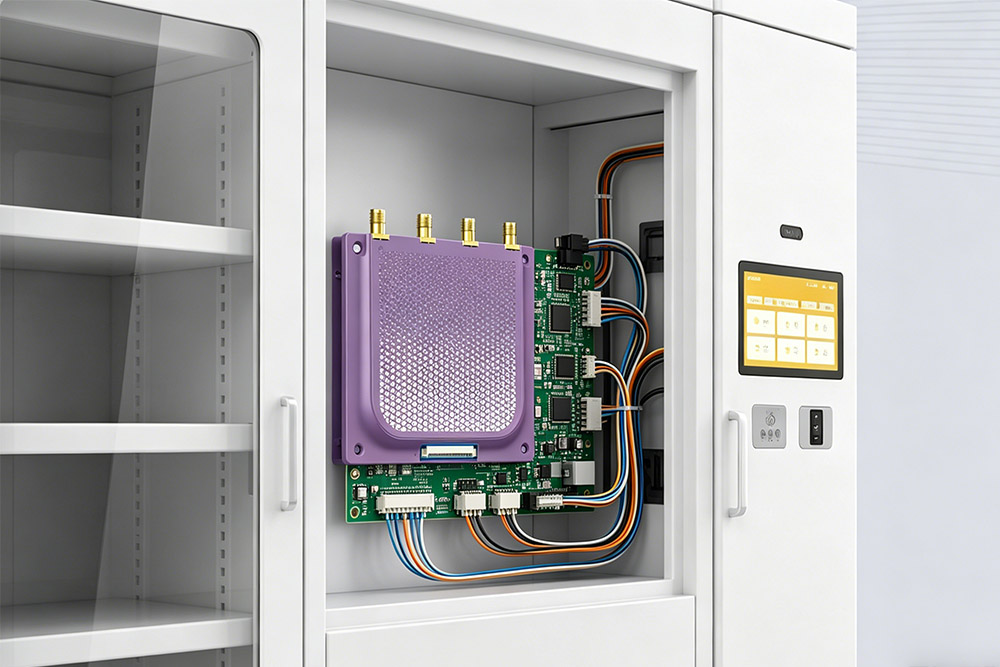
The module is the core that:

  • Powers the antennas
  • Reads tag data
  • Sends data to the system
rfid reader module integrated into smart tool cabinet system

For OEM or bulk projects, this is where customization happens.

3. Cabinet structure (control layer)

The cabinet itself:

  • Defines the read zone
  • Controls access (lock systems)
  • Triggers reading events (door open/close)

4. Software (data layer)

This is where everything connects:

  • Tool usage logs
  • Employee tracking
  • Maintenance schedules

Why companies invest in RFID tool tracking

The biggest return usually comes from one thing:

Not losing tools anymore

But there’s more:

  • Faster inventory (minutes instead of hours or days)
  • Better accountability
  • Predictive maintenance
  • Less downtime

Real-world challenges

From actual deployments, a few issues come up often:

Metal interference

Most tools are metal, which affects RFID signals.
→ Solution: use on-metal tags and proper antenna tuning

Small tools

Not much space for tags
→ Use specialized small RFID tags

Harsh environments

Heat, pressure, heavy use
→ Choose industrial-grade tags and mounting methods

Final thoughts

An RFID tool tracking system isn’t just about tagging tools.

It’s about building a system where:

  • The cabinet controls the environment
  • The antennas define the read zone
  • The module handles the data

Get those three working together, and the rest becomes much easier.

RFID Tool Tracking System Guide
PgUp:

Relevance

View more