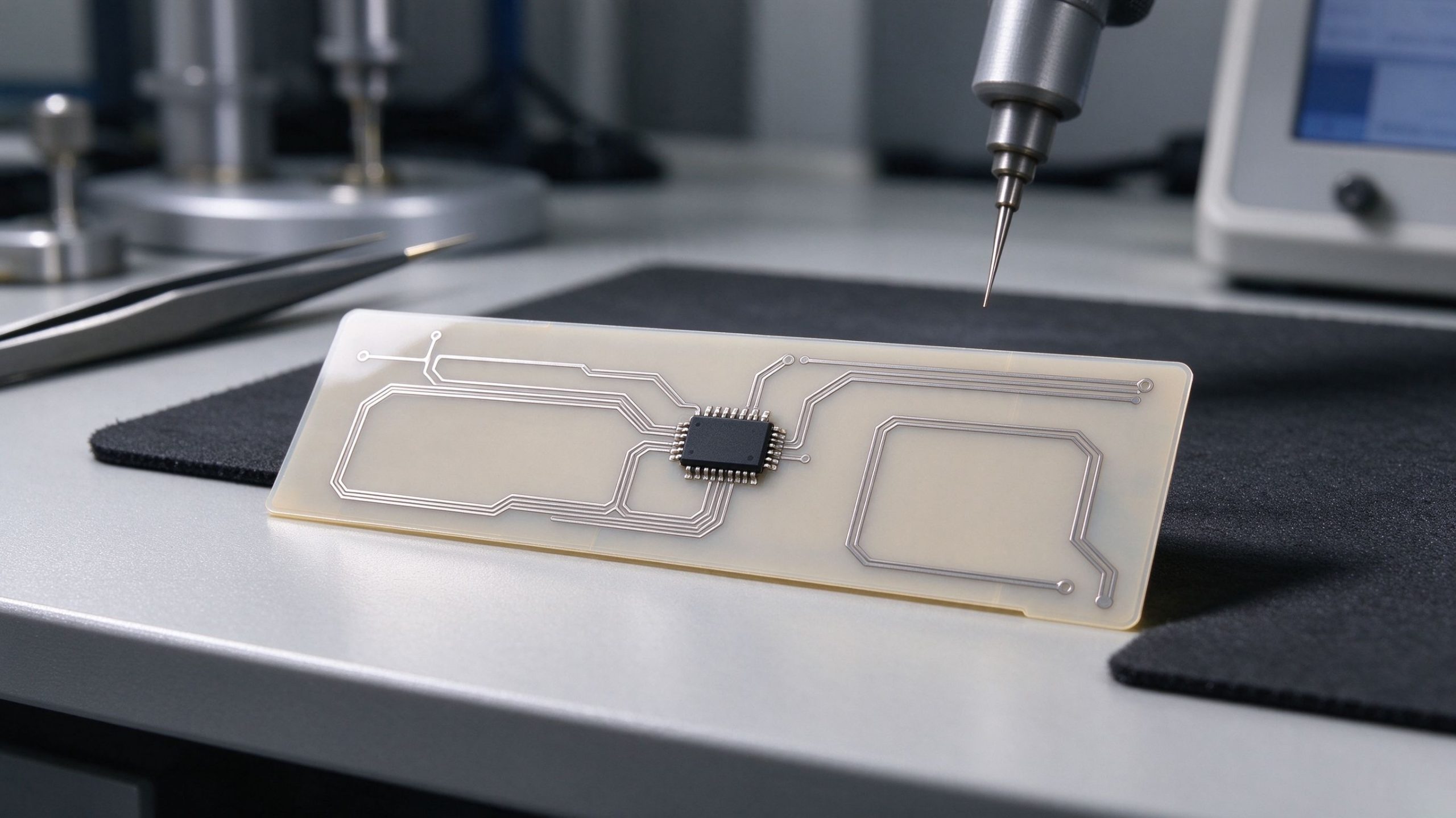
was ist ein rfid chip? An RFID chip is a small integrated circuit that stores identification data and communicates with an RFID reader through a connected antenna. It is the electronic component inside an RFID tag, enabling objects such as products, cards, tools, and packages to be identified wirelessly.
The chip is only one part of the system. It does not normally work like a miniature computer with its own independent network connection. In many common applications, especially passive UHF RFID, the chip receives energy from the reader’s radio-frequency field and returns stored data through the tag antenna.
That distinction is important when evaluating RFID products. The chip handles data and communication logic; the antenna determines much of how the tag interacts with the reader; and the tag’s physical construction determines how well the complete assembly performs when attached to a real object.
What Is an RFID Chip Made Of?
An RFID chip is a semiconductor integrated circuit designed for radio-frequency identification. It contains electronic circuits that manage communication with a reader and, depending on the chip, memory for storing identification data and other information.
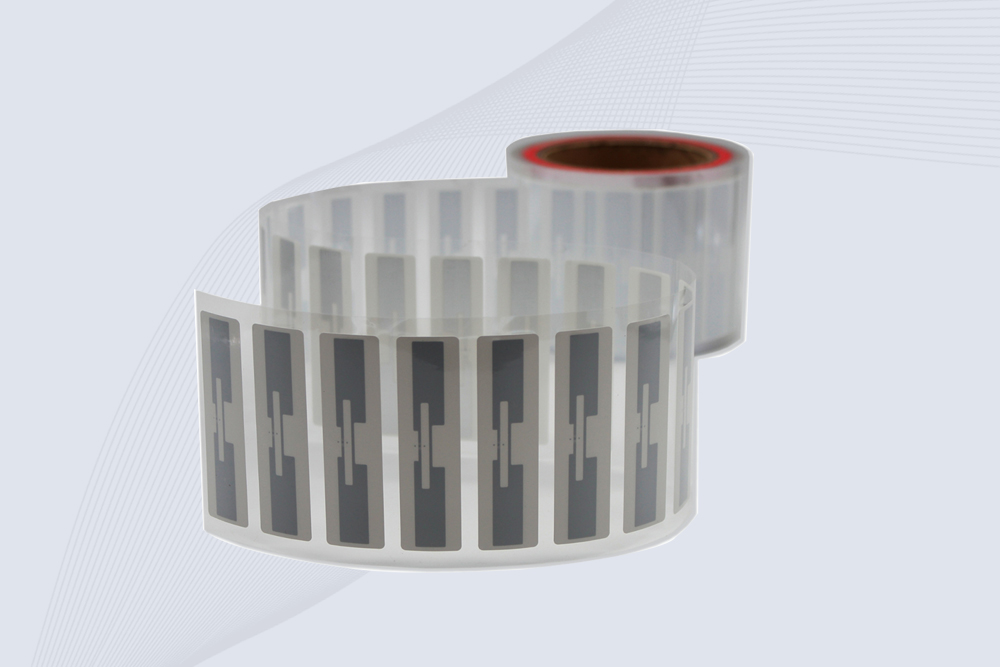
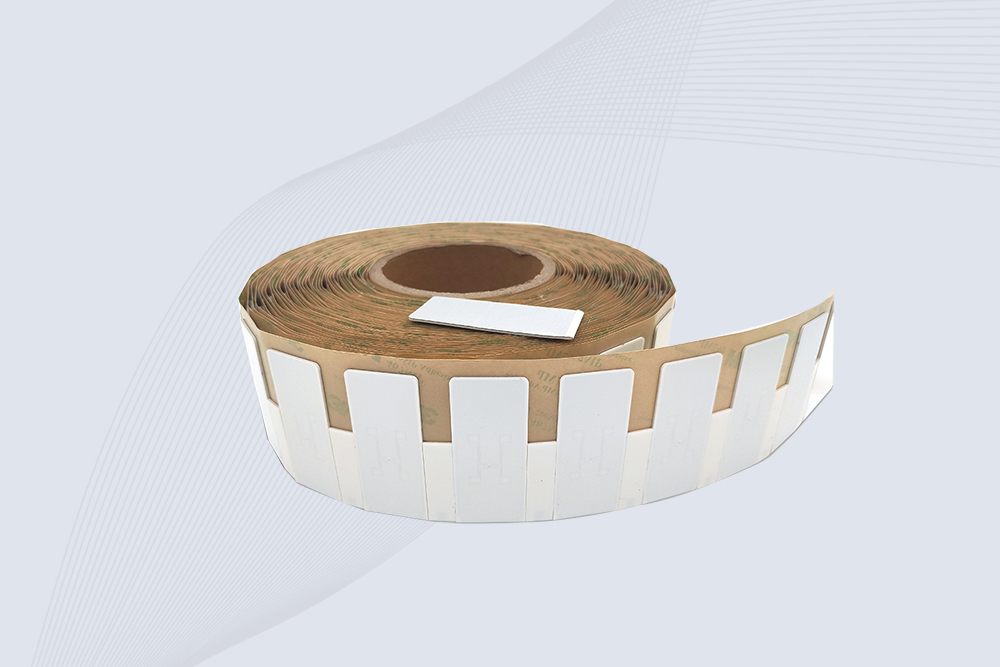
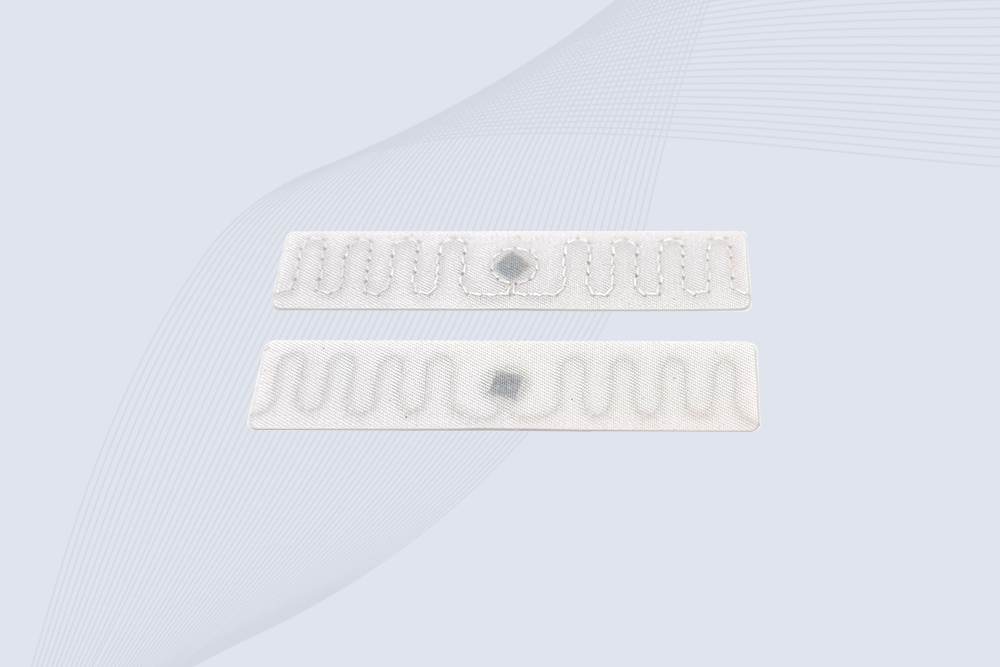
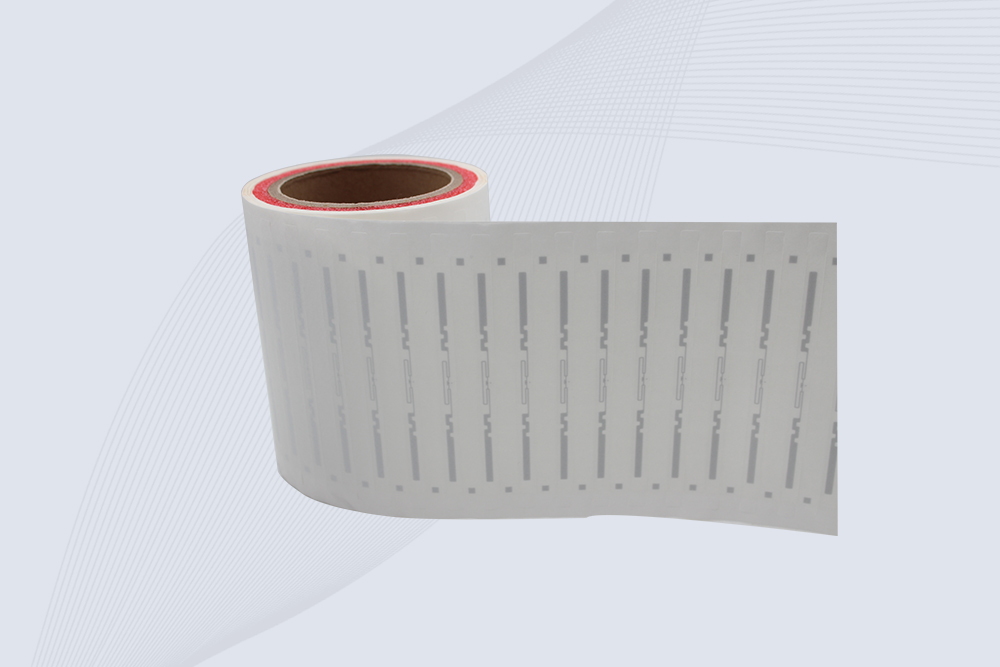
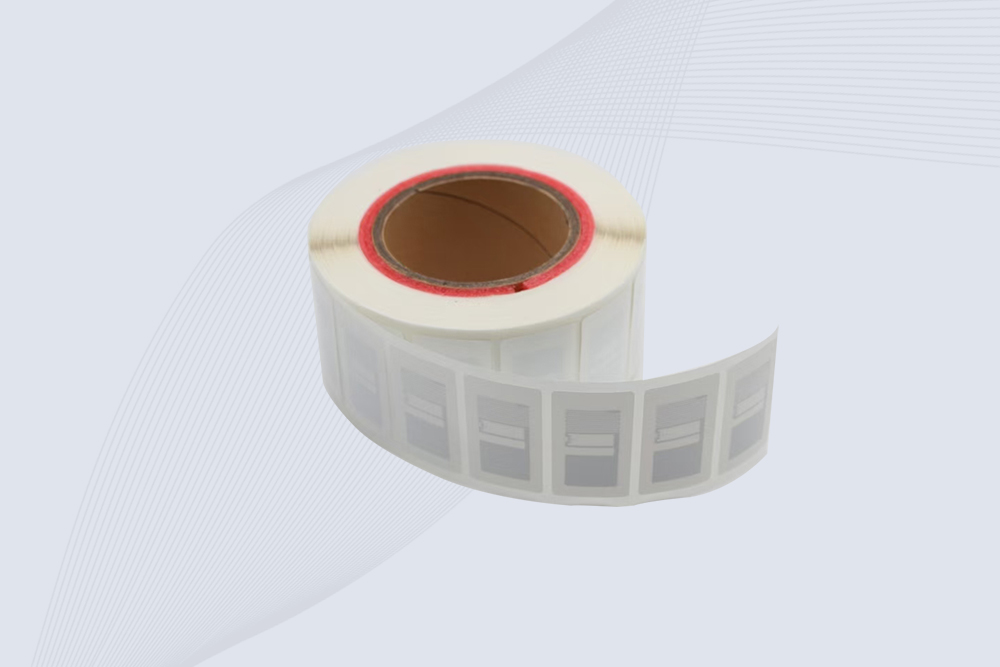
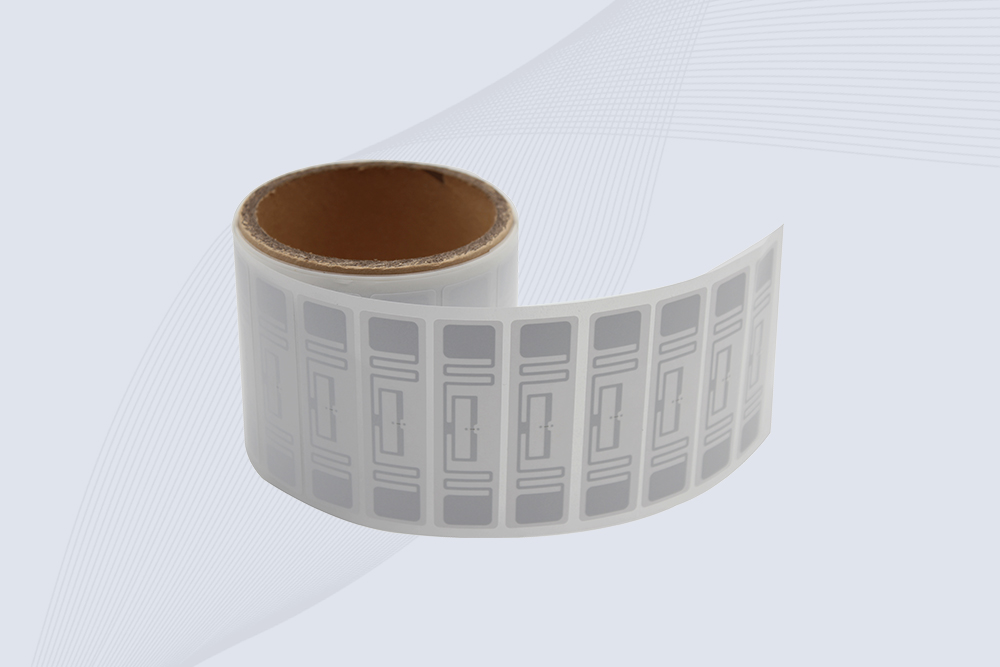
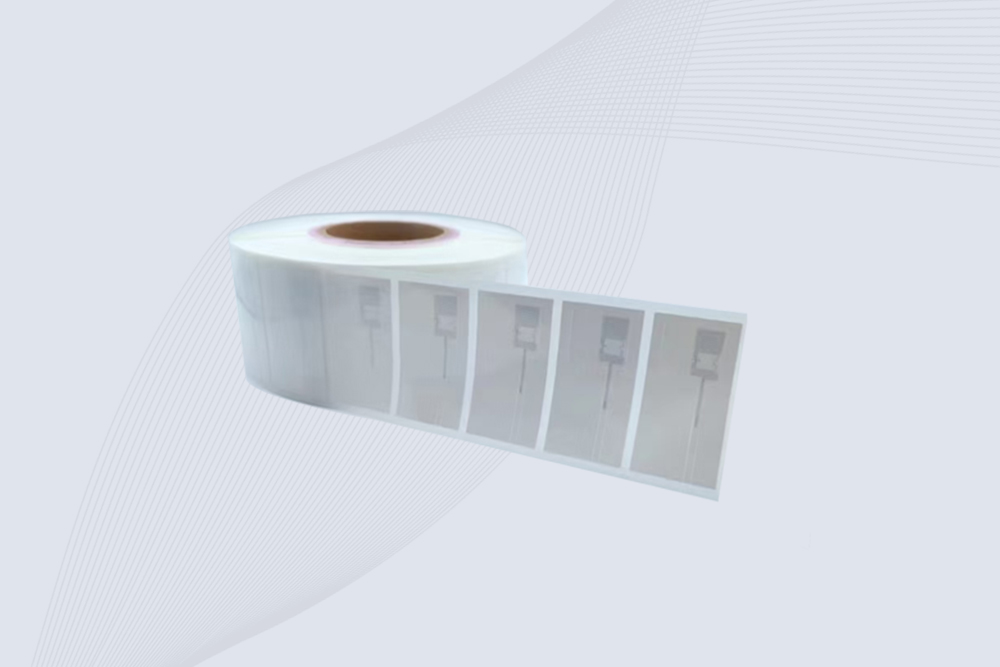
In a typical passive RFID tag, the chip is electrically connected to a small antenna. The chip and antenna are assembled into an inlay, which can then be incorporated into a label, card, hard tag, or other housing.
The main elements are:
Integrated circuit (IC): Processes commands and manages the tag’s stored information.
Memory: Holds an identifier and, where supported, additional user or application data.
RF interface: Handles the radio-frequency communication between the chip and reader.
Antenna: Receives the reader’s signal and enables the tag to return its response.
Substrate or housing: Supports and protects the chip and antenna in the finished tag.
GS1 describes an RFID tag as a microchip attached to an antenna. The antenna enables the chip to communicate identification information to a reader, which converts the received signal into digital data for computer systems.
The Chip Is Not the Whole RFID Tag
This is one of the most common points of confusion in RFID purchasing. People sometimes use the words RFID chip, RFID tag, and RFID card as if they refer to the same component. They are related, but not identical.
Term
What it refers to
RFID chip
The integrated circuit that processes communication and stores data
RFID antenna
The conductive structure that receives and returns radio-frequency signals
RFID inlay
The chip-and-antenna assembly, usually supported by a substrate
RFID tag
The complete identification component, which may include an inlay and protective material
RFID card
A card-shaped product containing an RFID inlay or chip-and-antenna assembly
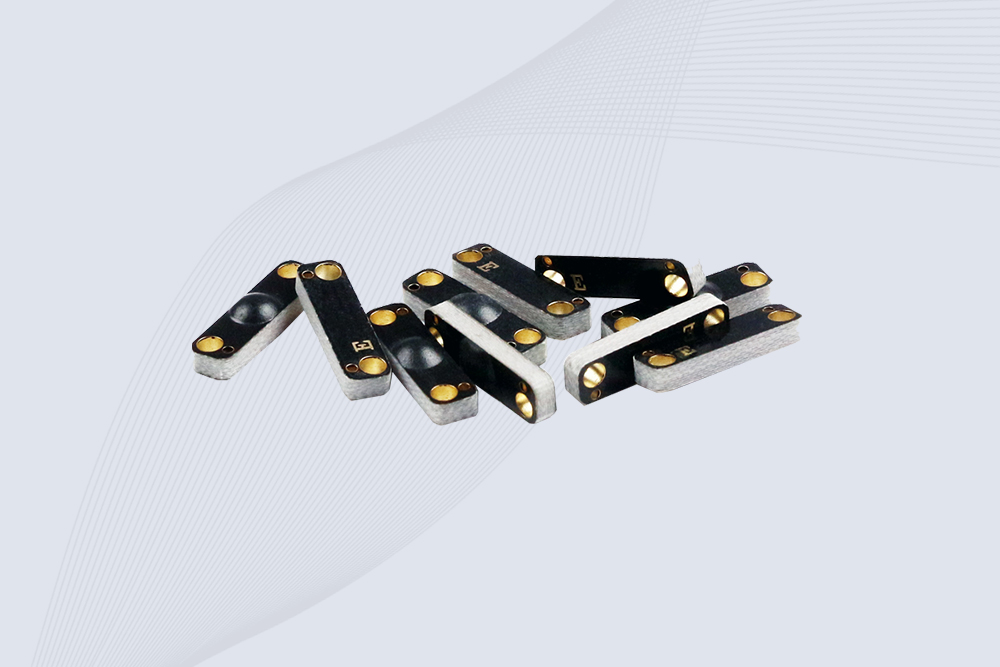
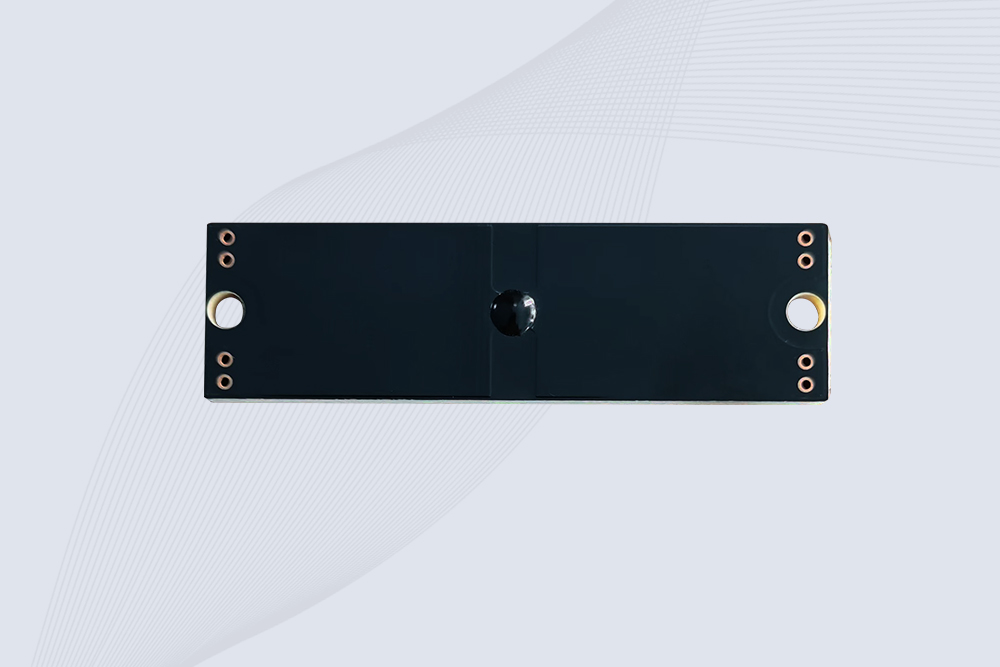
A thin retail RFID label and a rugged industrial RFID tag may use the same general principle, but their physical construction can be very different. One is designed to be inexpensive and attached to packaging. The other may need a protective housing, mechanical strength, or an antenna designed for mounting on a metal surface.
The RFID chip processes identification data while the antenna enables wireless communication with a reader.
How Does an RFID Chip Work?
An RFID chip communicates with a reader using radio-frequency signals. The exact method depends on the RFID technology, but passive RFID provides a useful example because it is widely used for product labels, warehouse identification, and logistics.
In a passive system, the reader transmits an electromagnetic signal through its antenna. The RFID tag antenna receives energy from this field. That energy powers the chip’s circuitry, allowing it to process the reader’s command and respond with stored information.
For passive UHF RFID, the response is commonly sent using backscatter. Rather than generating its own independent radio transmission, the tag changes the way its antenna reflects the incoming signal. The reader detects and decodes these changes.
GS1’s explanation of RFID describes this reader-powered operation: passive tags obtain their operating energy from the reader’s field and communicate by modulating the reflected signal.
What Happens During a Chip Read?
A typical passive UHF identification sequence looks like this:
Reader transmission: The reader sends a radio-frequency signal through its antenna.
Energy reception: The RFID tag antenna receives energy from the field.
Chip activation: The chip obtains enough power to operate its communication circuits.
Command processing: The chip interprets the reader’s request.
Data response: The chip returns the requested information through the antenna.
Reader decoding: The reader converts the response into digital data.
Application processing: Software matches the identifier to a product, asset, or other record.
The process happens quickly, but a successful read is not guaranteed simply because a tag is nearby. The chip must receive sufficient energy, and the antenna must be positioned and designed appropriately for the operating frequency.
For example, a passive UHF tag attached directly to an unsuitable metal surface may perform poorly even if the chip itself is fully functional. In that situation, the issue may be the antenna’s interaction with the mounting surface rather than a defective chip.
What Information Can an RFID Chip Store?
An RFID chip can store identification data and, depending on its memory design, additional information. The amount and organization of memory vary by chip family and RFID protocol.
In many UHF systems based on EPC Gen2, tag memory is organized into defined banks. These commonly include:
Reserved memory: Used for security-related information such as access and kill passwords, where supported.
EPC memory: Stores the Electronic Product Code or other encoded identifier.
TID memory: Contains tag identification information associated with the chip or tag manufacturer.
User memory: Optional memory for application-specific data, if provided by the chip.
Not every tag has the same memory capacity or features. Some are designed mainly to carry a serialized identifier. Others provide additional user memory or functions for particular applications. The exact memory map should be checked against the chip and tag datasheets.
A practical design decision is whether the tag needs to store detailed product information or only an identifier that points to a database record. For large inventory systems, storing a compact unique identifier on the tag and keeping detailed product records in business software is often easier to manage. Product descriptions, prices, supplier information, and stock status can change without requiring every tag to be rewritten.
GS1’s EPC/RFID resources explain how EPC identifiers are encoded and used to identify individual trade items and other objects.
Where Are RFID Chips Used?
RFID chips are used in products and equipment that need to be identified without relying on direct optical scanning. Their applications range from inexpensive disposable labels to durable tags used in industrial environments.
Retail Products and Clothing
Retailers commonly use passive UHF RFID chips in product labels. A serialized identifier can distinguish one physical item from another, even when many items share the same product model, colour, and size.
For example, two shirts may have identical product descriptions but different serialized RFID identifiers. A reader can capture those identifiers during stocktaking, receiving, or replenishment. The inventory application then uses the identifiers to update the corresponding item records.
Warehousing and Logistics
In warehouses, RFID chips can be embedded in labels attached to cartons, pallets, or reusable containers. Fixed readers can identify tagged goods at receiving points, conveyor checkpoints, and dispatch areas.
The operational benefit comes from connecting each read to a defined event. A tag detected at a receiving station may indicate that an item has arrived, while a tag detected at a dispatch checkpoint may support shipment verification. Software rules are needed to distinguish a genuine movement event from an incidental read.
Access Cards and Identification
RFID chips are also used in contactless cards and credentials. Depending on the technology, a card may store an identifier or support more advanced memory and security functions.
These systems are used in building access, employee identification, transport ticketing, and other applications. Security depends on more than the presence of an RFID chip: the chip type, authentication method, reader configuration, credential management, and system design all matter.
Industrial Tools and Equipment
Industrial RFID tags can be attached to tools, equipment, containers, and other assets. A technician can use a compatible reader to identify an item and retrieve its associated record.
This can support equipment registration, maintenance records, tool issue and return, and asset audits. For industrial applications, the tag’s physical construction is especially important. A chip that works inside a standard paper label may not be suitable for a metal tool or equipment exposed to impact and vibration.
RFID-enabled tools and equipment can be identified electronically and linked to digital asset records.
Passive vs. Active RFID Chips: What Is the Difference?
Not all RFID chips operate in the same way. The most important distinction is whether the tag obtains operating energy from the reader or uses its own power source.
Vehicle tracking, high-value asset monitoring, selected industrial systems
Battery-assisted passive (BAP)
Battery supports the chip; reader field is still used for communication
Typically backscatter
Applications requiring improved tag sensitivity or additional sensor functions
Passive RFID chips are widely used in item-level identification because they do not require an onboard battery. This makes passive tags suitable for products, cartons, reusable containers, tools, and documents that may remain in circulation for long periods.
Active RFID chips serve a different purpose. Their battery allows them to transmit signals independently of the reader’s energy field. They are useful when an application needs longer communication distances or periodic reporting, although battery replacement and maintenance become part of the system design.
Battery-assisted passive tags sit between these two categories. Their battery can power the chip or sensors, while communication with the reader may still rely on backscatter.
The distinction matters when choosing equipment. A reader designed for passive UHF tags cannot automatically communicate with every active RFID device.
RFID Chip Frequency: LF, HF, and UHF
The frequency of an RFID chip affects its communication characteristics, antenna design, read distance, and suitability for different environments.
Three frequency categories are commonly discussed:
Frequency category
Common frequency
Typical characteristics
Example applications
LF
125–134 kHz
Short read distance; generally less affected by water-containing materials than UHF
Animal identification, industrial identification
HF
13.56 MHz
Short-range communication; widely used for cards and NFC-related applications
Access cards, smart cards, library systems
UHF
860–960 MHz, depending on regional regulations
Supports longer-range reading and bulk identification
Warehousing, retail inventory, logistics
These categories are not interchangeable. An LF reader cannot read an ordinary HF or UHF tag simply because all three technologies use radio waves.
UHF RFID is particularly relevant to inventory and logistics applications. A fixed reader can identify multiple tagged items within its configured read zone, reducing the need to scan every label individually. However, actual performance depends on the reader, antenna, tag design, transmission power, regulatory limits, and surrounding materials.
For example, a UHF tag attached to a cardboard carton may perform differently from the same tag placed directly on a metal tool or liquid-filled container. The chip may be functioning correctly even when the complete tag is difficult to read.
GS1’s RFID guidance describes the different frequency bands and their application characteristics. The operating frequency and relevant regional requirements should be confirmed before selecting tags and readers.
How Do You Read Data from an RFID Chip?
Reading an RFID chip requires a compatible RFID reader, a suitable antenna, and software capable of interpreting the received data.
For a passive UHF system, the process generally works as follows:
The reader generates an RF signal. The reader sends radio-frequency energy through its antenna.
The tag receives energy. The RFID tag’s antenna captures part of the signal and supplies energy to its chip.
The chip responds. The chip uses its stored identification data to generate a response.
The reader receives the response. The tag communicates through backscatter modulation.
The reader decodes the information. The reader processes the response and obtains the relevant tag data.
The software handles the result. The application can associate the identifier with a product, asset, employee, or transaction record.
What equipment is needed?
A basic RFID reading setup normally includes:
RFID tag: Contains the chip and antenna.
RFID reader: Generates the RF signal and processes tag responses.
RFID antenna: Transmits and receives radio-frequency signals. Some readers have integrated antennas.
Host device: A computer, industrial controller, or embedded system.
Application software: Filters, stores, and uses the collected tag information.
The interface between the reader and host also matters. Depending on the equipment, communication may use USB, RS-232, Ethernet, or another supported interface. In larger deployments, middleware may be needed to filter repeated reads and connect RFID events with inventory or warehouse systems.
Can an RFID chip be read without a reader?
In normal RFID operation, no. The chip needs a compatible RFID reader or interrogator to communicate with it. A smartphone can read certain HF/NFC tags when its hardware and software support the tag’s technology, but it cannot automatically read every LF, HF, or UHF RFID chip.
This is an important distinction when someone describes an RFID chip as being readable by a phone. That statement may be true for a supported NFC tag, but it does not apply universally to industrial UHF tags.
Can You Write or Reprogram an RFID Chip?
Some RFID chips support writing or updating data, but the available operations depend on the chip’s memory structure, security settings, and access permissions.
For example, many EPC Gen2 UHF tags provide several memory banks:
Reserved memory: Holds access and kill passwords where supported.
EPC memory: Stores the Electronic Product Code or another identifier.
TID memory: Contains tag identification information, which is commonly manufacturer-programmed.
User memory: Provides additional storage when the particular chip includes it.
Not every RFID chip offers the same memory capacity or writable areas. Some data is factory-programmed or locked, while other fields may be updated using a compatible reader and the required permissions.
A typical UHF writing workflow includes:
Select a reader that supports the tag’s air-interface protocol.
Connect the reader to a computer or control system.
Configure the correct frequency region and reader parameters.
Place the tag within the reader’s effective writing zone.
Select the appropriate memory bank and address.
Write the required data.
Read the tag again to verify the result.
Apply access protection or locking if the application requires it.
Writing verification is essential. A software command being sent successfully does not necessarily mean the intended data was stored correctly. The application should read back the relevant memory and compare it with the original data.
For batch encoding, the software should also prevent duplicate identifiers and maintain a record of which tag is assigned to each product or asset.
What Should You Consider When Choosing an RFID Chip?
Selecting an RFID chip based only on its read range or memory capacity can lead to problems after installation. The tag must work with the reader, the object, the operating environment, and the business process.
1. Choose the frequency for the application
Start with the identification task.
For short-range animal identification, LF may be appropriate.
For access cards and NFC-related applications, HF is common.
For warehouse inventory and bulk item identification, UHF is often a suitable option.
The reader and tag must use compatible frequency bands and protocols.
2. Check the material of the tagged object
Metal and liquid can affect RFID performance, especially in UHF applications. A standard label may not work reliably when attached directly to a metal surface.
For these applications, consider on-metal tags, specially designed antennas, suitable mounting positions, or alternative frequency technologies. Testing the tag on the actual object is more reliable than relying only on a catalogue read-range figure.
3. Define the required memory
A product identification system may only need a unique EPC identifier, with detailed product information stored in the business database. Other applications may require additional user memory.
Avoid writing unnecessary information into the tag. A short identifier linked to a well-managed database can be easier to maintain and update.
4. Consider read distance and read-zone control
A longer read distance is not always better. In a warehouse doorway, for example, the system needs to identify items passing through a defined area without collecting tags from nearby shelves.
A useful design target is a reliable, controlled read zone—not the maximum distance achievable under ideal laboratory conditions.
5. Confirm protocol and reader compatibility
Check the chip’s supported protocol, frequency, memory structure, and security features. For passive UHF applications, EPC Class 1 Gen 2 / ISO/IEC 18000-63 compatibility is a common requirement.
Also confirm that the reader’s software development kit, API, and communication interfaces can integrate with the intended application.
How RFID Chips Are Used in Industrial Identification Systems
In industrial applications, the RFID chip is only one part of the identification process. The complete system needs to connect the tag’s electronic identity with the physical object and the software record.
Consider a tool-management process. Each tool receives an RFID tag containing a unique identifier. A reader installed at a storage point detects the tag when the tool is returned. The management software then uses that identifier to retrieve the tool’s record and update its status.
The same principle can support:
Inventory counting and stock visibility.
Reusable container and pallet tracking.
Library item identification and circulation.
Tool and equipment management.
Warehouse receiving and dispatch.
Production-line identification.
The value comes from connecting identification events to operational records. An RFID chip does not independently know where an item is, who owns it, or whether it has been checked out. Those functions depend on reader placement, system logic, and application software.
Cykeo RFID equipment examples
For projects using passive UHF RFID chips, the reader should be selected according to the installation rather than the chip alone.
CYKEO-M4L UHF OEM module: An embedded option for equipment manufacturers developing custom RFID devices. The supplied specifications include EPC C1G2 / ISO 18000-6C support, adjustable output power up to 33 dBm, and an API library.
CYKEO-RA9L / CK-D9L fixed reader: An integrated industrial UHF reader option with a 9 dBi antenna, RS-232 or Ethernet configurations, and support for ISO 18000-6C/6B. A 12 dBi variant is also available in the product range.
SSD-D1AL desktop RFID reader-writer: A compact option for desktop tag identification and encoding workflows. Supplied specifications include an Impinj R500 platform, near-field antenna, batch-writing functions, and reading/writing demonstration software.
These examples represent different equipment roles. An OEM module is suited to embedded integration, a fixed reader is designed for installed reading points, and a desktop reader-writer supports controlled encoding or close-range operations. Confirm the current product datasheet and regional configuration before specifying equipment.
Key Takeaways
An RFID chip is the integrated circuit inside an RFID tag.
The chip works with an antenna to communicate with a compatible reader.
Passive, active, and battery-assisted passive tags use different power arrangements.
LF, HF, and UHF chips require compatible readers.
Some RFID chips support writing, but memory access depends on chip capabilities and permissions.
Material, mounting position, antenna design, and read-zone control affect real-world performance.
Reliable RFID applications connect tag identifiers to properly maintained software records.
Frequently Asked Questions
1. Is an RFID chip the same as an RFID tag?
No. An RFID chip is the integrated circuit that stores and processes data. An RFID tag normally includes the chip, antenna, and supporting material or housing. The chip performs the electronic functions, while the complete tag enables it to communicate with a reader.
2. Does an RFID chip contain GPS?
No. A standard RFID chip does not contain GPS functionality. It communicates with a compatible reader when it enters the reader’s effective range. A system may use the reader’s known location to record where an item was detected, but that is different from GPS tracking.
3. Can an RFID chip store personal information?
Some RFID chips can store data beyond a basic identifier, depending on their memory capacity and configuration. However, many inventory systems use a unique identifier that links to information stored in a database. Sensitive information should not be written to a tag without considering access control, privacy, and security requirements.
4. Can RFID chips be reused?
Many RFID tags can be reused, particularly when their writable memory can be updated and the tag remains physically undamaged. Reuse depends on the chip’s write capabilities, security settings, application requirements, and the condition of the antenna and tag housing.
5. Why can’t my RFID reader detect a chip?
Possible causes include an incompatible frequency or protocol, insufficient reader power, incorrect antenna placement, tag damage, interference, or an unsuitable tag for the object’s material. Check compatibility first, then test the tag in a controlled environment before changing multiple reader settings.
6. Can a phone read an RFID chip?
A smartphone with NFC hardware can read compatible HF/NFC tags. Most phones cannot directly read ordinary passive UHF inventory tags because they do not include the required UHF RFID reader hardware. The term RFID covers several technologies, not one universal communication standard.
7. Can RFID chips be cloned?
Some RFID technologies and poorly protected implementations may be vulnerable to copying or emulation. The actual risk depends on the chip, protocol, authentication mechanisms, and system configuration. Applications involving access control or valuable assets should use suitable security features rather than relying on a tag identifier alone.
CYKEO Passive RFID Tags are made for wet and high-humidity environments where standard labels do not last. This rfid passive tag is often used around liquids, chemicals and temperature changes, providing stable reading distance and long data life for industrial tracking.
CYKEO CYKEO-PCB1504 Metal RFID Tags is a compact anti-metal UHF RFID solution built for direct mounting on metal surfaces. With stable 8-meter read range, Ucode-8 chip, and long data retention, this rfid metal tag fits tools, containers, automotive parts, and industrial asset tracking.
CYKEO CYKEO-PCB7020 On-Metal RFID Tags are designed for reliable tracking on steel and metal surfaces. Built with an FR4 epoxy body and industrial-grade chips, these On-Metal RFID Tags deliver stable performance, long data life, and chemical resistance, making them a dependable RFID anti-metal tag for harsh environments.
The CYKEO CYKEO-60-25 Anti-Metal RFID Tag is built for metal surfaces where standard tags fail. Designed for long-range performance, harsh environments, and stable data retention, this Anti-Metal RFID Tag is ideal for industrial assets, containers, and equipment tracking using on metal RFID tags.
The CYKEO RFID Laundry Tag is designed for long-term textile identification in harsh laundry environments. Built to withstand high heat, chemicals, and repeated washing, this RFID Laundry Tag delivers stable performance for hotels, hospitals, and industrial laundry operations using laundry rfid tags at scale.
The CYKEO CYKEO-125-7 RFID Book Tag is designed for reliable book and document tracking in libraries and archives. This RFID Book Tag delivers long read range, dense placement support, and stable performance on shelves, making it a practical rfid tag on books for library automation, file management, and archival systems.
CYKEO RFID tags in hospitals are designed for sterile environments where accuracy matters. These autoclavable RFID tags support long-term tracking of surgical tools, implants, and medications, helping hospitals improve visibility, compliance, and patient safety.
CYKEO RFID Cable Tie Tag is built for reliable identification on metal surfaces. This UHF RFID Cable Tie Tag is widely used in rfid tags for inventory systems, industrial asset management and Hospital RFID Tags, offering stable read performance, long service life and global EPC Gen2 compatibility.
CYKEO RFID Asset Tag is designed for stable identification of metal assets in industrial environments. This UHF RFID Asset Tag is commonly used for rfid tag asset tracking on equipment, tools and containers, providing reliable reads, long service life and ISO/IEC 18000-6C support.
CYKEO UHF RFID Card is designed for fast identification and long-term use in industrial and commercial systems. Supporting ISO 18000-6C, this UHF RFID Card works at 860–960 MHz and is suitable for custom RFID cards used in asset tracking, access control and inventory management.
CYKEO HF RFID Cards are designed for secure and stable access control systems. These 13.56 MHz RFID key cards support ISO 14443-A, reliable rewriting and long service life, making HF RFID Cards suitable for offices, campuses, events and membership management.
CYKEO UHF RFID Tag is designed for reliable tracking of metal jewelry and high-value items. This Jewelry RFID Tag supports long-range reading up to 8 meters, anti-counterfeit protection and stable performance on metal, making it suitable for retail, inventory control and asset management.
Key management has always been a troublesome issue in daily life. Traditional methods often come with various problems, such as disorganized manual management and the inability to access keys when key personnel are unavailable. These issues not on...
What does a rfid reader do? Discover how RFID readers identify, write, and manage tagged items with expert insights and industrial applications from Cykeo.
Learn how to choose and procure long-range RFID readers for industrial asset tracking. Covers reading distance, throughput, durability, and model recommendations for warehouses, logistics, and production lines.
Struggling with Bluetooth RFID reader connectivity? Learn how to fix pairing problems, interference, and firmware issues with our expert troubleshooting guide.
 Cykeo RFID IoT Solution Products R&D Manufacturer