 Cykeo RFID IoT Solution Products R&D Manufacturer
How Does RFID Tags Work?
67Discover how does rfid tags work, including RFID communication, tag components, reading process, applications, and expert insights for modern tracking systems.
MoreAll RFID Product
If you peek into an RFID system for the first time, it can feel like looking at a small control room: a bunch of boxes, cables, and flat panels all sitting quietly, but somehow orchestrating this invisible dance of data. It’s easy to confuse the RFID reader with the RFID antenna. They live close together, often in the same enclosure, and yet they have very distinct personalities.
Think of it like this: the RFID reader is the brain, quietly making decisions, interpreting signals, and figuring out what to do next. The RFID antenna? That’s the voice — it doesn’t think, it just sends and receives. Without one, the other is stuck, like a whisper in an empty room.
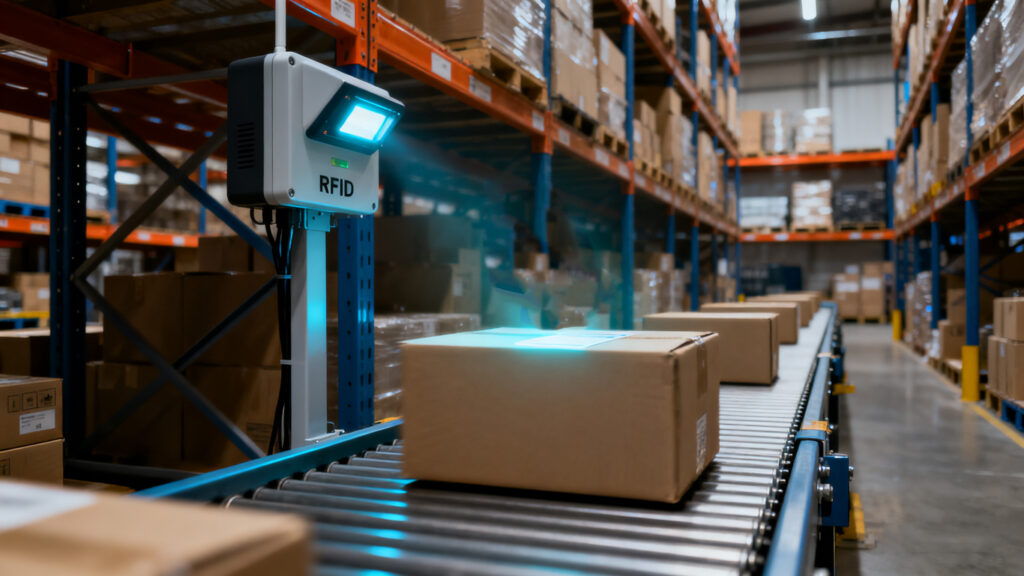
The reader is responsible for intelligence. It generates the RF signals that wake up the tags, controls communication protocols, filters responses, and sends data to whatever system is keeping track. Some readers are fixed, perched over gates or conveyor belts, silently keeping tabs on everything that passes by. Others are handheld, moving with a worker, scanning inventory, equipment, or assets. But regardless of form, its core job is the same: understand the messages the antennas bring in.
Oddly, a powerful reader doesn’t do much if the antenna isn’t set up right. This is one of those situations where the brain alone can’t solve the problem — it needs good sensory input.
The antenna is simpler, yet no less critical. It broadcasts electromagnetic waves to reach nearby tags and then catches their response, feeding it back to the reader.
There are internal antennas, built neatly into the reader. Compact, convenient, perfect for small coverage areas like doors, checkout counters, or desktop scanners. And then there are external antennas. These are more like stage lights in a theater — you can move them, angle them, focus them. They handle large warehouses, metal shelves, or complex logistics tunnels. But yes, they require cables, mounts, and careful calibration.
Here’s a little surprise: sometimes, people buy a high-end antenna and wonder why reads fail. It’s often not the antenna’s fault. If the reader isn’t powerful enough, or if the antenna is poorly positioned, even the fanciest gear is useless.
A reader can handle multiple antennas at once. Imagine one reader, several antennas, each covering a different slice of space — it’s like having a manager watching multiple gates simultaneously. Each antenna listens, speaks, and reports back. The combination allows continuous tracking across zones without missing a beat.
But the magic happens only when they’re compatible. Antenna gain, polarization, beam width — if these are off, the system develops dead spots, interference, or weak reads. When they’re right, though, the system hums quietly, almost invisible.
People often focus on specs — frequencies, read ranges, power outputs. That’s fine, but it misses the point. The difference between the RFID reader and RFID antenna is about interaction. The antenna defines where communication happens; the reader defines how it’s interpreted. Think of it like two musicians improvising. One keeps the rhythm (antenna), the other listens and harmonizes (reader). Without either, the performance falls apart.
In real-world applications — hospitals, factories, retail stores — this partnership matters more than raw numbers. The antenna might be quietly activating assets, but the reader decides what that activation means, how it’s logged, and what actions follow.
It’s funny — the most overlooked piece is often the antenna. Treat it as a strategic tool, not a passive accessory, and many “mysterious failures” suddenly make sense.
The RFID reader is the decision-maker, the antenna is the messenger. Together, they form a silent dialogue, translating electromagnetic whispers into actionable intelligence. Alone, each is limited. Together, they orchestrate smooth, invisible operations that modern logistics, healthcare, and retail rely on.
Next time you see an RFID setup, don’t just see hardware. Think of a conversation happening in the air — one device speaking, the other listening, and both making sense of a world that’s constantly moving.

SSD-A06 UHF RFID antenna with circular polarization, adjustable 840–960 MHz frequency, ≥4.5 dBi gain, and a compact directional design for RFID systems.
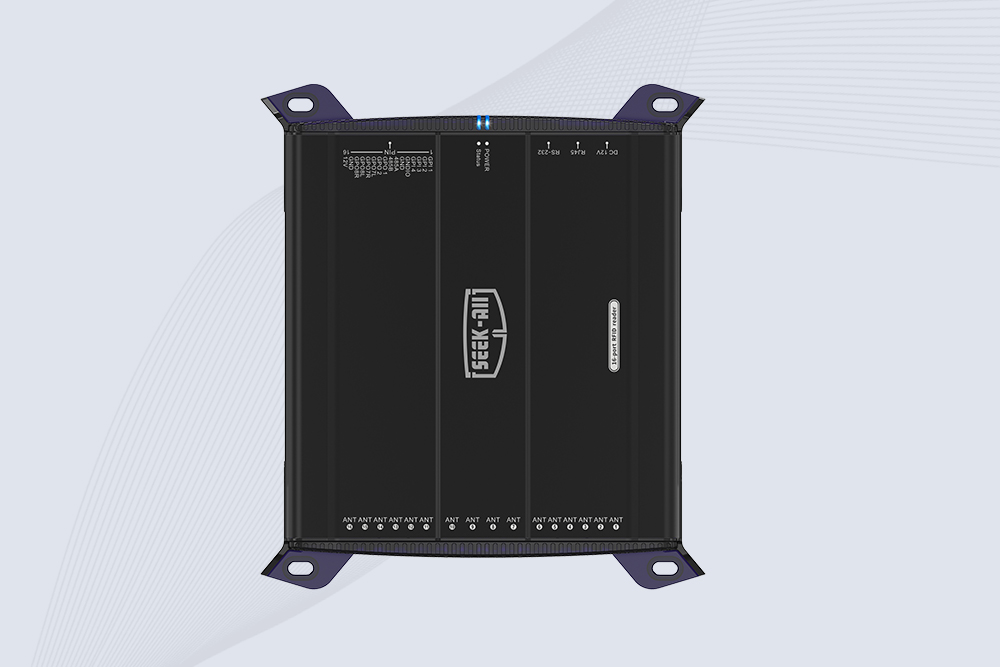
SSD-R16L Multi-Channel RFID Infrastructure for Automated Inventory Management ✔️ 16-Port High-Density RFID Reading Equipped with 16 SMA antenna ports, SSD-R16L supports multi-antenna deployment for warehouses, retail stores, logistics, production lines, and large-area RFID identification. ✔️ High-Speed & Long-Range Performance With up to 33…
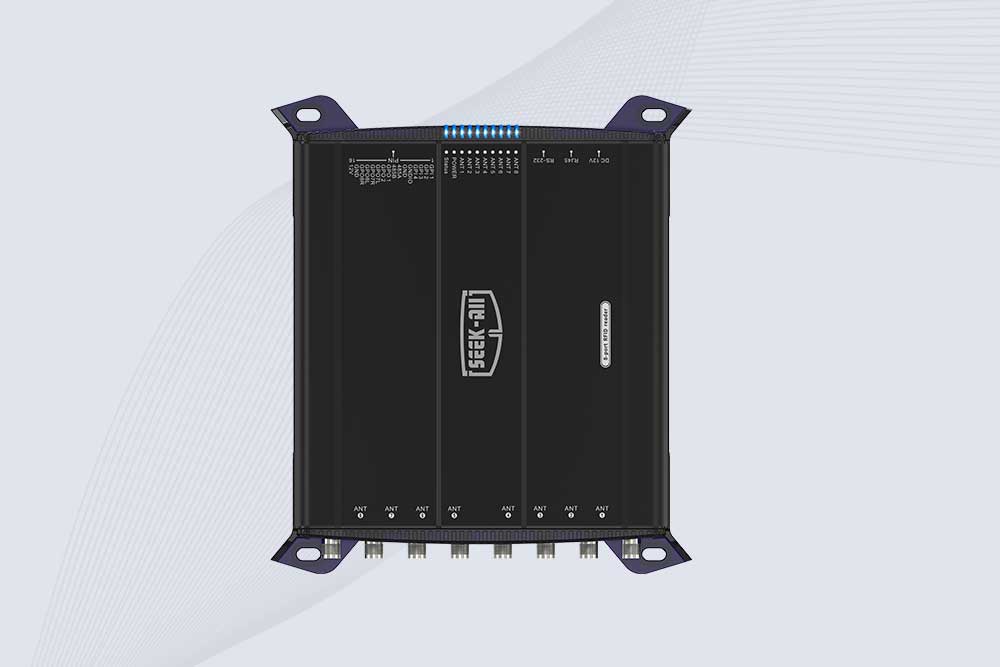
SSD-R8L 8-port UHF RFID reader with 33dBm output, up to 20m reading range and 600+ tags/s recognition. Ideal for warehouse, logistics, retail and asset tracking.
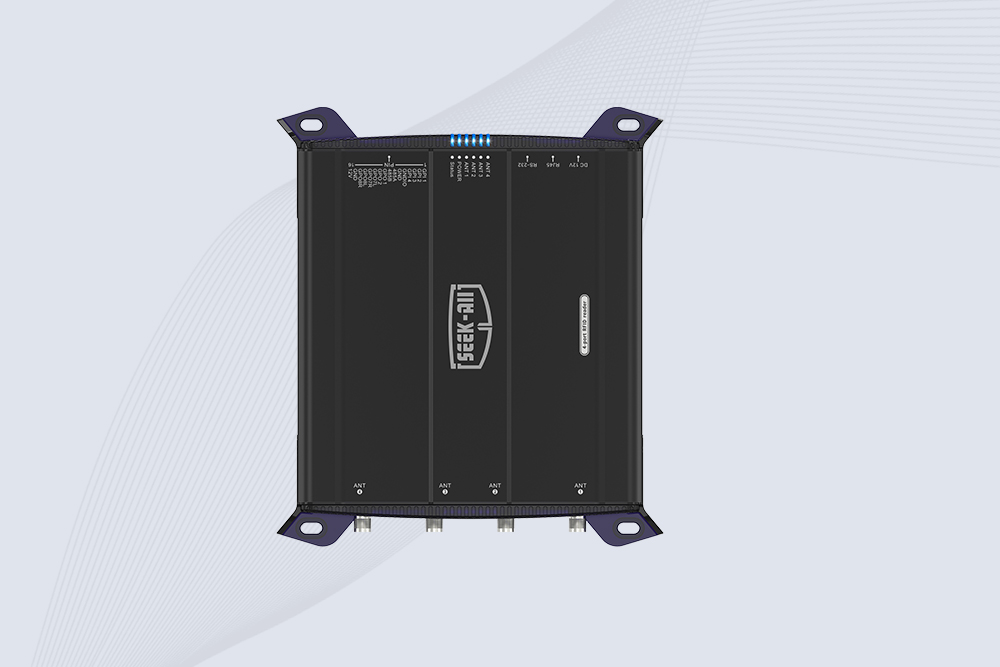
SSD-R4L is a 4-port UHF RFID fixed reader with 33dBm output power, up to 20m reading range, EPC C1G2 support and 600+ tags/s reading speed.

Discover how does rfid tags work, including RFID communication, tag components, reading process, applications, and expert insights for modern tracking systems.
More
Streamline your warehouse operations with the Cykeo CK-T1B Ceiling RFID reader. Supports EPC, ISO, GB/T protocols, RESTful APIs, SDK, and seamless WMS/ERP integration. Cold-chain ready and ultra-slim design.
More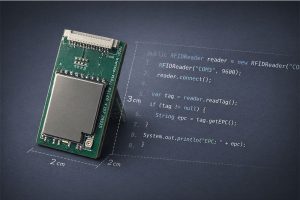
Cykeo UHF embedded RFID modules are designed for developers who need stable performance, clean APIs, and real SDK support. Easy to integrate, predictable in real systems, and ready for custom development.
More
A long range RFID scanner helps pharmaceutical manufacturers track raw materials, reusable containers, production equipment, laboratory tools, and finished p...
More