 Cykeo RFID IoT Solution Products R&D Manufacturer
How Far Can a Passive RFID Reader Read?
121Wondering how far a passive RFID reader can read? Learn what really affects RFID read range, including antennas, tags, installation and environmental conditions.
MoreAll RFID Product
uhf card is a passive UHF RFID smart card used for long-range identification and tracking. It enables fast, contactless access control and asset visibility in industrial and enterprise environments, improving accuracy, reducing manual logging errors, and supporting real-time data capture across secure workflows.
In real deployments I’ve seen across logistics yards and equipment rooms, the shift from manual badge logging to UHF RFID cards changes one thing immediately: traceability stops being reactive and becomes continuous.
A uhf card operates in the UHF frequency band (commonly 860–960 MHz) and follows widely adopted standards such as EPC Class 1 Gen2 / ISO 18000-6C, referenced by EPCglobal and GS1 frameworks used in global supply chains. These standards define how tags communicate with readers in dense environments.
Unlike HF or proximity cards, UHF cards are built for distance and bulk reading, which matters in environments where throughput is more important than single-point authentication.
In warehouse access points I’ve observed, operators often pass through gates without stopping. The system still captures identity within milliseconds, even when multiple cards are detected simultaneously.
UHF systems are designed for collision handling, meaning multiple cards can be read at once without sequential scanning. This is critical in:
According to RFID adoption guidance from GS1 and EPCglobal documentation, UHF Gen2 systems are optimized for high-speed multi-tag environments, which is why they dominate logistics and retail supply chains.
Traditional card systems rely on manual swipes. UHF card systems generate automatic event logs:
In practice, this removes “blind time” — the gap between actual movement and system recording.
In a European warehouse deployment scenario similar to Cykeo integrations, operators noted that UHF card-based access reduced missing-entry incidents caused by manual badge failure points. The key improvement wasn’t speed alone — it was consistency under pressure (rain, gloves, motion, workload peaks).
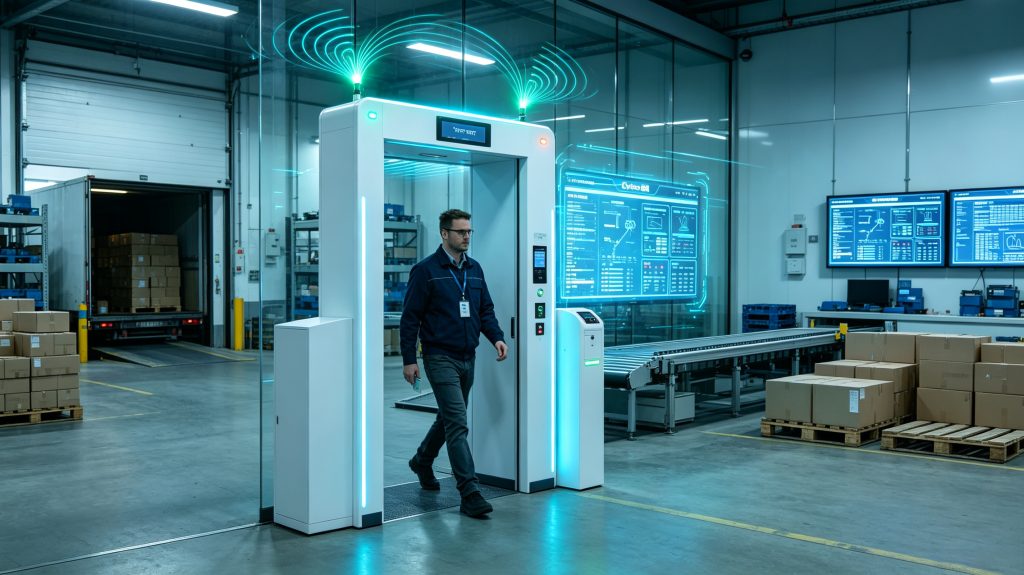
Most industrial uhf cards rely on:
These ensure interoperability between different reader brands and software systems, a requirement highlighted in global RFID supply chain frameworks published by GS1.org.
While exact values vary by tag design and reader power:
These characteristics make uhf cards suitable for continuous tracking environments where maintenance overhead must stay low.
In Cykeo deployment scenarios and similar RFID environments, applications usually cluster into three operational layers:
The transition is rarely about novelty. It’s about operational pressure:
A commonly cited point in RFID industry whitepapers from vendors such as Impinj and GS1 ecosystem reports is that automation reduces manual scanning dependency significantly in high-volume environments. While numbers vary by implementation, the trend is consistent: less human input, more system-driven capture.
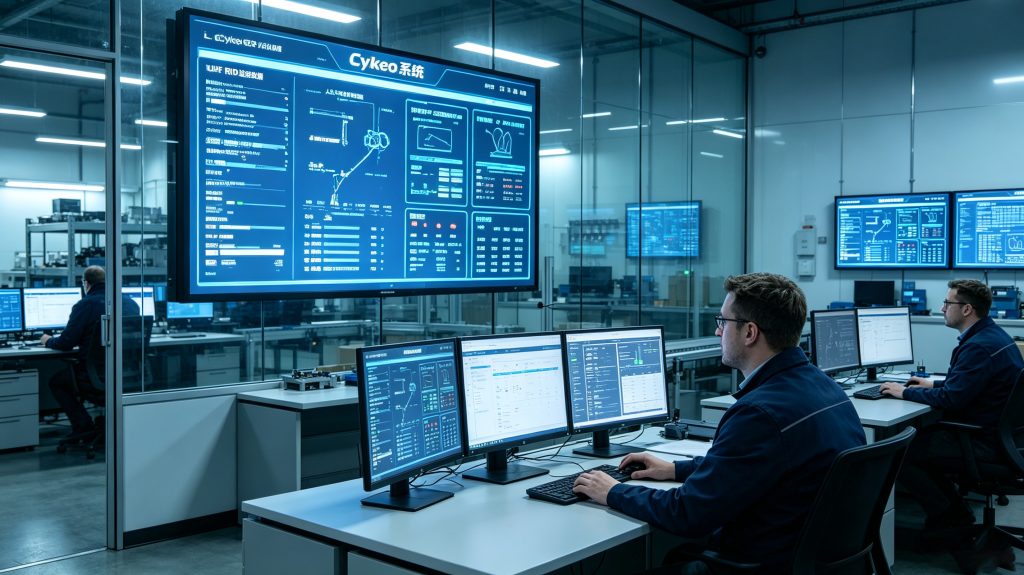
Not all environments behave the same. A few details matter more than expected:
In one warehouse setup, simply repositioning antennas improved read stability more than replacing cards themselves.
Q: Can uhf card replace traditional access cards?
Yes, especially in environments requiring long-range or hands-free identification.
Q: Does it require line-of-sight?
No, UHF RFID works without direct visibility, though shielding materials can affect performance.
Q: Is it suitable for outdoor environments?
Yes, when paired with industrial-grade readers and properly tuned antenna systems.
The shift toward uhf card systems is less about replacing plastic credentials and more about changing how environments think about identity — from something you present to something the system continuously detects.
In real deployments, the difference shows up quietly: fewer interruptions, fewer manual corrections, and a smoother operational rhythm.
Wondering how far a passive RFID reader can read? Learn what really affects RFID read range, including antennas, tags, installation and environmental conditions.
More
A long range RFID scanner can automate pallet identification and reduce manual barcode scanning, but reliable performance depends on the complete RFID setup....
More
Discover how portable RFID scanners help retail stores perform faster inventory counts, reduce stock discrepancies, and improve real-time product visibility across shelves and backrooms.
More
A practical view of RFID tools tracking systems used in real factories and workshops. Learn how RFID tool cabinets and industrial tracking solutions help reduce tool loss, improve visibility, and support asset management. OEM and wholesale inquiry...
More