 Cykeo RFID IoT Solution Products R&D Manufacturer
How Much Memory is in an RFID Tag?
1094Discover the memory capacity of RFID tags, including passive vs. active tags and use cases. Learn how Cykeo’s high-memory tags support data-rich applications.
MoreAll RFID Product
A tracking system for equipment uses RFID technology to monitor tools, machines, and assets in real time. It improves visibility, prevents loss, and automates inventory records. Industrial environments benefit from higher accuracy, faster audits, and reduced manual intervention in equipment management workflows.
In industrial operations, equipment does not stay in one place. It moves between workshops, storage rooms, and field sites. Without a tracking system, visibility breaks immediately.
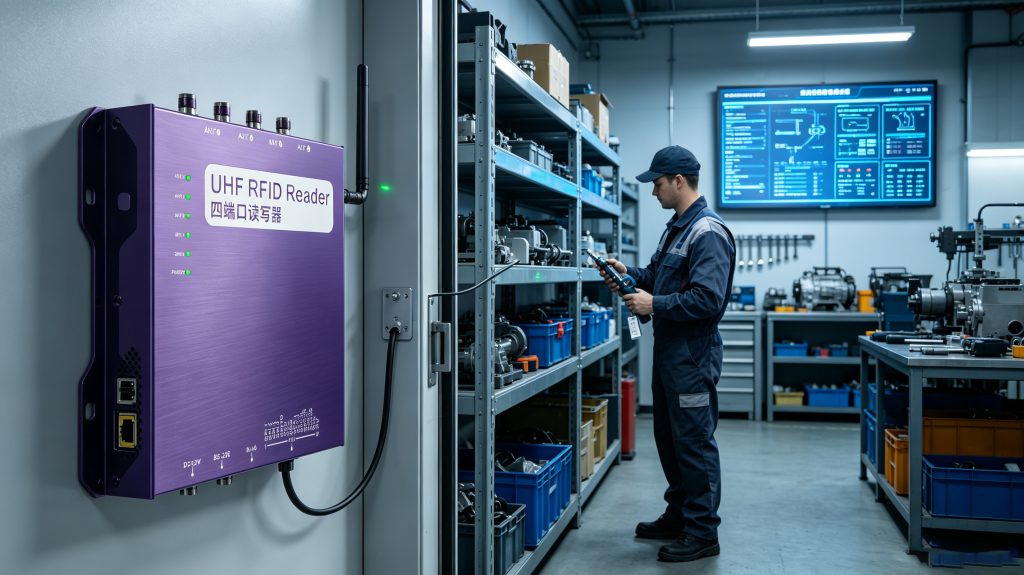
A RFID-based tracking system for equipment restores this visibility by automatically identifying tagged tools and machines whenever they enter or leave a monitored zone.
Industry analysis from GS1 standards (gs1.org) shows that automated identification systems significantly reduce manual tracking errors in asset-heavy environments, especially where equipment turnover is frequent and documentation gaps are common.
Most losses in equipment-heavy industries are not caused by theft—they are caused by tracking gaps.
Common operational issues include:
A digital tracking system removes these blind spots by creating continuous data capture at every movement point.
A complete RFID equipment tracking system typically includes:
Each scan event becomes a timestamped record, building a complete lifecycle history of equipment usage.
Accuracy is the most critical metric in equipment tracking systems.
In optimized RFID deployments:
According to RFID Journal (rfidjournal.com) case studies, RFID-based equipment tracking consistently outperforms manual barcode systems in speed and consistency, especially in high-turnover industrial environments.
This system is widely used across multiple sectors:
Each environment shares one requirement: knowing exactly where critical equipment is at all times.
From real deployments, a clear pattern appears:
When equipment tracking coverage is fully integrated across entry/exit points and storage zones, organizations see a major reduction in “unaccounted tools” during shift transitions.
Instead of searching for missing assets, teams rely on system-generated movement history.
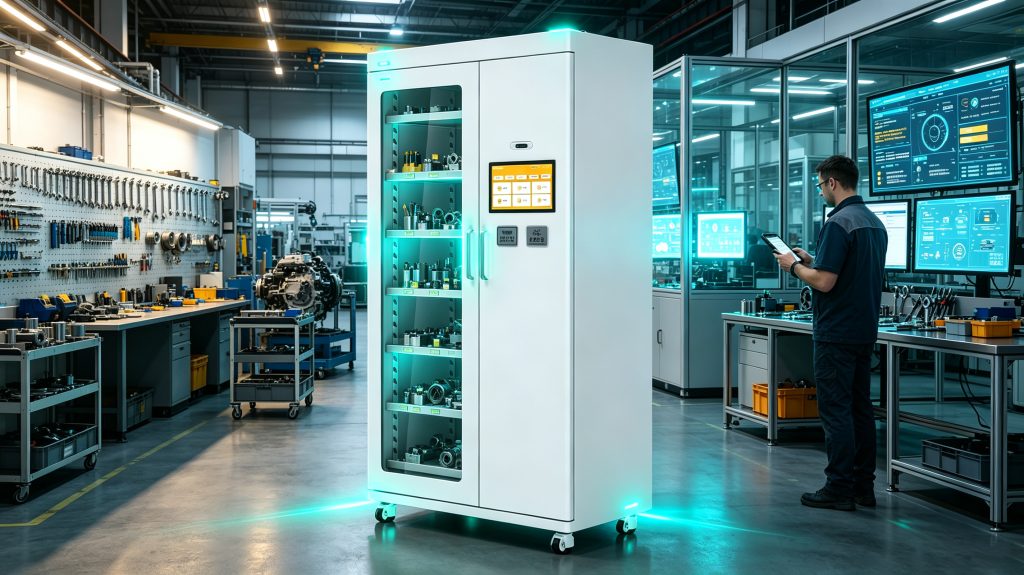
Modern tracking systems are not standalone—they connect to enterprise platforms:
This integration turns equipment data into actionable operational intelligence.
Q1: What is a tracking system for equipment used for?
It is used to monitor the location, movement, and usage history of tools and machines in real time.
Q2: Does it require manual scanning?
No, RFID-based systems automatically capture data when equipment passes detection zones.
Q3: Can it reduce equipment loss?
Yes, by providing continuous visibility and usage records across all operations.
A tracking system for equipment is more than an inventory tool—it is a control layer for industrial operations. Once implemented properly, it replaces uncertainty with real-time visibility across every stage of equipment usage.
Discover the memory capacity of RFID tags, including passive vs. active tags and use cases. Learn how Cykeo’s high-memory tags support data-rich applications.
More
Thinking of using a cell phone for RFID? We answer if cell phones can read RFID tags, explain the serious limitations, and show when professional systems are essential.
More
How does an rfid work? Learn how RFID tags, readers, and software communicate to enable smart tracking, automation, and identification with Cykeo RFID.
More
Learn how many layers of aluminum foil are actually needed to block RFID signals, how it works, and whether this DIY method is truly reliable for protecting your cards.
More