 Cykeo RFID IoT Solution Products R&D Manufacturer
Are RFID Readers Compatible with IoT Devices? Future-Proofing Your Setup
1345Learn how RFID readers integrate with IoT devices for seamless automation. Discover compatibility tips, protocols, and Cykeo’s solutions to future-proof your setup.
MoreAll RFID Product
RFID tracking stickers are adhesive RFID labels that enable real-time, wireless tracking of items, allowing fast identification, automated inventory, and accurate asset visibility without manual scanning.
That’s the direct answer.
In real deployments, though, they feel less like “labels” and more like silent infrastructure—once applied, they start reporting without being asked.
RFID tracking stickers are designed for quick deployment. No mounting, no wiring—just placement.
In a mid-sized logistics project I supported, the team tagged inbound cartons during unloading. Within hours, the system started logging movement automatically at every checkpoint.

When paired with UHF readers such as Cykeo RFID devices, RFID tracking stickers operate at scale.
| Metric | Barcode Labels | RFID Tracking Stickers |
|---|---|---|
| Read speed | Single item | Hundreds/sec |
| Accuracy | ~85–90% | 99%+ |
| Labor effort | High | Low |
| Visibility | Delayed | Real-time |
According to RAIN RFID Alliance:
According to GS1:
RFID tracking stickers aren’t universally necessary—but in high-volume environments, they quickly justify themselves.
In one retail deployment (~6,000 items):
That gap—those missing 10%—is where RFID pays for itself.
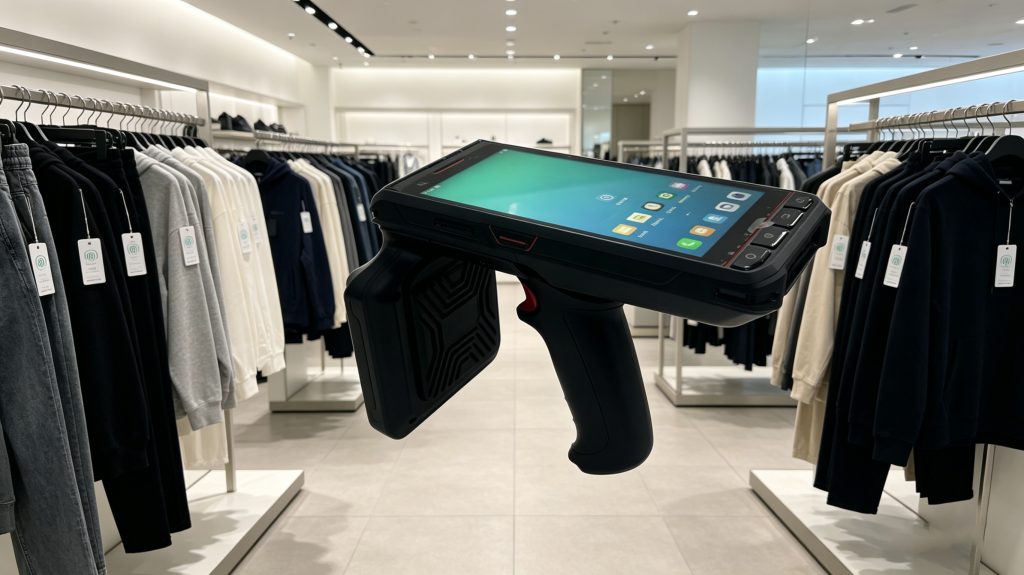
The sticker is only one part. Reliability comes from the full system.
With Cykeo UHF rfid readers:
In well-tuned systems, there’s no “scan moment.” Data just appears—because the system never stopped watching.
RFID tracking stickers are efficient—but environment matters.
Most issues are solved during setup—not after deployment.
| Feature | RFID Tracking Stickers | Standard Labels |
|---|---|---|
| Identification | Wireless | Visual |
| Multi-item reading | Yes | No |
| Automation | High | Low |
| Data update | Real-time | Manual |
They are used to track assets and inventory automatically in real time.
When properly deployed, systems reach over 99% accuracy.
No, they can be read without direct visibility.
RFID tracking stickers are easy to overlook.
They’re thin. Flexible. Almost disposable.
But once deployed, they change how systems behave.
Inventory stops lagging. Movement becomes visible.
And gradually, the idea of “checking where something is” disappears—because the system already knows.

Learn how RFID readers integrate with IoT devices for seamless automation. Discover compatibility tips, protocols, and Cykeo’s solutions to future-proof your setup.
More
Tamper proof RFID tags combine wireless identification with anti-tampering features. Once removed, they become invalid immediately. Widely used in asset authentication, logistics sealing, and high-value equipment monitoring. Cykeo offers customiza...
More
Learning how to use a RFID ID card reader? Step-by-step guide for door access systems and USB desktop readers. Card positioning, feedback signals, and troubleshooting tips from CYKEO engineers.
More
Discover the real difference between active and passive RFID tags. Learn how active RFID tag range impacts asset tracking, when to use passive tags for low-cost solutions, and how hybrid options fit in real-world applications.
More