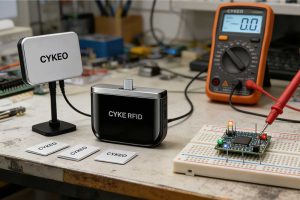
When people first start exploring RFID technology, the biggest challenge usually isn’t the hardware — it’s the terminology.
Words like EPC, UHF, antenna gain, anti-collision, middleware, and reader sensitivity appear in almost every RFID document. Without context, these terms can make the technology seem more complicated than it really is.
In reality, most RFID systems are built from a few simple components that work together: tags, readers, antennas, and software. Once you understand these pieces and the terminology around them, the whole system becomes much easier to grasp.
This guide explains the most common RFID terms using practical examples from real RFID deployments.
RFID Tag
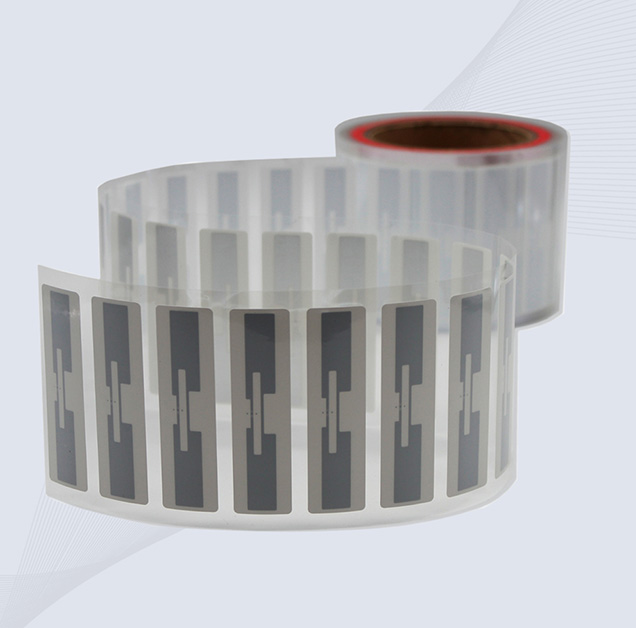
An RFID tag is a small electronic device attached to an object so it can be identified wirelessly.
Each tag contains:
- a microchip that stores information
- a small antenna that communicates with RFID readers
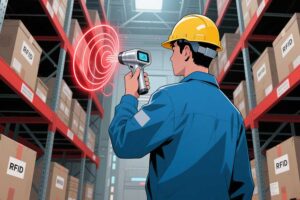
When a tag enters a reader’s radio field, it reflects back stored data such as a unique identifier or EPC code.Many industrial applications rely on passive tags because they are inexpensive and require no battery. For example, logistics companies frequently use RFID tags for inventory tracking, asset management, and supply chain visibility.
![RFID Terminology Guide: Understanding the Language of RFID Systems(images 1)]()
UHF RFID Tags and HF RFID Tags
RFID tags are small components, but in real projects they often decide whether a system works smoothly or becomes a constant headache. CYKEO works with both UHF RFID tags and HF RFID tags because different environments demand different behavior, not one “universal” solution.
UHF RFID tags are usually chosen when distance and speed matter. They perform well in warehouses, logistics centers, and manufacturing sites where hundreds of items may need to be identified in seconds. When properly selected, UHF tags can still deliver stable reads around metal racks, cartons, and pallets, even under daily wear and tear.
HF RFID tags are more controlled by design. They are commonly used for access control, libraries, medical tracking, and applications where close-range accuracy matters more than raw speed. HF tags are less sensitive to interference and are often easier to manage in dense, people-heavy environments.
CYKEO focuses on tag consistency rather than exaggerated read range claims. The goal is simple: predictable performance, long service life, and compatibility with real-world readers and systems.
There are several types of tags designed for different environments:
- UHF tags for long-range inventory scanning
- anti-metal tags for industrial equipment
- laundry tags for textile tracking
- RFID cards for access control
Choosing the correct tag type is often one of the most important decisions in an RFID deployment.
RFID Reader Module
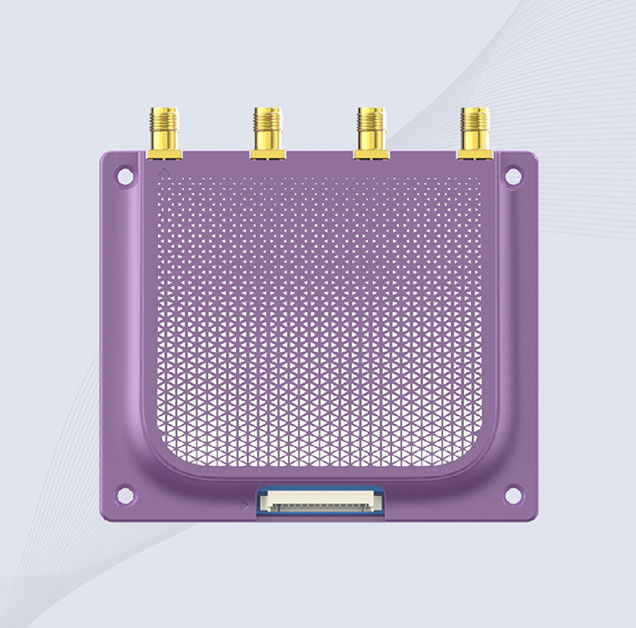
The RFID reader is the device responsible for communicating with tags.
It sends radio signals through an antenna and listens for responses from nearby tags. Once the tag responds, the reader converts that signal into digital data that software systems can process.
In many systems, readers are integrated as embedded modules rather than standalone devices.
A good example is the UHF RC522 RFID module, which is commonly used in embedded RFID equipment such as smart cabinets, automated kiosks, and asset tracking devices.
Typical capabilities of modern reader modules include:
- multi-tag reading
- adjustable RF power
- anti-collision processing
- serial or USB communication interfaces
These modules allow system integrators to build custom RFID solutions for warehouses, hospitals, retail stores, and manufacturing lines.
![RFID Terminology Guide: Understanding the Language of RFID Systems(images 2)]()
More About RFID Reader Modules
UHF RFID reader modules are compact RF components that enable stable communication with RFID tags when integrated with external antennas, supporting efficient data capture and system automation. These RFID modules use radio frequency signals to identify and process tag data, making them a core building block for embedded systems in retail, logistics, and healthcare environments. By leveraging RFID reader modules, solution providers can reduce integration complexity, improve system accuracy, and achieve real-time visibility across operations. This technology is well suited for applications such as embedded inventory tracking, smart cabinets, access terminals, and asset management systems.
At Cykeo, we offer a wide range of RFID readers to suit various applications and industries. From handheld RFID readers, USB RFID readers, Long Range RFID Reader, Portable RFID Reader, RFID Gate Reader, and fixed RFID readers to multi-functional, multi-frequency options, our carefully developed product portfolio provides RFID hardware for any type of system and project. Whether you’re upgrading your supply chain operations or enhancing workplace security, our RFID readers deliver reliability, precision, and performance to meet your business needs.
RFID Antenna
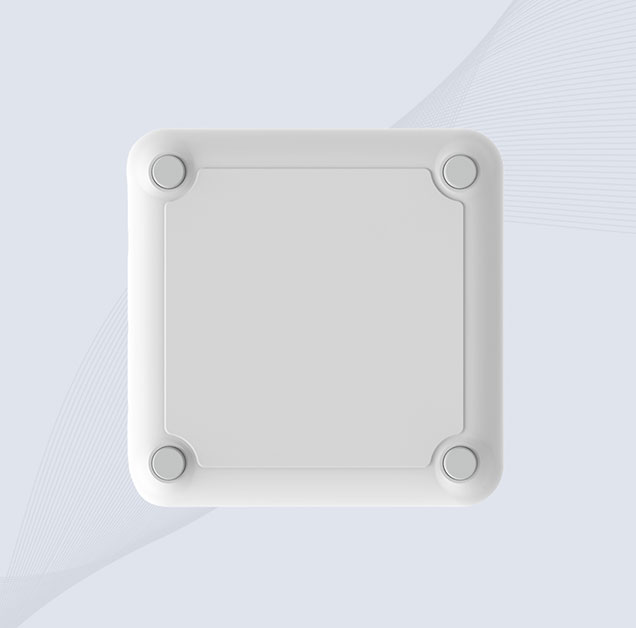
The RFID antenna is responsible for transmitting and receiving radio signals between readers and tags.
Although antennas may look simple, they play a crucial role in determining system performance. Factors such as antenna gain, polarization, and placement can dramatically affect reading accuracy.
For fixed RFID installations like warehouse gates or smart shelves, panel antennas are often used.
One example is the CK-A6 6dBi ultra-thin RFID panel antenna, which provides directional coverage while maintaining a slim design suitable for embedded installations.
Proper antenna selection helps create controlled read zones and prevents unwanted tag detection.
![RFID Terminology Guide: Understanding the Language of RFID Systems(images 3)]()
UHF RFID antennas are used when reading distance, coverage area, and read speed matter more than close control. In many warehouse and logistics projects, the antenna—not the reader—is what really defines how the system performs. Cykeo UHF RFID antennas are designed to create stable and predictable read zones, helping systems capture tag data as pallets, cartons, or assets move through a space.
These antennas are commonly installed at dock doors, conveyor lines, storage aisles, or production checkpoints. Different gain levels and polarization options allow installers to adapt to metal structures, narrow passages, or wide open areas. With solid enclosures and flexible mounting options, Cykeo UHF RFID antennas support long-term operation in busy industrial and commercial environments where consistency matters more than peak lab performance.
At Cykeo, we offer a wide range of RFID readers to suit various applications and industries. From handheld RFID readers, USB RFID readers, Long Range RFID Reader, Portable RFID Reader, RFID Gate Reader, and fixed RFID readers to multi-functional, multi-frequency options, our carefully developed product portfolio provides RFID hardware for any type of system and project. Whether you’re upgrading your supply chain operations or enhancing workplace security, our RFID readers deliver reliability, precision, and performance to meet your business needs.
EPC (Electronic Product Code)
The Electronic Product Code (EPC) is a globally unique identifier stored inside an RFID tag.
Unlike traditional barcodes, which usually represent product categories, EPC codes can identify individual items.
This makes RFID especially useful for:
- supply chain tracking
- retail inventory accuracy
- pharmaceutical authentication
- asset lifecycle management
With EPC, companies can trace a product from manufacturing all the way to the end user.
Read Range
Read range refers to the maximum distance at which an RFID reader can successfully detect a tag.
Several factors affect read range:
- reader power output
- antenna gain
- tag design
- environmental interference
For example, a properly configured UHF system can typically read tags from 3–10 meters away, depending on the hardware configuration.
RSSI (Received Signal Strength Indicator)
RSSI measures the strength of the signal received from an RFID tag.
This metric is useful for determining:
- tag proximity
- signal quality
- read reliability
Some advanced RFID systems use RSSI data to estimate the position of tagged objects within a space.
Anti-Collision Technology
One of the major advantages of RFID over barcode scanning is its ability to read multiple tags simultaneously.
This is made possible through anti-collision algorithms.
These protocols allow readers to communicate with many tags in the same radio field without signal interference. In large warehouse environments, hundreds of tagged items can be scanned within seconds.
RFID Middleware
Middleware is the software layer that connects RFID hardware to enterprise systems.
Instead of sending raw data directly into business software, middleware processes the information first.
Typical middleware functions include:
- filtering duplicate tag reads
- managing device communication
- integrating with ERP or warehouse management systems
Without middleware, RFID systems would produce massive amounts of unorganized data.
RFID Frequency Bands
RFID systems operate on several different frequency bands.
LF (Low Frequency)
Frequency: 125–134 kHz
Applications:
- animal identification
- access control systems
LF systems have short read ranges but perform reliably near water or metal.
HF (High Frequency)
Frequency: 13.56 MHz
Applications:
- contactless payment cards
- ticketing systems
- library management
HF RFID typically supports shorter reading distances.
UHF (Ultra-High Frequency)
Frequency: 860–960 MHz
UHF RFID is widely used in logistics and inventory management because it enables longer read ranges and faster multi-tag reading.
Why Understanding RFID Terminology Matters
Understanding RFID terminology helps businesses design better systems and avoid common deployment mistakes.
For example:
- selecting the right RFID tags ensures reliable identification
- choosing a capable reader module improves scanning speed
- installing the correct antenna design creates stable read zones
Even small technical details — like antenna placement or tag orientation — can significantly affect system performance.
FAQ: Common Questions About RFID
What does RFID stand for?
RFID stands for Radio Frequency Identification, a technology that uses radio waves to identify and track objects automatically.
What are the main components of an RFID system?
An RFID system usually includes:
What is the difference between RFID and barcodes?
Barcodes require line-of-sight scanning and can only be read one at a time. RFID can identify multiple items simultaneously without direct visual scanning.
How far can RFID read tags?
Depending on the frequency and hardware configuration, RFID systems can read tags from a few centimeters to more than 10 meters.
 Cykeo RFID IoT Solution Products R&D Manufacturer