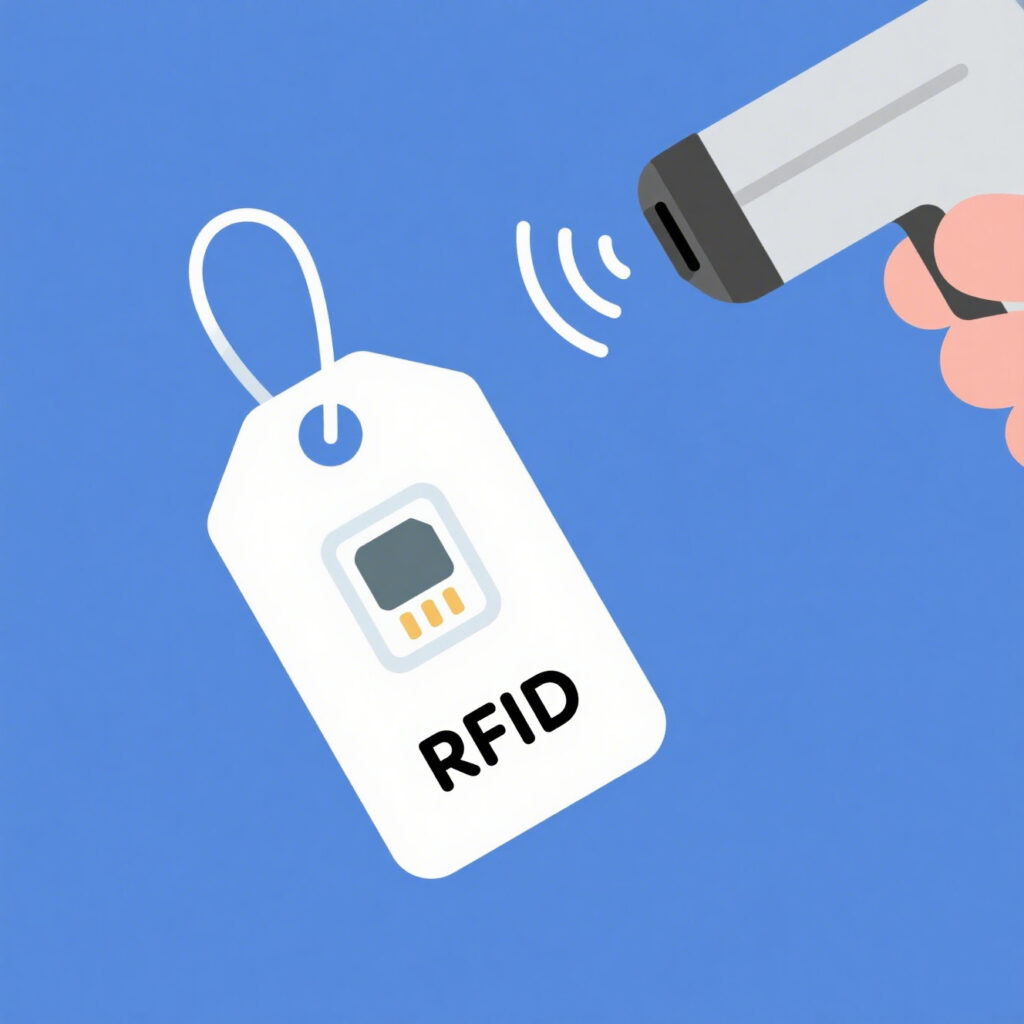
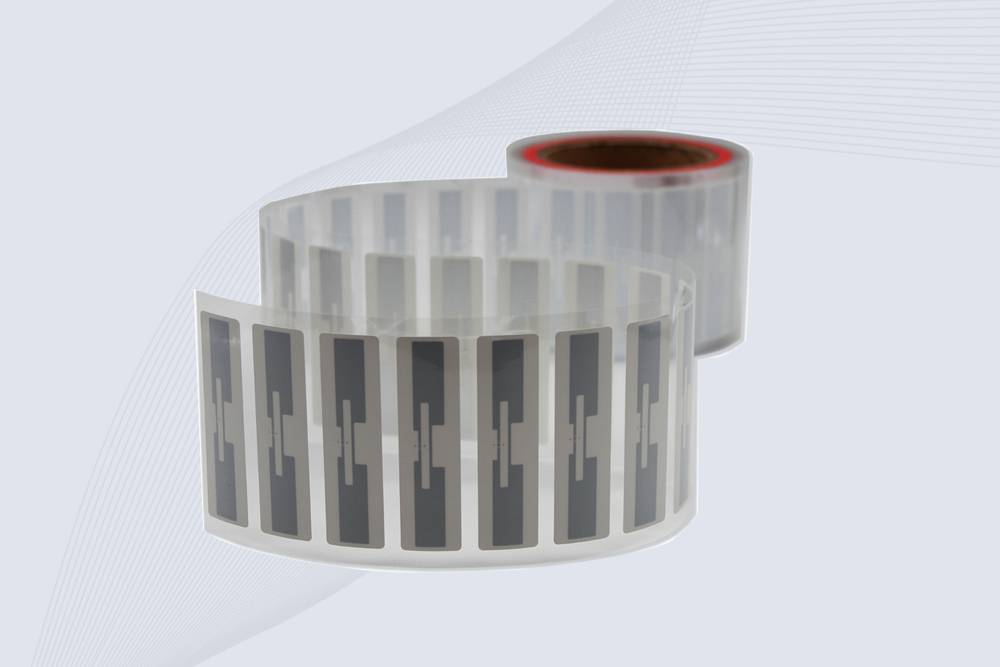
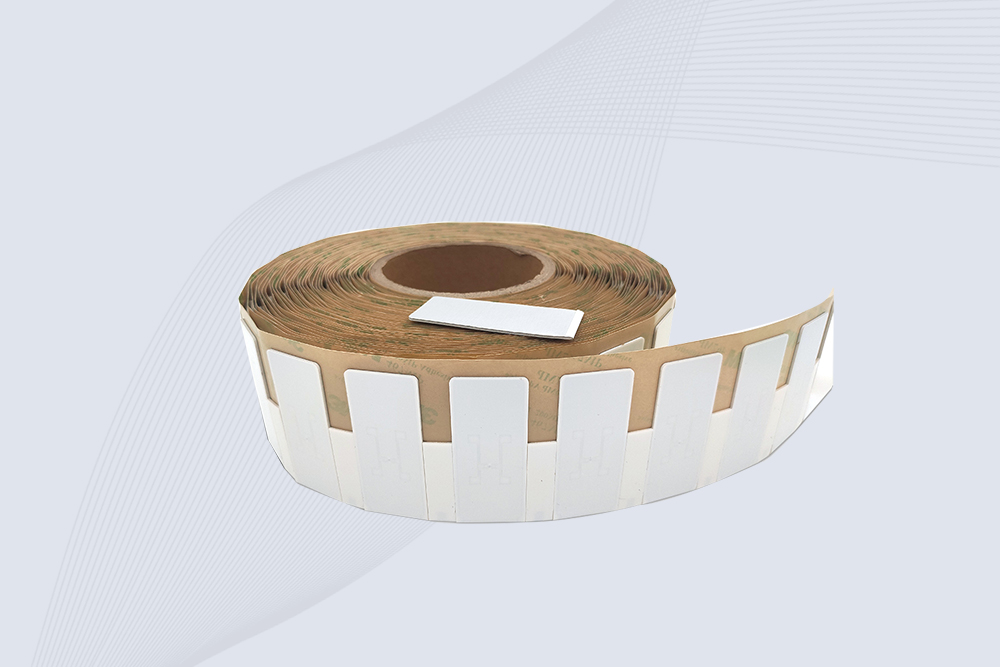
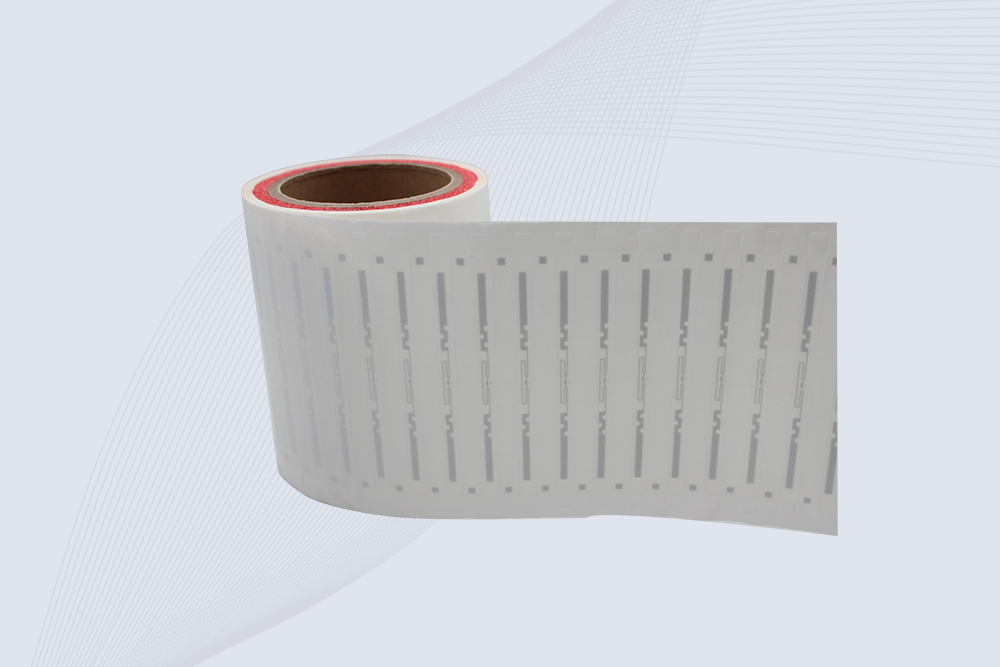
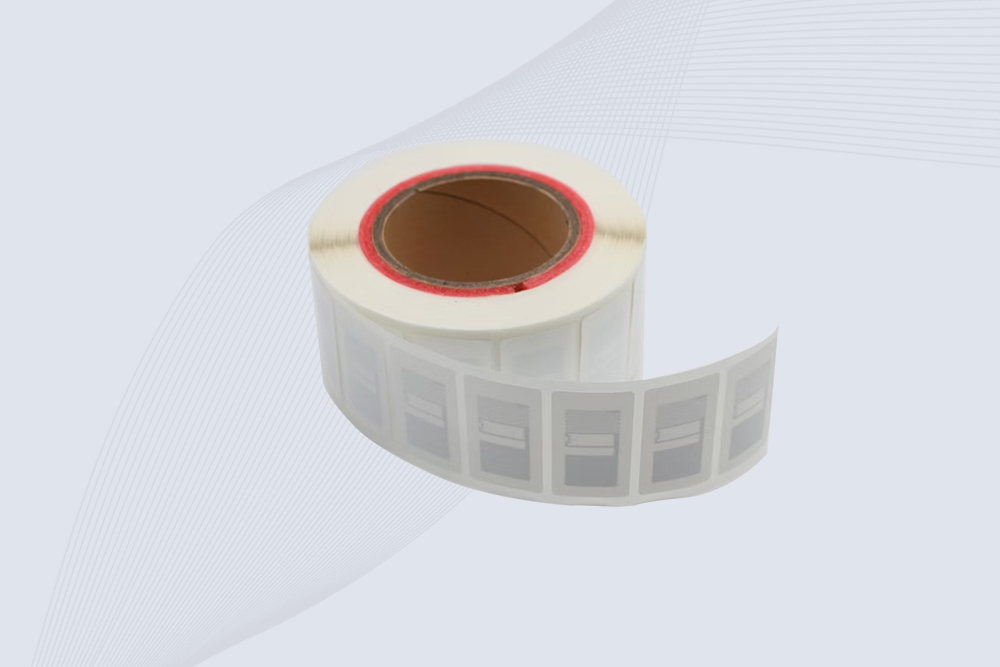
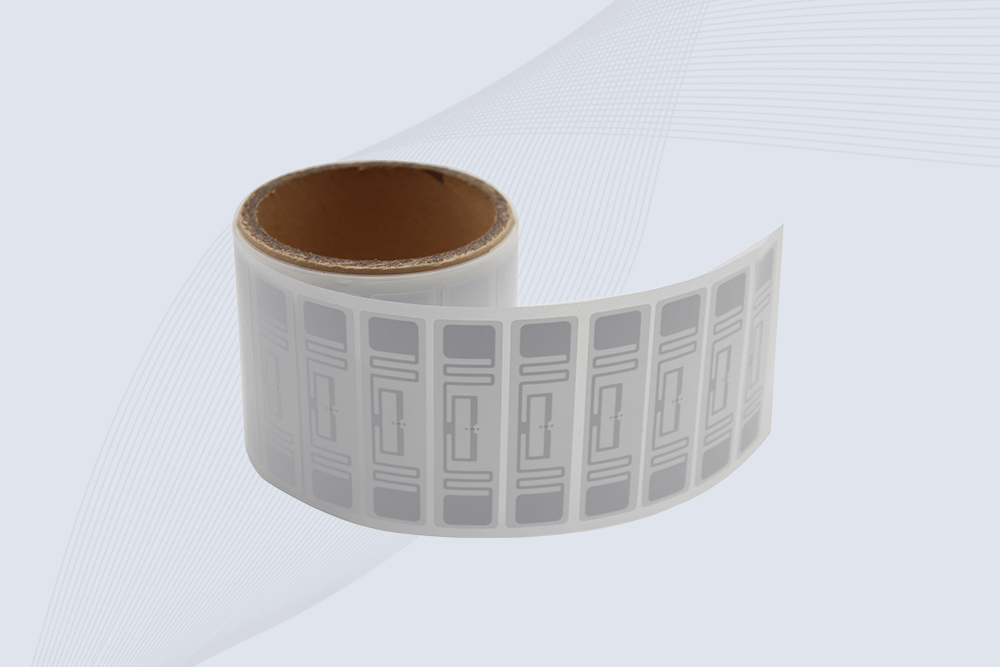
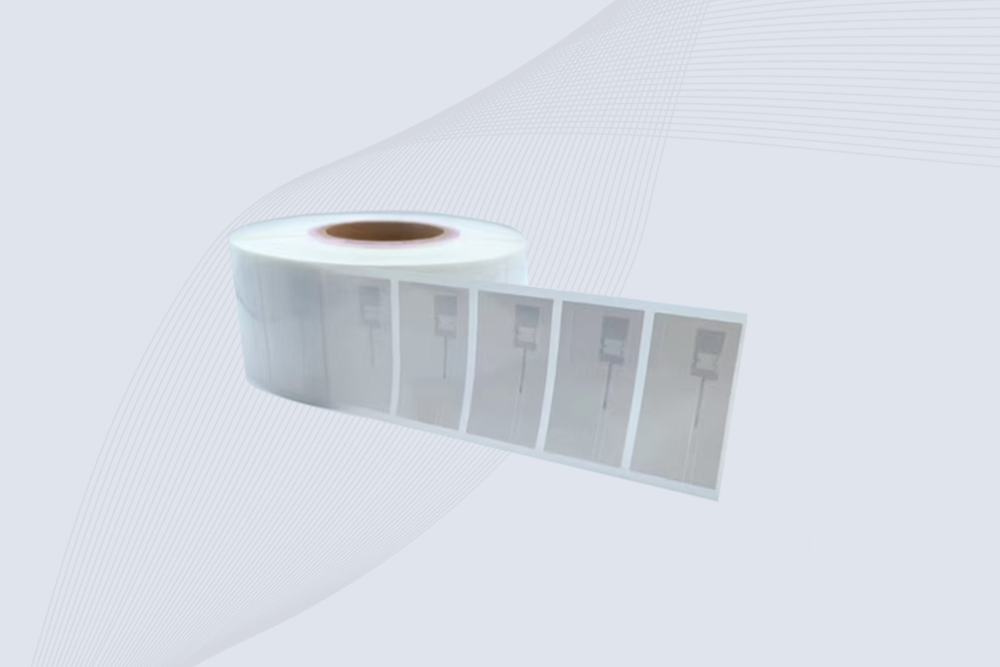
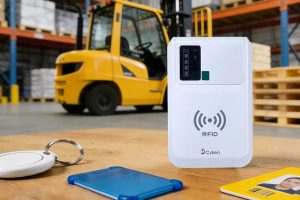
When people first hear the phrase RFID label, many imagine it’s just another type of barcode sticker. But that’s not really the case. RFID labels (Radio Frequency Identification labels) carry a small electronic chip and an antenna, so they can store and send information wirelessly.
Take a clothing store as an example. That price tag hanging from a jacket may look like an ordinary paper tag. In reality, hidden inside could be a thin RFID label. The shopper doesn’t notice it, but once the cashier waves a scanner over it, the system instantly knows which item it is, and how many are left in stock. That’s the actual meaning of RFID labels: turning objects into data points that can talk.
What’s Inside an RFID Label?
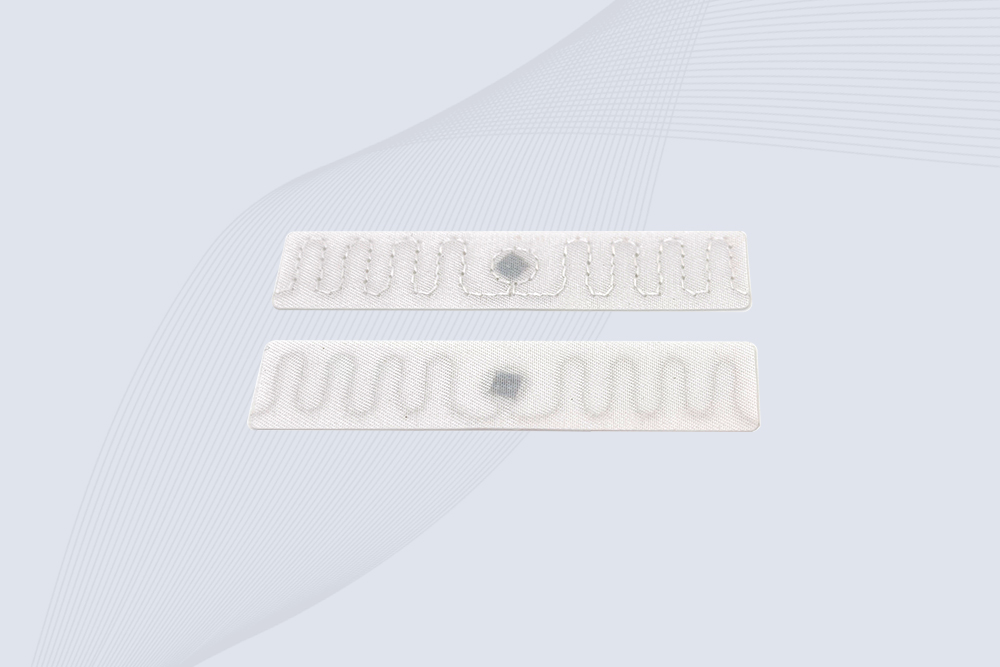
At first glance, an RFID label looks simple, but it has some very clever engineering inside. According to industry specialists like Checkpoint Systems, every RFID inlay usually has three parts:
Microchip (IC) – this is the “brain” of the label, storing the unique ID of the product.
Antenna – usually made of copper, aluminum, or conductive ink, it’s what allows the chip to communicate with the reader.
Substrate (the base layer) – paper, plastic, PET film, PVC, something that holds it all together.
Think of it like an ID card. The chip is the personal info, the antenna is the invisible function that lets machines read it, and the substrate is just the card body itself.
Different Types of RFID Labels
RFID labels are not one-size-fits-all. They can be grouped by power source and by frequency range.
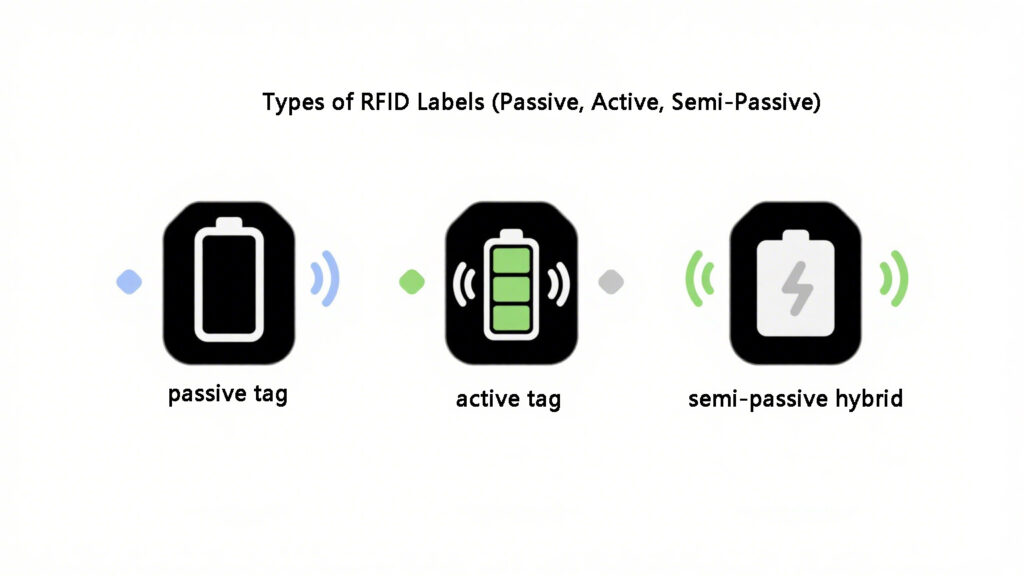
1. By Power Source
Passive No battery inside. The label gets activated only when an RFID reader sends energy to it. Cheap, small, and used a lot in retail clothing tags. Downsides: shorter read distance.
Active Has its own battery and can broadcast signals by itself. Common in tracking shipping containers or big pallets. Long range, but more expensive.
Semi-passive (a.k.a. battery-assisted) The chip runs on a battery, but still needs the reader to wake it up. You’ll see these in cold chain logistics, where the tag has to work reliably in low temperatures.
2. By Frequency
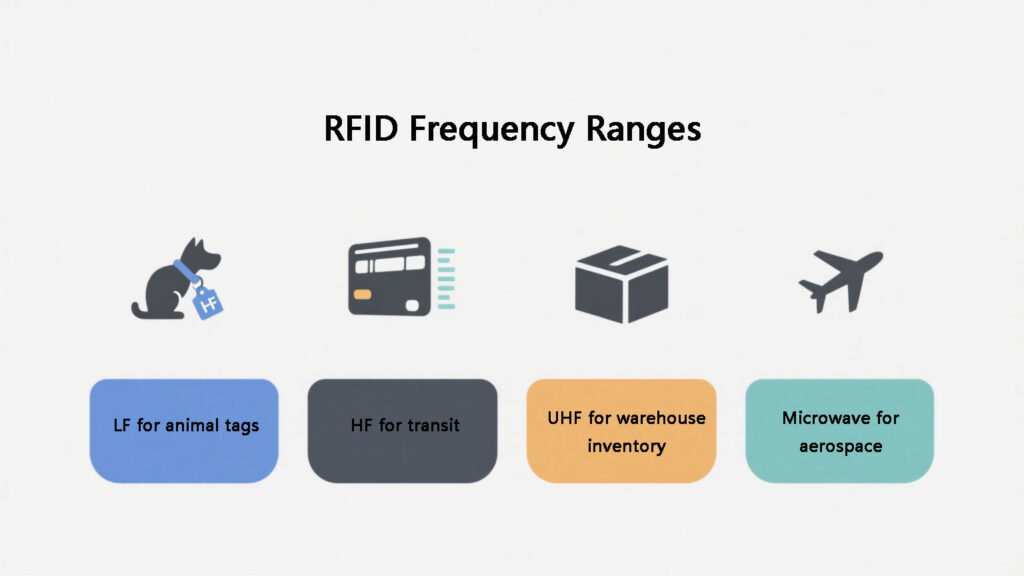
From Meyers and TechTarget’s breakdown, the common bands are:
Low Frequency (LF, 30–300 kHz) – short range, works well around animals or in door access cards.
High Frequency (HF, 3–30 MHz) – used in transit tickets, library cards, or event passes. Range is a few inches to a foot.
Ultra-High Frequency (UHF, 860–960 MHz) – the workhorse for warehouses and retail. Can read dozens of items at once, even from several meters away.
Microwave (2.4 GHz and up) – niche uses like car manufacturing or aerospace, with ranges stretching to hundreds of feet.
For example: the chip vets put inside dogs and cats is usually LF. Meanwhile, a warehouse where Amazon scans hundreds of boxes at once? That’s UHF.
RFID Labels vs Barcodes (and NFC)
A fair question is: why bother with RFID if barcodes already work?
Barcodes need line of sight. You have to aim the scanner directly at it. RFID doesn’t care – it works through boxes, bags, even a pile of folded shirts.
RFID can read multiple items in one sweep, barcodes can’t.
RFID data can be rewritten. A barcode is fixed once printed.
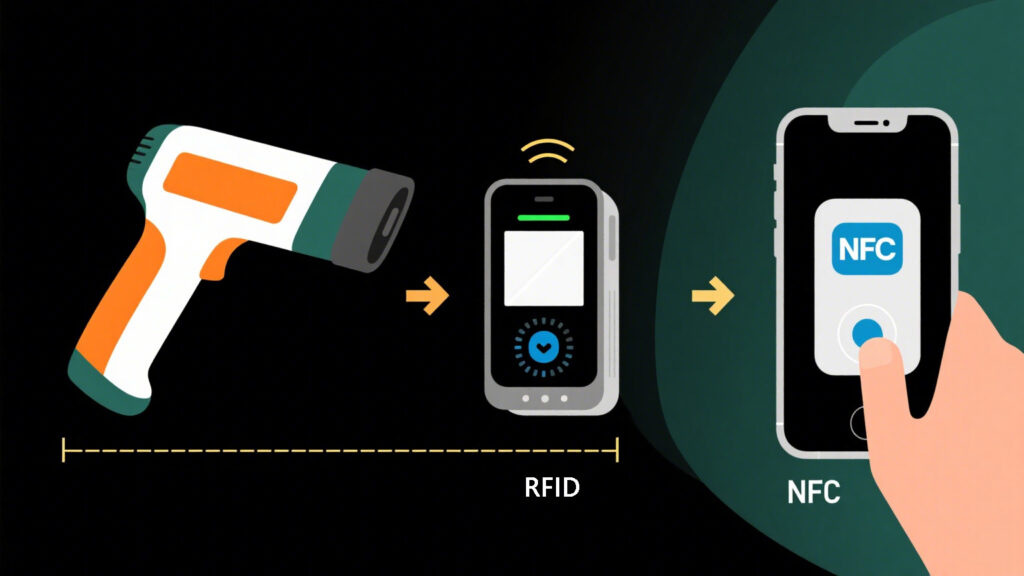
And then there’s NFC. Yes, NFC is also wireless, but it’s more like a “cousin” of RFID. NFC is for super short distances (a few centimeters), like tapping your phone to pay. RFID has much wider range and is built for larger-scale tasks like supply chains or hospital equipment.
Why RFID Labels Matter
So what’s the real value of RFID labels? Pulling together insights from Meyers, Camcode, and TechTarget, we can boil it down to a few things:
Real-time inventory tracking – shops instantly see when stock runs low.
Anti-counterfeit and security – luxury goods embed RFID so fakes can’t slip through.
Speed and efficiency – warehouse workers don’t need to scan item by item, one handheld device can sweep a whole shelf.
Cost savings – yes, an RFID tag costs more than a barcode, but it saves far more in labor and shrinkage.
Sustainability – new tags are being made recyclable or biodegradable, which cuts down environmental impact.
Real-World Uses of RFID Labels
Retail – brands like fast-fashion retailers rely on RFID to make restocking and checkout faster.
Healthcare – hospitals use RFID to track surgical tools or to make sure drugs are genuine.
Manufacturing – auto factories attach RFID to parts, so assembly lines don’t miss a component.
Cold chain logistics – semi-passive RFID monitors food shipments, keeping an eye on temperature and location.
Each example highlights the same truth: RFID labels aren’t just about storing info. They’re about making physical objects visible and traceable in the digital world.
How to Choose the Right RFID Label
As SML points out, the choice depends on:
Look and design – for something delicate like perfume bottles or jewelry boxes, you want small, subtle, or even transparent labels.
Material compatibility – metal and liquids can interfere with signals, so there are special “anti-metal” or heat-resistant labels.
Standards and certification – in global supply chains, many retailers only accept ARC-certified labels to guarantee performance.
Wrapping It Up: The True Meaning of RFID Labels
If I had to sum up rfid labels meaning in one line: they are not just “electronic barcodes” but tools that give products a voice.
Whether in a retail store, a hospital ward, a delivery truck, or a factory floor, RFID labels quietly collect and transmit information. They help managers see what was once invisible, they make supply chains more transparent, and they protect consumers with safer goods.
And the technology is still evolving. Labels are getting smaller, cheaper, and more eco-friendly. Chances are, the next time you pick up a product, you won’t see the RFID inside – but it will still be there, doing its job.
Related Reading Of Rfid Meaning
You have probably used RFID without realizing it.
A card that opens an office door. A toll tag that lets a car pass through a highway gate. A warehouse worker scanning hundreds of products without touching a barcode scanner.
If you’ve ever walked through a warehouse and wondered how workers seem to know exactly where thousands of products are located, RFID labels are often part of the answer.
A few years ago, barcode labels were still doing most of the heavy lifting in inventory management. They worked well enough, but there was always one limitation—someone had to point a scanner directly at each barcode.RFID Labels,How They Work and Why More Businesses Are Using Them
CYKEO Passive RFID Tags are made for wet and high-humidity environments where standard labels do not last. This rfid passive tag is often used around liquids, chemicals and temperature changes, providing stable reading distance and long data life for industrial tracking.
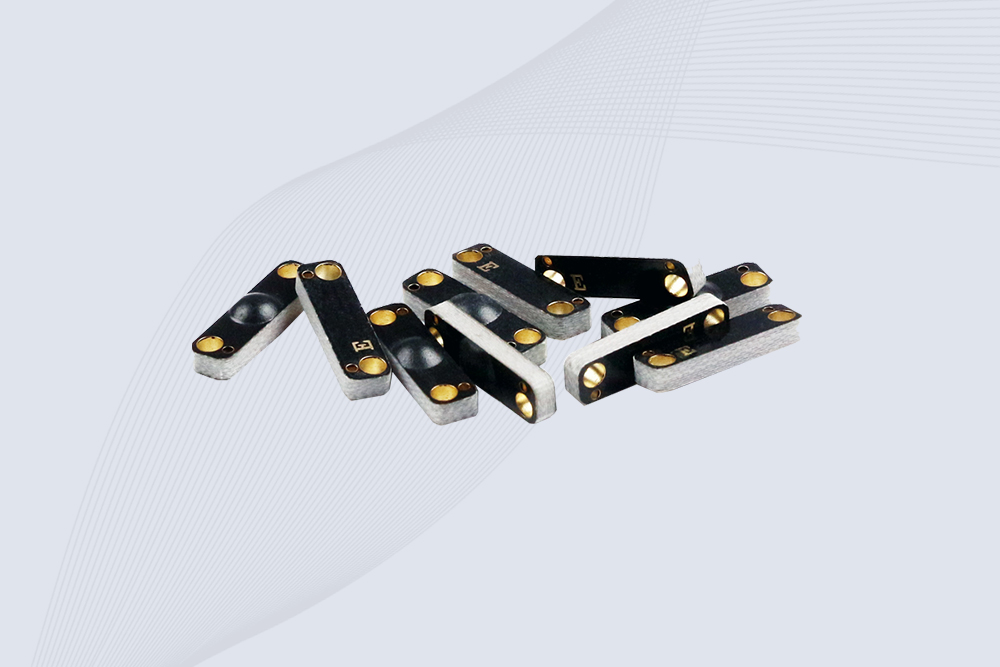
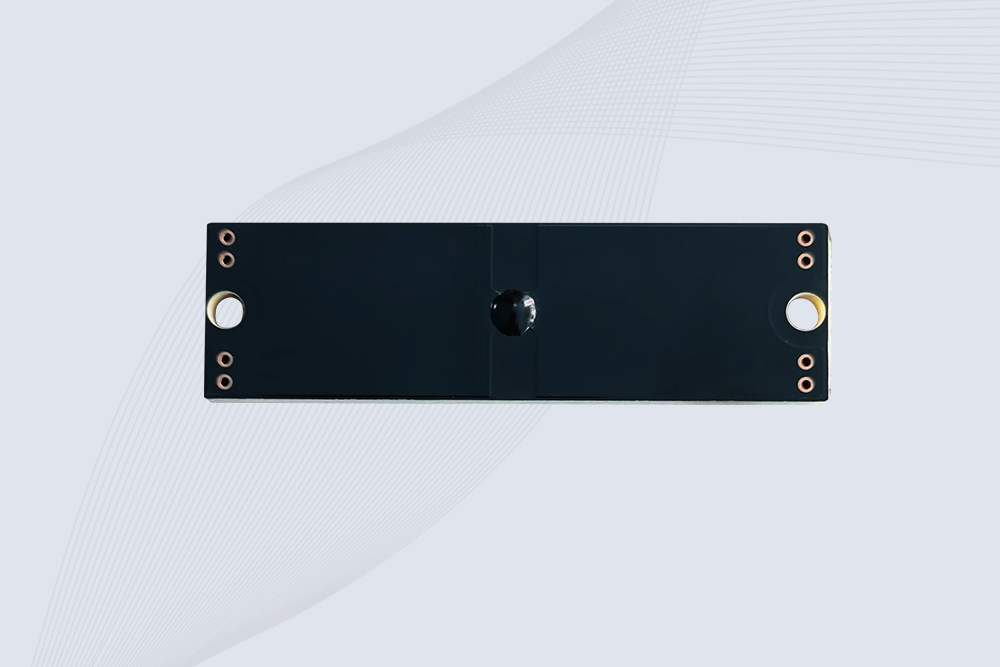
CYKEO CYKEO-PCB1504 Metal RFID Tags is a compact anti-metal UHF RFID solution built for direct mounting on metal surfaces. With stable 8-meter read range, Ucode-8 chip, and long data retention, this rfid metal tag fits tools, containers, automotive parts, and industrial asset tracking.
CYKEO CYKEO-PCB7020 On-Metal RFID Tags are designed for reliable tracking on steel and metal surfaces. Built with an FR4 epoxy body and industrial-grade chips, these On-Metal RFID Tags deliver stable performance, long data life, and chemical resistance, making them a dependable RFID anti-metal tag for harsh environments.
The CYKEO CYKEO-60-25 Anti-Metal RFID Tag is built for metal surfaces where standard tags fail. Designed for long-range performance, harsh environments, and stable data retention, this Anti-Metal RFID Tag is ideal for industrial assets, containers, and equipment tracking using on metal RFID tags.
The CYKEO RFID Laundry Tag is designed for long-term textile identification in harsh laundry environments. Built to withstand high heat, chemicals, and repeated washing, this RFID Laundry Tag delivers stable performance for hotels, hospitals, and industrial laundry operations using laundry rfid tags at scale.
The CYKEO CYKEO-125-7 RFID Book Tag is designed for reliable book and document tracking in libraries and archives. This RFID Book Tag delivers long read range, dense placement support, and stable performance on shelves, making it a practical rfid tag on books for library automation, file management, and archival systems.
CYKEO RFID tags in hospitals are designed for sterile environments where accuracy matters. These autoclavable RFID tags support long-term tracking of surgical tools, implants, and medications, helping hospitals improve visibility, compliance, and patient safety.
CYKEO RFID Cable Tie Tag is built for reliable identification on metal surfaces. This UHF RFID Cable Tie Tag is widely used in rfid tags for inventory systems, industrial asset management and Hospital RFID Tags, offering stable read performance, long service life and global EPC Gen2 compatibility.
CYKEO RFID Asset Tag is designed for stable identification of metal assets in industrial environments. This UHF RFID Asset Tag is commonly used for rfid tag asset tracking on equipment, tools and containers, providing reliable reads, long service life and ISO/IEC 18000-6C support.
CYKEO UHF RFID Card is designed for fast identification and long-term use in industrial and commercial systems. Supporting ISO 18000-6C, this UHF RFID Card works at 860–960 MHz and is suitable for custom RFID cards used in asset tracking, access control and inventory management.
CYKEO HF RFID Cards are designed for secure and stable access control systems. These 13.56 MHz RFID key cards support ISO 14443-A, reliable rewriting and long service life, making HF RFID Cards suitable for offices, campuses, events and membership management.
CYKEO UHF RFID Tag is designed for reliable tracking of metal jewelry and high-value items. This Jewelry RFID Tag supports long-range reading up to 8 meters, anti-counterfeit protection and stable performance on metal, making it suitable for retail, inventory control and asset management.
RFID Industry Writer | IoT & Asset Tracking Analyst
James writes about RFID technology, asset tracking, and the practical challenges of digital transformation across warehousing, retail, manufacturing, and logistics.
His work focuses on how RFID is applied in real-world operations—improving inventory visibility, automating workflows, and helping businesses manage assets with greater accuracy and efficiency.
He regularly covers topics including UHF RFID, smart cabinets, RFID portals, tool tracking, warehouse automation, and industrial IoT trends..
Explore how mobile RFID equipment carts enhance efficiency in healthcare, industrial, and warehouse settings. Learn about automation in asset management, real-world case studies, selection advice, and practical user experience.
Trying to use a Flipper Zero for RFID tasks? This no-nonsense guide explains its real-world capabilities, its hard limits, and when you truly need an industrial system.
Explore groundbreaking RFID applications beyond logistics, including interactive art, wildlife tracking, and smart agriculture. Discover how Cykeo pioneers creative RFID solutions.
what do rfid tags do? Learn how RFID tags identify, track, and manage assets with real-world applications, technical insights, and Cykeo RFID solutions.
 Cykeo RFID IoT Solution Products R&D Manufacturer