 Cykeo RFID IoT Solution Products R&D Manufacturer
what are the benefits of rfid
82RFID improves identification speed, inventory visibility, data accuracy, and process efficiency by automatically capturing multiple tagged items without dire...
MoreAll RFID Product
When companies start improving tool management, the first upgrade is usually barcode systems.
It feels like a reasonable step forward.
But after a while, many factories realize something important:
Barcodes are still manual systems.
And in real industrial environments, manual systems eventually break down.
That’s where RFID for tools becomes the next stage.
At a basic level:
This sounds simple, but in practice, it changes everything.

Barcode systems work fine in retail.
But industrial tool environments are different:
In these conditions:
👉 Workers often skip scanning
And once scanning becomes optional, data becomes unreliable.
The biggest advantage of RFID is not speed.
It’s removing dependence on human behavior.
With an RFID tool tracking system:
The system works even when people don’t “follow procedures”.
RFID becomes much more powerful when combined with a controlled environment.
That’s why many factories use RFID tool cabinets instead of open systems.
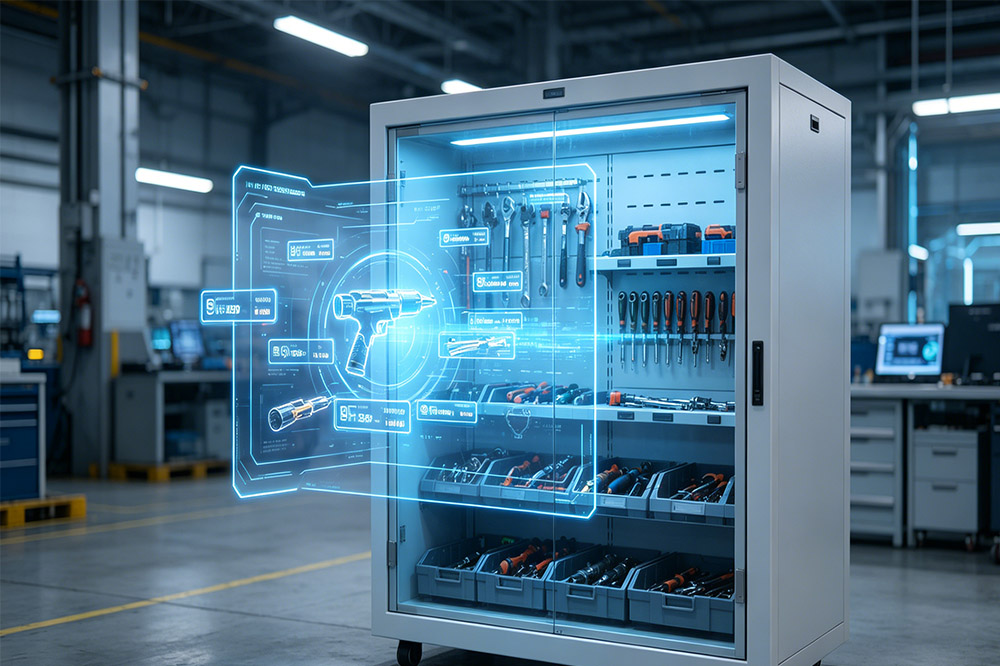
In real deployments, systems like the CK-GT1 RFID Tool Cabinet combine:
This creates a closed-loop system:
You can only take tools if the system knows who you are.
| Feature | Barcode System | RFID for Tools |
|---|---|---|
| Scanning method | Manual | Automatic |
| Speed | Slow | Fast |
| Human error | High | Very low |
| Real-time tracking | Limited | Full visibility |
| Multi-tool detection | No | Yes |
| Industrial suitability | Medium | High |
After switching from barcode to RFID, companies usually report:
But the biggest change is not operational.
It’s behavioral:
Workers no longer need to remember anything.
The system handles it.
To be fair, barcode systems are not useless.
They still work if:
But once scale increases…
Barcode systems start to collapse.
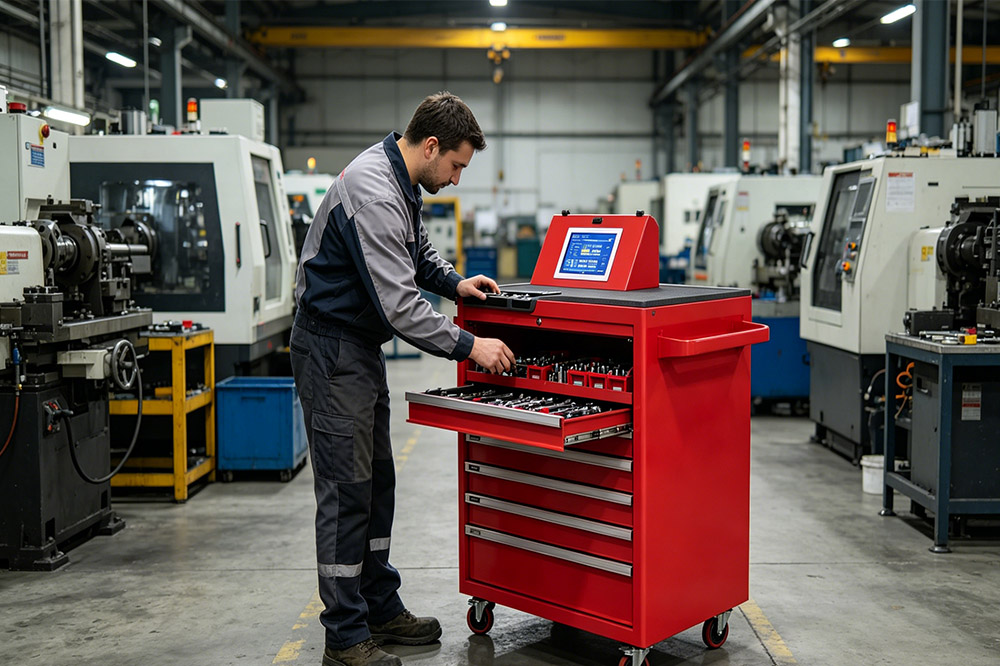
You should seriously consider RFID if:
At that point, barcode systems are no longer efficient.
Barcode systems help you start tracking tools.
RFID systems help you control tools.
That’s the real difference.
RFID for tools is not just an upgrade in technology—it’s an upgrade in management logic.
Instead of asking people to record actions,
you build a system that records everything automatically.
RFID Tool Cabinets
CYKEO-GT1 RFID Intelligent Tool Cabinet
CYKEO-GGT1 Intelligent Weighing Cabinet
CYKEO-GT7 RFID Inventory Tool Cabinet
CYKEO-TC RFID Multi-Drawer Tool Cart
CYKEO-GTC4 INDUSTRIAL RFID TOOL CART
CYKEO-GTC7 RFID Aviation Maintenance Cart
CYKEO-GTC7A RFID Real-Time Tool Tracking Cart
CYKEO-GTC4B RFID Mobile Tool Cart
CYKEO-GTC4C RFID Workshop Tool Control Cart
CYKEO-GTC4A Multi-drawer RFID Tool Cart
CYKEO-GTC4D RFID Tool Tracking Cart
CYKEO-GT3A COMPACT RFID TOOL CABINET
CYKEO-GT1A INDOOR RFID CABINET
CYKEO-GT4A RFID Secure Tool Cabinet
CYKEO-GT2B RFID Aviation Tool Cabinet
CYKEO-GTC5 RFID tool tracking system
CYKEO-GT3B RFID Tool Inventory System Cabinet
CYKEO-GT3 UHF RFID Tool Cabinet
CYKEO-GT4 RFID Multi-Drawer Tool Cabinet
CYKEO-GT2 INDUSTRIAL RFID TOOL CABINET
CK-GT2A INDUSTRIAL RFID CABINET
CK-GT1B INDUSTRIALRFID TOOL CABINET
CK-GT3C RFID Tool Checkout System Cabinet
RFID Reader Antennas
CYKEO-A11 UHF RFID reader antenna
CYKEO-A10 UHF RFID HIGH GAIN ANTENNA
CYKEO-PHF3 SMART HIGH-FREQUENCY POSITIONING ANTENNA
CYKEO-A5B 5dBi Industrial Linear RFID Antenna
CYKEO-B12 12dBi UHF Long Range RFID Antenna
CYKEO-B10 Long Distance RFID Antenna
CYKEO-A6 UHF RFID panel antenna
CK-A3 industrial antenna RFID UHF
CYKEO-B5 directional RFID antenna
CYKEO-A5C High-Gain UHF RFID Antenna System
CYKEO-A7 Flexible RFID Antenna
CYKEO-B5A industrial Passive RFID Antenna
CYKEO-A9B High Gain RFID Antenna
CYKEO-A8A INDUSTRIAL UHF RFID ANTENNA
CYKEO-A9 9dBi UHF RFID Antenna
CYKEO-A12 12dBi RFID Circular Polarized Antenna
CYKEO-A5 5dBi UHF RFID Circular Polarized Antenna
CYKEO-A8 8dBi HIGH-GAIN UHF RFID ANTENNA
CYKEO-A9A 9dBi UHF RFID HIGH-GAIN ANTENNA
RFID improves identification speed, inventory visibility, data accuracy, and process efficiency by automatically capturing multiple tagged items without dire...
More
The 2025 USDA regulation requires cattle to wear RFID electronic ear tags. This article shares selection, deployment, and management insights from frontline ranch experience, helping farmers quickly comply while improving management efficiency.
More
Learn what an RFID reader module is, how it works, and why OEMs and system integrators use it to build RFID devices. A practical guide covering integration, interfaces, and real-world applications.
More
Wondering "can you read NFC with RFID"? Discover how HF RFID readers work with NFC tags, real-world testing results, protocol requirements, and solutions from CYKEO.
More