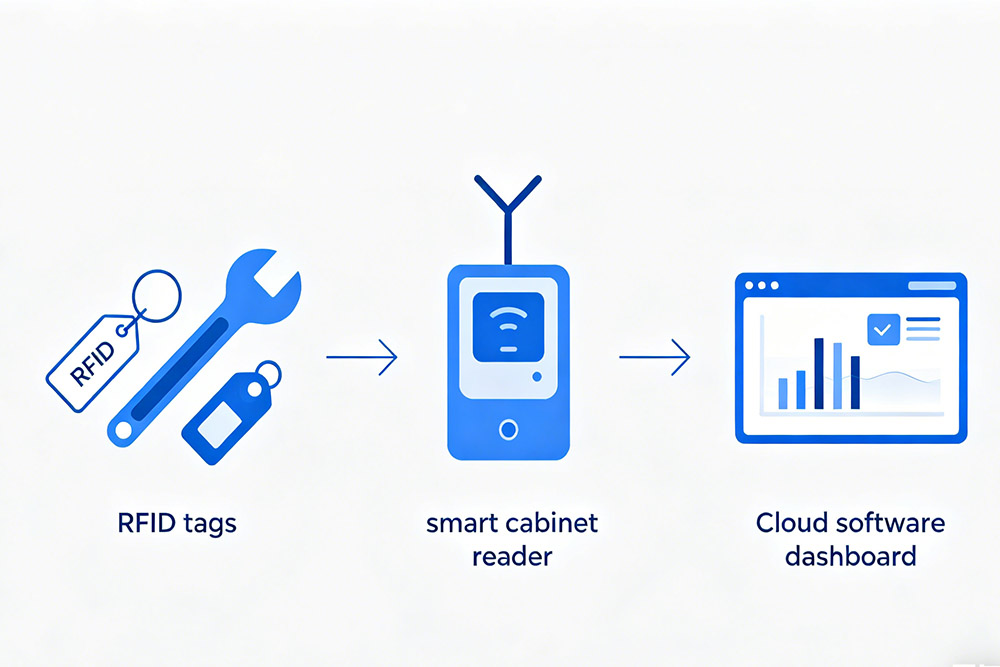
A reader (often inside a cabinet) detects the tools
Software records every movement
No barcode scanning. No paperwork.
Everything happens automatically in the background.
2. Why Traditional Tool Tracking Breaks Down
A lot of companies start with:
Excel sheets
Sign-out logs
Barcode systems
But over time, these systems fail for one simple reason:
They depend on people.
And people forget.
In real working conditions:
Tools get borrowed quickly
Workers skip steps
Records become incomplete
Eventually, inventory becomes unreliable—and no one fully trusts the system anymore.
3. How RFID Changes Tool Management
RFID removes the dependency on manual input.
Instead of asking workers to “remember to log tools,” the system does it automatically.
Here’s what actually changes:
Automatic Tracking
Every tool movement is recorded without scanning
Real-Time Visibility
You always know what’s in the cabinet—and what’s missing
Accountability
Each user interaction is linked to a person
Faster Inventory
Full tool count can be done in seconds, not hours
4. The Role of RFID Tool Cabinets
While handheld readers and fixed readers exist, most industrial buyers are now choosing RFID tool cabinets.
Why?
Because tracking alone isn’t enough—you also need control.
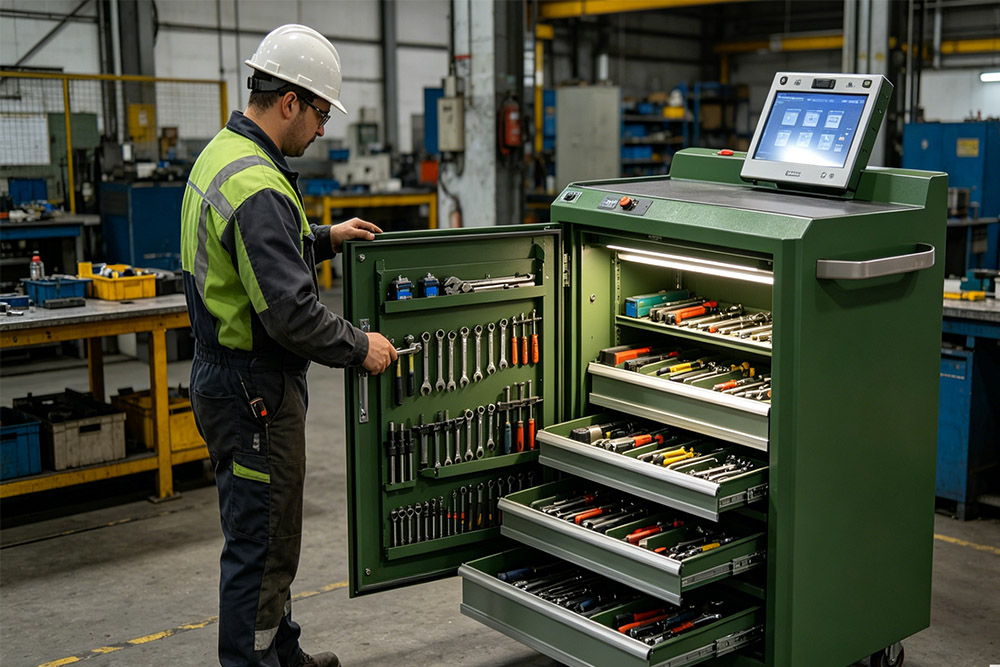
Example Solution: CK-GT1 RFID Intelligent Tool Cabinet
In real projects, many factories prefer integrated systems like the CK-GT1 RFID Tool Cabinet, because it combines:
Storage
Tracking
Access control
into one system.
Typical features include:
Automatic tool identification when placed inside
Controlled access via badge or login
Real-time inventory display
Alerts for missing or overdue tools
Industrial-grade design for harsh environments
Instead of just “knowing” where tools are, you’re actively managing them.
5. Where RFID for Tools Is Used
This isn’t limited to one industry.
You’ll typically see RFID tool tracking in:
Manufacturing
Production line tools
Maintenance equipment
Oil & Gas
High-value tools
Remote site management
Aerospace & MRO
Strict compliance requirements
Tool accountability (FOD prevention)
Construction
Shared tools across teams
Temporary job sites
6. What Buyers Actually Care About
When companies look into RFID for tools, they’re usually not thinking about technology first.
They’re asking:
“How much tool loss can we reduce?”
“Will this slow down workers?”
“How long before we see ROI?”
And these are valid concerns.
In most cases, the benefits come from:
Reduced tool replacement costs
Less time spent searching
Lower administrative work
Better internal accountability
7. Common Mistakes to Avoid
If you’re considering RFID, watch out for these:
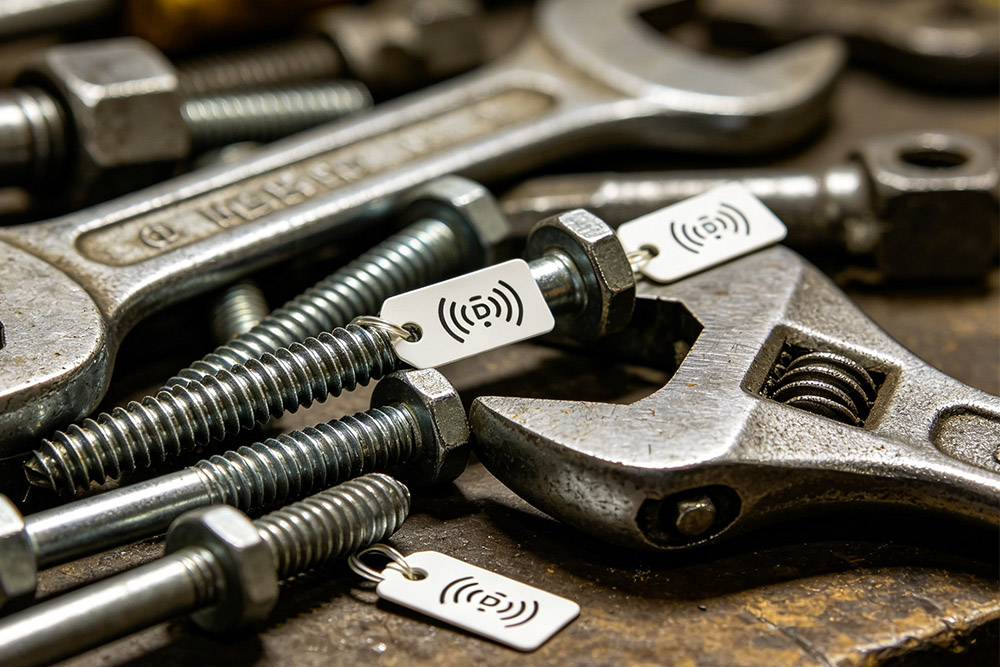
Choosing tags that don’t fit your environment
Metal tools require specific RFID tags
Ignoring workflow design
The system must match how your team actually works
Overcomplicating the setup
Simple systems often perform better in real operations
8. Is RFID for Tools Right for You?
You’ll benefit most if:
You manage a large number of shared tools
Tool loss is a recurring issue
You need traceability for compliance
Manual tracking is already failing
If none of these apply, RFID might be overkill.
But if even two of them sound familiar—it’s worth looking into.
9. Final Thoughts
RFID for tools isn’t about adding new technology for the sake of it.
It’s about removing friction from daily operations.
No more chasing tools. No more guessing inventory. No more unclear responsibility.
Just a system that works quietly in the background—and keeps everything under control.
If you’re sourcing RFID tool tracking solutions or planning a bulk deployment, it’s worth evaluating integrated systems like RFID tool cabinets with customization options.
This article provides a deep dive into smart RFID parking systems, covering the technology principles, key components, application scenarios, and advantages. It highlights how RFID improves parking efficiency and security, driving the evolution of...
Explore how armoire RFID smart cabinets work in real environments. Learn about RFID reader design, cabinet structure, antenna layout, and why RFID cabinets deliver stable asset tracking in industrial, medical, and secure storage scenarios.
The success of any RFID system depends not just on the reader but on the antenna. It’s the antenna that transmits radio energy to the tags and captures data accurately. Choosing the right RFID antenna ensures stable reads, maximum coverage, and e...
Learn what it truly means to program an RFID reader. Our guide covers configuration, software integration, and the realities of custom firmware development.
 Cykeo RFID IoT Solution Products R&D Manufacturer