Whether it’s a residential community, an industrial park, or a large commercial parking lot, the demand for better access control is growing every year. People want safety, efficiency, and less dependency on manpower. In this context, the rfid barrier gate has quietly become a central piece of many projects. On the surface, it may look like just a bar that goes up and down, but the real value goes much deeper.
The Technology Behind the Gate
At first glance, an rfid barrier gate is just about recognizing vehicles with RFID tags. But every step of the process matters. When a vehicle approaches, the reader captures the RFID signal from the tag placed on the windshield or license plate, and sends it to the backend system. If the data matches the authorized list, the controller triggers a signal and the barrier arm rises automatically. The whole process is so fast that drivers barely notice a delay.
More importantly, the rfid barrier gate doesn’t work alone. It integrates with license plate recognition, ground loops, CCTV, traffic lights, and even payment platforms. This means it goes beyond simple “access granted or denied” — it becomes the central hub of entry management. For example, it can stop tailgating vehicles, or give emergency vehicles immediate priority during critical moments.
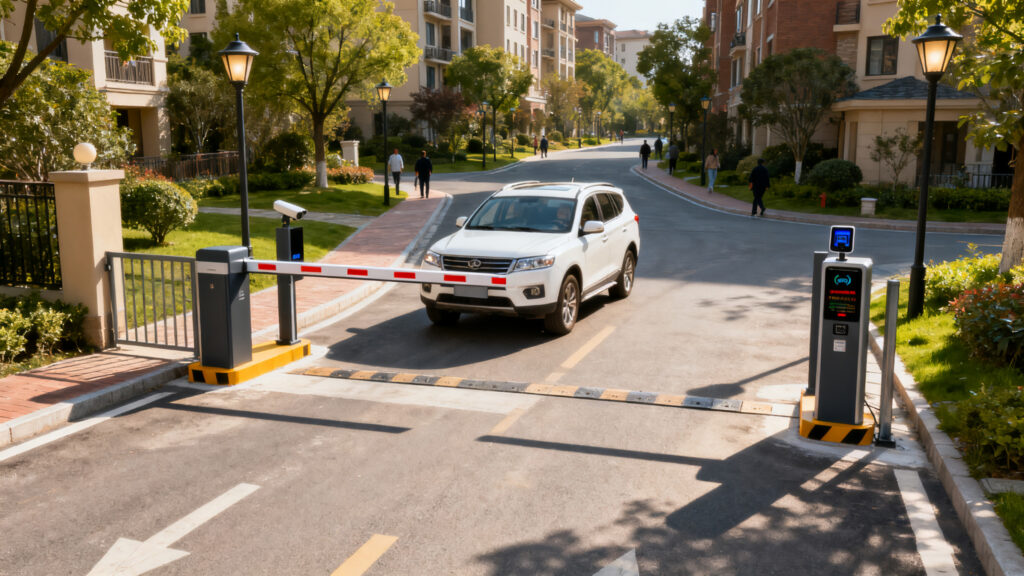
In Residential Communities: Convenience Meets Security
For residential areas, the first impact is felt in everyday convenience. Residents no longer need to stop and swipe a card or search for a lost remote control. With RFID tags, the barrier opens automatically as the car approaches.
On the management side, every entry and exit is recorded with precise timestamps. This invisible layer of security makes it harder for unknown vehicles to sneak in, while giving residents peace of mind.
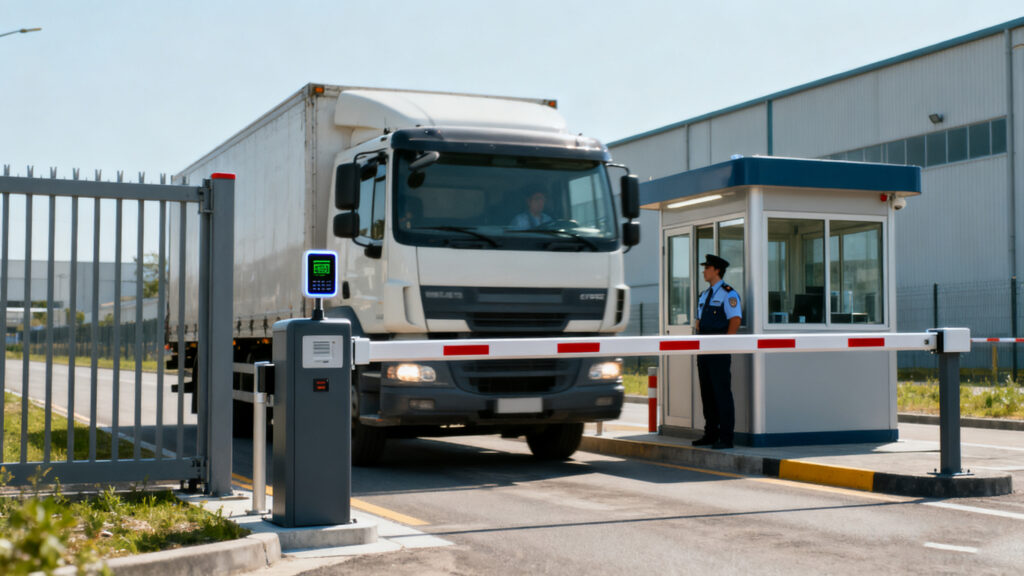
In Industrial Parks: Process Meets Control
Factories and industrial parks require a more complex setup. Employee cars, visitor cars, and trucks all need different handling rules. Here, the rfid barrier gate plays a much larger role — it’s not just about letting vehicles in, it’s part of the operational workflow.
For instance, employees with long-term RFID tags can enter freely; visitors may need pre-registration; trucks often connect with warehouse or weighbridge systems, and even logistics scheduling platforms. Without rfid barrier gates doing the initial vehicle identification, the rest of the chain wouldn’t flow properly.
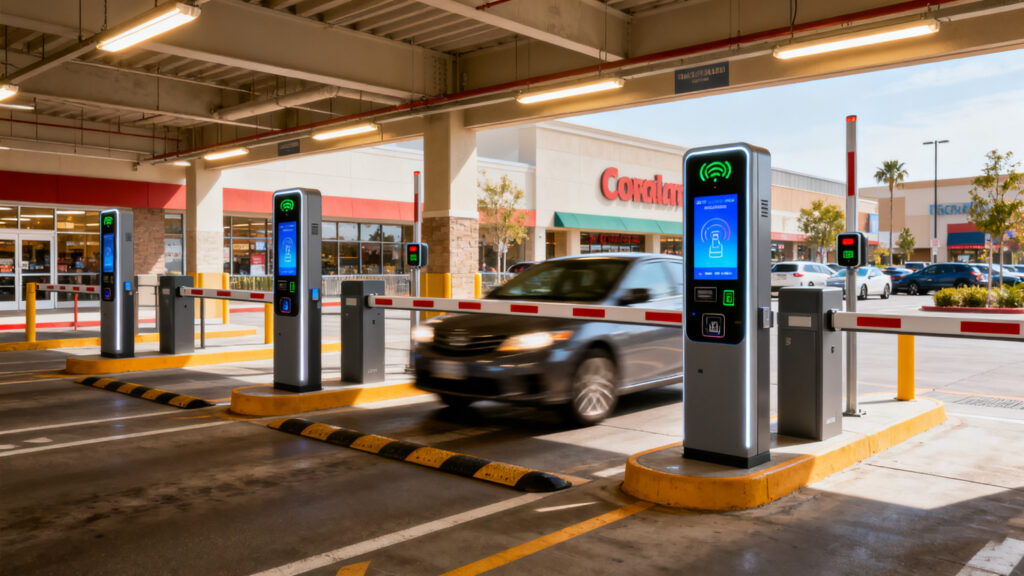
In Parking Lots: Efficiency Equals Revenue
In places like shopping malls, hospitals, and airports, the rfid barrier gate is often tied to revenue. As soon as a car enters, the system starts timing. When leaving, the driver completes payment and the barrier lifts automatically.
With digital payments and top-up options, the entire process can be almost fully automated, reducing wait times and improving customer satisfaction. At the same time, higher turnover rates and smoother operation translate directly into better business performance.
Safety Details: Where Reliability Is Proven
While speed is important, safety details are what really prove the system’s quality. A well-designed rfid barrier gate usually includes anti-tailgating features, infrared or pressure sensors to avoid hitting vehicles or pedestrians, and breakaway mechanisms in the arm so the system won’t collapse if struck by a car.
In high-standard projects, there are even special RFID tags or remote controls for emergency vehicles, ensuring ambulances or fire trucks can pass without delay. These details may seem small, but they make a huge difference when it matters most.
What Integrators Really Care About
For system integrators, the main question isn’t just “does it open or not?” The real concerns are:
Is the reader and controller reliable under continuous use?
Can the system integrate with existing access control, CCTV, or payment platforms?
If future upgrades include license plate recognition or mobile app control, will it scale smoothly?
These factors determine whether a project remains sustainable in the long run. A flexible, integration-friendly rfid barrier gate is far more valuable than a stand-alone solution.
From Hardware to Open Platform
Looking at the bigger picture, the rfid barrier gate has already evolved from a simple mechanical device into an open integration platform. Today, it can connect with IoT systems, mobile apps for remote authorization, or even AI analytics for vehicle behavior.
In residential communities, it brings convenience and safety. In factories, it enforces process discipline. In parking lots, it improves efficiency and profitability. For integrators, it’s not just about selling a piece of hardware — it’s about building the entry point that ties together the entire access control and security system.
In short, the rfid barrier gate is much more than a rising arm. It’s hardware and software, convenience and security, operations and integration. As applications continue to expand, it’s moving from a simple gatekeeper to the central nervous system of smart access management.
Cykeo’s CYKEO-T1D industrial RFID ceiling reader features 500 tags/sec scanning, IP54 protection, and -20℃~60℃ operation for retail/warehouse security. Supports ISO18000-6C and GB/T29768 protocols.
Cykeo’s ceiling-mounted RFID reader enables hands-free 5m inventory tracking with 500 tags/min speed. Features dual alerts, ERP integration, and IP54 rating for warehouse security.
Cykeo CK-T1E RFID gate system features 120° coverage, AI motion filtering, and 5m detection for retail/warehouse security. IP67 rugged design with ERP integration.
Wondering where is RFID reader used? From warehouse inventory to retail checkout and healthcare asset tracking, we explore the many industries and applications that rely on RFID readers. Real guidance from CYKEO engineers.
Learn how an RFID tag tracking system helps businesses locate, monitor, and manage assets in real time. Discover how RFID tags, readers, and frequencies work together to boost visibility, accuracy, and efficiency across industries.
Learn how to test rfid reader performance with real field methods, troubleshooting tips, and CYKEO technician insights to verify range, stability, and accuracy.
This article shares real-world experiences from hotels in Los Angeles and New York, exploring the practical implementation of RFID key card systems, efficiency improvements, common pitfalls, and security risks, revealing hotel operators’ hands-on ...
 Cykeo RFID IoT Solution Products R&D Manufacturer