In our previous article, “6 Factors That Affect RFID Read Range,” we discussed how each component of an RFID system impacts overall performance. When it comes to RFID tags, we covered the concept of SOAP—Size, Orientation, Angle, and Placement—and how each factor influences the maximum achievable read distance.
In this article, we’ll take a closer look at three key aspects of orientation and angle: pitch, yaw, and roll.
In systems using linear polarized antennas, pitch, yaw, and roll play a much more significant role. While circular polarized antennas can help reduce issues related to roll, pitch and yaw can still present challenges.
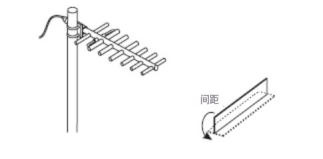
Pitch refers to the rotation of the tag around its horizontal axis.
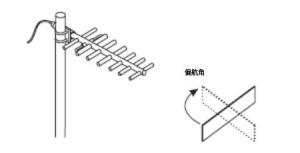
Yaw refers to the rotation of the tag around its vertical axis.
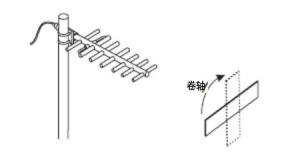
Roll refers to the rotation of the tag around the z-axis.
Pitch, Yaw, and Roll — Positioning RFID Tags
Pitch refers to the rotation of the tag along its horizontal axis.
Yaw refers to the rotation of the tag along its vertical axis.
Roll refers to the rotation of the tag along the z-axis.
Why It Matters
Understanding how pitch, yaw, and roll affect RFID tag performance is critical for achieving maximum readability in almost any RFID system.
Ideally, the antenna of the RFID tag should be aligned with the plane of the reader antenna. This alignment allows the tag to absorb as much RF energy as possible. As the angle increases—whether due to pitch, yaw, or roll—more RF energy is deflected or “washed over” the tag instead of being absorbed. As a result, tag performance drops, and the read range decreases (or the tag may not be read at all).
Practical Considerations
Depending on your system setup, these issues can sometimes be addressed by:
Adding more antennas to improve coverage in the read zone
Switching to omnidirectional tags to reduce sensitivity to orientation
In any case, thorough testing is essential. It’s the only reliable way to understand how pitch, yaw, and roll affect your specific application—and how to minimize their negative impact.
Welcome to Part 7 RFID Roadmap We have divided the information into nine sections: RFID Overview, RFID Readers, RFID Antennas, RFID Tags, Hardware, Auxiliary Equipment, Advanced Principles, Ideal Equipment Performance, RFID System Deployment, and ...
Sometimes referred to as semi-passive or semi-active, Battery-Assisted Passive (BAP) tags are essentially passive RFID tags with a built-in battery. Since these tags wait for a signal from an RFID reader before responding, they function similarly ...
Welcome to Part 8 RFID Roadmap We have divided the information into nine sections: RFID Overview, RFID Readers, RFID Antennas, RFID Tags, Hardware, Auxiliary Equipment, Advanced Principles, Ideal Equipment Performance, RFID System Deployment, and ...
Items or assets made of certain surface materials can be challenging when applying adhesive RFID labels or RFID hard tags with permanent or semi-permanent mounting methods. We recommend following a few simple steps to ensure your RFID tags adhere ...
 Cykeo RFID IoT Solution Products R&D Manufacturer