How to Make a UHF RFID Antenna: Our Workshop Chronicle of Trials
The urge to make a UHF RFID antenna often strikes in a moment of necessity or pure curiosity. You have a unique item that needs a tag, but nothing off-the-shelf fits. Or, you just want to see if you can do it. We’ve been there, with rolls of copper tape and a graveyard of dead RFID chips. Here’s the unfiltered walkthrough of what this process actually involves, complete with the points where most sensible people quit.
The Deceptively Simple Start: Cutting and Pasting
It begins with optimism. You gather the basics: a substrate (like FR4 board or even thick plastic), adhesive copper tape, a ruler, an exacto knife, and a UHF RFID chip strap you ordered online. The plan is straightforward: cut two strips of tape to the calculated length (about 80mm each for 915MHz), stick them down with a small gap, and bridge the gap with the chip.
You do it. It looks clean. You hold it up to a uhf rfid reader. Nothing. Or maybe a faint read if the tag is touching the antenna. This is the first, universal DIY UHF antenna mistake: assuming a simple dipole will work. You’ve just built an antenna that is spectacularly mismatched to your chip.
The Real Problem Nobody Sees: The Impedance Wall
This is where you learn the most important lesson. Your RFID chip isn’t a passive component; it’s a complex load with a specific impedance—often something like 15 – j150 Ω. Your straight copper strips have a different impedance. This mismatch means nearly all the RF energy your antenna captures reflects at the chip connection point, starving it of power.
To fix this, you must redesign the antenna’s feed point. You need to incorporate a T-match or an inductive loop—tiny, intricate modifications to the copper right where the chip attaches. These features act as an impedance transformer. This step moves you from a craft project into RF engineering. You’ll need to find the chip’s datasheet for its exact impedance and use simulation software (like a free version of Qucs) to model the new design. This is where many DIY attempts stall.
The Iterative Grind of Prototyping
Armed with a new design, you build Prototype V2. It works a little better. Now you enter the troubleshooting loop for homemade RFID tags. You notice performance changes if the tag is near your hand, or on a table. Why? Your substrate’s dielectric constant isn’t perfect. The adhesive on the copper tape adds parasitic capacitance you didn’t model.
To truly diagnose this, you need a Vector Network Analyzer (VNA), a costly piece of test equipment that shows the antenna’s actual frequency response. Without it, you’re tuning in the dark—trimming a millimeter here, adding a foil patch there, and hoping. Even if you succeed, the performance is inconsistent. Prototype 2 might read at 2 meters. Prototype 3, built identically, might only reach 1 meter.
The Durability Problem You Can’t Solve at Home
Let’s say you get one working reasonably well. Now, try bending it. The copper tape cracks or delaminates. The delicate solder or epoxy joint on the chip fails. Expose it to humidity—performance drifts. This is the inherent fragility of a homemade UHF RFID antenna. It has no environmental protection, no robust lamination, and no strain relief.
This journey perfectly illustrates the value of a commercial RFID tag. What you buy isn’t just materials; it’s solved engineering. A mass-produced inlay uses etched aluminum on a precisely characterized substrate. The chip is attached with a robotic flip-chip process. It’s laminated for protection and tested for consistent performance. Every tag on a roll of 10,000 behaves the same way.
So, should you learn how to make a UHF RFID antenna? Absolutely—if your goal is a deep, hands-on education in RF principles. The frustration is the teacher.
But for a product, a business process, or any application where reliability matters, the most efficient path is to use a professionally made tag. At CYKEO, we help clients navigate this choice every day. We use our understanding of the underlying challenges to recommend the right pre-engineered solution—one that’s already survived the prototyping gauntlet and is ready for the real world. Build one to learn how it works. Then, choose a proven product to make your system work.
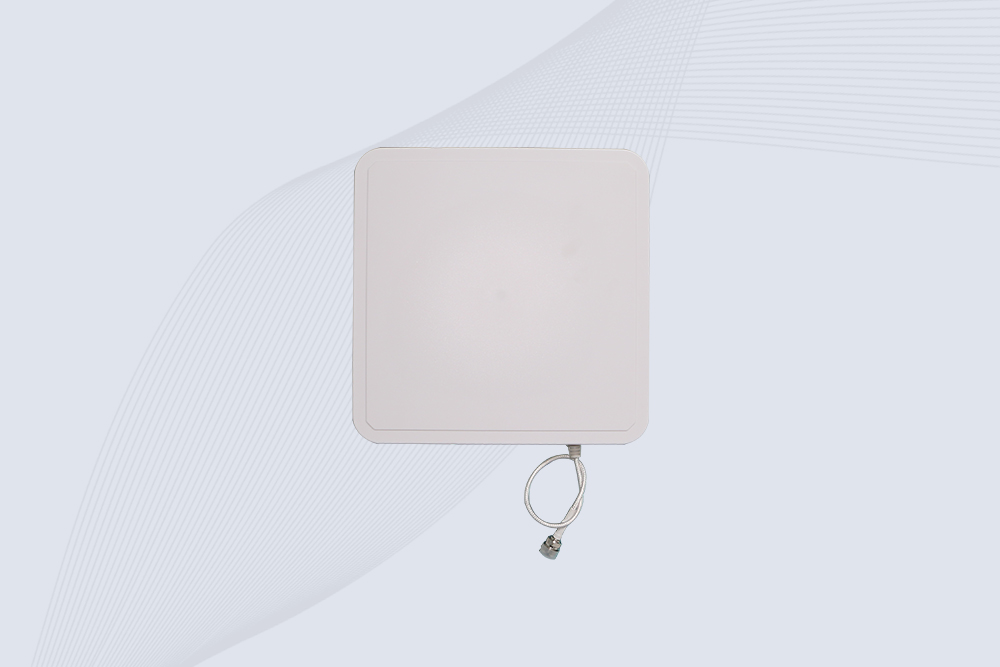
RFID Antennas Recommendation
 Cykeo RFID IoT Solution Products R&D Manufacturer