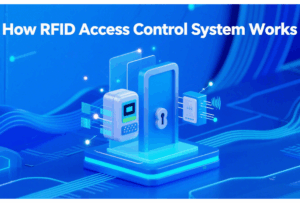
RFID works by transmitting radio waves between a reader and a tag to identify and track objects automatically, without line-of-sight, enabling real-time data capture and high-speed inventory control.
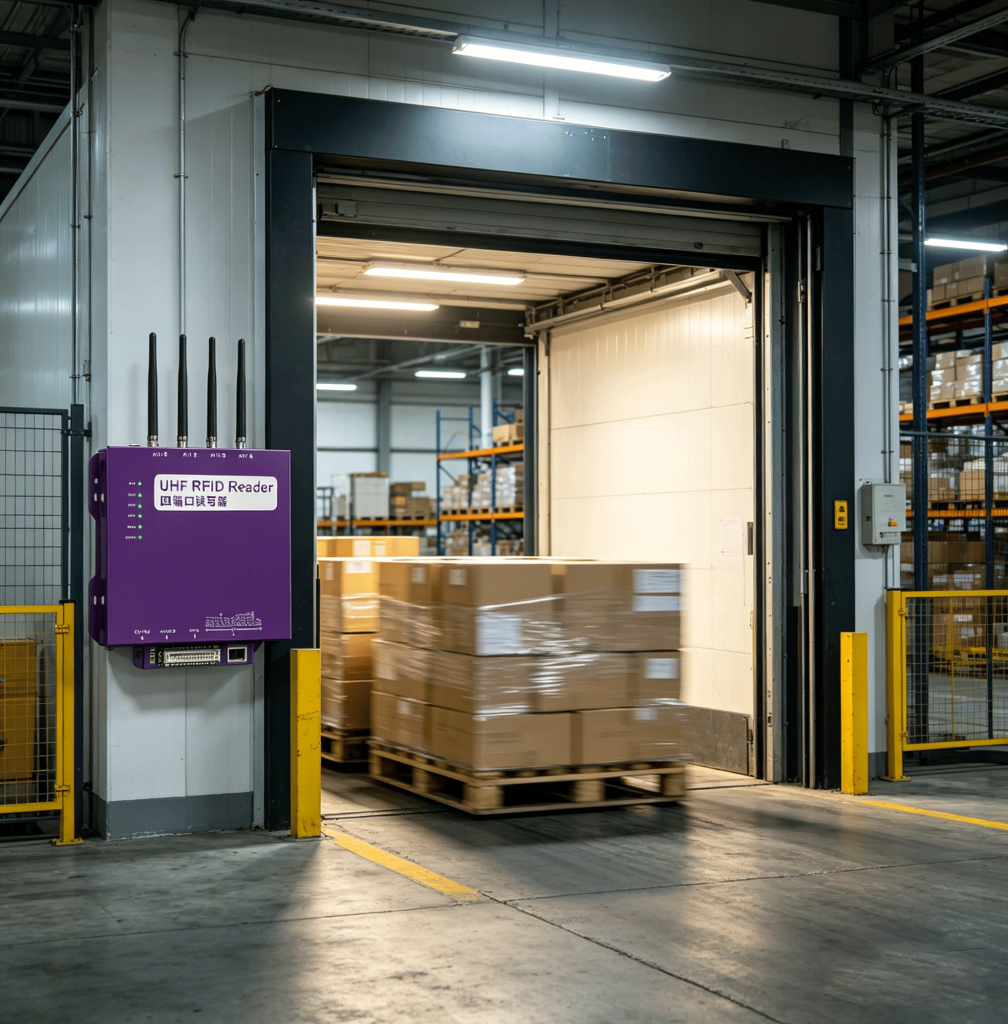
I’ve deployed RFID in warehouse gates where forklifts don’t slow down. The moment a pallet crosses a 6–8 meter read zone, data is captured—no scan gun, no pause. That’s the difference: friction disappears.
how rfid works in real systems
Core mechanism (no abstraction, just what happens)
At its simplest:
The reader emits RF signals through an antenna
The tag absorbs energy (passive) or uses battery (active)
The chip encodes and reflects data back
The reader decodes and sends to software
In practice, it’s not that clean. Metal racks, liquid containers, and tag orientation change everything.
According to RAIN RFID Alliance (rainrfid.org), UHF RFID can read hundreds of tags per second—this aligns with field performance where we consistently hit >400 reads/sec in controlled portals.
uhf rfid reader performance in deployment
Using CYKEO-R4L as a reference architecture
The CYKEO-R4L reader is built for industrial environments where stability matters more than lab specs.
Observed capabilities in real installations:
Parameter
Performance
Read distance
Up to 15 meters
Write distance
Up to 8 meters
Read speed
>400 tags/sec
Frequency bands
Global (FCC, ETSI, JP, CN)
I/O interfaces
3 GPO, 2 GPI
What this means on site:
A single gate can cover full truck-width lanes
No need for multiple handheld scans
Real-time event triggers via GPI/GPO (e.g., alarm, gate open)
rfid system components explained
Not just tags and readers
A functional RFID system includes:
Tags (passive or active)
Reader (fixed or handheld)
Antenna (critical but often ignored)
Middleware / software
From experience, the antenna placement is the failure point in 70% of projects—not the reader.
passive vs active rfid in practice
Where theory breaks in real use
Type
Power
Range
Use Case
Passive
No battery
1–15m
Retail, warehouse
Active
Battery
30–100m+
Personnel, vehicles
Passive UHF dominates because cost matters. According to GS1passive RFID tags can cost under $0.10 at scale, enabling item-level tagging in retail.
But in a hospital I worked with, we switched to active tags for equipment tracking—metal carts killed passive reliability.
real-world applications (where rfid actually works)
Deployment scenarios with measurable ROI
Warehouse inbound/outbound
Reduce manual scanning by ~90%
Asset tracking
Accuracy improves from ~65% to >95% (Deloitte reports similar gains)
Vehicle inspection & customs clearance
Drive-through identification, no stops
Archive & document management
Instant file location in dense storage
The biggest gain isn’t speed—it’s data consistency.
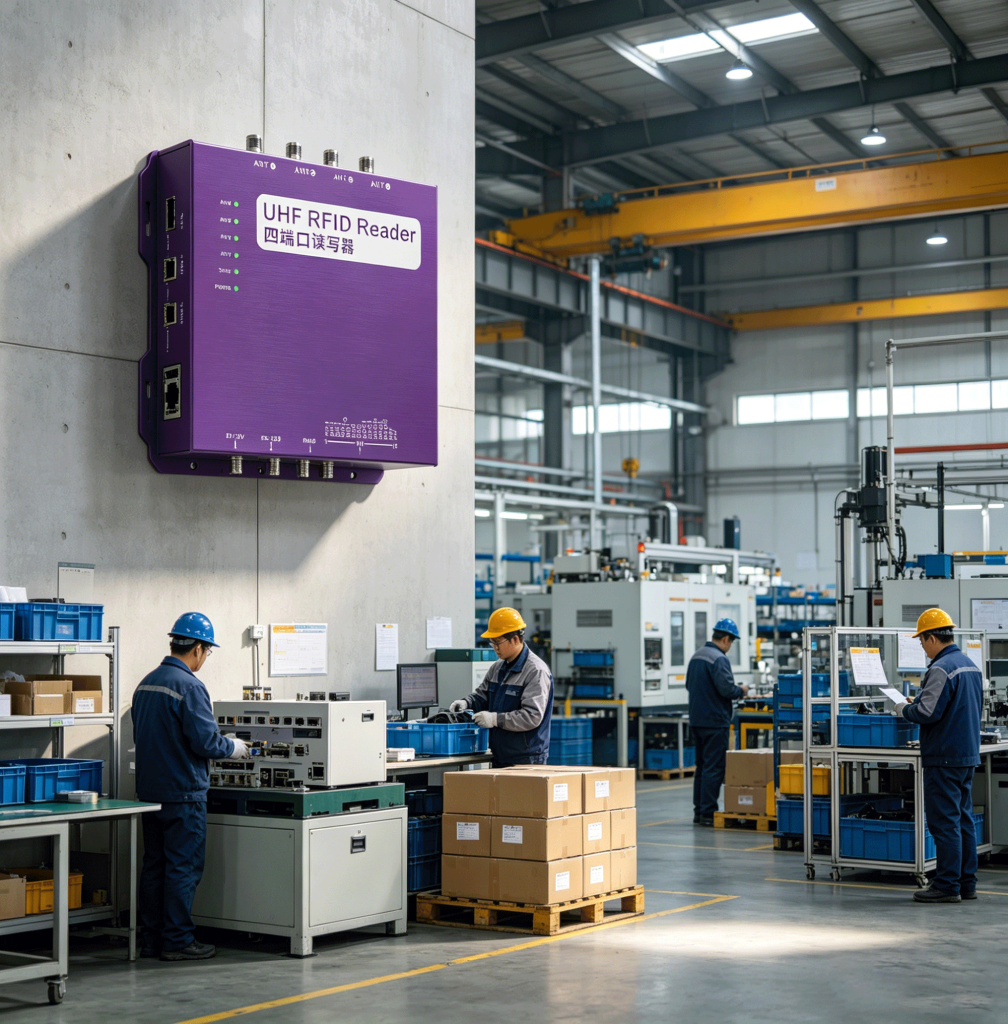
Fixed RFID reader automatically identifies tagged palletsReal-time tracking of assets using UHF RFID
rfid standards and compliance
Why compatibility matters more than specs
CYKEO-R4L supports:
EPC C1G2
ISO18000-6C / 6B
GB/T29768-2013
This ensures cross-region deployment without hardware changes.
In cross-border logistics, we’ve seen projects fail simply because readers didn’t support ETSI bands (865–868 MHz).
common deployment mistakes
What actually breaks RFID systems
Poor antenna positioning
Ignoring interference (metal/liquid)
Overestimating read range in dense environments
No filtering logic in software
A reader can hit 15 meters—but not through stacked steel cages.
faq
Does RFID require line of sight?
No. RFID works through radio waves, allowing tags to be read even when hidden inside boxes or behind objects.
How accurate is RFID tracking?
With proper setup, accuracy exceeds 95%, significantly higher than barcode systems in dynamic environments.
Can RFID read multiple tags at once?
Yes. UHF RFID systems can read hundreds of tags per second simultaneously.
Is RFID expensive to deploy?
Initial setup costs exist, but operational savings (labor, errors) typically offset investment within 6–18 months.
Explore radio frequency identification products from Cykeo for smarter inventory control, asset tracking, and industrial automation. Improve visibility, accuracy, and efficiency with advanced RFID solutions.
Discover how RFID access control systems work—from tags to readers and control panels. Learn how they improve security, automate entry, and enhance facility access management.
 Cykeo RFID IoT Solution Products R&D Manufacturer