 Cykeo RFID IoT Solution Products R&D Manufacturer
How Does RFID Hospital Asset Tracking Solve Real Healthcare Headaches?
814Considering RFID hospital asset tracking? Learn how hospitals reduce equipment loss, save time, and improve care with real-world ROI examples.
MoreAll RFID Product
When people talk about hospital efficiency, it usually sounds like a management buzzword. But if you’ve ever seen how equipment is handled day to day, it’s actually very concrete.
Things get delayed not because equipment doesn’t exist—but because no one knows where it is.
A nurse needs a device.
Someone says, “Try the next room.”
Then another room.
Then storage.
Ten minutes later, they find one. Or they don’t.
Multiply that across shifts, departments, and days—that’s where the real inefficiency is.
RFID doesn’t eliminate work. It removes the “searching” part, which turns out to be a big chunk of the problem.

Most inefficiencies aren’t dramatic. They’re small, repeated moments.
Individually, each one feels minor. Together, they add up fast.
RFID improves efficiency by cutting down these micro-delays. Not by speeding things up—but by removing unnecessary steps altogether.
One thing I’ve noticed is that hospitals don’t suddenly “feel faster” after implementing RFID. Instead, things feel… less chaotic.
You stop hearing:
Because now, there’s a place to check.
Instead of asking people, staff check the system.
It sounds like a small shift, but it changes how decisions are made in real time.
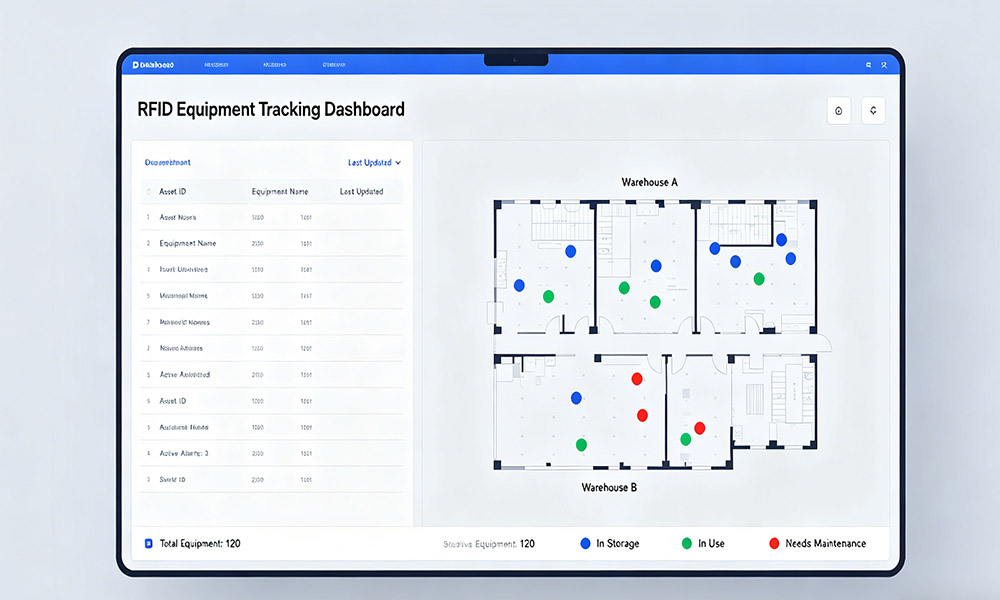
The phrase “real-time visibility” gets used a lot, but it’s easy to underestimate what it actually means in practice.
It’s not just about knowing where something is right now.
It’s about trusting that the information is current.
That trust changes behavior.
Efficiency improves not just because of data—but because people start acting differently based on that data.
One of the most immediate changes is how much time gets spent looking for things.
Before RFID, searching is normal. It’s built into the workflow.
After RFID, it starts to disappear.
Instead of physically checking rooms, staff can:
It’s not that equipment moves less.
It’s that movement stops being invisible.
Tracking equipment is one side of the story. Inventory is where things get more interesting.
Manual inventory systems tend to lag behind reality. Items get used, moved, or restocked—but records don’t always keep up.
This is where combining RFID tracking with controlled storage starts to make a difference.
For example, using an RFID medical cabinet system allows hospitals to automatically record what goes in and out of storage.
No one needs to log withdrawals.
No one needs to update stock levels.
In practice, this reduces:
And unlike tracking systems alone, this part directly impacts daily supply workflows.
Hospitals often assume they need more equipment when availability feels tight.
But once RFID is in place, a different picture sometimes appears.
With that visibility, hospitals don’t need to enforce stricter rules.
They just make better decisions.
Equipment gets redistributed.
Purchases become more targeted.
Efficiency improves—not because people work harder, but because they work with better information.

On paper, barcode systems can also track equipment.
But in real environments, they rely on consistent behavior:
That consistency is hard to maintain, especially in busy hospital settings.
RFID removes that requirement.
No scanning. No extra steps.
The system captures movement automatically.
That’s the reason it tends to perform better—not because it’s more advanced, but because it fits the environment more naturally.
RFID doesn’t guarantee efficiency by default. How it’s implemented matters a lot.
Some common issues:
Reader placement isn’t optimized
→ Leads to gaps in tracking
Too much coverage without a clear plan
→ Generates data, but not useful insights
No integration with existing systems
→ Staff end up checking multiple platforms
Skipping storage control
→ Tracking improves, but inventory still has problems
In most successful setups, tracking and storage are considered together—not separately.
If tracking tells you where equipment has been,
smart cabinets help manage what’s happening right now.
They’re especially useful for:
By combining access control and automatic logging, they reduce both errors and unnecessary manual steps.
And importantly, they don’t require staff to change their habits too much—which makes adoption easier.
RFID improves hospital equipment tracking efficiency in a pretty straightforward way—it removes friction.
Not all of it. But enough to make daily operations smoother.
Less searching.
Fewer assumptions.
More reliable data.
And over time, those small improvements compound.
It’s not about making hospitals “high-tech.”
It’s about making sure the basics—like knowing where your equipment is—actually work.
Related products
CYKEO-GY1B Medical RFID Cabinet
CYKEO-GY1A Smart Medical Cabinet RFID
CYKEO-GY2A UHF RFID Hospital Asset Cabinet
CYKEO-GY2B Medical RFID Storage Cabinet
CYKEO-GY1 Smart RFID Medical Cabinet
FTNG-L-CK-03 FENTANYL SMARTDRUG CABINET
FTNG-L-CK-02 RFID Fentanyl Secure Pharmacy Cabinet
FTNG-L-CK-01 Medical RFID Medicine Cabinet
CYKEO-MFX RFID Operating Room Cabinet
CYKEO-MFY Operating Room RFID Cabinet
CYKEO-MH RFID Scrub Return Cabinet
CYKEO-GY3 Low-Value Consumables Cabinet
Guide Recommendations
RFID Technology Reshapes Hospital Management: Driving Intelligent Transformation in Healthcare
RFID in Medical Equipment and Asset Management: A Smart Solution for Efficiency and Cost Reduction
RFID in Healthcare: Tracking Equipment, Improving Care
RFID in Healthcare: Is It Really Solving Hospital Problems or Just Adding Tech?
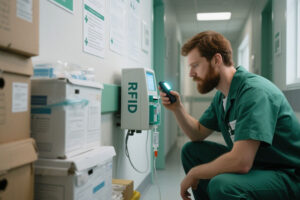
Considering RFID hospital asset tracking? Learn how hospitals reduce equipment loss, save time, and improve care with real-world ROI examples.
More
Learn how to safely remove or deactivate RFID tags from clothing without damaging the fabric. Discover tools, tips, and why some tags shouldn’t be tampered with.
More
Discover how logistics RFID improves warehouse visibility, inventory accuracy, and supply chain efficiency with real-time RFID tracking solutions from Cykeo.
More
How does RFID work? Learn RFID tag communication, reader technology, and real applications with Cykeo RFID experts. Discover smarter identification solutions.
More