 Cykeo RFID IoT Solution Products R&D Manufacturer
RFID in Healthcare: The Silent Guardian Saving Lives and Resources
883Discover how RFID technology improves patient safety, tracks critical medical equipment, and cuts hospital costs. Learn about real-world healthcare RFID solutions.
MoreAll RFID Product
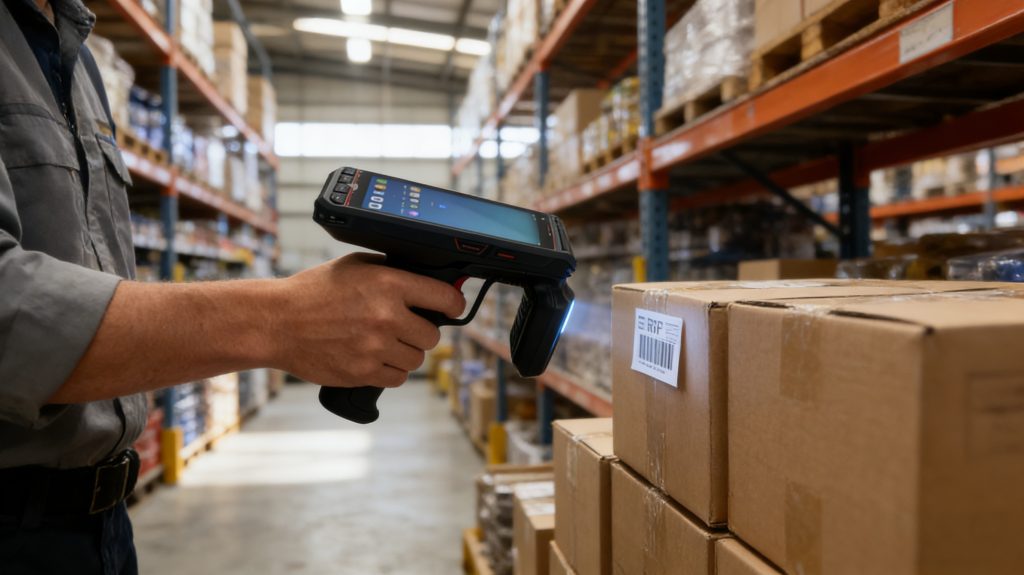
A uhf rfid tag enables long-range, high-speed identification of items, and when paired with a handheld rfid writer, it delivers efficient, real-time data encoding and tracking.
That’s the direct answer. In practice, the value shows up when you stop counting items one by one—and start seeing them all at once.
Author: Cykeo RFID Engineering Team
In a regional distribution center project (~22,000㎡), we deployed uhf rfid tag systems for pallet and carton tracking:
These weren’t theoretical gains—they came from timestamp comparisons between WMS logs before and after deployment.
A uhf rfid tag is a passive or active RFID tag operating in the UHF frequency band (860–960 MHz), designed for long-range and bulk identification.
Typical characteristics:
According to RAIN RFID Alliance , UHF RFID enables reading hundreds of tags per second, making it suitable for high-throughput environments.
A handheld rfid writer writes EPC or user memory data into uhf rfid tag chips.
Typical workflow:
The key shift here isn’t just speed—it’s control. Encoding no longer depends on a fixed station.
Unlike HF or LF systems, uhf rfid tag supports extended read distances:
Multiple tags can be read simultaneously.
According to GS1 RFID systems significantly improve inventory visibility and can achieve over 95% accuracy in controlled environments.
Passive uhf rfid tag costs have decreased over the years, making large-scale deployment viable in retail and logistics.
| Tag Type | Application Scenario |
|---|---|
| Paper label | Retail, apparel |
| On-metal tag | Industrial tools, machinery |
| Hard tag | Reusable assets |
| Flexible tag | Curved surfaces |
UHF RFID doesn’t behave perfectly in every environment.
From field experience:
One warehouse team initially reported inconsistent reads. After adjusting tag placement angles and antenna power, read rates stabilized above 97%.
It wasn’t a hardware issue—it was a deployment detail.
Most are passive and do not require a battery, making them cost-effective and low maintenance.
Usually between 3–10 meters depending on environment and reader power.
Yes. Tags can be re-encoded multiple times depending on chip type and memory configuration.
A uhf rfid tag doesn’t just store data—it changes how data is captured.
When paired with a handheld rfid writer, the system becomes mobile, immediate, and scalable. The biggest gains don’t come from the tag itself, but from how seamlessly it fits into daily operations.
That’s where efficiency stops being theoretical—and starts showing up in numbers.

Discover how RFID technology improves patient safety, tracks critical medical equipment, and cuts hospital costs. Learn about real-world healthcare RFID solutions.
More
How rfid tags work explained with real RFID engineering insights. Learn how RFID chips, readers, EPC codes and smart workstations create accurate identification systems.
More
Trying to save costs? Discover why asking "can any antenna be used for RFID" is risky and learn the critical factors for RFID antenna compatibility and performance.
More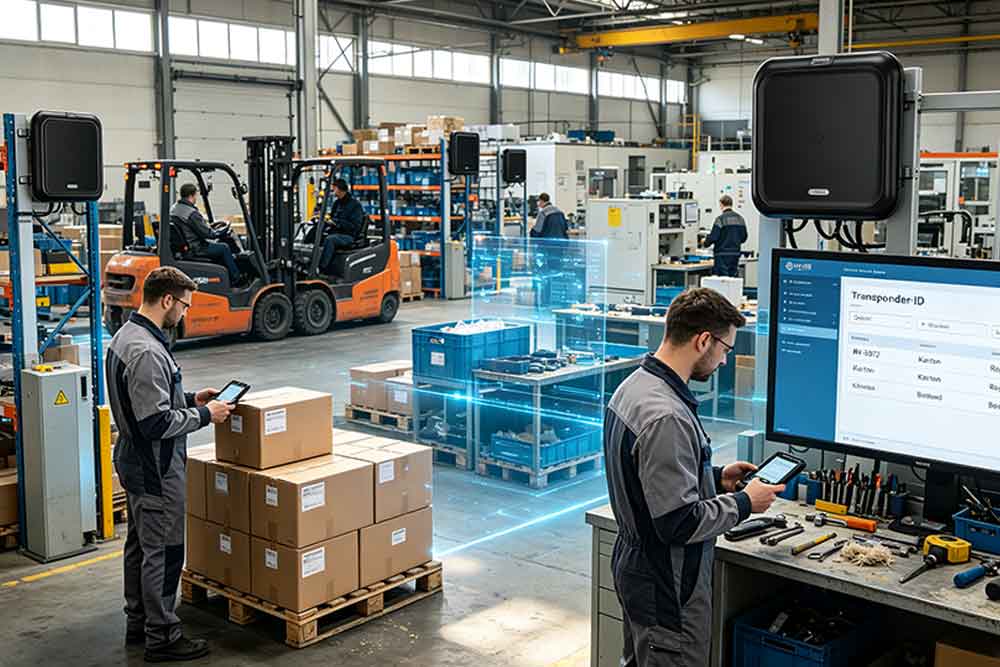
RFID is a wireless identification technology that uses radio waves to exchange data between tags and readers, enabling automatic identification, tracking, an...
More