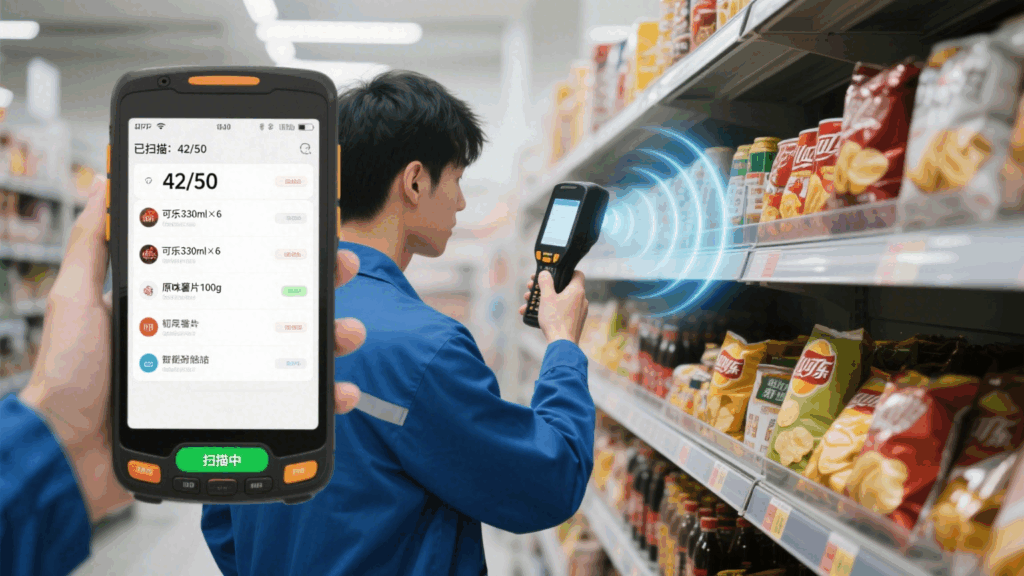
Handheld RFID reader is portable wireless device capable of reading RFID tags, displaying data in real time, and managing information. Compared with fixed readers, it offers greater flexibility and convenience for mobile operations. These devices are widely applied in:
Industrial Manufacturing: production line process tracking, workpiece positioning and identification
Retail: smart inventory management, store stocktaking
Healthcare: medicine management, medical asset tracking
Libraries & Education: book inventory, borrowing and returning records
Composition and Working Principle of RFID Handheld Devices
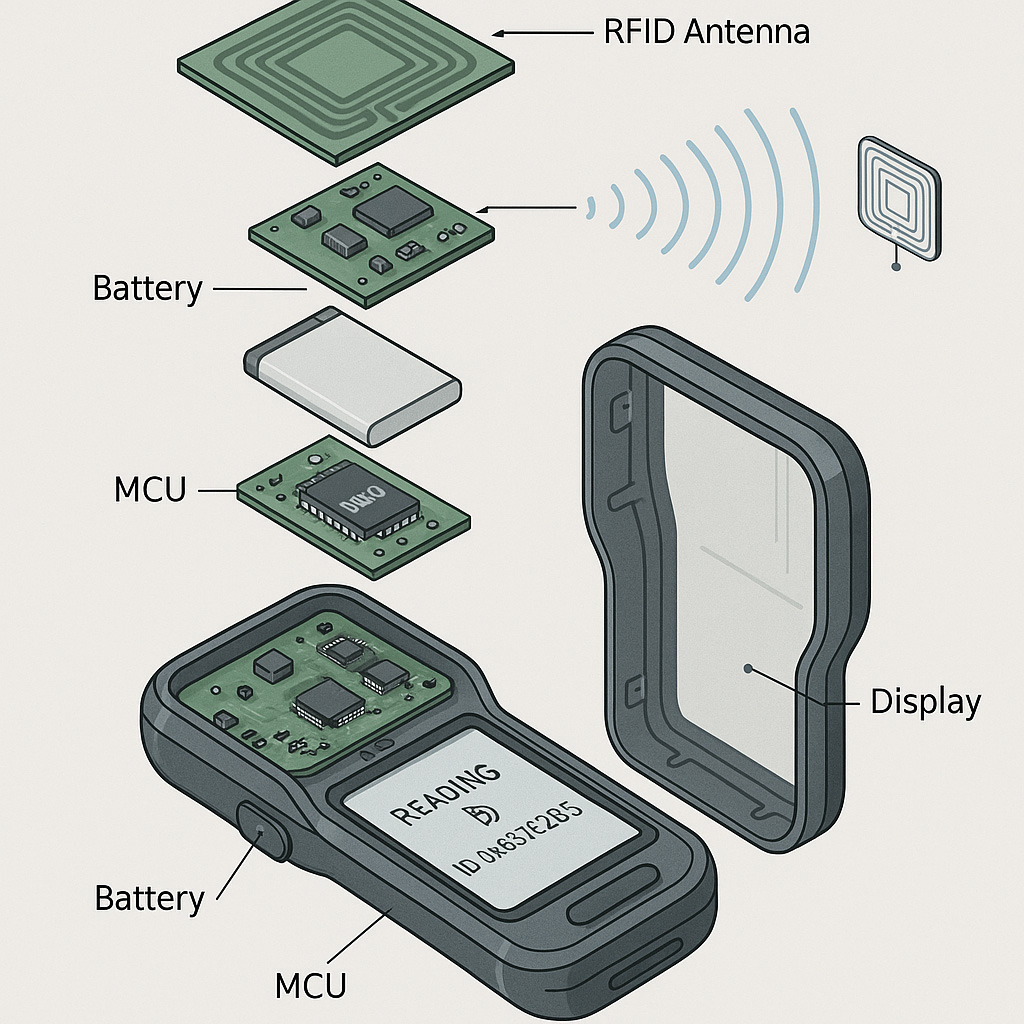
A handheld RFID reader typically integrates an RFID module, antenna, display control system, and communication modules, forming a standalone terminal. The typical workflow is as follows:
Signal Transmission: The antenna emits radio frequency signals to surrounding tags.
Tag Activation: Passive tags receive energy and respond with data.
Data Collection: The reader captures tag information, processes and displays it locally or uploads it to a system.
Information Management: Connection to backend databases via Wi-Fi, Bluetooth, or 4G modules.
Depending on the model, devices may run Android or Windows Embedded OS, supporting custom app installations and local data storage. Some also integrate barcode/QR code scanners to enable multi-function recognition within one device.
RFID Frequency Bands and Protocol Support Explained
Based on application scenarios and reading distance needs, handheld RFID devices mainly support three frequency bands:
Frequency Band
Operating Frequency
Characteristics
Common Applications
LF (Low Frequency)
125 / 134.2 kHz
Short reading distance, good anti-interference
Animal identification, access control
HF (High Frequency)
13.56 MHz
Medium reading distance, globally compatible
Libraries, medical equipment management
UHF (Ultra High Frequency)
860–960 MHz
Long reading distance, supports multi-tag reading
Industrial inventory, warehouse logistics
Most UHF handheld readers support international standards such as EPC Gen2 (ISO 18000-6C), ensuring compatibility with mainstream tags worldwide and enhancing cross-system deployment. Additionally, devices often allow flexible antenna power adjustment to adapt to both long- and short-distance recognition scenarios.
Key Points for Selecting a Handheld RFID Device
Choosing the right handheld RFID reader requires considering the specific application environment, budget, and technical parameters. Key factors include:
Reading Distance: Varies from several centimeters to over ten meters depending on tag type and frequency band.
Operating System: Android-based devices are recommended for easier app development and customization.
Protection Level: For outdoor or industrial sites, IP65 or higher rating (dustproof, waterproof, shockproof) is preferred.
Battery Life: Continuous use time affects work efficiency; high-capacity lithium batteries or replaceable batteries are advisable.
Interface Expandability: Support for Bluetooth, Wi-Fi, USB Type-C, NFC, and other functions.
Tag Compatibility: Ensure the device supports the RFID protocols and frequency bands of the tags in use.
Typical Application Scenarios
Due to its flexibility and mobility, handheld RFID readers demonstrate high practical value across various industries. Typical cases include:
Warehouse and Logistics
Fast tag scanning to improve inventory efficiency
Integration with WMS systems for automated inbound/outbound records
Retail Stores
Daily stocktaking and tag updating
Dual recognition combining QR code and RFID to improve accuracy
As key tool for automated asset tracking and data collection, handheld RFID readers have excelled in industries such as manufacturing, healthcare, and retail. When purchasing, prioritize:
Supported frequency bands and protocols (to ensure compatibility with existing RFID tags)
Operating system openness and extensibility (for easier custom development)
Device durability and battery life (to handle intensive usage)
Support for 1D/2D barcode scanning (to enhance recognition capabilities)
Brand after-sales service and SDK support (to ensure smooth project implementation)
For enterprises in the early stages of digital transformation, it is recommended to select general-purpose UHF handheld terminals and gradually build an RFID-based intelligent tracking and management system.
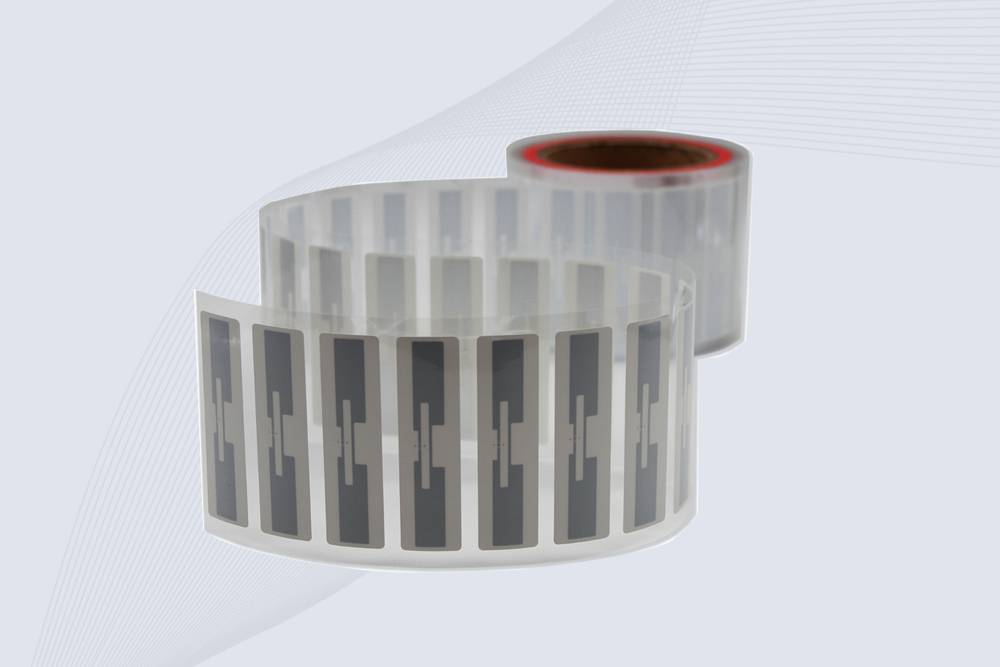
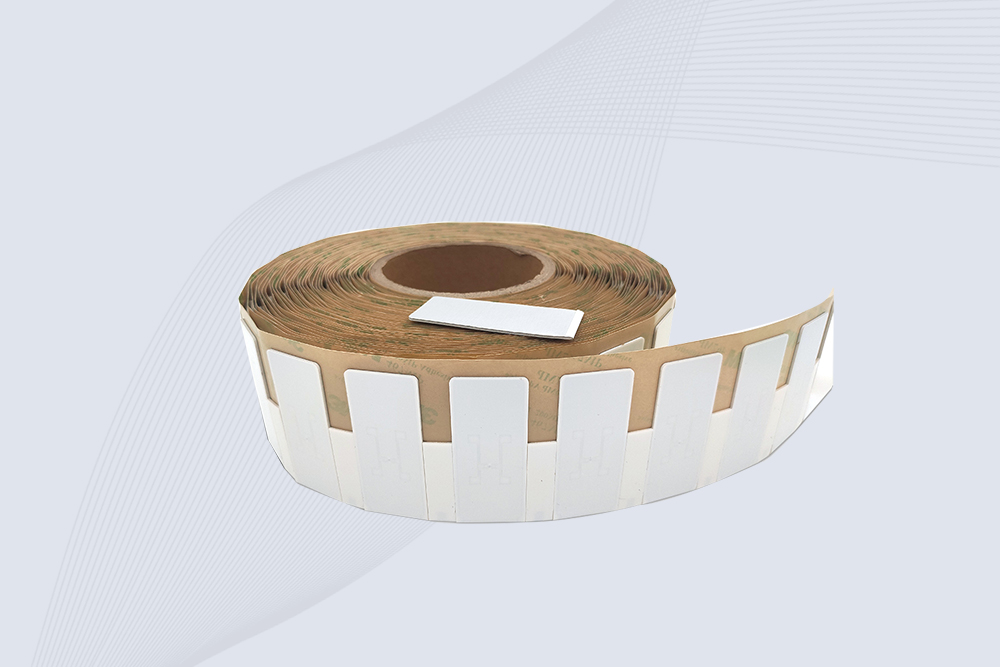
CYKEO Passive RFID Tags are made for wet and high-humidity environments where standard labels do not last. This rfid passive tag is often used around liquids, chemicals and temperature changes, providing stable reading distance and long data life for industrial tracking.
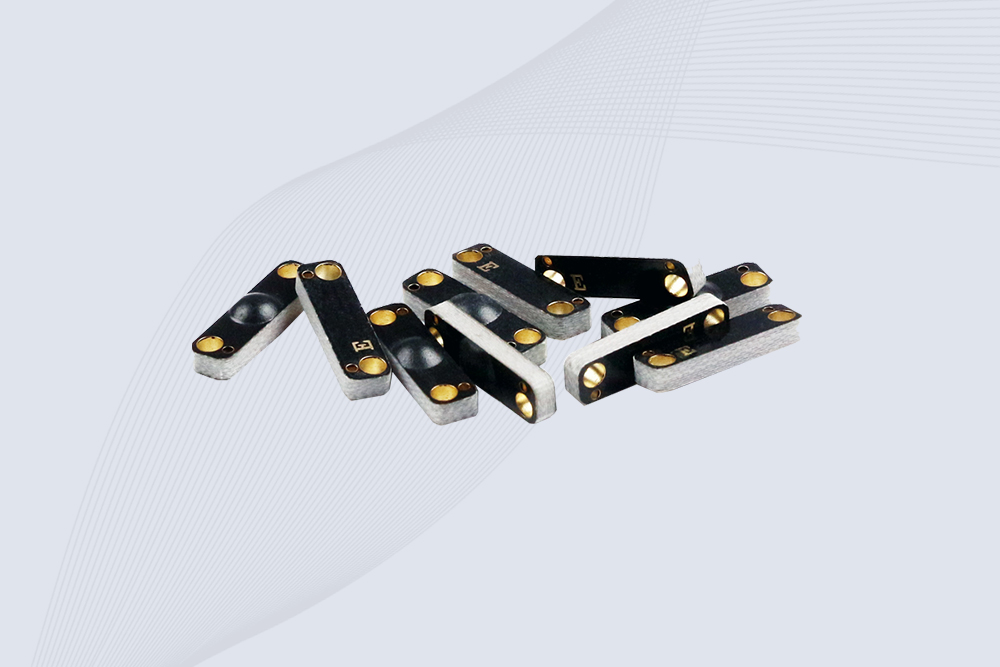
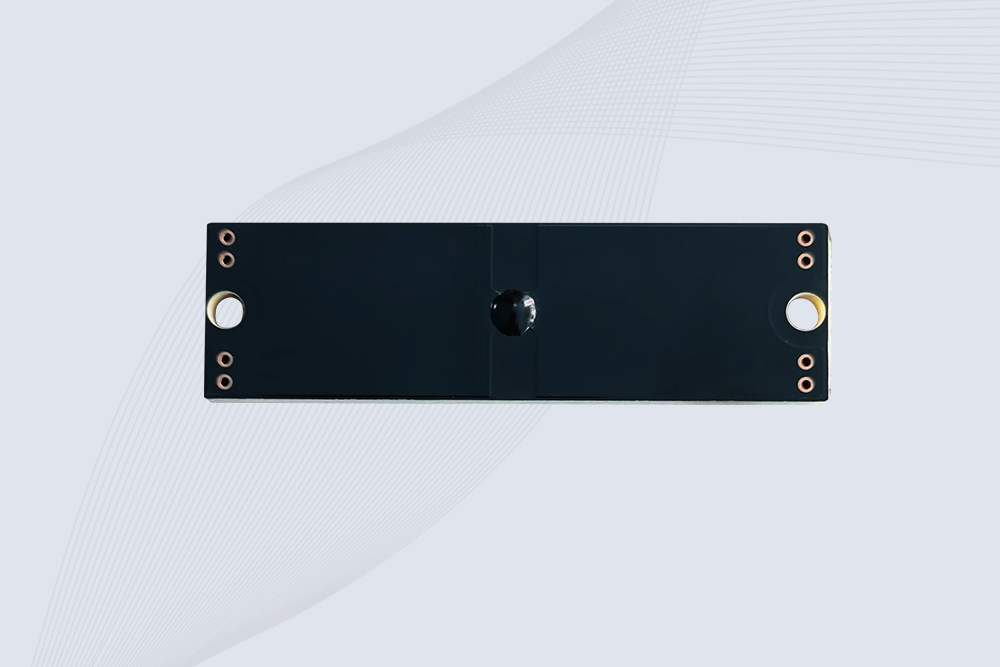
CYKEO CYKEO-PCB1504 Metal RFID Tags is a compact anti-metal UHF RFID solution built for direct mounting on metal surfaces. With stable 8-meter read range, Ucode-8 chip, and long data retention, this rfid metal tag fits tools, containers, automotive parts, and industrial asset tracking.
CYKEO CYKEO-PCB7020 On-Metal RFID Tags are designed for reliable tracking on steel and metal surfaces. Built with an FR4 epoxy body and industrial-grade chips, these On-Metal RFID Tags deliver stable performance, long data life, and chemical resistance, making them a dependable RFID anti-metal tag for harsh environments.
The CYKEO CYKEO-60-25 Anti-Metal RFID Tag is built for metal surfaces where standard tags fail. Designed for long-range performance, harsh environments, and stable data retention, this Anti-Metal RFID Tag is ideal for industrial assets, containers, and equipment tracking using on metal RFID tags.
how RFID technology and the CK-G0628 Smart RFID Book Locker create a 24/7 self-service borrowing and returning system for libraries, schools, archives, and institutions. Boost efficiency, security, and user experience with RFID-driven automation.
RFID tag antennas play a vital role in read performance. This article explores how to choose the appropriate antenna structure and frequency for typical applications like warehouse logistics, medical tracking, and metallic environments—helping bus...
 Cykeo RFID IoT Solution Products R&D Manufacturer