 Cykeo RFID IoT Solution Products R&D Manufacturer
What Are the Benefits of RFID?
1061Explore the top benefits of RFID technology, including automation, cost savings, and real-time tracking. Learn how Cykeo’s RFID solutions drive efficiency across industries.
MoreAll RFID Product
An antenna RFID UHF is the component that transmits and receives radio frequency signals between a UHF RFID reader and RFID tags. Choosing the correct antenna directly determines read distance, coverage, reading accuracy, and overall system reliability, making it one of the most critical parts of any RFID deployment.
After more than ten years working with RFID deployments across automated warehouses, manufacturing plants, logistics hubs, and smart retail projects, I’ve learned that system performance rarely depends only on the reader. In many installations, replacing the antenna—not the reader—has delivered the largest improvement in read accuracy.
Many first-time users compare RFID readers by transmit power or communication interfaces.
Experienced system integrators usually begin somewhere else.
They start with the RFID antenna.
According to the RAIN Alliance, passive UHF RFID operates globally using the EPC Gen2 / ISO/IEC 18000-63 standard, enabling billions of RFID tags to be identified across supply chains, manufacturing, healthcare, aviation, and retail each year.
The GS1 EPCglobal standard also emphasizes standardized air-interface communication, where antenna design directly influences tag interrogation performance.
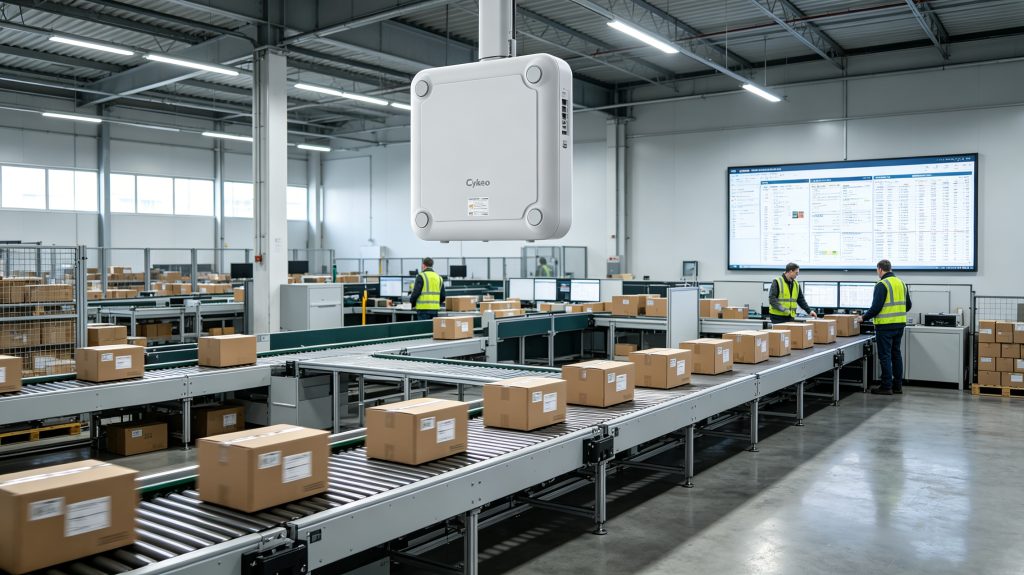
A UHF RFID antenna creates the electromagnetic field required for communication between the RFID reader and passive RFID tags.
Unlike barcode scanners, RFID antennas can identify multiple tagged objects simultaneously without requiring direct line-of-sight.
The reader generates RF energy.
The antenna radiates this energy.
Passive RFID tags harvest part of the transmitted energy and reflect encoded information back to the reader.
That entire process typically occurs within milliseconds.
Selecting the right antenna depends on the application rather than maximum reading distance alone.
| Antenna Type | Best Application | Main Advantage |
|---|---|---|
| Circular Polarized | Warehouses, logistics | Reads tags from multiple orientations |
| Linear Polarized | Fixed tag direction | Longer read distance |
| Near-Field Antenna | Item-level identification | Controlled reading zone |
| Outdoor Directional | Vehicle access, yards | Long-distance coverage |
One mistake I still encounter is choosing linear polarization simply because the specification lists a longer read range. If tag orientation varies—as it usually does in real warehouses—a circular polarized antenna often produces far more consistent results.
Read distance depends on several combined variables:
Increasing power alone rarely solves poor system performance.
Circular polarization offers greater flexibility for moving assets whose tag orientation cannot be controlled.
Linear polarization provides stronger signal concentration when tag orientation remains consistent.
A wider beam covers more area.
A narrower beam provides greater precision and reduces unwanted reads.
During deployment, beam width frequently becomes more important than maximum gain.
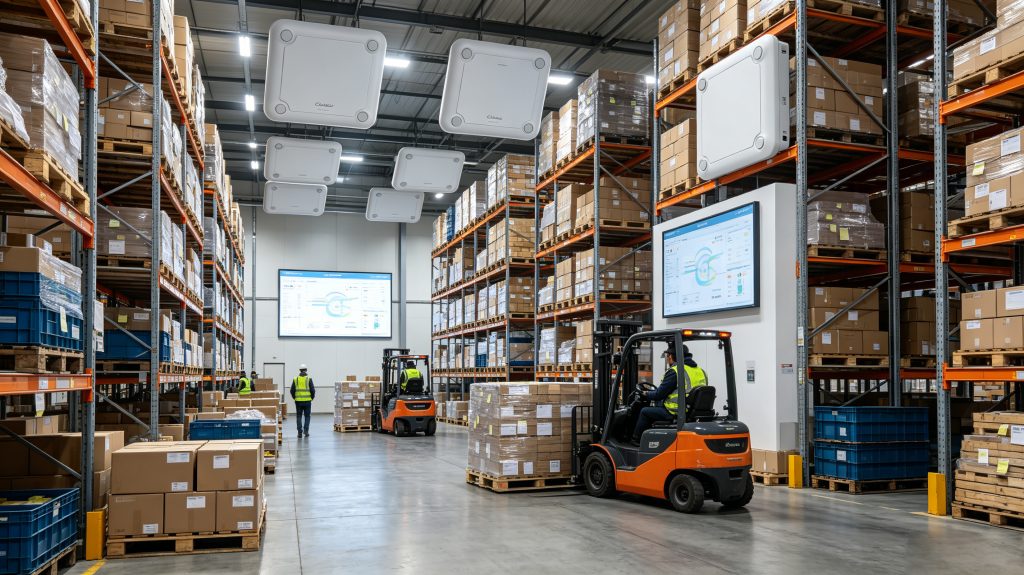
Laboratory testing is predictable.
Real facilities rarely are.
In one manufacturing project, the initial installation produced inconsistent reads despite using high-performance readers. The issue wasn’t transmit power. Steel support columns reflected RF energy, creating unexpected dead zones between production lines.
Rather than increasing power, we repositioned the antennas by approximately 40 centimeters and adjusted the polarization angle. Read stability improved immediately without replacing any hardware.
That project reinforced an important lesson: antenna placement often contributes more to system performance than upgrading the reader itself.
Automated inventory counting
Dock door verification
Pallet identification
Production tracking
Work-in-process monitoring
Industrial asset management
Inventory visibility
Loss prevention
Smart checkout
Vehicle identification
Container tracking
Yard management
To maximize RFID performance:
These adjustments often determine whether a system consistently reads 99% of assets—or struggles with unpredictable blind spots.
It is the antenna used by a UHF RFID reader to transmit and receive radio frequency signals for identifying passive EPC Gen2 RFID tags.
Circular polarized antennas are generally preferred because they reliably read tags regardless of orientation.
Yes. Modern UHF RFID antennas support simultaneous multi-tag reading when connected to compatible EPC Gen2 RFID readers.
Read distance depends on antenna gain, reader power, tag sensitivity, and environmental conditions. Industrial systems commonly achieve several meters, while optimized installations may reach well beyond 10 meters under suitable conditions.
Cykeo designs antenna RFID UHF solutions for demanding industrial environments where consistent performance matters more than theoretical specifications. Our UHF RFID antennas support ISO/IEC 18000-63 (EPC Gen2) systems and are engineered for warehouses, manufacturing plants, logistics centers, libraries, retail stores, and intelligent asset management applications.
Through years of deployment experience, we’ve learned that the best RFID antenna is not simply the one with the highest gain—it is the one engineered for the actual environment. By combining optimized antenna design, reliable RF coverage, and practical installation expertise, Cykeo helps customers achieve stable multi-tag reading, reduced blind spots, and long-term operational reliability.
Explore the top benefits of RFID technology, including automation, cost savings, and real-time tracking. Learn how Cykeo’s RFID solutions drive efficiency across industries.
More
This article comprehensively introduces the working principles and types of RFID security tags, compares them with traditional EAS tags, and explores their practical applications in retail theft prevention and inventory management. It also provide...
More
Discover the top UHF RFID scanners for warehouse inventory tracking in 2025. Compare range, durability, software integration, and future-ready features for logistics efficiency.
More
Discover the differences between passive and active RFID tags, their applications, and how to select the best solution for asset tracking, logistics, and industrial use.
More