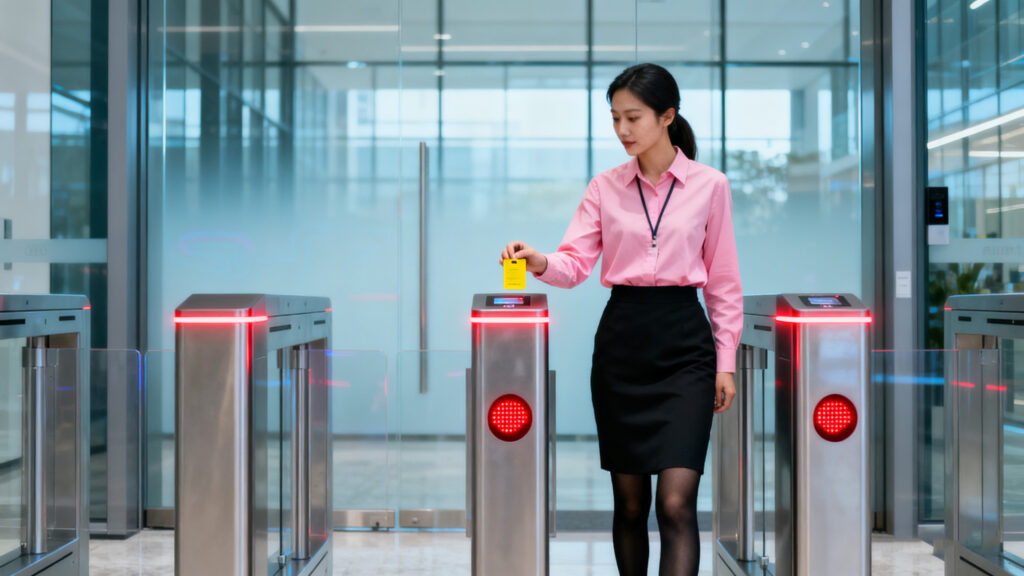
When people first hear RFID access management, most think of the badge hanging on their chest at the office—swipe it, and the door opens. Sounds easy, right? But anyone who’s actually implemented this in a workplace knows it’s far from straightforward.
RFID access management isn’t just about a door; it’s an entire organizational security logic. The system has to answer: Who gets in? Who stays out? What can they do once inside? And this isn’t just a technical issue—it also intertwines with human habits, company culture, budget constraints, and even psychological expectations.
Technical Perspective: Core Components of RFID Access Management
In simple terms, a system has three parts:
Tags/Cards: The medium carried by employees or visitors.
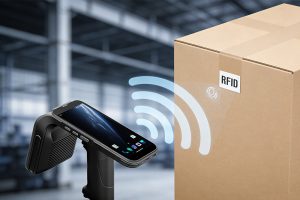
Readers/Access Devices: Devices at doors or gates that identify the card.
Backend System: Handles authentication, logging, and data analysis.
It sounds clear-cut, but in practice, it’s often messy. For instance, in a warehouse with metal racks, the signals can reflect and interfere; in hospitals, with gurneys and medical carts passing through, the read distance must be carefully tuned—too far or too close, and the system misbehaves.
Office Environments: The Contradiction Between Security and Efficiency
In office buildings, RFID access management is most common. Companies often use it to replace keys and track attendance.
But here’s the contradiction:
Employees complain if the system is too complex or adds extra steps.
Management worries about security gaps and insists on multi-factor authentication.
The result? Both sides are somewhat dissatisfied. One client initially deployed “card + password” dual authentication, but employees complained about long entry lines. Eventually, they downgraded to “card-only.” This is a classic tug-of-war between human convenience and security.
Warehouse Environments: The Challenge of Metal, Liquids, and Signals
Warehouses and factories are notoriously difficult. Metal shelves, pallets, forklifts—all interfere with RFID signals.
Common problems include:
If readers are too close, employees have to press cards very precisely.
If too far, forklifts can trigger doors unintentionally.
Liquid packaging can also distort signals, making the system unreliable.
Many warehouses solve this by adding multiple readers and cross-checking logs. In other words, perfection isn’t expected—human oversight supplements the system.
Hospital Environments: Privacy Comes First
Hospitals use RFID access management differently. They need to protect labs, drug storage, and patient privacy simultaneously.
For example:
Logs that are too easily accessible can reveal patient movements.
Nurses need quick access during shift changes; a cumbersome system could slow care.
Emergency scenarios require automatic override, but that introduces potential security risks if misused.
So in hospitals, the design has to balance privacy, security, and operational efficiency carefully.
School Environments: Safety Beyond Security
Schools often deploy RFID systems for campus safety. Some institutions also use them as an educational tool.
Examples:
Students swipe to enter libraries; the system tracks study time.
Dorm access integrates with attendance reporting, alerting staff to late arrivals.
Parents can monitor entry and exit times.
Sounds efficient, but privacy concerns arise. Some students feel overly monitored, demonstrating the tension between technological convenience and personal comfort.
Data Privacy and Legal Boundaries
A commonly overlooked aspect: RFID access management systems not only control doors but also generate data. Every swipe leaves a trace, forming a complete behavior map.
In some countries, legal requirements include:
Limiting data retention periods.
Restricting log access to authorized personnel.
Encrypting stored data.
Failing to comply can transform a technical problem into a legal liability.
Lessons Learned from Real-World Experience
In short, RFID access management is a “70% technology, 30% human” endeavor.
Technology solves most issues, but environments and human behavior rarely cooperate fully.
Don’t chase a “perfect system.” A practical approach is “small pilot + gradual optimization.”
Managers must accept occasional glitches—doors might fail to open or open unintentionally.
I often tell clients: installing the system isn’t a one-time fix; it’s a long-term project requiring maintenance, adjustment, and attention to human factors.
Cykeo’s CYKEO-T1D industrial RFID ceiling reader features 500 tags/sec scanning, IP54 protection, and -20℃~60℃ operation for retail/warehouse security. Supports ISO18000-6C and GB/T29768 protocols.
Cykeo’s ceiling-mounted RFID reader enables hands-free 5m inventory tracking with 500 tags/min speed. Features dual alerts, ERP integration, and IP54 rating for warehouse security.
Cykeo CK-T1E RFID gate system features 120° coverage, AI motion filtering, and 5m detection for retail/warehouse security. IP67 rugged design with ERP integration.
A practical guide on how to increase the range of your RFID reader. Learn about antenna selection, power tuning, environmental factors, and optimal tag placement for CYKEO systems.
Confused by RFID tech? Learn what a RFID reader is, how it works, and why it's used in warehouses, stores, and access control. Get the plain facts here.
Need a low-cost low-power UHF RFID reader transceiver for mobile applications? Discover key specs, trade-offs, and integration tips for handhelds, drones, and IoT devices.
 Cykeo RFID IoT Solution Products R&D Manufacturer