 Cykeo RFID IoT Solution Products R&D Manufacturer




















How Is RFID Read? Step-by-Step Guide to the Reading Process
49Wondering "how is RFID read"? Discover the step-by-step process from energizing tags to decoding data. Learn about anti-collision and memory banks with CYKEO.
MoreAll RFID Product
Look at an RFID tag on a warehouse box, then look at your office key card. They look different because they are different. The shiny pattern on the box tag and the hidden loop in your card are both rfid antennas, but they’re built for completely different jobs. So, what type of antenna do RFID tags use? It’s not one answer—it’s two main answers, and picking the wrong one is the fastest way to sink an RFID project.
If your tag needs to work within an inch or two—like for opening a door, making a payment, or scanning a library book—it uses a coil antenna. This is just a loop or spiral of thin copper wire hidden inside the plastic.
How it works is neat: the RFID reader creates a tiny magnetic field. The tag’s coil, when brought close, soaks up energy from that field like a sponge to power its chip. Then, by subtly disrupting the field in a coded pattern, it talks back. This is inductive coupling. It’s super secure because you have to be right on top of it.
You’ll find this in:
Bottom line: If the application is “tap and go,” the antenna is a coil.
Now, for reading a tag from 10, 20, or 30 feet away—like on a pallet in a warehouse or items on a retail shelf—you need UHF (Ultra-High Frequency). Here, the tag antenna is a printed dipole. That’s the metallic, often squiggly pattern you see on the label itself, usually made of etched aluminum or printed silver ink.
This antenna is like a tiny, sophisticated catcher’s mitt for radio waves. It’s designed to grab the UHF radio waves broadcast by a reader, convert them to power for the chip, and then reflect a modified signal back. The secret isn’t just the shape you see; it’s the tiny T-match or inductive loop engineered right where the chip connects. This feature is critical for impedance matching—it ensures almost all the captured energy gets to the chip. A bad match means a weak, useless tag.
Special cases need special dipoles:
Understanding what type of antenna RFID tags use is the difference between success and a warehouse full of “dumb” stickers.
At CYKEO, we move our clients from asking “what type of antenna do RFID tags use?” to knowing “which tag antenna will work for my specific item in its specific location?” We don’t just sell tags; we diagnose the environment—metal, plastic, distance, orientation—and specify the exact tag with the right antenna design to deliver reliable data. Choosing the tag is the first and most critical hardware decision. Get it wrong, and nothing else works. Get it right, and you have a solid foundation for everything that follows.
Wondering "how is RFID read"? Discover the step-by-step process from energizing tags to decoding data. Learn about anti-collision and memory banks with CYKEO.
More
Not sure where to buy RFID reader for your business? Learn about your key purchasing options, what to consider, and why CYKEO direct support matters.
More
Most iPhones can only scan NFC tags, If you need real RFID UHF tag reader ,the iPhone needs extra hardware. Here is how the Cykeo CK-R10A plugs that gap and turns your phone into a practical UHF RFID tool.
More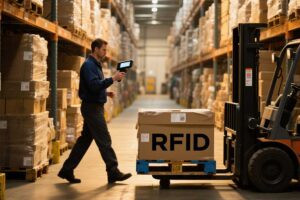
Discover how to select the best handheld RFID scanner for warehouse efficiency. Learn key features, durability needs, and why Cykeo leads in industrial RFID solutions.
More