 Cykeo RFID IoT Solution Products R&D Manufacturer
Fixed RFID Readers: What I Didn’t Expect and What I Learned
545Understand fixed RFID readers in asset tracking, production,warehouse management,how to select the best RFID readers,RFID signal issues .
MoreAll RFID Product
RFID stands for Radio Frequency Identification, a wireless and non-contact technology that uses radio waves to transmit data and identify objects, animals, or people. An RFID system typically consists of RFID readers, RFID tags, and rfid antennas.
RFID technology is widely used across many industries, including healthcare, retail, hospitality, and manufacturing. In simple terms, RFID works similarly to barcodes but does not require line-of-sight scanning.
In this beginner’s guide, we’ll walk through the most common questions about RFID, including:
This guide is ideal for anyone who is new to RFID or looking to better understand how RFID systems are designed and deployed.
RFID works by attaching RFID tags to objects, allowing users to automatically and uniquely identify and track inventory or assets.
The process works as follows:
Each RFID tag contains a unique identifier stored in memory, allowing identical items to be distinguished easily.
Unlike traditional barcode systems, RFID can read tags without direct visibility, sometimes from distances exceeding 30 meters depending on the system design.
RFID technology has existed since the 1930s during World War II, when it was used to identify friendly and enemy aircraft. Since then, the technology has evolved significantly, becoming more efficient and affordable for modern applications.
RFID applications span a wide range of industries and use cases. From inventory tracking to supply chain management, the technology enables organizations to identify and track individual items quickly and accurately.
Common RFID applications include:
RFID is particularly valuable in situations where fast, automated, and accurate identification of individual items is required.
RFID systems operate within different frequency ranges. Each range has unique characteristics such as reading distance, speed, and cost.
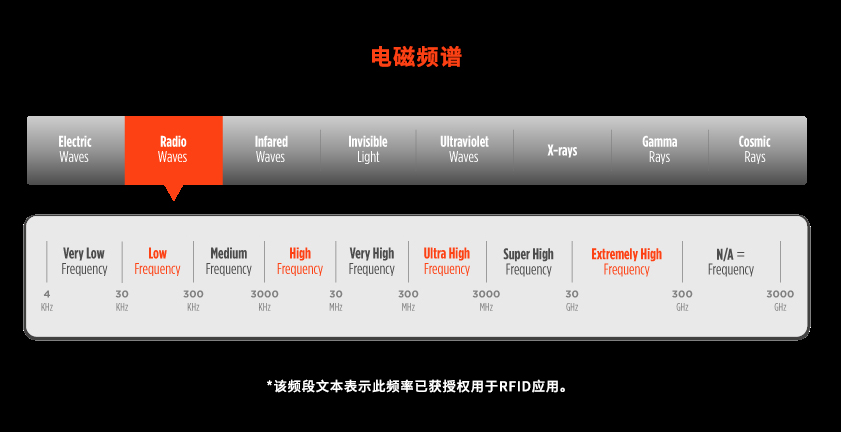
The three main RFID frequency categories are:
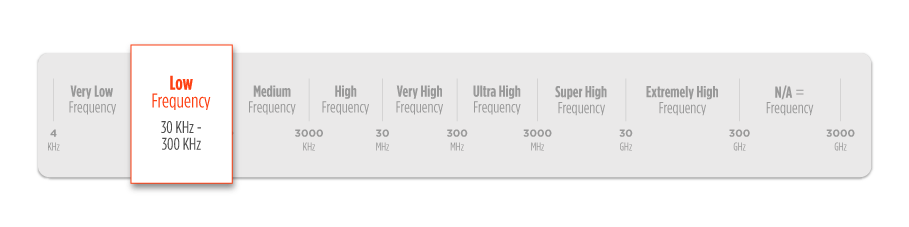
Typical frequency range: 30–300 kHz
Common operating range: 125–134 kHz
Read range: Contact to about 10 cm
Typical applications
Advantages
Disadvantages
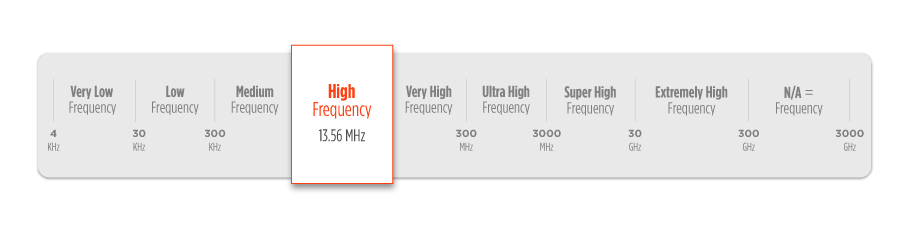
Typical frequency: 13.56 MHz
Read range: Contact to about 30 cm
Common applications
Advantages
Disadvantages
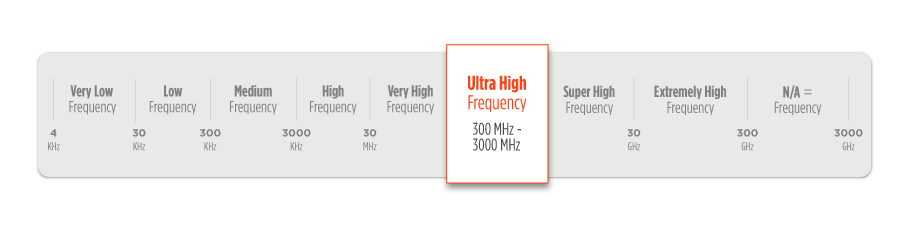
Typical frequency range: 300 MHz – 3 GHz
Common operational bands: 433 MHz and 860–960 MHz
UHF RFID includes two main types:
Frequency: Typically 433 MHz or 2.45 GHz
Read range: 30–100+ meters
Average tag cost: $15 – $50
Applications
Advantages
Disadvantages
Frequency: 860–960 MHz (UHF)
Read range: Up to 25 meters
Average tag cost: $0.08 – $20
Applications
Advantages
Disadvantages
A standard RFID system typically includes four main components:
In simpler systems, handheld or USB readers may integrate the reader, antenna, and connection into a single device.
More advanced systems may include:
An RFID tag is the component attached to an item to store and transmit identification data.

A typical RFID tag consists of two parts:
Most RFID tags do not have a battery. Instead, they draw energy from the radio signal transmitted by the reader.
When activated, the chip modulates the signal and sends the stored data back to the reader.
RFID chips usually contain four memory banks:
RFID tags come in many forms depending on the application:
Form factors
Environmental types
Surface compatibility
Choosing the correct tag depends on factors such as material, environment, read range, and installation method.
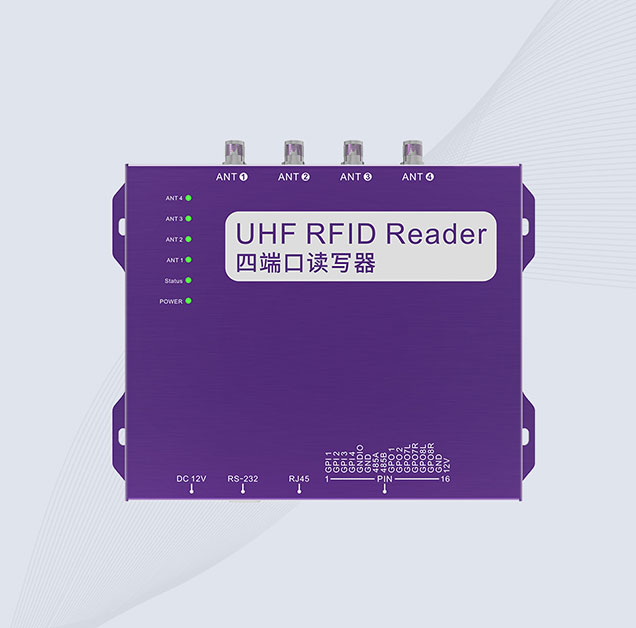
An RFID reader is the central device in an RFID system responsible for communicating with RFID tags.
Readers transmit radio waves and receive responses from tags, converting them into usable digital data.
Common reader types include:
RFID readers are usually the most expensive component in an RFID system.
Typical price ranges:
The price depends on performance, connectivity, antenna ports, and processing capabilities.
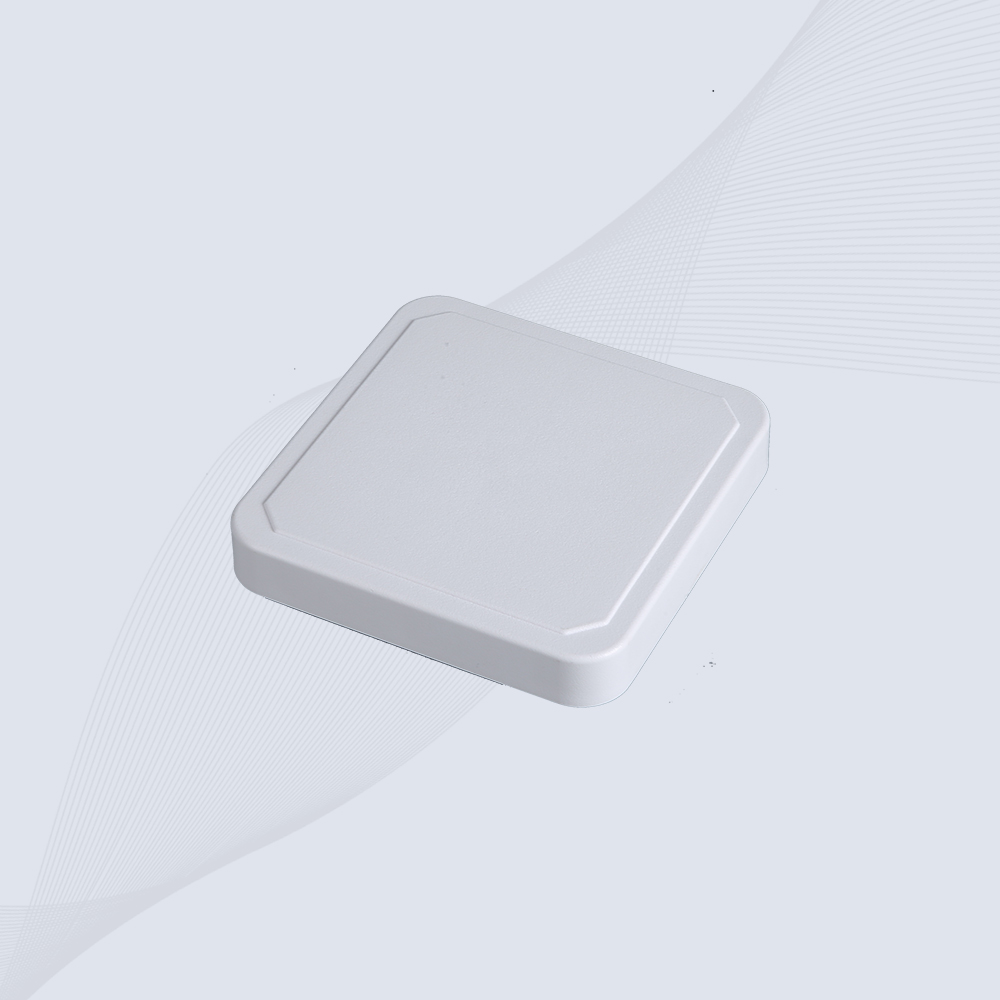
An RFID antenna is responsible for transmitting and receiving radio signals between the reader and RFID tags.
Without an antenna, the reader cannot communicate with tags.
Antennas create an RF field, enabling nearby RFID tags to receive power and transmit data.
Although this guide contains a wealth of RFID knowledge, it only scratches the surface when it comes to implementing RFID technology. The good news is that there are many ways to continue learning and exploring the topic:
RFID Knowledge Base – This knowledge base is designed to keep you up to date with Cykeo RFID product applications and product knowledge. Whether you are an industry professional or completely new to RFID, we plan to publish original content that covers a wide range of RFID topics and experience levels.
RFID Resources – In our RFID Resources section, you can explore tutorials, research, market reports, and industry insights. We regularly discuss radio frequency identification technology and how it is being applied across different industries.
If you have any questions or would like more information, feel free to contact us anytime.

Understand fixed RFID readers in asset tracking, production,warehouse management,how to select the best RFID readers,RFID signal issues .
More
Learn how to optimize fixed RFID readers for high-speed conveyor belts. Discover Cykeo’s solutions for tag positioning, anti-collision settings, and real-time data capture.
More
RFID tool control cart designed for aircraft hangars, assembly lines, and power plant workshops. Real-time tool tracking, fast inventory, open API, and support for custom RFID integration.
More
Understand the difference between RTLS and RFID in healthcare. Learn how hospitals use real-time tracking systems to improve equipment visibility and workflow efficiency.
More