 Cykeo RFID IoT Solution Products R&D Manufacturer
How Does a RFID Tag Work: Understanding RFID Tag Technology
109How does a RFID tag work? Learn how RFID tags communicate with readers, transfer identification data, and support smart tracking systems in logistics, retail, and industry.
MoreAll RFID Product
If you’ve ever used a keycard to enter an office building, a hotel room, or tapped a card to pay for transit, you’ve interacted with an RFID card reader. But what is an RFID card reader exactly? In simple terms, it’s a device that wirelessly reads information stored on an RFID card or key fob to grant access, verify identity, or process data.
At CYKEO, we design and supply these readers for businesses worldwide, focusing on reliability and seamless integration. Unlike traditional magnetic stripe readers, an RFID card reader doesn’t require physical contact or a precise swipe angle. You simply bring the card close to the reader—a method often called “proximity reading.”
The process is quick and happens in the background. Inside every RFID card is a tiny microchip and rfid antenna. When you present the card near the RFID card reader, the reader’s antenna emits a radio wave signal. This powers the card’s chip (in passive systems) and triggers it to send back its unique identification data. The reader captures this data and sends it to a connected system—like an access control panel or point-of-sale terminal—which then decides what to do next: unlock a door, log attendance, or approve a payment.
The use of an RFid card reader for access control is the most common application. They secure office doors, gated communities, and server rooms. But their utility goes far beyond just doors:
Choosing the right system matters. For instance, a proximity card reader system from CYKEO for a main office entrance needs a different range and durability than a reader for a busy warehouse time-clock station.
A common question we hear is, “how to use an rfid card reader?” The good news is, for the end-user, it’s incredibly simple—just tap. For administrators, our readers are designed for easy setup and management. They reduce security risks associated with lost keys or shared codes, provide an audit trail of who accessed where and when, and generally offer a more professional, modern infrastructure.
So, when asking “what is an RFID card reader?”, think of it as a gatekeeper and data collector. It’s a fundamental tool that bridges physical items (cards) to digital systems, enabling security, efficiency, and convenience. Whether you’re looking to upgrade your building’s security or streamline employee management, understanding this technology is the first step.
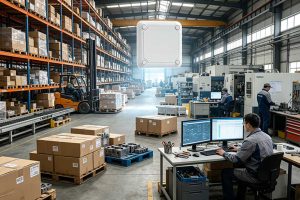
How does a RFID tag work? Learn how RFID tags communicate with readers, transfer identification data, and support smart tracking systems in logistics, retail, and industry.
More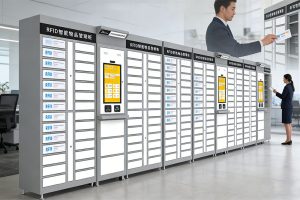
Upgrade to the CK-G0628 UHF RFID Locker System for smarter, faster, and more secure item management. Automate tracking, enhance security, and provide real-time monitoring—all with the power of RFID technology.
More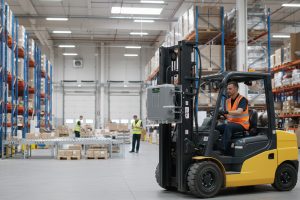
CYKEO forklift mounted RFID reader designed for software developers integrating real-time warehouse systems. High-speed RFID forklift reader with Ethernet, RS-232 and optional Wi-Fi, built for mobile forklift deployment and dense tag environments.
More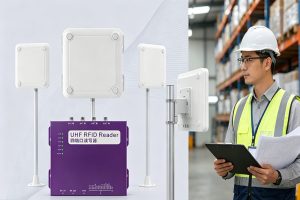
Choosing the right UHF RFID fixed reader? Learn how to select the right model based on range, antenna ports, environment, and system integration for your project.
More