1. Why the CK-R8L Exists: A Fixed Reader Built for Real Operational Work
In almost every project where UHF RFID is used—warehousing, customs, vehicle inspection, archive access, jewelry tracking—people say they want “good read range and stable performance”. But the definition of “good” varies from one site to another. CYKEO built the CK-R8L fixed rfid reader based on years of complaints from integrators: unstable sensitivity, ports failing too early, dropping tags in dense mode, overheating when mounted in an enclosed rack, and so on.
The CK-R8L doesn’t try to look futuristic. It’s a practical 8-port UHF reader with a tough enclosure and a layout that makes sense when technicians have to plug and unplug cables ten times a day. For many customers, this is exactly the kind of device they want—nothing flashy, but consistent enough to run an automatic gate or conveyor lane for months without bothering anyone.
It supports the standard UHF 840–960 MHz range, which makes it usable across China, Southeast Asia, North America and Europe without changing hardware. And because it supports EPC C1G2, ISO18000-6C/B and GB/T29768-2013, the same reader can be dropped into national or international projects with minimal compatibility worries.
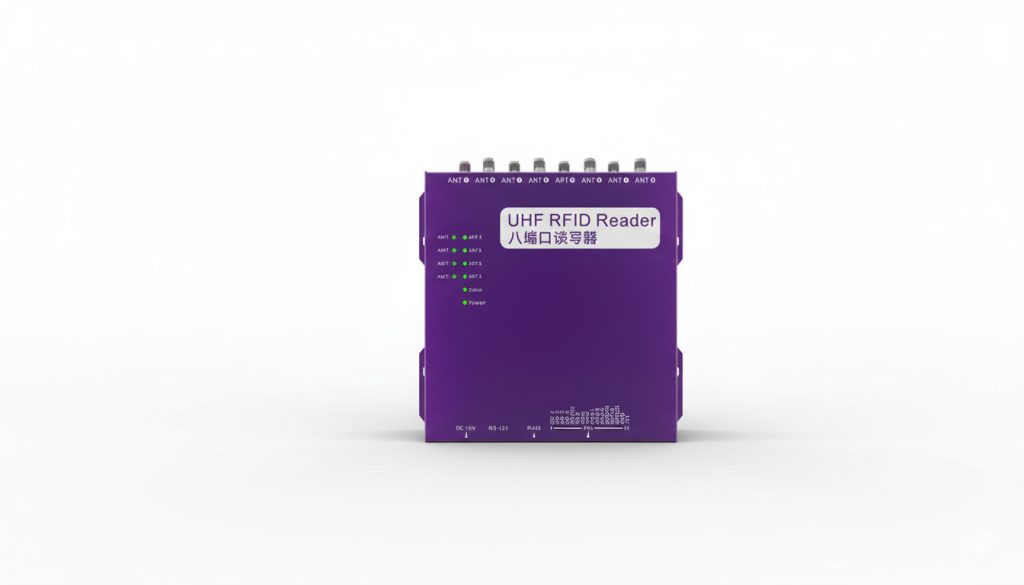
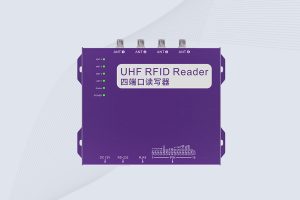
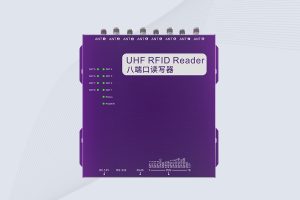
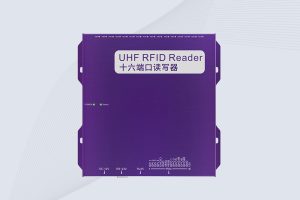
The CK-R8L uses a clean and practical layout, designed for daily operational environments.
2. Read Range and Reliability: What Makes It One of the Best Fixed RFID Readers of 2025
Let’s talk about the main promise: strong read range and stable long-term operation. Many brands advertise long distances, but real-world performance often depends on heat control, matching antennas, and how well the firmware handles dense tag clusters.
In the CK-R8L, the RF output goes up to 33 dBm (±1 dBm), and combined with good antennas, integrators typically see 12–15 meters of practical reading distance—not theoretical lab numbers.
The reader is comfortable working in:
dense tag environments where 300–400 tags appear at once
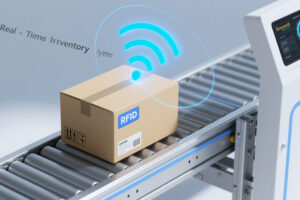
fast-moving lanes where cartons or vehicles pass quickly
multi-zone coverage where 8 antennas must be managed independently
areas with mixed tag orientation
CYKEO’s firmware is tuned for stable RSSI and quick switching across the 8 TNC ports. Installers don’t need to fight with random reader freezes or dropped ports, which unfortunately still happens in mid-range hardware from newer brands.
This is precisely why some integrators consider the CK-R8L among the best fixed rfid readers read range reliability 2025—not because of fancy marketing, but because it stays predictable in tough projects.
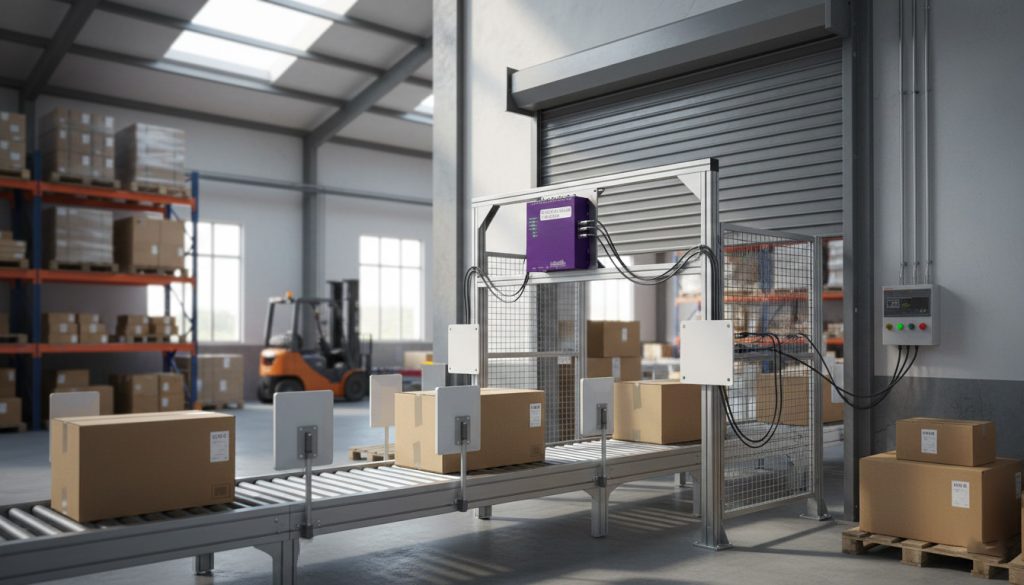
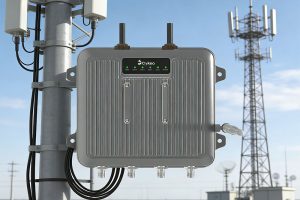
8-port design allows multi-zone coverage in gates, conveyors and warehouse entrances.
3. Flexible Deployment for Many Industries
One reason integrators like multi-port readers is flexibility. The CK-R8L can run:
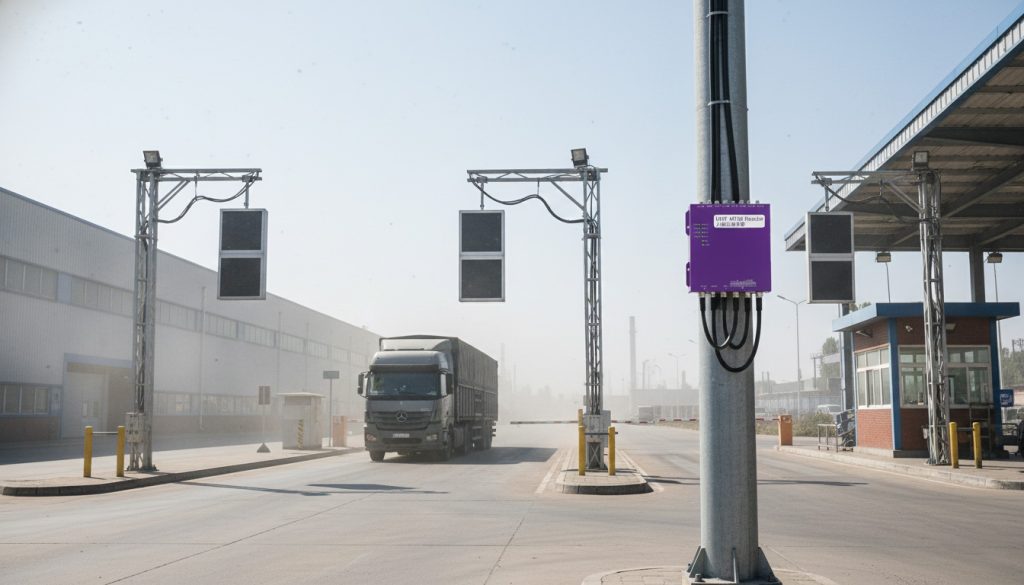
vehicle access lanes with two long-range antennas
warehouse entry points with four antennas
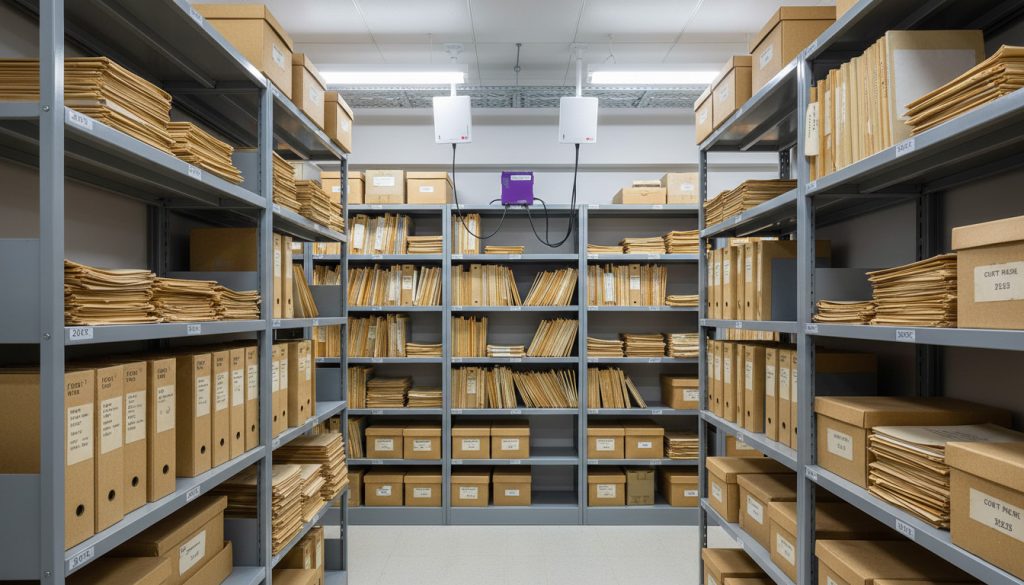
jewelry counters or document rooms with smaller patches
customs gates where items must be logged automatically
production lines needing stable port switching
The built-in RS-232, RS-485, Wi-Fi, TCP/IP and Wiegand make it adaptable for old and new systems. In some government or legacy sectors, RS-232 is still required. In modern warehouses, everything runs over Ethernet or Wi-Fi. The CK-R8L handles both without demanding extra converters.
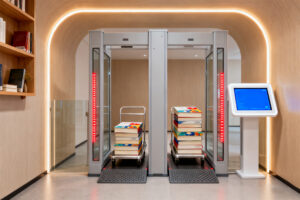
In archives or document rooms, stable multi-antenna control prevents missing tags.
4. Hardware Design That Makes Sense
The purple aluminum housing isn’t there for beauty. It helps with heat dissipation, which keeps RF performance stable during continuous operation. In warm regions, this matters a lot—some cheaper readers lose sensitivity after running for hours at high output.
Other small design choices matter more than people expect:
TNC connectors instead of fragile SMA
clear LED indicators for each antenna
four mounting holes that actually fit most brackets
side space for cable routing
The device consumes around 20W at full RF power, which is quite acceptable for gate installations and enclosed control boxes.
It supports:
840–960 MHz global band
fixed or hopping mode
output power tuning in 1 dB steps
over 400 tags per second
These details affect daily operation more than people think.
Stable long-range reading helps in customs gates and vehicle identity verification.
The device is not trying to dominate every price segment. Instead, it positions itself as a reliable industrial reader for:
warehouse entrances
conveyor and manufacturing lines
customs & inspection gates
archive rooms
jewelry stores
asset management zones
In these environments, the important thing is not just “long read range”. It’s consistency—the reader keeps running, keeps reporting tags, and doesn’t surprise the IT team with random downtime.
This is why many integrators consider it among the best fixed RFID readers focused on read range reliability in 2025.
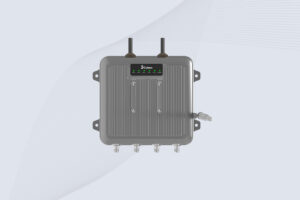
Cykeo CYKEO-C1 industrial Forklift RFID Reader features 20m read range, 600 tags/sec scanning, Impinj R2000 chipset, and IP67 rugged design. Ideal for warehouse logistics and manufacturing. Supports ISO 18000-6C/6B protocols.
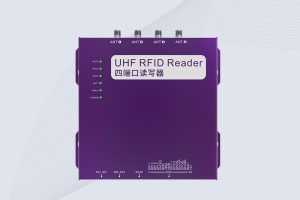
Cykeo CYKEO-R4 industrial UHF RFID Fixed Reader features 4 TNC ports, 400+ tags/sec speed, IP67 housing, and global frequency compliance for vehicle inspection, smart warehouse, and asset management systems.
CYKEO CYKEO-R8L Fixed RFID Reader with 8-port UHF design, Impinj-based RF core and up to 20m read range. An industrial Fixed RFID Reader for vehicle inspection, warehouse portals, smart manufacturing lines and secure access checkpoints.
RFID Fixed Reader from CYKEO – the CYKEO-R16L 16-port UHF fixed reader for warehouses, smart cabinets, and production lines. Long-range, multi-tag reading, stable performance for 24/7 industrial use.
A simple breakdown of RFID hardware, including tags, readers, and antennas. Learn how each part works and how RFID systems improve tracking, automation, and visibility.
Discover how RFID security gates protect assets, streamline access, and improve efficiency in libraries, retail stores, gated communities, and industrial parks. Learn about technology trends and real-world applications.
Struggling with rfid reader distance measurement in real projects? Learn field-tested range methods, common mistakes, and CYKEO setup tips that improve reading accuracy.
 Cykeo RFID IoT Solution Products R&D Manufacturer