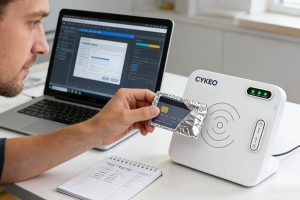
If you work on RFID-enabled software systems, you already know the problem: most RFID readers are built for operations, not for development.
They read too much, they read too far, and they behave differently depending on the environment. When you’re registering books, converting tags, or initializing assets inside a system, that kind of uncertainty turns into bugs very quickly.
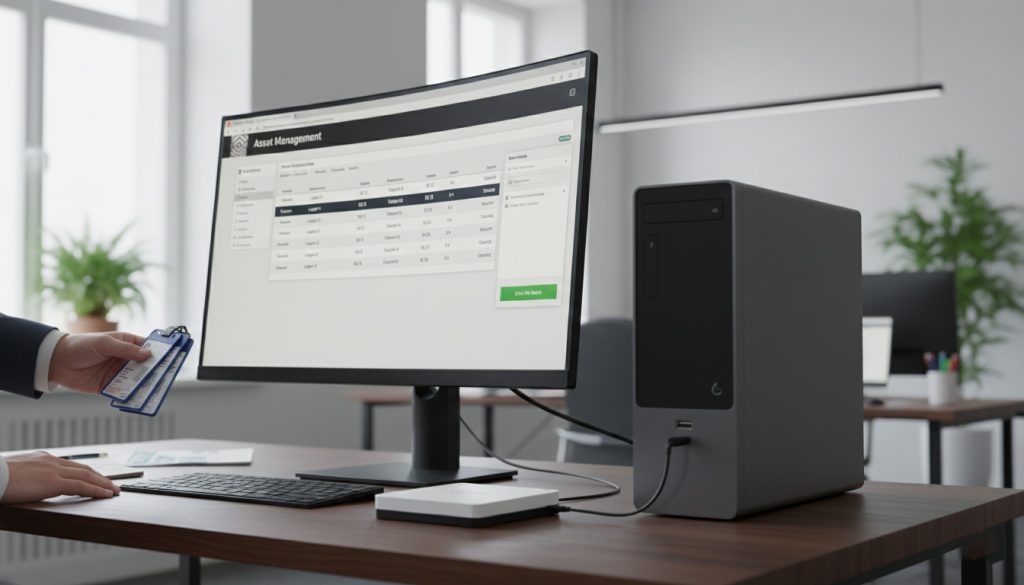
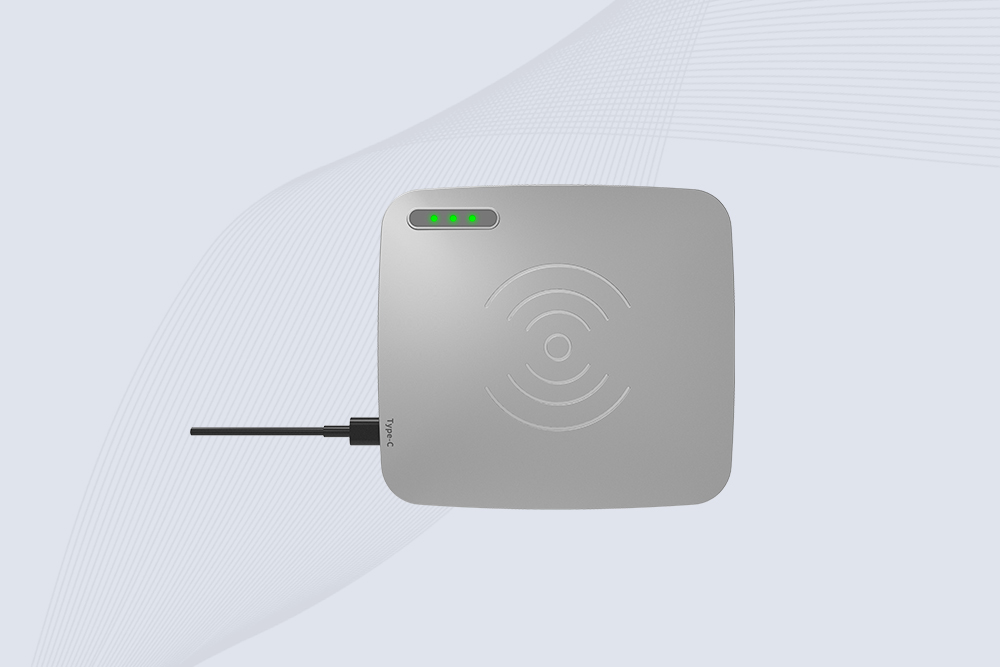
The CK-D3L connects to your computer via USB-C, no external power supply, no network configuration. Once connected, it behaves like a stable local device that your software can talk to directly.
For developers, this matters. You don’t want your system logic to depend on environmental RF noise or unpredictable reads. You want consistency.
That’s why CK-D3L uses a near-field antenna design. The effective read range stays within 30 cm, and writing is controlled even tighter, around 10 cm. When a tag is placed on the platform, it’s the only one being processed. No surprises.
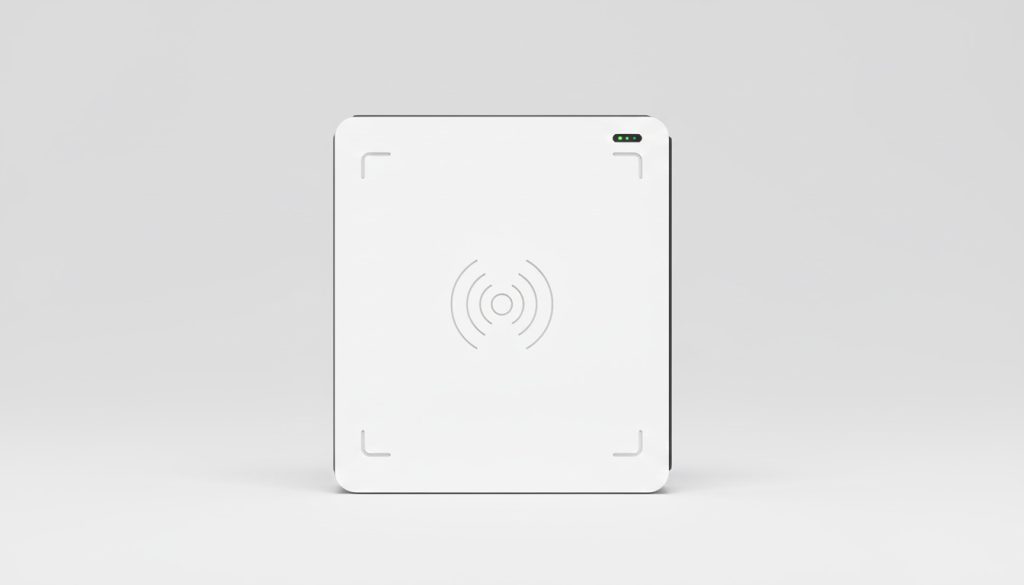
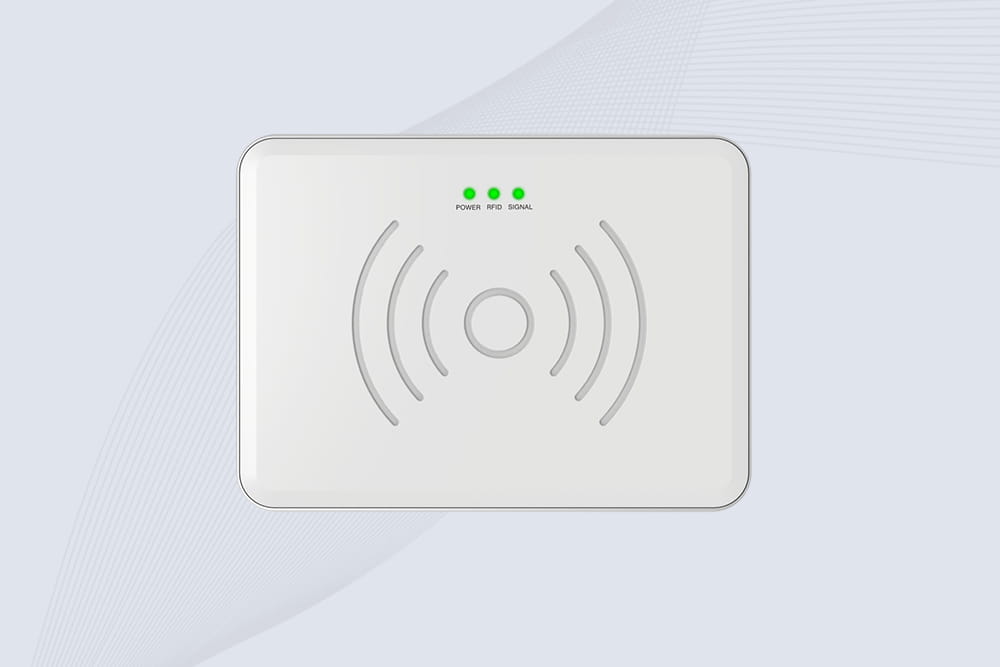
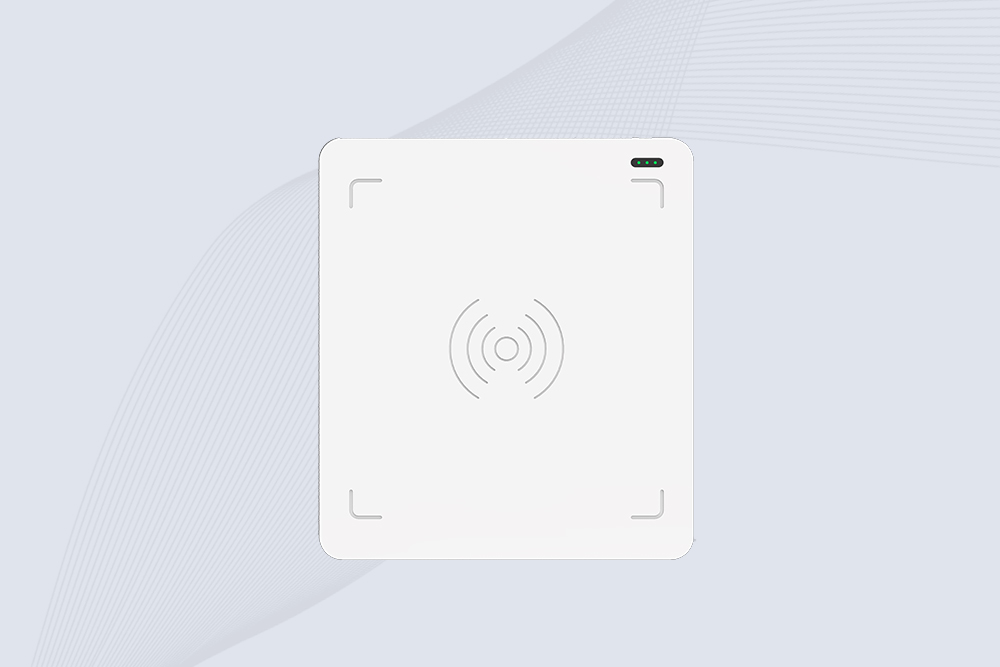
CK-D3L used as a desktop RFID reader USB-C for tag conversion
Designed for High Tag Density Without Chaos
One of the common pain points in tag registration scenarios is dense tag handling. Libraries, tool rooms, linen management — these environments often require registering or rewriting many tags in a short time, all on a desk.
The CK-D3L handles this with its advanced anti-collision algorithm and proprietary signal processing. It maintains a high recognition rate even when multiple tags are present, while still keeping reads within a controlled area.
In practice, this means faster workflows and fewer retries.
Demo Software That Matches How Developers Think
CYKEO provides RFID demo software along with C# and Java development materials. The demo is not just a “showcase.” It’s a working reference for how your own system can communicate with the reader.
Developers typically start by testing:
Tag EPC reading
User memory access
Data rewriting and conversion
RSSI feedback
Tag filtering logic
Then they move that logic into their own system. Because the reader behaves consistently, the transition is smooth.
What Software Teams Usually Need (But Rarely Get)
From our experience, software system customers usually care about the same things:
Predictable read zones
Stable write performance
Clear tag selection logic
Simple USB communication
Minimal hardware-side logic
The CK-D3L addresses these directly:
Output power up to 33 dBm, stable and adjustable
Read speed of 40+ tags per second
Support for dense reading and data filtering
RSSI feedback for signal awareness
USB-C interface for easy deployment
It doesn’t try to be “everything.” It focuses on doing desktop RFID tasks properly.
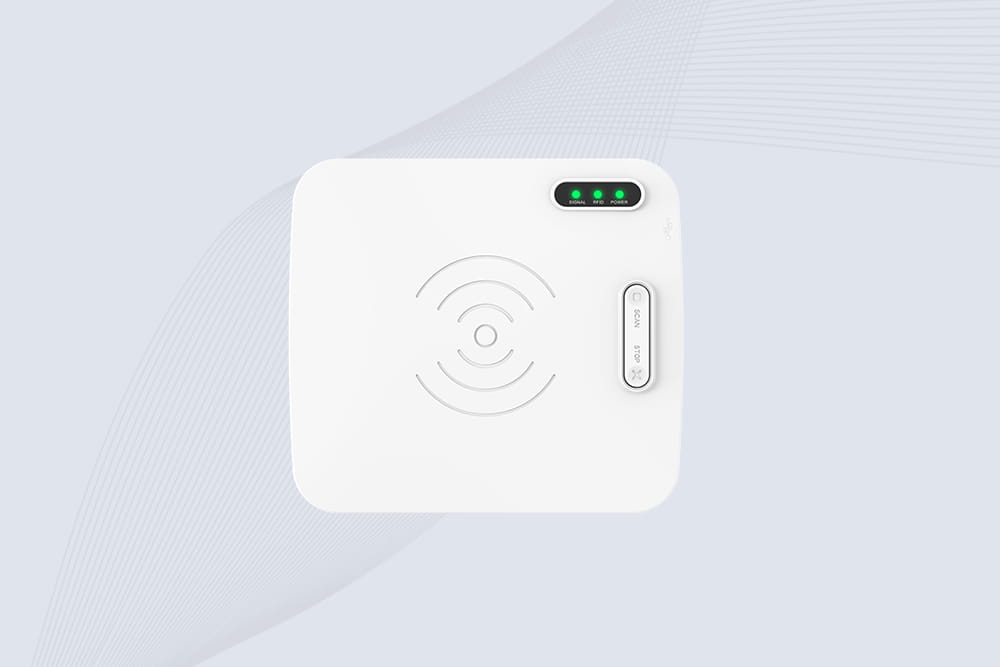
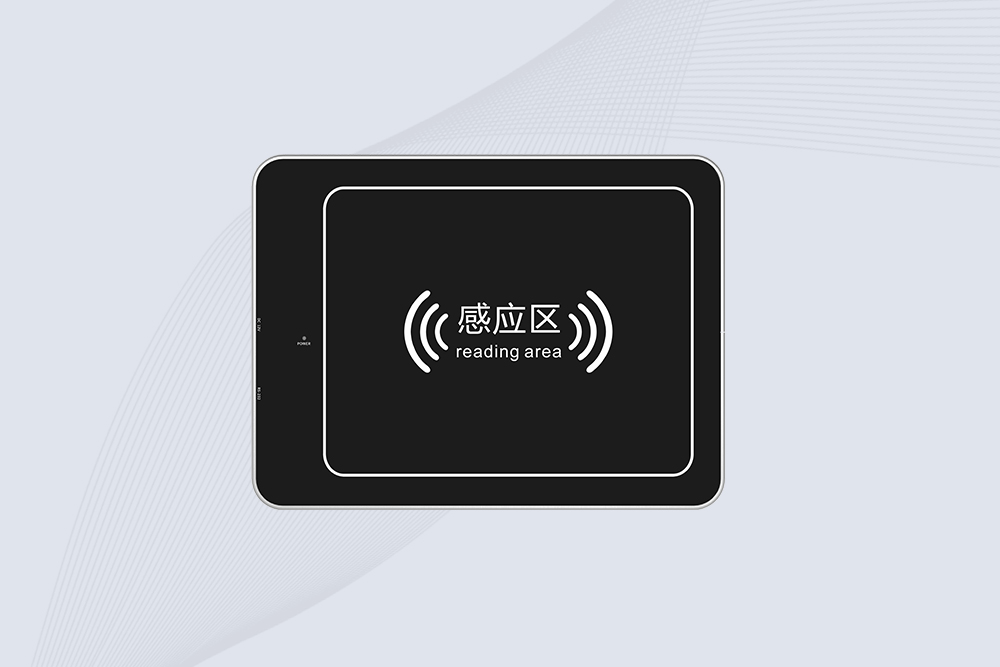
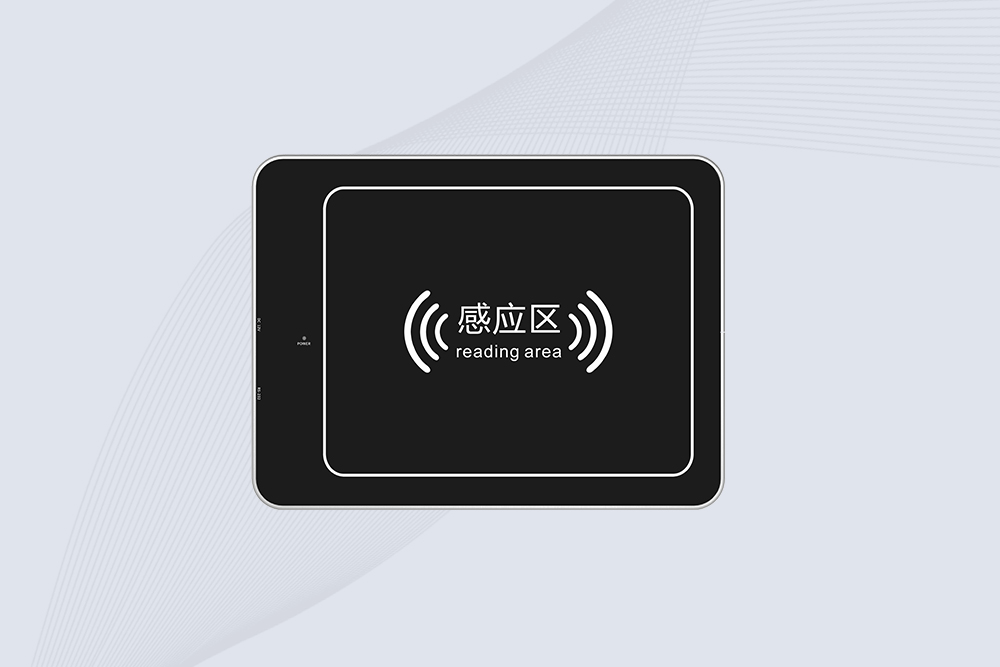
Flat reading surface of CK-D3L designed for controlled tag placement
The CK-D3L has a flat, stable reading surface. Tags are placed deliberately, not waved around. The ABS housing keeps weight reasonable (about 1.5 kg), so it doesn’t move around during use.
It’s designed to sit on a desk for years, not weeks.
CYKEO focuses on RFID devices that support systems, not replace them. The CK-D3L doesn’t try to handle business logic on the hardware side. That stays in your software, where it belongs.
The reader does one job well: accurate, repeatable RFID tag processing at close range.
Wondering "can RFID sensors read through aluminum"? Discover how aluminum blocks RFID signals, why metal causes interference, and solutions for tracking assets in metal-rich environments with CYKEO.
Wondering will aluminum foil stop a RFID card reader? We tested it. Learn how the Faraday cage principle works, real-world effectiveness, and better alternatives for protecting your cards. Real guidance from CYKEO engineers.
Descubre cómo funciona el RFID en logística, sus ventajas reales, obstáculos al implementar, y consejos prácticos basados en experiencias reales para mejorar visibilidad y eficiencia.
Wondering why your Washington State ID has an RFID antenna? We explain its purpose for enhanced security, REAL ID compliance, faster border crossings, and address privacy concerns.
 Cykeo RFID IoT Solution Products R&D Manufacturer