 Cykeo RFID IoT Solution Products R&D Manufacturer
RFID for Small Businesses: Cost-Effective Tools to Streamline Growth
871Discover budget-friendly RFID solutions tailored for small businesses. Learn how to reduce errors, save time, and scale operations without breaking the bank.
MoreAll RFID Product
You have heard about people in Sweden opening doors with a wave of their hand, paying for train tickets, and sharing LinkedIn profiles—all with a tiny chip implanted under their skin. It sounds like science fiction, but it is real, and it has been happening for over a decade.
Here is the thing. When people search rfid implant sweden, they are usually curious about how this technology works, why Sweden has become the global center for human microchip implants, and whether it is something they should consider.
Let me explain what RFID implants are, how they are used in Sweden, and what you need to know about this emerging technology.
An RFID implant is a tiny, passive radio-frequency identification chip, about the size of a grain of rice, that is injected under the skin—typically between the thumb and index finger—to perform tasks like opening doors, accessing printers, making payments, and sharing digital information .
Unlike the active tracking chips you might imagine from spy movies, these are passive NFC/RFID implants. They have no battery and do not transmit signals on their own. They only activate when brought close to a reader—just like the contactless card in your wallet .
RFID implants are also called microchip implants, NFC implants, body chips, or biohacking implants. In Sweden, they are part of a broader movement called “body hacking” or “biohacking”—the practice of enhancing the human body with technology .
The technology is elegantly simple. Here is what happens:
The implant is passive. The chip contains a tiny antenna and a small amount of memory (typically around 888 bytes on an NTAG216 chip). It has no battery and does not actively send out signals .
The reader powers the chip. When you place your hand near an RFID or NFC reader (like a door lock, printer, or smartphone), the reader emits a radio field that energizes the chip. This harvested power allows the chip to transmit its stored data .
The chip transmits its ID. The reader captures the chip’s unique identifier, which is linked to your permissions—whether you have access to that door, that printer, or that gym membership.
Nothing happens otherwise. Because the chip is passive, it cannot be tracked. It only works when intentionally held near a reader. As Jowan Österlund, CEO of Biohax International, explains: “The passive device does not actively send out any signals as you walk. There is no battery. It is only powered up by a reader if a user has access rights” .
Sweden has become the epicenter of human microchip implantation for several reasons :
High technology adoption. Sweden is one of the most digitally advanced countries in the world. Only about 2% of transactions in Sweden use cash (compared to 33% in the United States) . Swedes are accustomed to using technology to simplify daily life.
Trust in institutions. There is widespread public trust in Swedish institutions, which makes people more comfortable with voluntary technological adoption .
The Epicenter office complex. The movement began at Epicenter, a high-tech office space in Stockholm. In 2015, Epicenter started offering RFID implants to its members as a voluntary alternative to key cards . Workers could open doors, access printers, and eventually pay for food with a wave of their hand.
Biohacker community. Sweden has an active biohacking community led by organizations like Bionyfiken (the Swedish Biohacking Group) and companies like Biohax International . They host “implant parties” where people can get chipped in a safe, social setting.
The numbers have grown steadily over the past decade:
These are voluntary adoptions. Companies like Epicenter and Biohax make it clear that requiring employees to get implants would be illegal. As Österlund states, “Any requirement by an employer to inject the device would be illegal” .
Swedish implant users have found creative ways to use their chips:
Access control: Open office doors, secure areas, and parking gates with a wave .
Printing and copiers: Access printers and photocopiers without typing a code .
Gym membership: Check in at gyms that accept the implant as a membership credential .
Public transportation: Swedish rail company SJ accepts RFID implants in lieu of paper tickets .
Payments: Some shops and vending machines accept implant payments .
Digital business cards: Store LinkedIn profile or contact information that can be read by smartphones .
Event access: Use implants as tickets for concerts, conferences, and events.
The chip stores a unique identifier that can be linked to multiple applications. One chip can replace dozens of cards and fobs .
The most common RFID implant in Sweden is manufactured by Biohax International, a Swedish company founded in 2012 .
The chip itself is an NTAG216 from NXP Semiconductors—the same type used in many consumer NFC applications. Specifications include:
The chip is encapsulated in a biocompatible glass capsule—similar to the microchips used in pets for decades. The capsule is about the size of a grain of rice and has been approved for human use since 1994 .
The implant process is straightforward and performed by trained professionals:
The procedure takes only a few minutes. Some implant events are even called “implant parties,” where people get chipped together in a social setting .
Medical professionals emphasize that the risks are minimal when proper procedures are followed:
Infection risk: Any time the skin is pierced, there is a small risk of infection. This is mitigated by having the procedure performed by healthcare professionals in sterile conditions .
Rejection: The glass capsule is biocompatible, meaning the body does not reject it. Similar implants have been used in pets for decades without issues.
Extraction: The chip can be easily removed if desired. It is large enough to locate and extract under local anesthesia .
Lifespan: The chip has no battery, so it does not wear out. The circuitry has a lifespan of approximately 10 years, though it may last longer .
There are many misconceptions about RFID implants. Here are the facts:
The chip is not a GPS tracker. It has no battery and cannot transmit signals on its own. It only works when intentionally held near a reader .
The chip cannot track your location. Unlike a smartphone that constantly pings cell towers, the implant is completely silent until powered by a reader .
Data is limited. The chip stores only a unique identifier—not your personal information. Your permissions are stored in the access control system, not on the chip .
It is voluntary. In Sweden, implants are strictly voluntary. Employers cannot require workers to get chipped .
Encryption is possible. Like any RFID system, the communication can be encrypted. Many implant systems use secure protocols.
As Österlund emphasizes: “A big misconception is that the chip is a tracking device. It isn’t. It’s not used to control you—it’s used to give you control” .
Several cultural factors explain Sweden’s openness to this technology:
Pragmatic innovation. Swedes tend to view technology as a tool to solve practical problems. If a chip makes life easier, why not use it?
Cashless society. Sweden is already one of the most cashless countries in the world. The leap from contactless cards to contactless hands is not as large as it might seem .
High trust. There is high trust in institutions, which reduces fear about how data might be used .
Biohacker community. A vibrant community of biohackers has normalized the technology through education and open discussion .
Research on RFID implant adoption in Sweden has identified several factors that influence people’s decisions :
Studies show that about 10% of employees offered the option accept immediately, while 50-60% come around over time as they see colleagues using it and become more comfortable with the idea .
Sweden is leading the way, but the technology is spreading:
As technology evolves, future implants may offer more capabilities—biometric monitoring, medical records, or even enhanced interaction with the Internet of Things .
The decision is personal. Consider these factors:
If you want: Convenience, fewer cards to carry, seamless access to your workplace or gym, and being part of a technology movement.
If you are concerned about: Needles (some people simply do not like injections), privacy (though the privacy risks are minimal), or having a foreign object under your skin.
The technology is voluntary. It is designed to give you more control over your daily interactions—not to take control away .
RFID implant Sweden refers to the voluntary adoption of passive microchip implants by over 4,000 Swedes for convenience applications like door access, payments, and digital identification. The movement began at Stockholm’s Epicenter office complex and is led by companies like Biohax International.
The implants are passive NFC chips, about the size of a grain of rice, injected between the thumb and index finger. They have no battery, cannot be tracked, and only work when intentionally held near a reader. The procedure is safe when performed by trained professionals, and the implants are removable.
Sweden has embraced this technology because of its digital-forward culture, high trust in institutions, and a vibrant biohacker community. It is a voluntary choice that offers convenience without compromising privacy.
CYKEO is a leader in RFID technology, including readers and tags for access control, inventory, and asset tracking. While we do not manufacture or administer human implants, we recognize the importance of understanding this emerging technology and its implications for how we interact with the digital world.
If you are curious about RFID implant technology or want to learn more about RFID applications in access control, contact our team. We are happy to discuss the technology, its capabilities, and its limitations.
Curious about RFID technology?
CYKEO offers RFID readers, tags, and access control solutions. Contact our team to learn more about how RFID can simplify your operations.
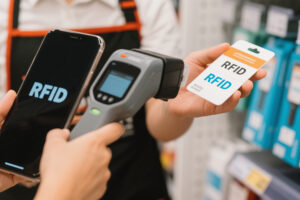
Discover budget-friendly RFID solutions tailored for small businesses. Learn how to reduce errors, save time, and scale operations without breaking the bank.
More
RFID (Radio Frequency Identification) is a wireless communication technology. Automatically identifying and tracking the corresponding frequency band tags on attached objects by emitting electromagnetic waves of different frequency bands emitted b...
More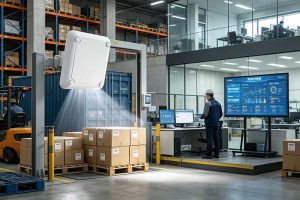
Are RFID tags secure? Learn how RFID tag security works, including encryption, authentication, privacy protection, and industrial RFID safety practices from Cykeo.
More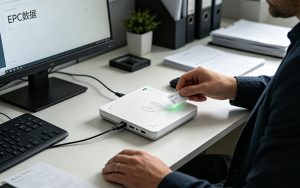
how to connect rfid devices step by step with proven methods. Learn USB, Type-C, and network setup, avoid common errors, and achieve stable RFID system integration.
More