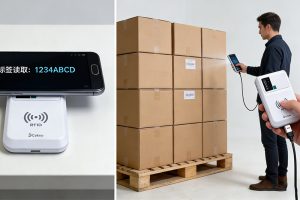
Efficiency Bottleneck in Traditional Warehouse Management
In large-scale logistics, manufacturing, or retail warehouses, inventory checks are time-consuming, labor-intensive, and prone to errors. Manual counting often falls short in meeting the demands for high turnover, precision, and frequency—especially in high-shelf, densely packed, or nighttime operations. As a result, enterprises are actively seeking smarter and more efficient solutions. The RFID drone inventory system has rapidly emerged as a key technology to address these challenges.
How the RFID Drone System Works
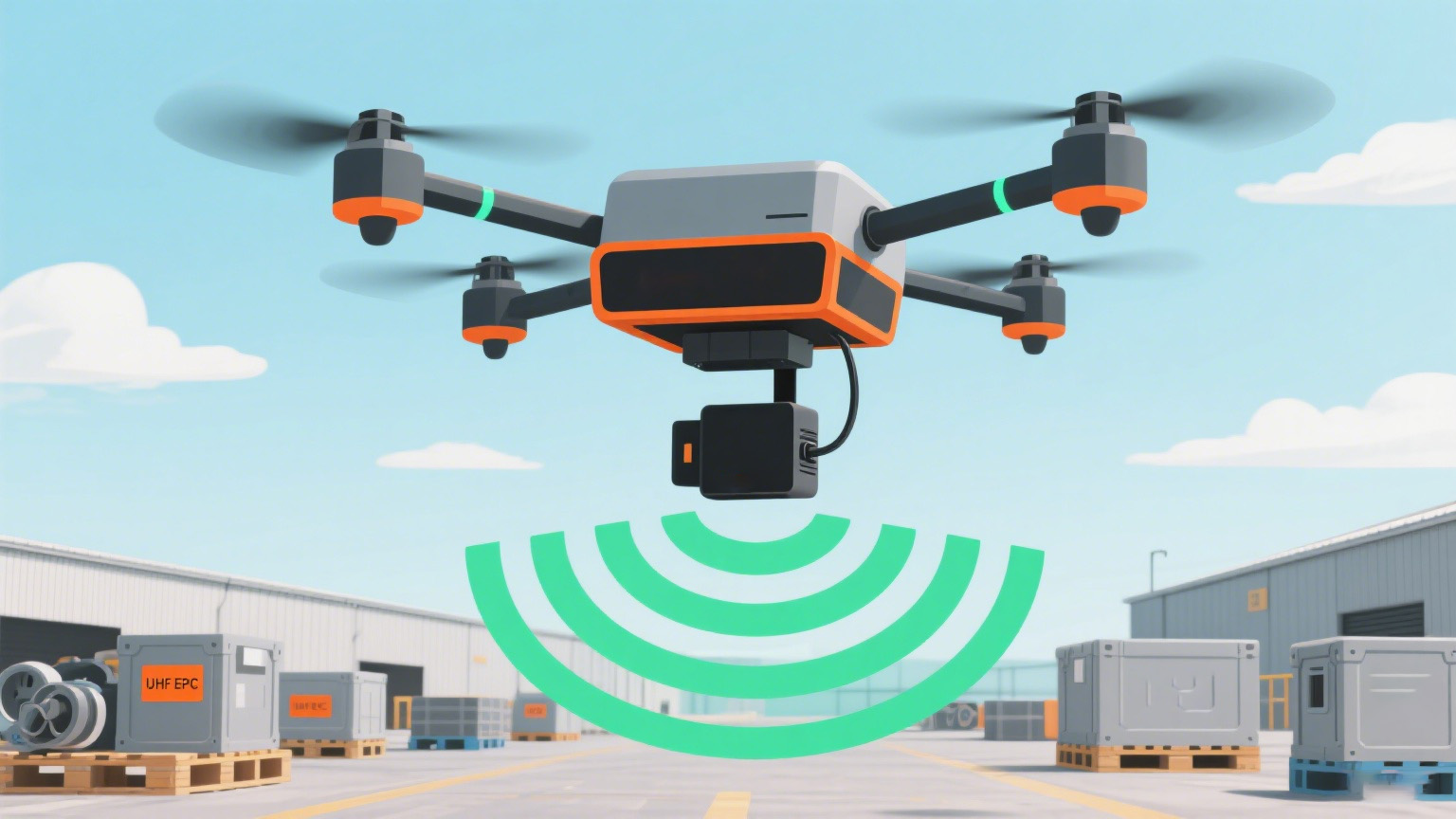
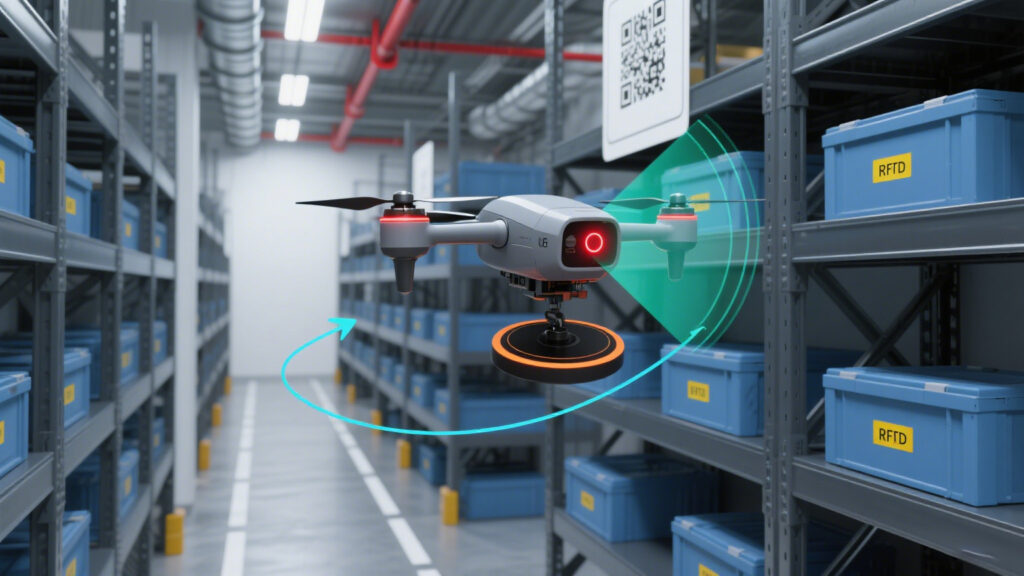
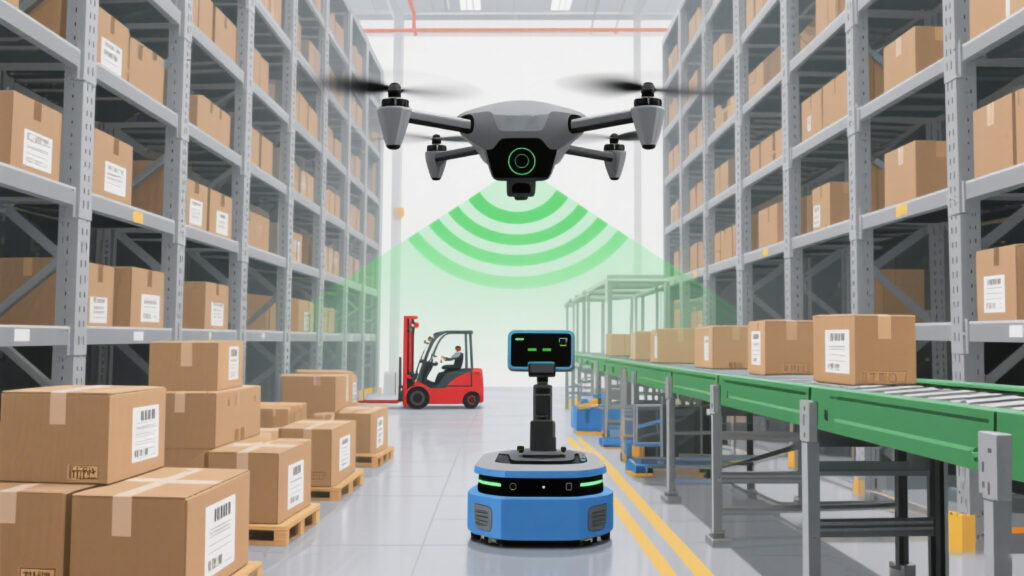
The RFID drone system integrates radio frequency identification (RFID) with autonomous drone technology. During flight, the drone reads tag data via an onboard RFID reader and uploads this data in real time to a central management system (such as WMS or ERP) for comparison and archiving.
Core system components include:
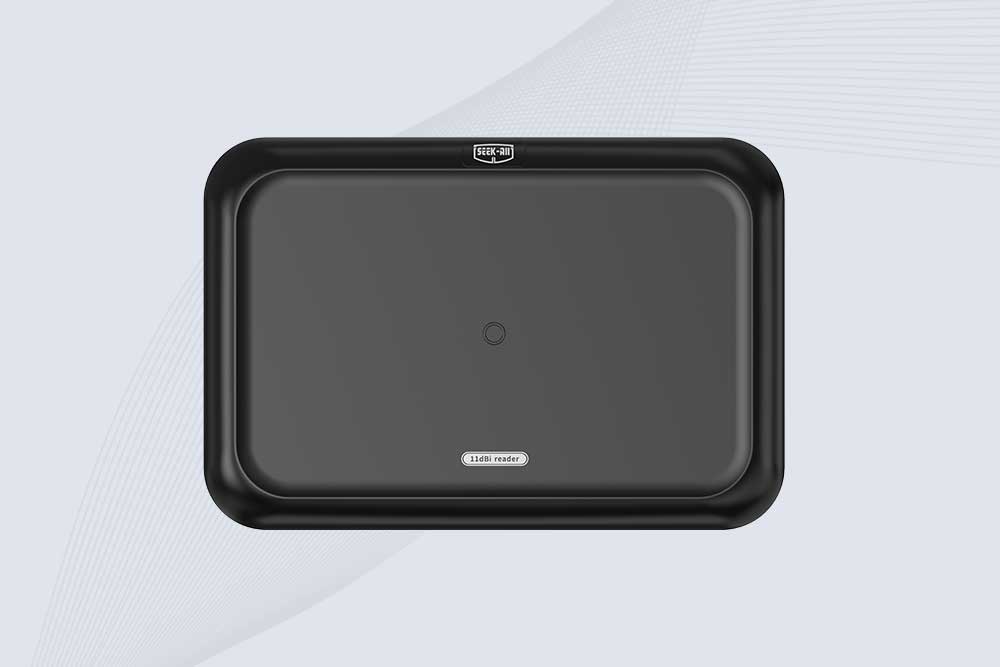
UHF RFID Reader Module: Reads passive tags within a range of 3–10 meters.
Navigation & Obstacle Avoidance: GPS, visual SLAM, or other sensors for path planning indoors and outdoors.
Wireless Communication Module: Connects to backend systems via Wi-Fi or 5G.
Data Processing Unit: Matches scanned tags with inventory records in real time.
The system can be scheduled for regular tasks, allowing fully autonomous night-time inventory checks without human supervision.
Key Advantages of RFID Drone Inventory
Exceptional Efficiency: Reduces inventory time by over 90% compared to manual methods. For example, one large warehouse completed a full scan of tens of thousands of tags in under 3 hours.
Touchless & Safer Operation: No need for workers to climb high shelves or enter hazardous zones—ideal for high-density storage environments.
High Accuracy: Tag read rates exceed 95%, significantly reducing missing or duplicated scans.
Unmanned Night Operation: Drones follow preset flight paths for autonomous scanning during off-hours, improving utilization.
Adaptable to Complex Environments: Effective in metal-shelf warehouses, outdoor foliage areas, and densely packed SKUs.
Real-World Use Cases
Case 1: Global Logistics Warehouse
A multinational logistics company manages over 10 million pallet tags daily. After deploying autonomous RFID drones, the system performs two inventory sweeps every night without human supervision. Inventory accuracy reached 99.9%, saving significant labor and reducing downtime costs.
Case 2: Retail and Fashion Industry
In apparel distribution centers, preset drone routes enable thrice-weekly automated scans. Integrated with WMS, this system prevents stock mismatches and overstock, improving inventory turnover.
Case 3: Plant Nurseries
Low-altitude hovering drones read RFID tags on saplings and shrubs, tracking their location and growth cycles—ideal for large-scale tree nurseries and outdoor farms.
Broad Industry Applications
Industry
Application Value
Large-Scale Warehousing
Fast high-rack counting, reduced labor
Retail & E-commerce
SKU-level checks, lower stockout rates
Medical & Pharmaceutical
Batch-level management of sensitive items
Manufacturing (Raw/Semi-finished Goods)
Material location tracking and auto-replenishment
Agriculture / Nurseries
Lifecycle tracking via tag recognition
Ports / Container Yards
Automated inspections and seal verification
Challenges and Future Directions
Despite the benefits, RFID drone systems face some technical and deployment challenges:
Challenge
Mitigation Strategy / Trend
Signal interference in metal environments
Use directional antennas and optimization algorithms
Limited flight time
Introduce auto-charging docks and multi-drone scheduling
High integration costs
Develop open APIs to integrate with ERP/WMS systems
High initial investment
Offer rental or managed services to lower deployment barriers
Indoor navigation complexity
Combine visual SLAM or LiDAR for assisted navigation
Conclusion
RFID drone systems are accelerating the digital transformation of warehousing and supply chains. By improving efficiency, reducing manual errors, and enhancing data visibility, this technology is becoming a vital tool for businesses to meet inventory and operational challenges. With the continued advancement of AI navigation, edge computing, and 5G, tomorrow’s smart warehouses will rely not on human inspectors, but on fleets of autonomous drones managing high-frequency, high-precision inventory workflows.
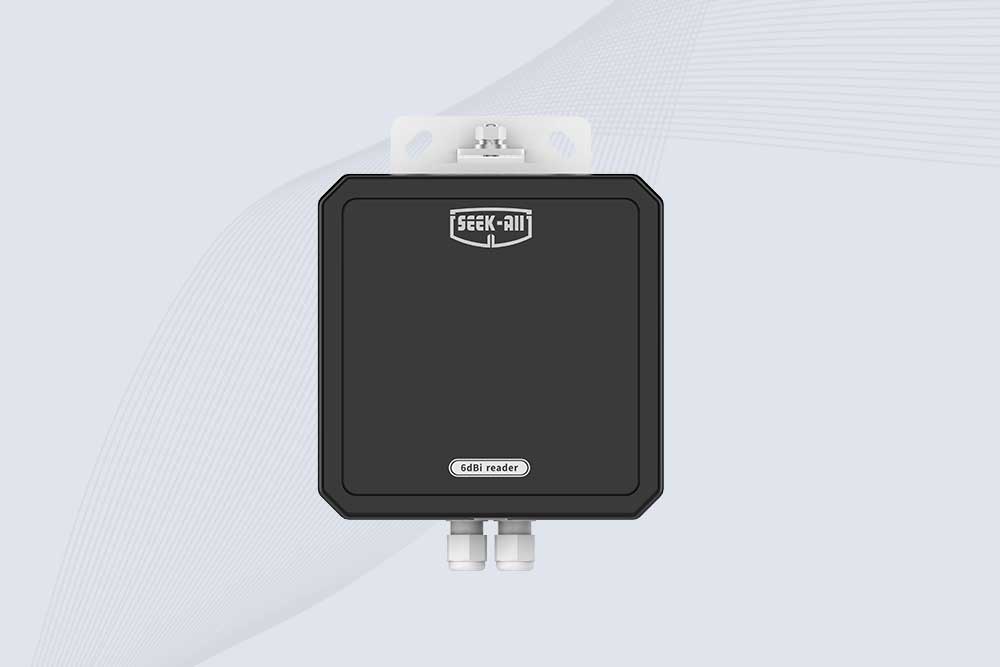
SSD-RA06L is an industrial UHF RFID reader with a built-in 6 dBi antenna, 3 m read range, 600+ tags/s, Ethernet, RS232, and optional Wi-Fi, 4G, and PoE.
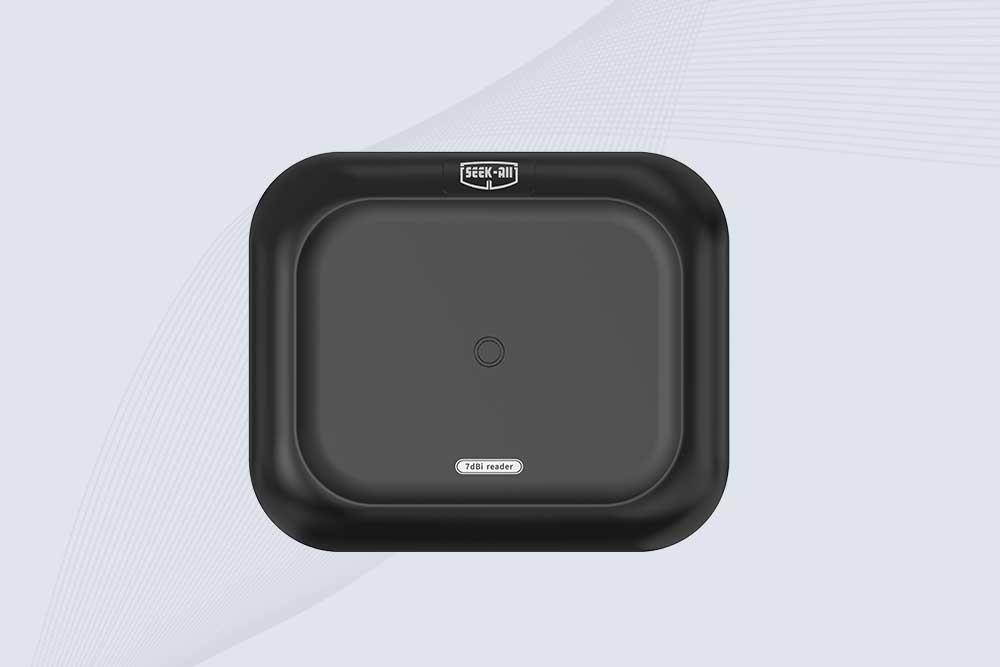
SSD-RA07L industrial UHF RFID reader with integrated 7 dBi antenna, up to 6 m reading distance, over 600 tags/s, Ethernet, RS232, and optional Wi-Fi, 4G, and PoE.
Learn how a long range RFID reader for parking system helps reduce congestion, automate vehicle access, and improve parking security for residential, commercial, and industrial facilities.
Discover how long range RFID readers improve asset tracking for IT equipment, medical devices, manufacturing tools and construction assets. Learn how RFID helps companies reduce loss, improve visibility and manage valuable equipment efficiently.
Can an Android phone read an RFID tag? Yes—but only 13.56 MHz HF/NFC tags within 1-4 cm. For UHF warehouse tags? Absolutely not. Here’s exactly what works.
Learn how to optimize fixed RFID readers for high-speed conveyor belts. Discover Cykeo’s solutions for tag positioning, anti-collision settings, and real-time data capture.
 Cykeo RFID IoT Solution Products R&D Manufacturer