 Cykeo RFID IoT Solution Products R&D Manufacturer
Can an RFID Reader Read NFC? I’ll Give You the Clear Answer—No Fluff.
64Can an RFID reader read NFC? Only if it's an HF 13.56 MHz reader. UHF readers can't. LF 125 kHz readers can't. Learn exactly what works and what doesn't.
MoreAll RFID Product
When I first heard the concept of “RFID being used on pets,” the image that came to mind was of cats and dogs wearing small pendants so they could be tracked down if they got lost. However, after learning more about it, I realized my understanding was far too simplistic. The application of RFID in pet management goes far beyond just “location tracking.” Some of the methods even seemed a bit “strange” at first glance, but they genuinely solve real-world problems.
01 My initial misconception: RFID = GPS?
Many people, upon hearing the term “pet management,” instinctively associate it with GPS tracking, because GPS has been the only tool they’ve encountered for location services. However, RFID and GPS are completely different concepts.
GPS is suitable for real-time tracking, but it consumes a lot of power and is expensive. RFID, on the other hand, is used for “identity verification,” essentially giving each pet an electronic ID card.
I once saw an interesting case study at a pet expo: a cattery with hundreds of Ragdoll cats had implanted low-frequency RFID chips in each cat. By scanning each cat with an RFID handheld device, they could find out the cat’s birth date, vaccination status, and even breeding records.
At the time, I thought: isn’t this just an electronic record? But after discussing it further, I learned that this kind of “record” is much more reliable than paper records. Because with so many people in a cattery and cats that look similar, the chances of mistaken identity are actually quite high.
02 Bizarre Use #1: Preventing Pets from Being Swapped
Preventing pet swapping? It sounds a bit fantastical, but it’s actually a real issue.
A friend of mine who exports pet supplies told me that their clients often encountered situations where the pedigree dogs they bought in South America weren’t the same ones they brought home. They eventually mandated that breeders implant RFID chips in the puppies before they left their litters, and then verify them with a RFID reader upon leaving the factory.
This left a deep impression on me: it turns out that RFID, in its “unusual” use in pet management, also has a touch of anti-counterfeiting.
Scott Information actually had similar experience back in the library equipment era—RFID could solve the problem of “book swapping” or “book mixing.” Later, this was extended to pets, just in a different context.
03 Second bizarre use: controlling feeding permissions
I honestly didn’t expect this at first.
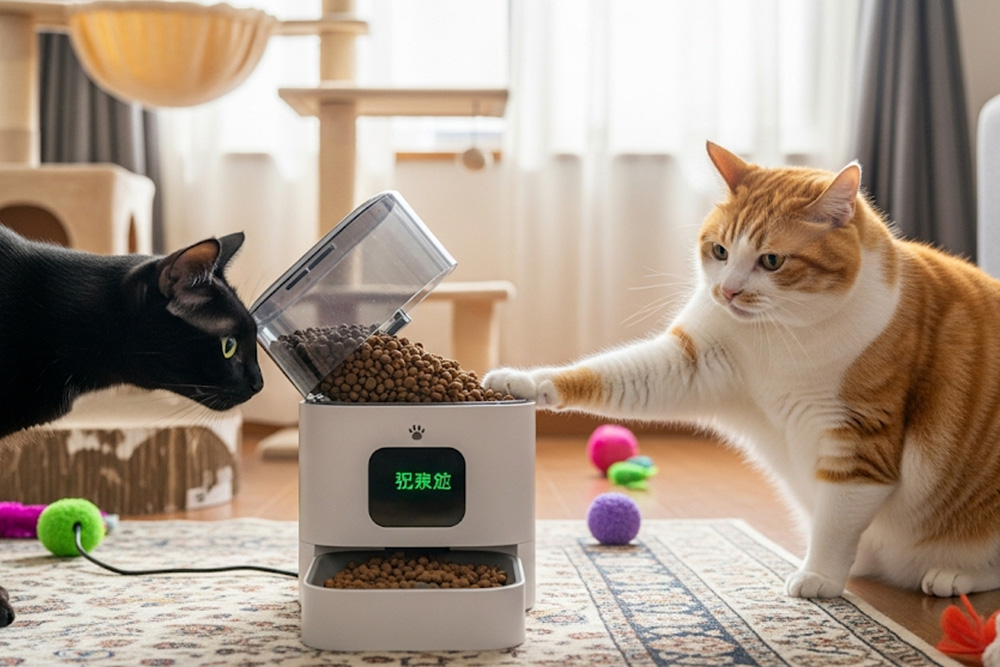
A smart pet supplies company in Guangzhou conducted an experiment. They implanted RFID tags into cats and then installed RFID recognition modules on smart feeders. The result was that the feeder only opened when the corresponding cat approached.
Why do this? Because in multi-cat households, there are always “overeign” cats and “undere” cats. Some cats eat a lot, resulting in the other cat always going hungry. Previously, the owner had to watch over them; now, the machine identifies the cat, solving the problem.
However, I personally think this type of product is still experimental. Some cats might not approach correctly, causing the reader to miss them. But the overall direction is indeed very interesting.
04 Third unusual use: Fast registration at pet hospitals
I experienced it firsthand.
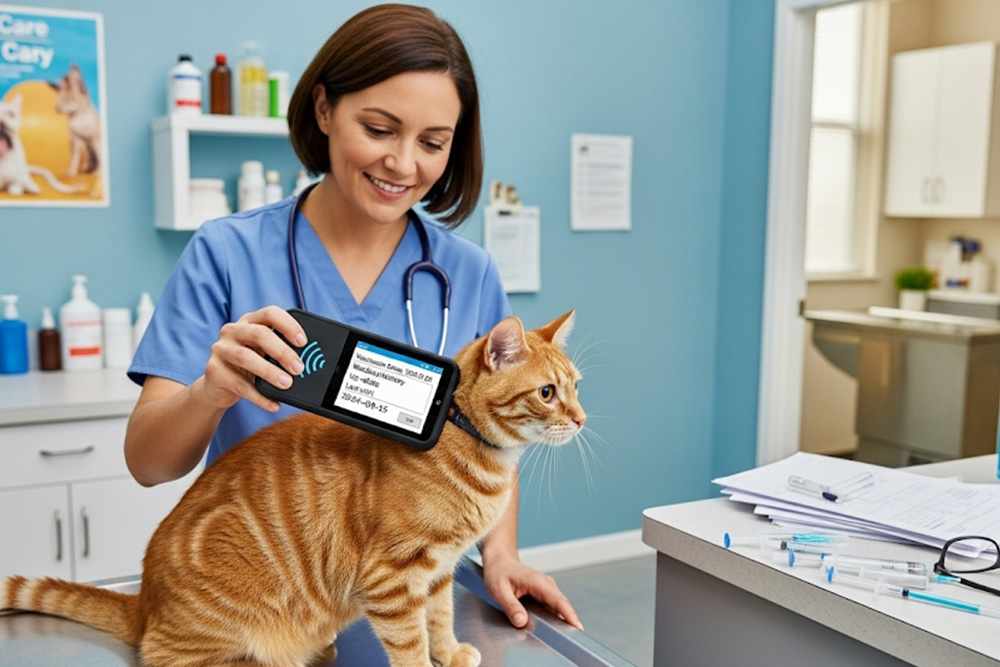
I took my cat to a pet hospital in Shanghai. The vet simply scanned it with an RFID handheld device, and the screen immediately displayed the vaccination dates and medical history. The whole process took less than 5 seconds, much faster than flipping through a medical record.
However, there’s a problem: not all hospitals are connected to the same database. I encountered this in Hangzhou; the information scanned from the chip was incomplete. The vet still had to ask me to provide a bunch of paper documents.
This made me realize that RFID is powerful for pet management, but to reach its full potential, it still relies on data sharing. This may take time to develop in China.
05 Fourth bizarre use: “Contestant numbers” in pet competitions.
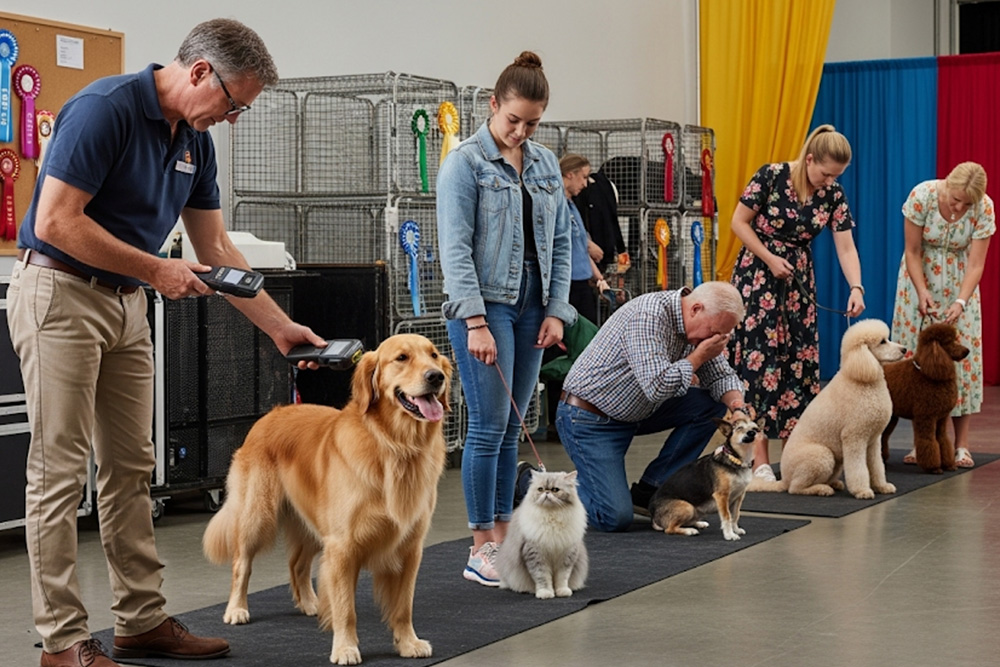
Two years ago, I attended a pet expo in Nanjing, which included cat and dog shows. The organizers used RFID ear tags instead of traditional number tags. Judges could simply scan the tags to identify the participating pet.
This method helps prevent cheating—for example, some contestants might secretly switch pets (don’t laugh, it’s actually happened). The uniqueness of RFID makes such manipulation virtually impossible.
06 Cykeo’s Practices: From Libraries to the Pet Industry
I spoke with the Cykeo team; they actually started out in library management before expanding RFID into the pet industry. They have a UHF access gate originally designed for identifying books entering and exiting, but after some modifications, it’s also being used by veterinary hospitals for bulk registration.
Furthermore, their handheld devices are quite popular with pet managers because they’re lightweight and easy to operate. A farm manager can learn to use them almost instantly, and a simple scan tells them whether a dog has completed its vaccinations.
07 My little worry
While RFID has many applications, I still have some concerns. For example:
If the chip shifts, will it cause a reading failure?
Some pet owners are worried about safety, feeling uneasy about implanting foreign objects inside their pets.
There’s also the issue of cross-regional data sharing; can hospital systems in different cities be integrated?
I haven’t received unified answers to these questions yet. Some experts say the technology is mature, but in practice, the situation is far more complex than imagined.
08 Conclusion: Beneath the surface of eccentricities, life is actually quite ordinary.
Having read this far, you might realize that the so-called “unusual uses” are actually just practical little inconveniences. RFID doesn’t possess any magical powers; it simply performs identification tasks more reliably than humans.
From preventing pet swapping to controlling feeding and facilitating rapid veterinary registration, these applications may seem novel, but the logic is quite simple.
Therefore, if you still understand RFID’s application in pet management merely as “location tracking,” you’re likely underestimating its potential.
If you would like to learn more about RFID, please visit our website, RFID resources, or contact us.
Can an RFID reader read NFC? Only if it's an HF 13.56 MHz reader. UHF readers can't. LF 125 kHz readers can't. Learn exactly what works and what doesn't.
More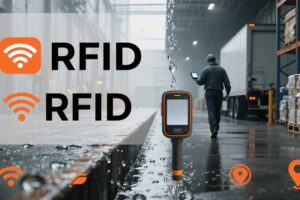
Discover waterproof handheld RFID scanners built for rugged outdoor environments. Learn how Cykeo’s durable devices enhance accuracy in harsh weather and dust.
More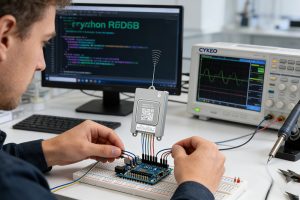
Learning how to use handheld RFID reader writer? Step-by-step for inventory counting and tag programming. Power on, connect to Android, read EPCs, write user memory. Real field advice from CYKEO engineers.
More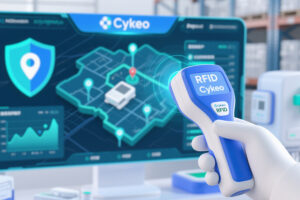
Learn how RFID asset tracking works, its key components, and benefits for industries like healthcare, logistics, and manufacturing. Explore Cykeo’s tailored solutions.
More