 Cykeo RFID IoT Solution Products R&D Manufacturer
Can RFID Reader Read Multiple Tags? Yes, That’s the Whole Point.
94Need to scan many items fast? Learn how and why an RFID reader can read multiple tags simultaneously, and the factors that affect bulk reading performance.
MoreAll RFID Product
So first thing to know: yes, iPhones do have NFC inside. Since the iPhone 7, you can read and write certain HF (13.56 MHz) RFID tags, basically the same stuff used for NFC cards, smart labels, tap-to-open web links, and so on.
If your tags follow common NFC standards (NDEF, NFC-Forum, some MIFARE types, etc.), then the iPhone alone works fine. You just use any NFC app and scan the tag like you normally would. Super straightforward.
But the limitations are pretty big:
So yeah — iPhone can technically read some RFID, but only the NFC kind. For anything industrial or long-range or bulk-scanning, the phone alone isn’t enough.
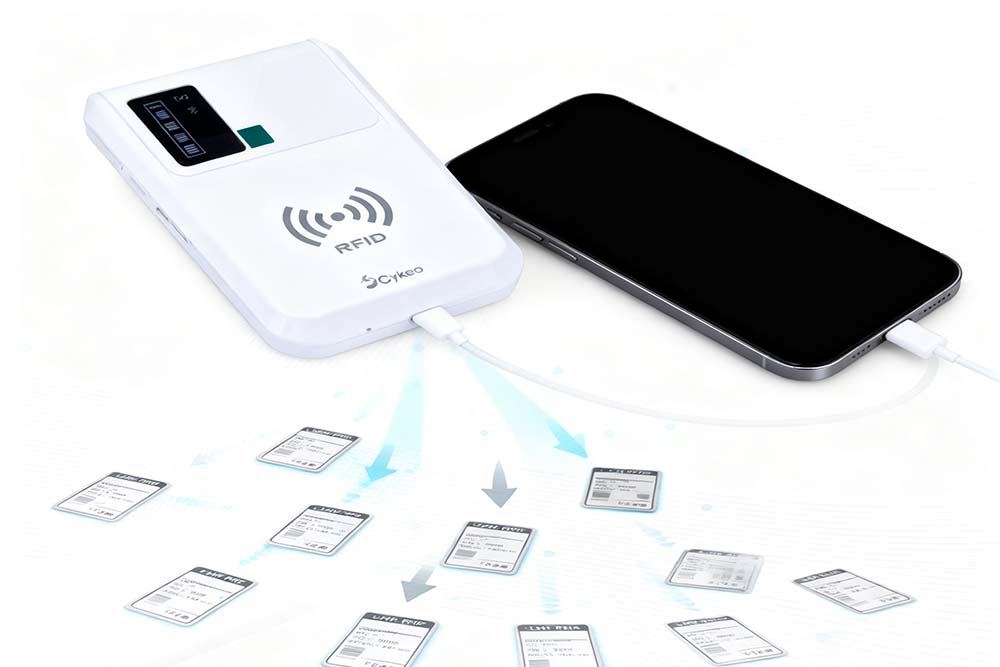
If you’re doing warehouse inventory, asset audits, equipment tracking, RFID logistics, or any system based on LF or UHF… you absolutely need a proper RFID reader. A phone doesn’t replace that hardware.
And that’s where devices like the Cykeo CK-R10A Portable RFID Reader for iPhone come in — basically adding “real” UHF RFID capability to your phone.
The CK-R10A is basically a compact, mobile UHF RFID reader built to pair with iPhone. It gives you all the stuff the phone can’t do on its own:
In short: if your tags are NFC, use the iPhone.
If your tags are UHF (the real warehouse stuff), you pair the phone with something like the CK-R10A.
It’s definitely more convenient than the old giant handheld scanners, but there are still some real-world details that matter:
So it’s not “plug in and magic happens.”
It works well, but you still need a proper workflow.
If you’re scanning simple NFC stickers or cards — your iPhone alone is enough.
But if you’re doing real RFID work — asset tracking, warehouse stock checks, retail item scanning, UHF labels, long-range reading, bulk inventory — then you need an external UHF reader, and something like the CK-R10A is a very practical way to do that without carrying around a huge industrial device.
It’s basically the middle ground:
Your iPhone stays the brain, the CK-R10A becomes the muscle.
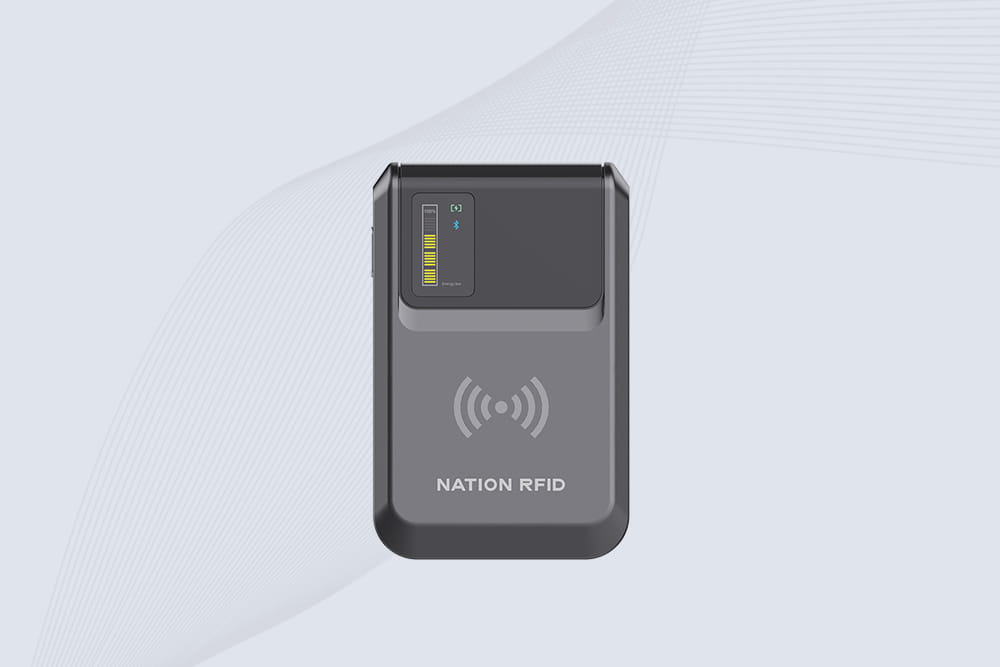
Cykeo CYKEO-B5L portable iPhone RFID reader features 8m range, 500 tags/sec scanning, and built-in 10000mAh charger. Perfect for retail/warehouse teams needing iOS integration.
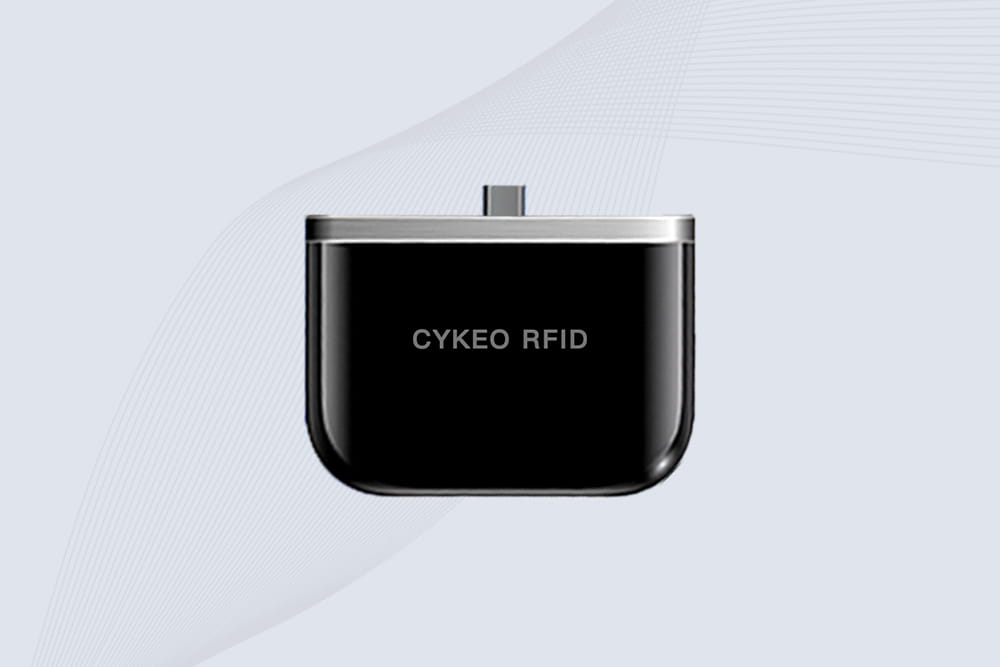
Cykeo CYKEO-B4L Android RFID reader features 37g magnetic phone attachment, 30cm UHF scanning, and Java/C# SDK for mobile asset tracking. Ideal for anti-counterfeit and warehouse verification.
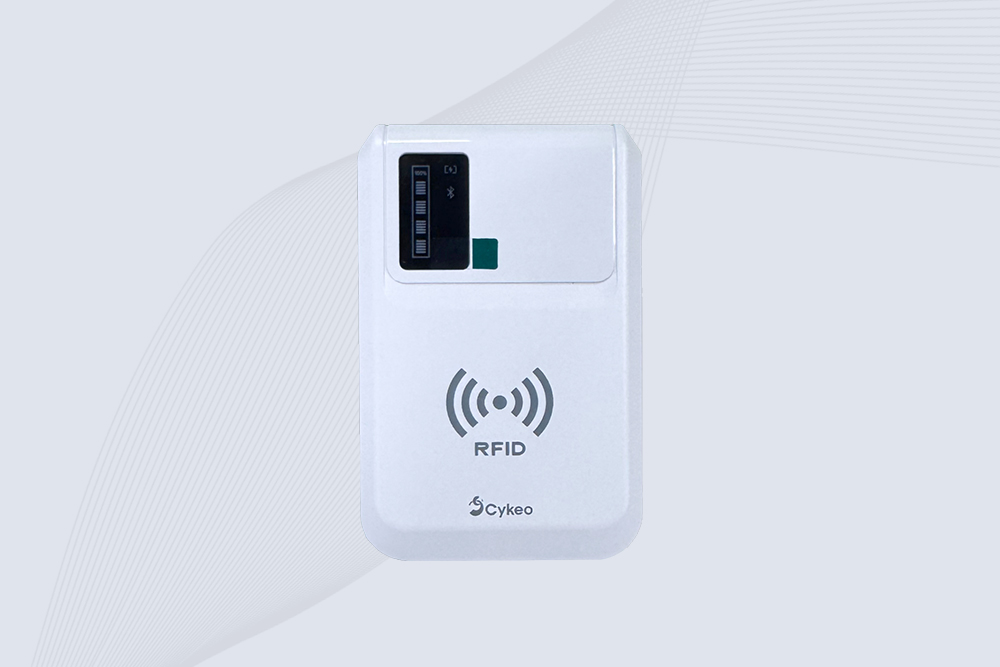
CYKEO CYKEO-B5L RFID Chip Reader iPhone delivers long-range UHF scanning, iOS compatibility, and all-day battery life. A compact RFID Tag Reader iPhone solution for retail, healthcare, and mobile inventory tracking.

Need to scan many items fast? Learn how and why an RFID reader can read multiple tags simultaneously, and the factors that affect bulk reading performance.
More
Cattle RFID tags help track livestock health, movement, and ownership. Learn how they work in real farms and how to choose the right tags.
More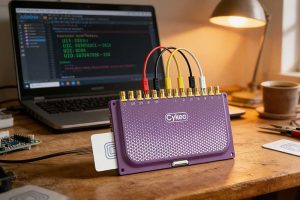
Learn how to make an RFID reader with Arduino that actually works. Our hands-on tutorial covers RC522 wiring, library setup, and fixing "tag not found" errors.
More
AI + UHF RFID + Phased Array Technology for Next-Generation RFID Portal Gate Systems Discover the latest in RFID Portal Gate, combining AI, UHF RFID, and phased array technology. This cutting-edge solution provides smarter, m...
More