 Cykeo RFID IoT Solution Products R&D Manufacturer
RFID Tags for Inventory Management
264RFID tags for inventory management explained from real use cases. See how warehouses actually track stock faster, cleaner, and with fewer mistakes.
MoreAll RFID Product
To check an RFID number, use a compatible RFID reader to scan the tag and retrieve its unique EPC or UID stored in the chip, typically displayed instantly via software or mobile app.
That’s the direct answer. In practice, however, whether you get a clean, stable number—or nothing at all—depends on distance control, antenna tuning, protocol matching, and even how you hold the tag. I’ve seen identical tags behave completely differently just by rotating them 30 degrees on a metal shelf.
An RFID number is not a random label—it’s a structured digital identity. In UHF systems, you’re usually reading the EPC (Electronic Product Code) stored in the tag’s memory bank. <h3>Common RFID number types</h3>
| Type | Description | Typical Length |
|---|---|---|
| EPC | Product/asset identifier | 96–128 bits |
| TID | Chip manufacturer ID | Fixed, read-only |
| User Memory | Custom data | Variable |
In warehouse deployments, I almost always rely on EPC for tracking, while TID is used for anti-counterfeiting verification.
Not all readers can read all tags. Frequency alignment matters:
For example, a desktop device like Cykeo D1L is ideal when you need controlled, repeatable reads within 30 cm.
Most professional readers provide:
Once connected, the interface will show real-time tag data.
Bring the tag into the read zone:
From experience, unstable reads are often not “device failure”—they’re environmental.
Once scanned, the system displays:
Export options often include CSV or API integration.
I’ve deployed RFID systems in tool rooms and warehouse gates. One consistent observation:
Typical causes:
In one inventory project, simply lowering output power from 30 dBm to 27 dBm improved read accuracy by ~18%.
According to GS1, EPC-based RFID systems enable:
RAIN RFID Alliance reports that billions of UHF RFID tags are deployed annually across retail and logistics, emphasizing the importance of reliable tag identification.
One subtle issue: many beginners assume “no data” means a broken tag. In reality, it’s often a protocol mismatch.
Only if the phone supports NFC (HF). UHF tags require an external reader.
It usually doesn’t. You may be reading different memory banks (EPC vs TID).
Use a UHF reader with anti-collision support; it can read hundreds of tags per second.
Yes, EPC is designed to be globally unique when properly encoded.

RFID tags for inventory management explained from real use cases. See how warehouses actually track stock faster, cleaner, and with fewer mistakes.
More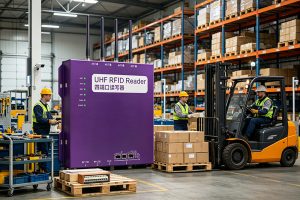
Industrial asset tracking RFID improves equipment visibility, inventory accuracy, and maintenance efficiency with ultra high frequency UHF RFID technology from Cykeo.
More
How much RFID installation really costs? Get real pricing insights, hidden expenses, and expert advice to budget your RFID system correctly.
More
long-range UHF RFID readers that scan tags from up to 20 meters. Cykeo CK‑RA4L, CK‑RA6L, CK‑RA9L, and CK‑RA12L handle high-speed batch reading, work in tough industrial environments, and easily integrate with WMS, ERP, and IoT systems.
More