 Cykeo RFID IoT Solution Products R&D Manufacturer
RFID Vehicle Tracking for Parking Systems: How It Works & Why It Matters
34Discover how RFID vehicle tracking improves parking systems and gate access with automatic identification, faster entry, and better security.
MoreAll RFID Product
A temperature tag is no longer just a nice-to-have in logistics—it’s a necessity. Whether you’re shipping vaccines, fresh produce, or clinical trial materials, knowing the exact thermal history of your products is critical.
We sat down with the team at CYKEO to answer the most common questions businesses have about these small but powerful devices. From real-world use cases to debunking myths, here’s everything you need to know.
A temperature tag is a compact, battery-powered sensor that records temperature data throughout a product’s journey. Think of it as a silent witness.
“Most of our clients are surprised by how simple it actually is,” says a CYKEO product specialist. “You attach the tag to a pallet or a box, and it automatically starts logging temperature at set intervals. Once the shipment reaches its destination, you get a full report—whether via Bluetooth, cloud upload, or USB.”
Unlike old-school data loggers that require manual retrieval, modern wireless temperature tag solutions from CYKEO sync with mobile apps, so you can check conditions mid-transit without opening a single box.
Price is tempting, but the real cost comes when a shipment fails without you knowing why.
“We’ve seen clients switch to CYKEO after a single temperature excursion ruined a $50,000 pharma shipment,” the team shares. “A temperature tag isn’t just a sensor—it’s proof of compliance.”
CYKEO tags are designed for:
One logistics manager put it this way: “I used to lose sleep over disputed chargebacks. Now I just share the data report from the cold chain temperature monitor, and the conversation is over.”
While you might think it’s just food and pharma, the list keeps growing.
“We recently had a vineyard use our temperature data logger to settle a dispute with a shipping line,” the CYKEO rep adds. “The grapes arrived above spec, and the data was indisputable.”
Both options exist, and it depends on your workflow.
CYKEO offers:
“A common mistake is assuming reusable is always cheaper,” the team notes. “If you’re shipping to 50 different countries and tags get lost, single-use can actually lower your total cost.”
Accuracy comes down to three things: calibration, placement, and reading frequency.
CYKEO rfid tags are factory-calibrated with NIST-traceable standards. Placement matters too—attaching a temperature tag to the outside of a thermal box won’t reflect internal product temps.
“We always tell clients: put the tag inside the insulated packaging, next to the product,” the specialist advises. “And choose a tag that logs at intervals you actually need. Some log every 10 minutes; others log every hour. Over-logging drains battery, under-logging leaves gaps.”
Yes, and this is where CYKEO stands out.
Most CYKEO wireless temperature tag models support:
“We’ve integrated with WMS platforms, ERP systems, and even custom client portals,” says the CYKEO technical lead. “The goal is to make the tag invisible to your workflow—except when something goes wrong.”
“That just having one solves the problem,” the CYKEO team says with a laugh.
A temperature tag gives you data, but it doesn’t automatically fix a broken cooler or a driver who left the door open. The real value comes from acting on the alerts.
“We have one client who reduced spoilage by 40% just by setting up real-time SMS alerts for their logistics team,” they share. “The tag wasn’t the solution—the behavior change it enabled was.”
Start by asking three questions:
CYKEO offers a quick assessment tool on their website to match your use case with the right temperature data logger model.
Whether you’re managing a single cold storage room or a global supply chain, a reliable temperature tag turns guesswork into accountability. With CYKEO’s range of wireless and reusable options, you get more than just a sensor—you get a layer of trust between you, your partners, and your customers.

Discover how RFID vehicle tracking improves parking systems and gate access with automatic identification, faster entry, and better security.
More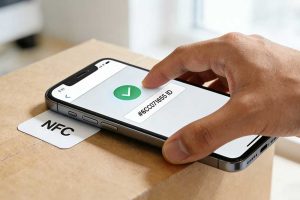
Find out if your Android phone can read RFID. We explain the NFC capability, what types of tags work, and why it's not suitable for business asset tracking.
More
Can a passive RFID reader work with active RFID? The short answer is no. Here’s why these two technologies speak different languages and how to bridge them when needed.
More
Compare QR codes and NFC/RFID tags for your business. Discover their pros and cons in cost, security, and usability to choose the right identification technology.
More