 Cykeo RFID IoT Solution Products R&D Manufacturer
Does iPhone Support RFID? (The Real Answer for Warehouse Workers)
743Does iPhone support RFID? Learn why native scanning fails and how Bluetooth readers like Cykeo's solve real inventory problems. Field-tested results.
MoreAll RFID Product
In world obsessed with “real-time efficiency,” RFID solution providers know one painful truth — it’s not that clients don’t want RFID systems, it’s that fixed readers can’t always reach where they’re needed.
Maybe you’ve been there: a few stubborn boxes on the bottom shelf just never get scanned; a warehouse changes its layout, and suddenly all your cabling and installation work has to start from scratch.
That’s when you realize — mobility isn’t just convenience, it’s power.
And that’s exactly why more integrators are putting handheld RFID readers at the heart of their system designs.
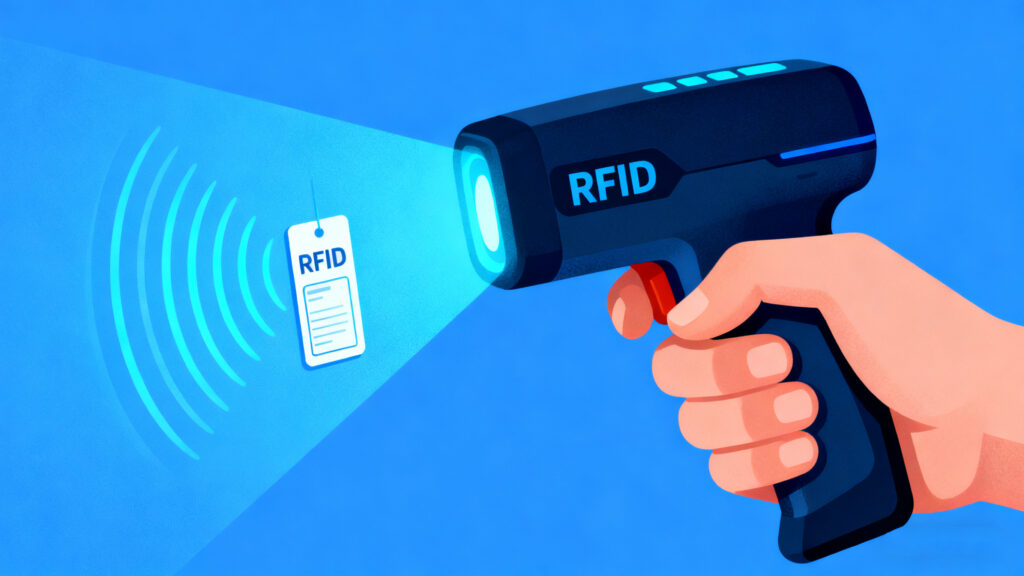
On the surface, it looks like a fancy barcode scanner.
But anyone who’s done real deployments knows — handheld RFID reader is the most flexible and human-friendly part of the RFID ecosystem.

It has its own power source, RF module, antenna, processor, and communication module.
It emits radio signals, activates tags, and reads the reflections back.
Sounds simple, right? But every detail matters:
For solution providers, this means one thing — you can take your system to the field, instead of waiting for the field to come to your system.
Fixed readers have their strengths: gate control, conveyor tracking, and automated identification are where they shine.
But walk into a messy warehouse, an open yard, or a retail space packed with racks, and you’ll quickly hit the limits of a fixed setup.
That’s where handheld RFID readers fill the gap.
They let staff move freely, scanning while walking — perfect for locating lost items, updating inventory, or troubleshooting a tag in seconds.
In short, they make your system alive.
For RFID integrators, this means faster deployment, easier maintenance, and the ability to take on projects that would otherwise be “too dynamic” for a fixed setup.
A common mistake when selecting handheld RFID readers is focusing too much on numbers.
Power output, reading distance, tags per second — all sound impressive, but that’s not the whole story.
The truth is: great projects start with human experience.
Think about it — if a warehouse clerk has to hold the reader for hours a day, and it’s heavy, clunky, or dies after two hours, no one’s happy.
That’s why, beyond specs, you need to ask:
These small “human factors” often decide whether a customer keeps calling you for future projects — or quietly switches vendors.
Different projects demand different types of handheld RFID readers.
Connectivity matters too.
Bluetooth, Wi-Fi, or cellular — they’re not “nice extras,” they’re what keeps your data flowing.
In real warehouses with weak networks, offline buffering and auto-reconnect can save a project from disaster.
Modern RFID deployments increasingly use a hybrid approach — fixed readers for automated zones, handheld readers for manual flexibility.
Think of it like this:
For solution providers, this combination means broader compatibility and higher adaptability.
Because client environments change — new production lines, new layouts, new temporary setups.
If your system includes handheld flexibility, you’ll always be one step ahead.
A successful project is never just about “does it read tags.”
The fine details — IP rating, drop resistance, scanning angle, system compatibility — determine how the client feels about your solution.
Experienced providers always test in real environments —
around metal, near liquids, under sunlight, in noisy RF zones.
Because RFID isn’t clean lab data — it’s a real-world signal puzzle.
And handheld devices are your most direct way to solve it.
The new generation of handheld RFID readers is evolving fast:
For solution providers, that means higher mobility, simpler deployment, and lower maintenance costs.
Readers aren’t just “tools” anymore — they’re intelligent nodes within your system.
Clients might only see your quotation and diagrams,
but you know — behind every good RFID project lies deep field understanding.
The handheld RFID reader isn’t here to replace fixed systems.
It’s here to make your solutions more flexible, adaptable, and human.
It turns RFID from a “hardware + tag” setup into a living, breathing system that moves with people.
If fixed readers are the bones of your RFID solution,
then handheld readers are the hands that make it work in the real world.
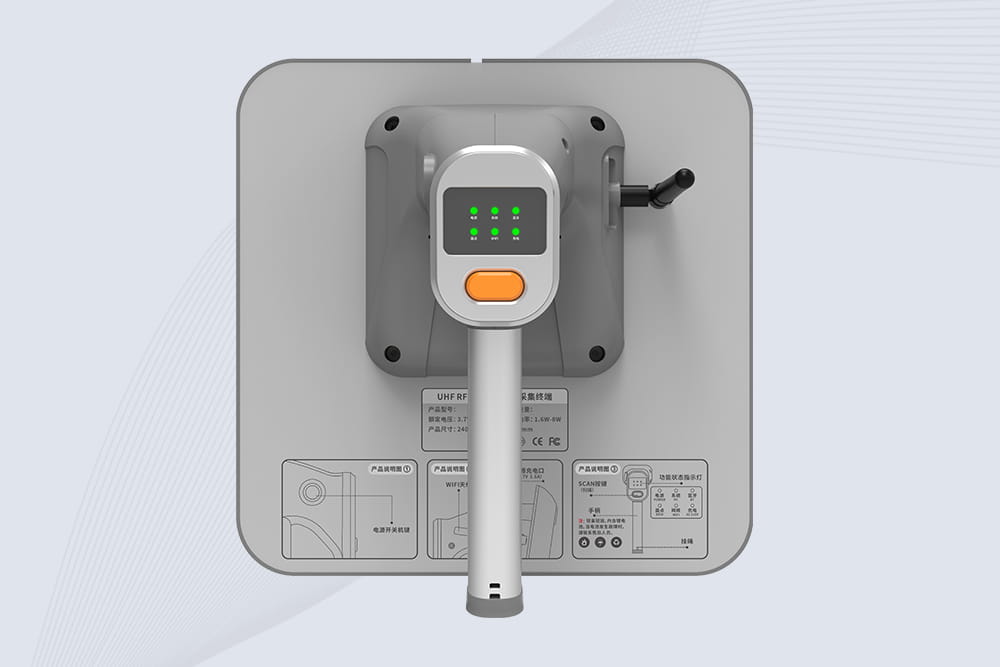
Cykeo CYKEO-B9 UHF Bluetooth handheld RFID scanner features 12m UHF range, 200+ tags/sec scanning, IP67 rugged design for retail/warehouse/pharma. Supports Android SDK & real-time Bluetooth 5.0 transmission.
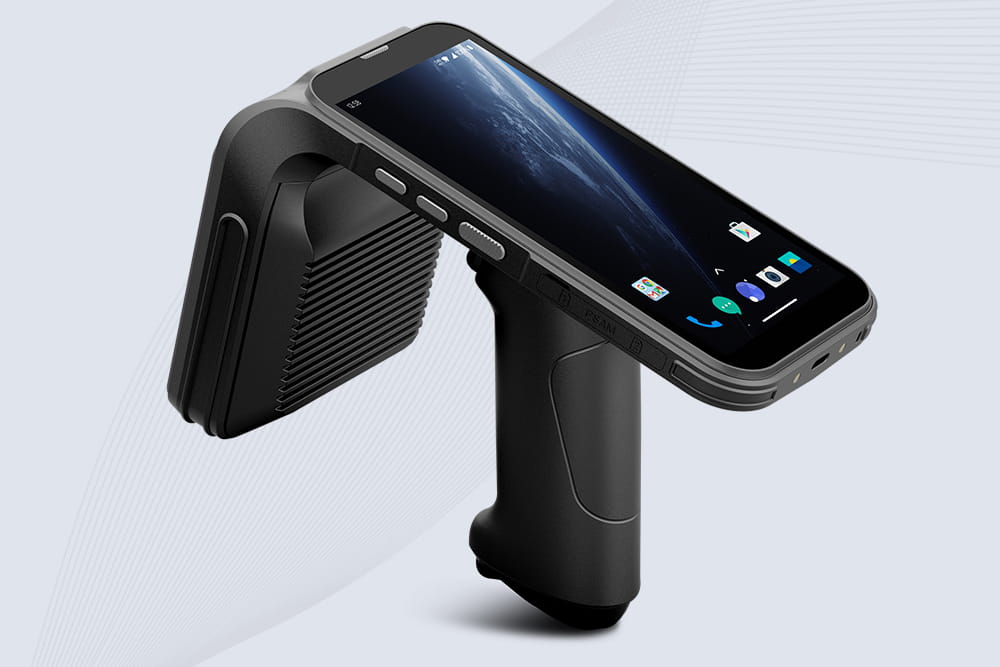
Cykeo CYKEO-B4 UHF Handheld RFID Reader scanner delivers 1300 tags/sec reading, 30m UHF range, and 12-hour battery life. IP65 rugged design with barcode/NFC/ID scanning for retail/manufacturing/logistics.
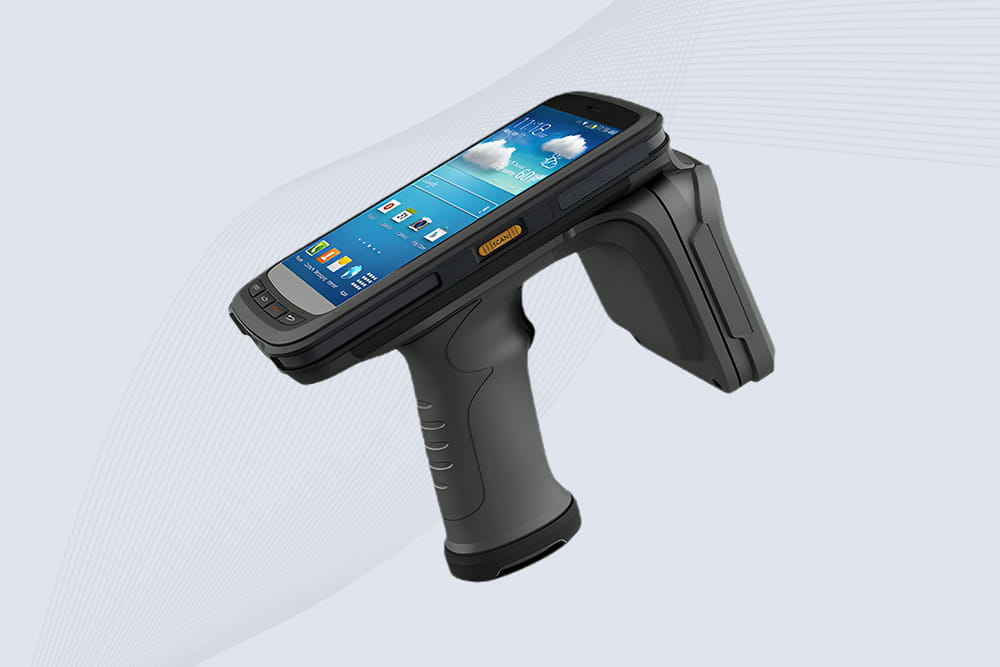
Cykeo CYKEO-B2 industrial UHF RFID handheld offers 10m range, 500 tags/sec scanning, Android 11 OS, and IP65 rugged design for retail/warehouse/manufacturing.
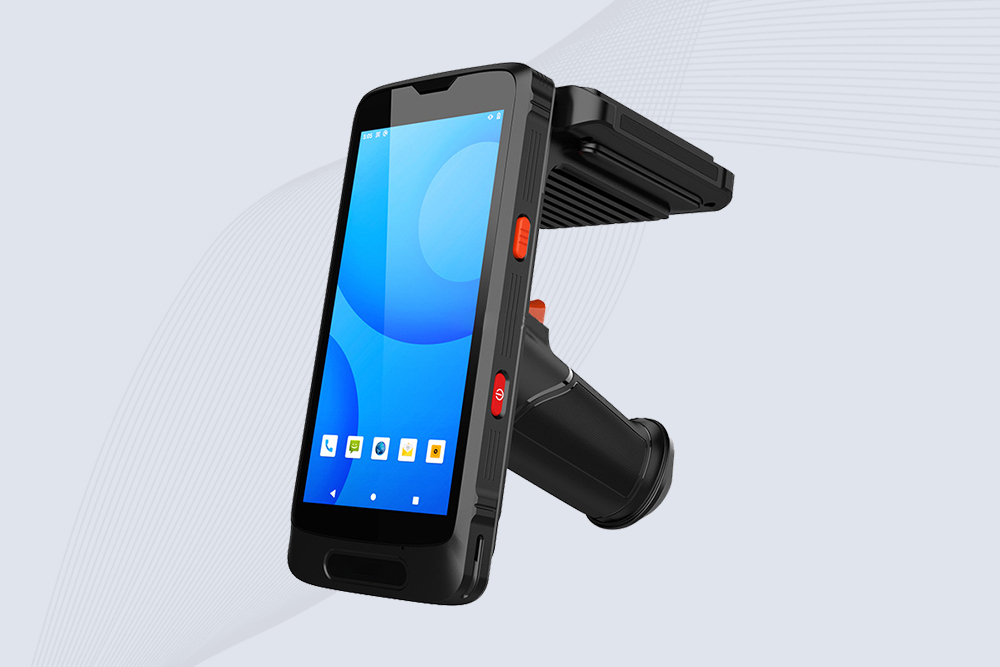
Cykeo CYKEO-B3 industrial RFID Reader Handheld, terminal offers 2m read range, multi-protocol scanning (NFC/barcode/ID), Android 10 OS, and IP65 ruggedness for logistics/retail/manufacturing.
Does iPhone support RFID? Learn why native scanning fails and how Bluetooth readers like Cykeo's solve real inventory problems. Field-tested results.
More
Learn what RFID technology is, how RFID tags work, and their role in industries like logistics and healthcare. Discover Cykeo’s sustainable RFID solutions.
More
Learn how to configure UHF RFID readers for library book checkout systems. Optimize settings, integrate with ILS, and ensure seamless patron workflows with Cykeo solutions.
More
RFID (Radio Frequency Identification) readers, as a core component of RFID technology, play a crucial role in the development and management of smart cities. RFID technology enables automated identification, tracking, and management of as...
More