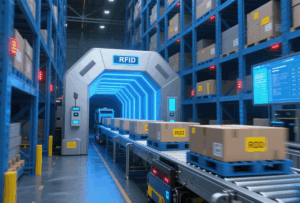
Your factory floor isn’t a lab—it’s a battlefield. Ovens baking parts at 300°F, metal machinery scrambling signals, chemicals eating through flimsy tags. Off-the-shelf RFID? It’ll crash and burn. But here’s the good news: with the right tweaks, you can build RFID tags that laugh at your harshest conditions. Let’s break down how to customize them for your industrial nightmares.
1. When “Standard” RFID Just Won’t Cut It
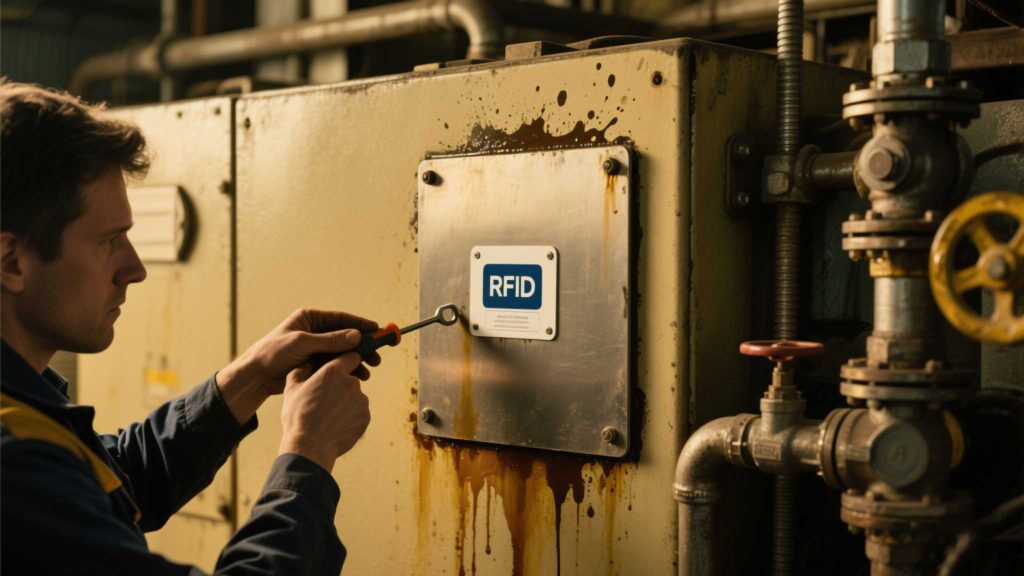
Scenario: Trying to track metal engine parts in an automotive plant. Problem: Metal reflects RFID signals like a funhouse mirror. Solution:
Anti-Metal Tags: Add foam spacers to lift tags off surfaces.
Low-Frequency (LF) RFID: Uses frequencies that penetrate metal better than UHF.
Pro Tip: Test tags on actual parts—simulated environments lie.
2. Beating the Top 4 Industrial Killers
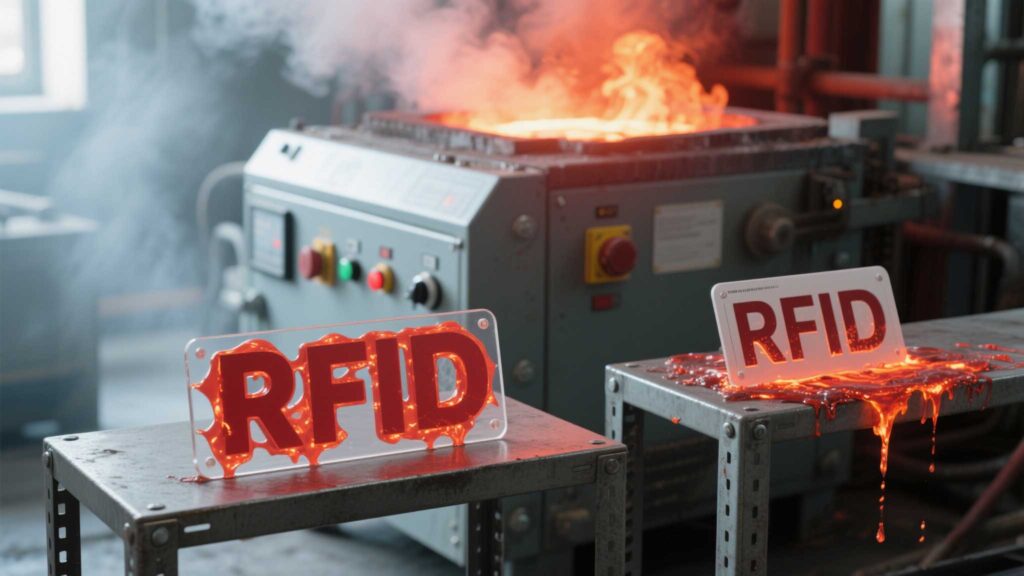
a. Extreme Heat
Custom Fix: Ceramic or polyimide tags rated for 400°F+.
Avoid: Silicone labels—they melt like ice cream.
Field-Test: 50–100 tags in real conditions for 2–4 weeks.
Measure: Read accuracy, tag survival rate.
Adjust: Swap adhesives, resins, or chip positions.
4. Cost vs. ROI: Why Custom Pays Off
Upfront Cost: Custom tags cost 3–5x more than generic.
Savings:
Reduced replacement labor (no swapping dead tags).
Fewer misreads = accurate inventory (saves 5–15% losses).
Example: A refinery spent 12konchemical−prooftagsbutsaved80k/year in manual stock checks.
5. How to Vet RFID Customization Partners
Ask These Questions:
“Can you share case studies for my industry?”
“Do you do on-site testing or just lab work?”
“What’s your lead time for prototypes?”
Red Flags: Vendors who push one-size-fits-all fixes.
Takeaway: Custom RFID isn’t a luxury—it’s survival gear for industrial zones. By matching tags to your specific hellscape (heat, chemicals, or metal), you’ll dodge daily tag fails and data blackouts. Start small: prototype 100 tags, torture-test them, then scale. Because in industry, “good enough” RFID isn’t good enough.
Learn multiple ways for how to connect an RFID reader to computer. Step-by-step guide for USB, Ethernet & serial ports with CYKEO readers, including driver and software setup.
Discover why RFID is the top choice for user identification. Compare RFID with BLE and QR codes for security, range, and durability in access control, logistics, and more.
RFID Tunnel With its efficient and accurate capabilities in item identification and data collection, it overcomes the limitations of traditional recognition methods
Learn how to streamline healthcare asset tracking with handheld RFID scanners. Discover best practices for inventory management, compliance, and reducing equipment loss.
 Cykeo RFID IoT Solution Products R&D Manufacturer