 Cykeo RFID IoT Solution Products R&D Manufacturer

So, what type of antenna is used for an RFID tag?
420Need to know what type of antenna is used for an RFID tag? We explain the common dipole and loop antennas, how they work on metal or items, and key selection tips.
MoreAll RFID Product
The short answer is yes.
In fact, reading RFID tags through a vehicle windshield is one of the most common applications for long range UHF RFID systems. You’ll see it in parking lots, logistics yards, industrial parks and residential communities every day.
That said, not every windshield gives the same result. Two vehicles parked side by side can behave differently, even if they use the same RFID reader.
Many people assume the glass blocks the RFID signal.
For ordinary laminated windshields, that’s generally not the case. UHF radio waves can pass through standard automotive glass without much difficulty.
The situation changes when the vehicle uses a metalized or heat-reflective windshield. Some premium cars include a thin metallic coating that helps reduce heat inside the cabin, but it can also weaken RFID signals.
We’ve seen installations where one model of vehicle consistently read from several meters away, while another required a different tag position to achieve the same performance.
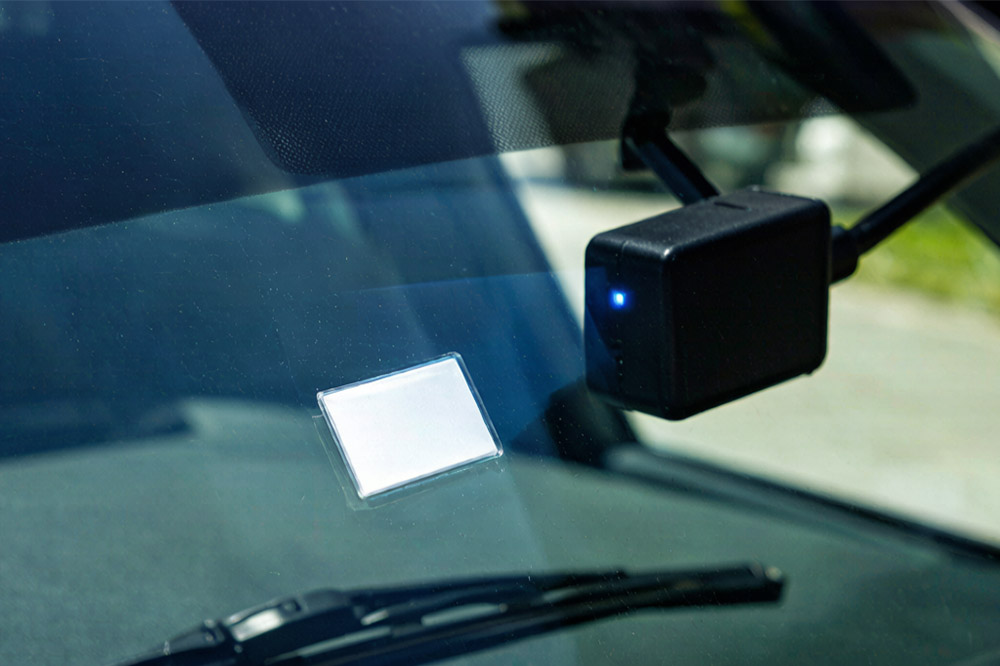
A common mistake is sticking the RFID tag wherever there’s an empty space.
Sometimes it’s placed behind a rearview mirror, sometimes in the lower corner of the windshield. Both might work, but neither is guaranteed to be the best location.
Many parking operators test several positions before deciding on the final placement. Moving the tag just a few centimeters can noticeably improve reading consistency.
It’s a small adjustment, but it often saves countless troubleshooting hours later.
People often ask whether buying a more powerful reader will solve every problem.
Not necessarily.
The antenna angle, installation height and lane width all influence the reading area. If the antenna points too high, the reader may detect vehicles waiting in the next lane. If it’s too low, the system could miss taller trucks or vans.
In vehicle access control, defining the correct reading zone is usually more important than chasing the longest possible distance.
Yes, and that’s exactly why many parking systems use RFID.
As long as the vehicle stays within the designed reading area, the reader can identify the windshield tag while the vehicle continues moving.
In logistics centers where trucks enter one after another, smooth traffic flow is often the biggest advantage. Drivers don’t need to stop, lower windows or present access cards.
Of course, vehicle speed, lane width and tag quality still affect performance, so testing under real traffic conditions is always worthwhile.
When this happens, replacing the reader isn’t always the answer.
In many cases, the issue comes down to installation details. The antenna may need a slight angle adjustment, the tag might be mounted too low, or nearby metal structures could be affecting the signal.
We’ve also seen outdoor systems where water entered a damaged cable connector, causing unstable reads that looked like a hardware problem.
Checking these basics first is often faster than changing equipment.
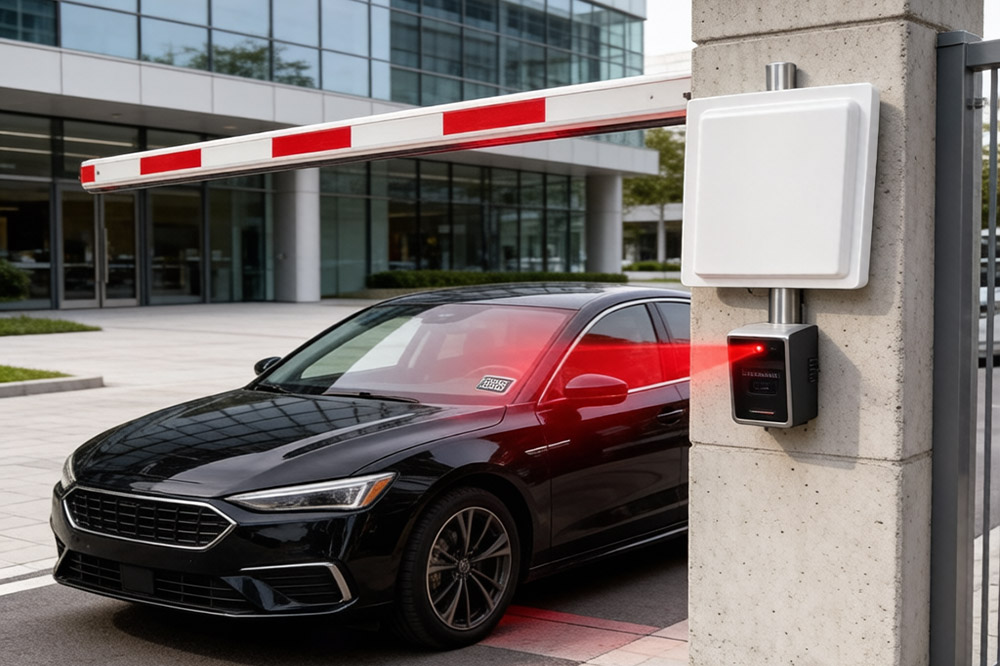
A reliable vehicle identification system depends on more than reading distance alone. The RFID tag, antenna design, installation angle and site layout all contribute to stable performance.
CYKEO long range RFID readers are widely used for parking management, gated communities, industrial parks and logistics vehicle access. Combined with dedicated windshield RFID tags and directional antennas, they provide fast and accurate vehicle identification while helping reduce false reads from adjacent lanes.
If you’re planning a new parking system or upgrading an existing entrance, our engineering team can recommend reader placement, antenna configuration and tag selection based on your actual lane layout rather than relying only on theoretical specifications.
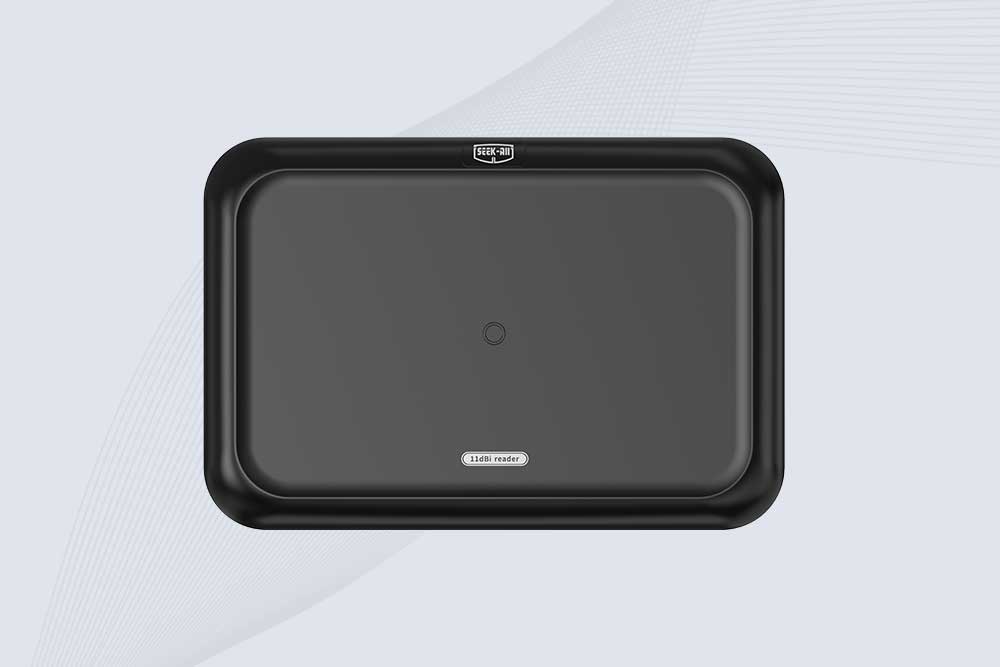
SSD-RA11L is an 11 dBi UHF RFID reader with up to 15m reading distance, 600+ tags/s speed, integrated antenna and flexible connectivity.
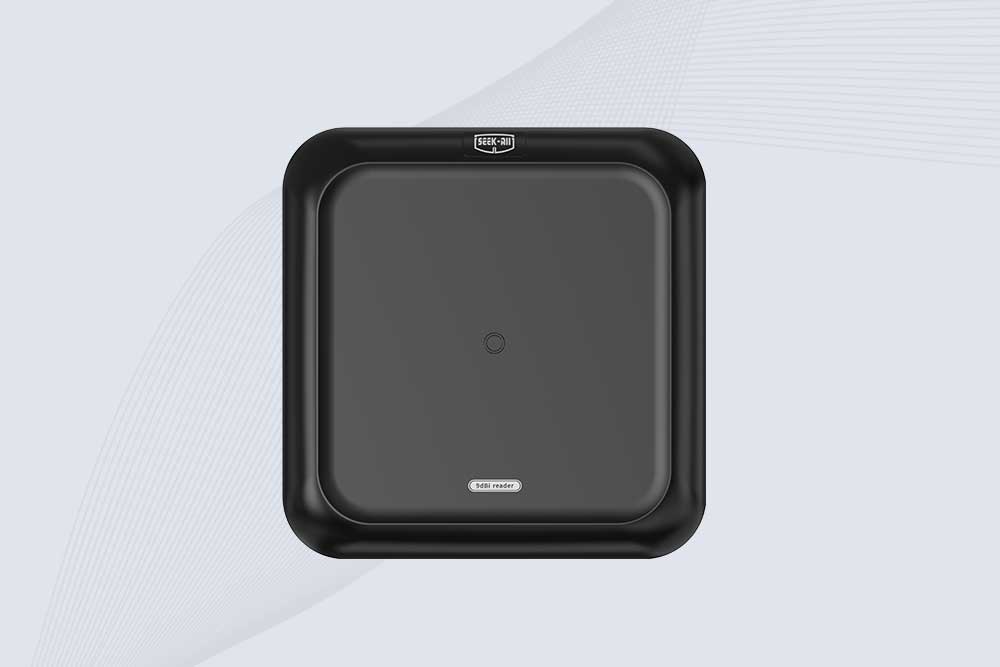
SSD-RA09L is a long range UHF RFID reader with a built-in 9 dBi antenna, 10m reading range, 600+ tags/s speed and flexible interfaces.
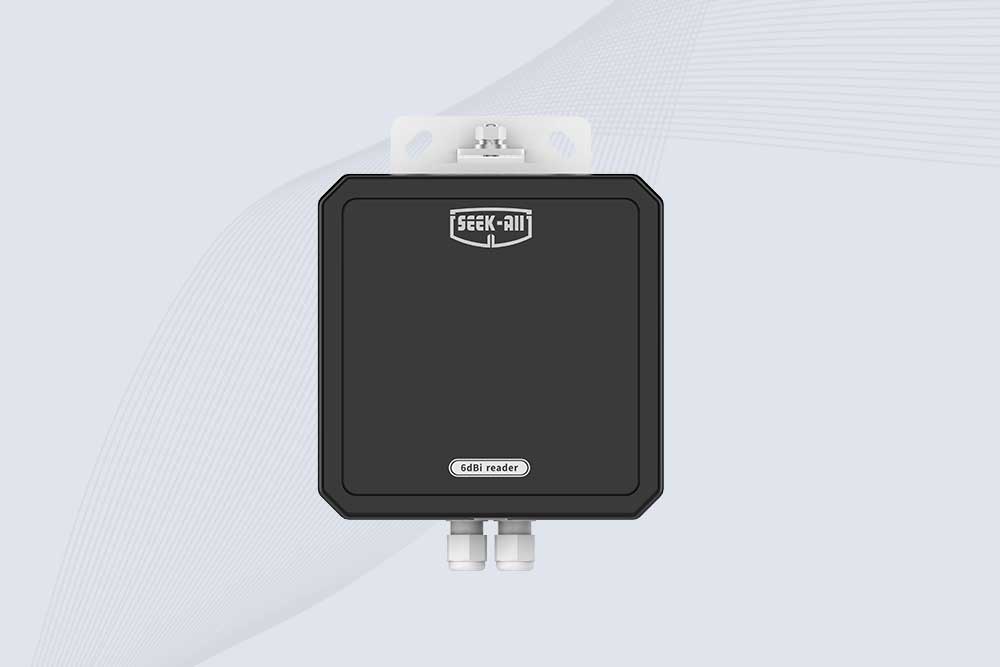
SSD-RA06L is an industrial UHF RFID reader with a built-in 6 dBi antenna, 3 m read range, 600+ tags/s, Ethernet, RS232, and optional Wi-Fi, 4G, and PoE.
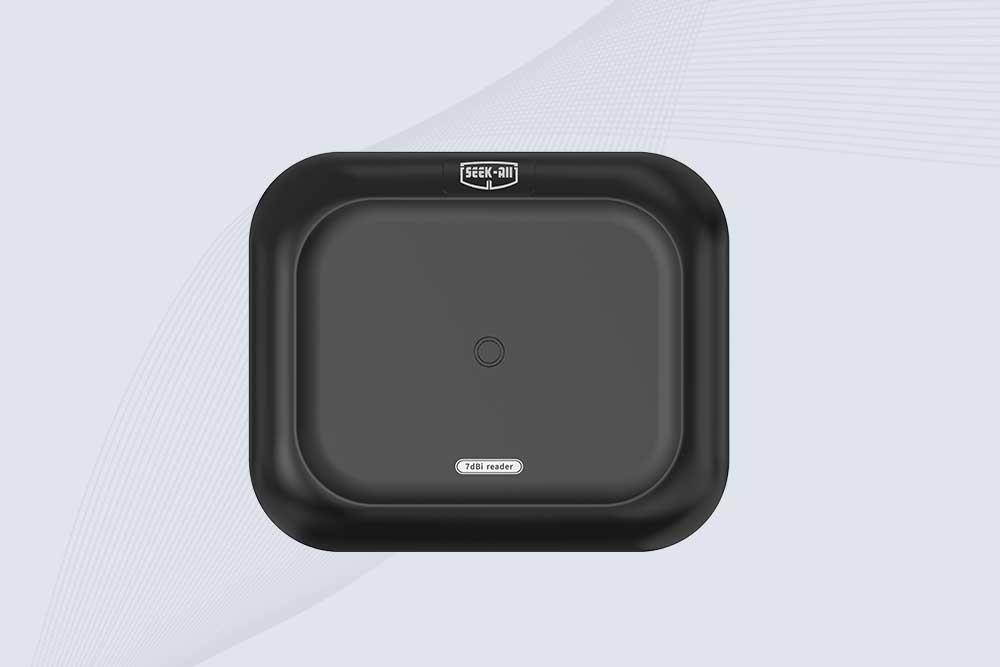
SSD-RA07L industrial UHF RFID reader with integrated 7 dBi antenna, up to 6 m reading distance, over 600 tags/s, Ethernet, RS232, and optional Wi-Fi, 4G, and PoE.
RFID Industry Writer | IoT & Asset Tracking Analyst
James writes about RFID technology, asset tracking, and the practical challenges of digital transformation across warehousing, retail, manufacturing, and logistics.
His work focuses on how RFID is applied in real-world operations—improving inventory visibility, automating workflows, and helping businesses manage assets with greater accuracy and efficiency.
He regularly covers topics including UHF RFID, smart cabinets, RFID portals, tool tracking, warehouse automation, and industrial IoT trends..
Need to know what type of antenna is used for an RFID tag? We explain the common dipole and loop antennas, how they work on metal or items, and key selection tips.
More
Can mobile phones read RFID tags? We explain the technical limits of phone NFC vs. professional UHF RFID needs, and the CYKEO solution for mobile work.
More
RFID cards are written by using a compatible RFID writer, programming software, and verified data transfer into the correct card memory area for identificati...
More
RFID uses radio waves to identify tagged objects wirelessly. It is used for inventory, retail, logistics, manufacturing, asset tracking, access control, and ...
More