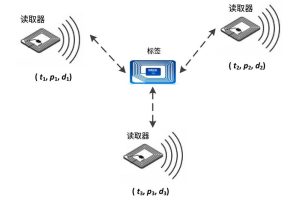
There are two main types of RFID systems in use today — passive RFID and active RFID. If you are new to RFID technology, you may wonder what the differences are between these two systems and which one is better suited for your application. Below, we’ll provide a quick overview first, followed by a more detailed explanation.
Short Answer
Passive RFID systems use tags without an internal power source. Instead, the tags are powered by electromagnetic energy transmitted from the RFID reader. Passive RFID tags are widely used in access control, document tracking, race timing, supply chain management, smart labeling, and many other applications. Their low cost makes passive RFID systems affordable for a wide range of industries. Passive RFID labels can cost as little as $0.09 per tag, can be quickly printed using RFID printers, and can be directly attached to products or assets.
Active RFID systems use battery-powered RFID tags that continuously broadcast their own signals. Active RFID tags are commonly used as “beacons” for real-time asset tracking or in high-speed environments such as toll collection systems. Because active RFID tags rely on batteries, they have a limited lifespan and usually need battery replacement every 3–4 years. Active tags offer much longer read ranges than passive tags, but they are also significantly more expensive.
In-Depth Explanation
1. Passive RFID
In general, a passive RFID system consists of three main components:
Unlike active RFID tags, passive RFID tags contain only two primary components:
A tag antenna
A microchip or integrated circuit (IC)
As the name suggests, passive RFID tags wait for a signal from the RFID reader. The reader sends energy to the antenna, which converts the energy into radio waves and transmits them into the surrounding area. The RFID tag receives this energy through its internal antenna and transfers it to the connected IC chip.
The RF energy powers the IC chip, allowing it to modulate the stored information and send it back through the tag antenna. This return signal is known as backscatter.
Backscatter refers to the modification and reflection of radio frequency waves back to the reader, where the RFID system detects and decodes the information.
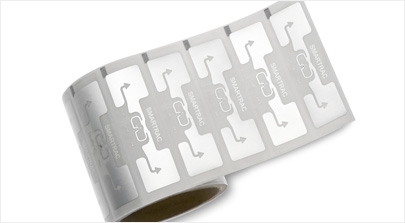
Since passive RFID tags do not contain an internal battery, standard passive tags are typically made up only of the IC chip and antenna. This simple structure is commonly called an RFID inlay.
The IC and antenna are usually mounted on a substrate material such as PET plastic and coated with adhesive and/or a printable label surface.
Types of Passive RFID Tags
There are many different styles of passive RFID tags on the market, but they are generally divided into two categories:
RFID inlays
Hard tags
RFID Hard Tags
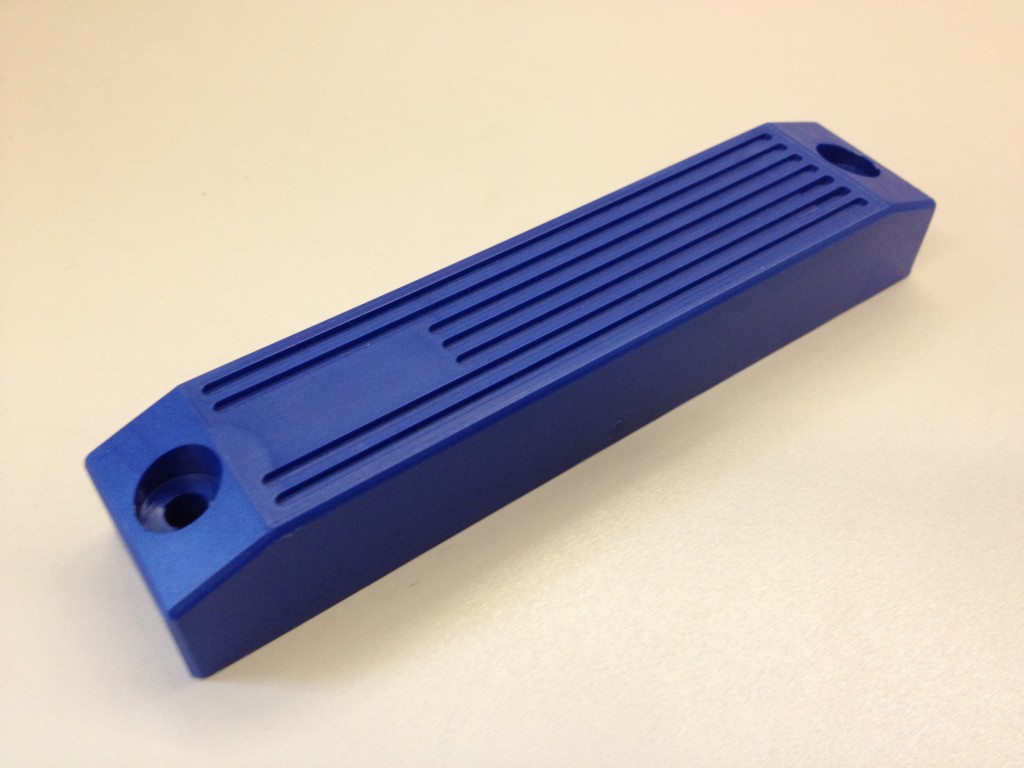
Hard RFID tags are durable tags made from materials such as plastic, metal, ceramic, or rubber. They come in various shapes and sizes and are often designed for specific environments or applications.
A good example is RFID laundry tags, which are built to survive high temperatures, chemicals, and repeated industrial washing cycles.
Common Categories of Passive Hard Tags
High-Temperature RFID Tags
Industries such as healthcare, pharmaceuticals, and manufacturing often track tools and instruments that go through sterilization or autoclave cycles. Specialized RFID tags are designed to withstand extreme heat for these environments.
Rugged RFID Tags
Outdoor applications or harsh warehouse environments may expose tags to snow, dust, debris, moisture, or even crushing pressure from machinery. Rugged RFID tags are specifically engineered for these demanding conditions.
Size-Specific RFID Tags
Some applications require very small or specially shaped tags to track tiny items or assets with limited installation space.
On-Metal RFID Tags
When tracking metal assets, standard UHF tags may perform poorly due to signal interference. On-metal RFID tags are specially designed to function reliably on metallic surfaces.
Embedded RFID Tags
In high-wear environments, RFID tags can be embedded inside grooves or cavities and sealed with epoxy for protection against damage.
RFID Inlays
RFID inlays are usually the most affordable RFID tags, especially when purchased in high volume. They generally fall into three main categories:
Dry Inlays
A dry inlay consists of an RFID microchip and antenna attached to a substrate material. These inlays typically do not include adhesive.
Wet Inlays
Wet inlays are RFID inlays mounted on PET material with an adhesive backing. They are commonly supplied on rolls and can be peeled and applied directly to items.
Paper Face Labels
These are essentially wet inlays with a printable white paper or plastic surface, making them ideal for barcode printing, logos, or human-readable information.
Passive RFID Frequencies
Passive RFID systems mainly operate within three frequency ranges, and frequency greatly affects read range, performance, and material compatibility.
Low Frequency (LF)
125–134 KHz
Very long wavelength
Typical read range: 1–10 cm
Performs well around water and metal
Commonly used for animal tracking
High Frequency (HF) / NFC
13.56 MHz
Medium wavelength
Typical read range: 1 cm–1 meter
Used for:
Access control
Data transfer
E-passports
NFC applications
Kiosk systems
Ultra-High Frequency (UHF)
865–960 MHz
Short, high-energy wavelength
Average read range: 5–6 meters
Large tags can exceed 30 meters under ideal conditions
Commonly used for:
Race timing
IT asset tracking
File tracking
Laundry management
Supply chain systems
Generally speaking, higher frequencies provide longer read ranges but are also more sensitive to materials like water and metal.
Advantages of Passive RFID
Smaller tag sizes
Lower tag costs
Flexible and thin label options
Wide variety of tag designs
No battery required
Potentially lifetime operation depending on wear conditions
2. Active RFID
Active RFID systems mainly operate at two frequencies:
433 MHz
2.45 GHz
Many companies prefer 433 MHz systems because the longer wavelength performs better around metal and water.
An active RFID system includes:
RFID reader/interrogator
Antenna
Active RFID tag
Unlike passive tags, active RFID tags contain their own internal battery, enabling:
Extremely long read ranges
Larger memory capacity
Continuous signal broadcasting
Types of Active RFID Tags
There are two main types of active RFID tags:
Transponders
In active transponder systems, the reader first sends a signal, and the tag responds with data. Since the tag only transmits when activated, battery life is conserved.
These systems are commonly used in:
Security access systems
Toll collection systems
Beacons
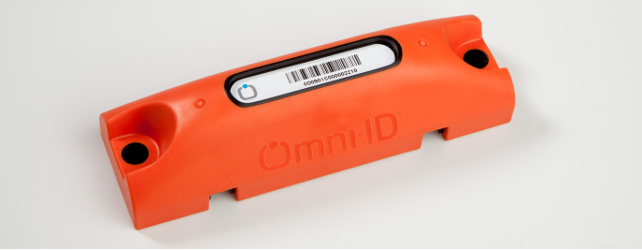
Beacon tags continuously broadcast information at regular intervals, typically every 3–5 seconds.
Beacon systems are widely used in:
Oil and gas industries
Mining operations
Cargo tracking
Real-time location systems (RTLS)
Beacon tags can often be read from hundreds of meters away, although transmission power can be adjusted to conserve battery life.
Active RFID Tag Construction
Most active RFID tags are enclosed in rugged housings designed to withstand:
Extreme temperatures
Moisture
Outdoor environments
Industrial conditions
Because they include batteries, larger circuitry, and protective casings, active RFID tags are generally much larger than passive tags.
Some advanced active tags also include onboard sensors capable of monitoring:
Temperature
Humidity
Environmental conditions
Motion or vibration
Cost of Active RFID
Active RFID tags are considerably more expensive than passive tags.
Typical prices range from:
$20 to over $100 per tag
The final cost depends on:
Environmental durability
Sensor capabilities
Battery type
Communication range
Because of the higher investment, active RFID is usually reserved for tracking:
High-value assets
Containers
Vehicles
Heavy machinery
Pipelines
Common Active RFID Applications
Active RFID systems are commonly used in:
Oil & gas
Logistics & shipping
Construction
Mining
High-value manufacturing
Advantages of Active RFID
Extremely long read ranges
Real-time tracking capability
Supports GPS and sensor integration
Rugged industrial tag options
Active RFID vs. Passive RFID: Conclusion
Active and passive RFID technologies each serve different purposes.
Active RFID tags use internal batteries, making them ideal for long-range tracking and real-time location applications such as vehicle tracking and large-scale asset management.
Passive RFID tags, on the other hand, are smaller, more affordable, and powered by the RFID reader itself. This makes them highly suitable for inventory management, supply chain visibility, retail operations, and access control systems.
Choosing the right RFID technology depends on several factors, including:
Required read range
Budget
Environmental conditions
Asset value
Real-time tracking requirements
Operational workflow
Understanding these differences will help you select the most effective RFID solution for your specific application.
Welcome to Part 1 RFID Roadmap We divide the information into nine parts: RFID overview, RFID readers, RFID antennas, RFID tags, hardware, auxiliary equipment, advanced principles, ideal device performance, RFID system deployment, and different ty...
Welcome to Part 6 RFID Roadmap We have divided the information into nine sections: RFID Overview, RFID Readers, RFID Antennas, RFID Tags, Hardware, Auxiliary Equipment, Advanced Principles, Ideal Equipment Performance, RFID System Deployment, and ...
Welcome to Part 8 RFID Roadmap We have divided the information into nine sections: RFID Overview, RFID Readers, RFID Antennas, RFID Tags, Hardware, Auxiliary Equipment, Advanced Principles, Ideal Equipment Performance, RFID System Deployment, and ...
Understanding how pitch, yaw, and roll affect your ability to read RFID tags is critical to achieving maximum readability in almost any RFID system. Ideally, the antenna of the RFID tag should be aligned with the plane of the reader antenna so tha...
 Cykeo RFID IoT Solution Products R&D Manufacturer