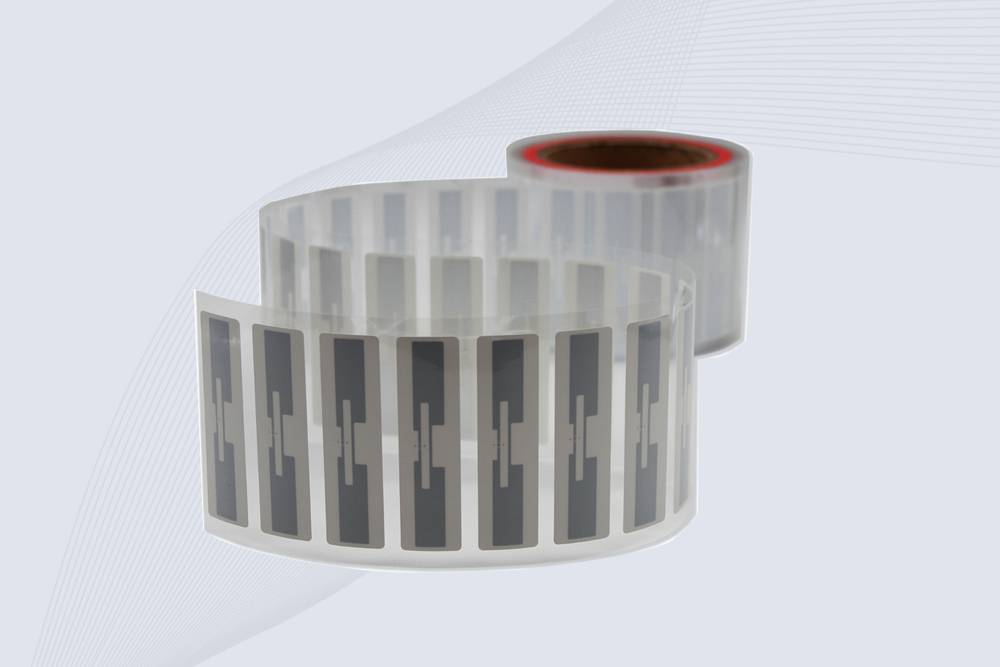
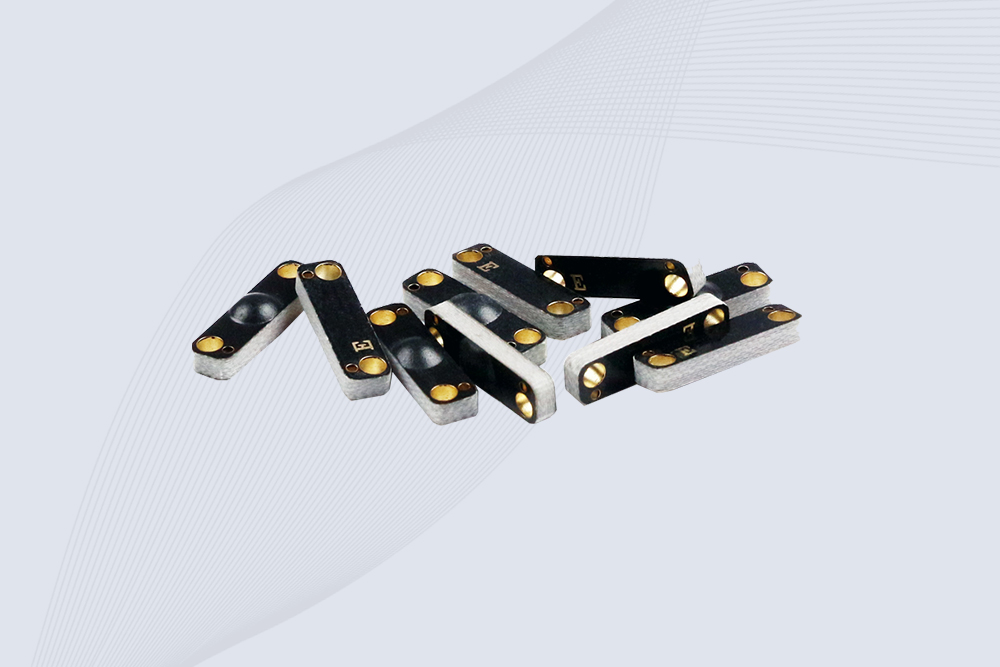
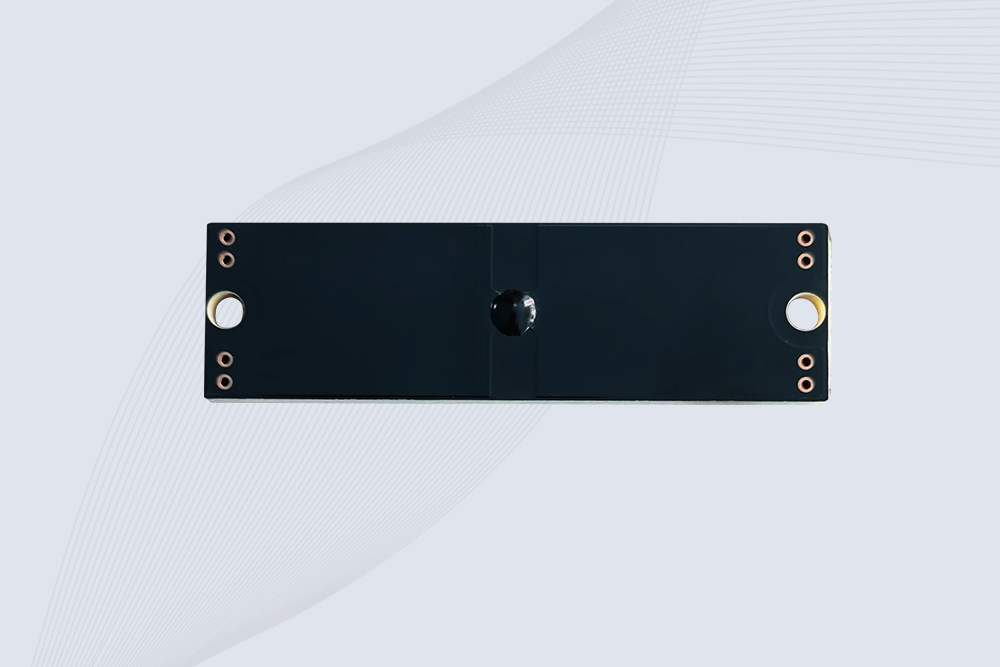
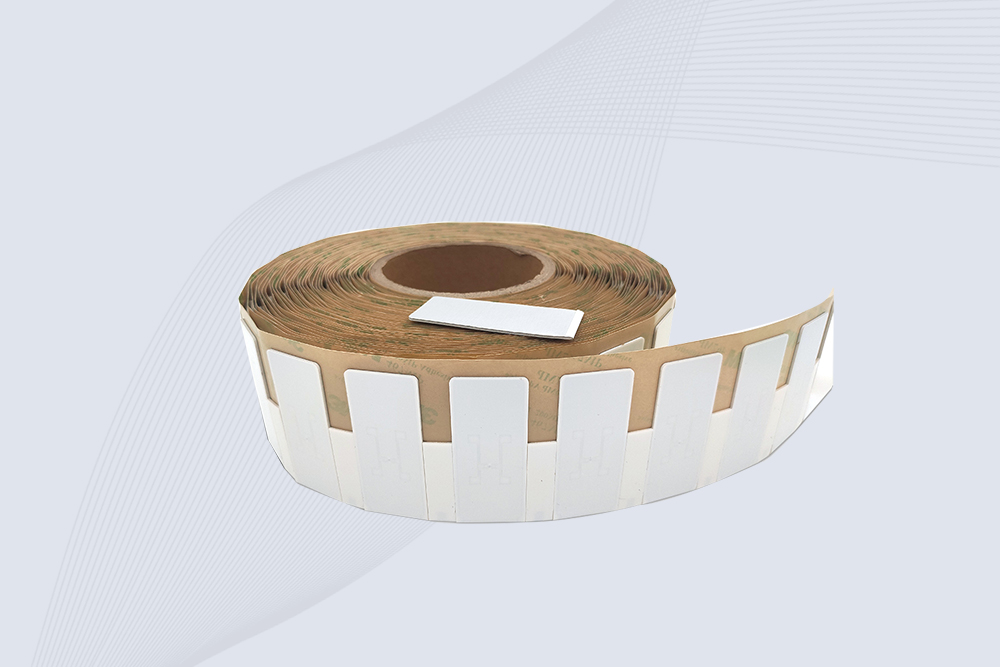
Chipless RFID is a type of radio-frequency identification technology that operates without the use of integrated circuit chips. Unlike conventional RFID systems, chipless RFID relies on specific material structures such as conductive ink, metal resonators, or resonant units to store and transmit information. By eliminating the chip, the tags become thinner, more flexible, and can even be directly printed onto paper or packaging materials.
Its reading mechanism is based on the concept of “reflected signatures.” A reader emits a radio signal, which the tag reflects in a unique spectral pattern that can be recognized and decoded. This approach not only reduces costs but also provides greater application flexibility.
Chipless RFID Encoding Methods and Working Principle
The core of chipless RFID lies in how information is encoded. There are two main encoding strategies:
1. Frequency-Domain Encoding
This method uses multiple resonators, each with a different resonant frequency. Each resonance peak represents a bit of data — for example, a response at a frequency indicates a “1,” and no response indicates a “0.”
2. Time-Domain Encoding
This technique uses transmission lines of different lengths or delay structures. The reflected signals produce distinct echoes on the time axis, which encode the data.
Additionally, hybrid encoding techniques (such as frequency + polarization modulation) are being explored to improve data density.
Advantages and Technical Challenges of Chipless RFID
Advantages:
Extremely Low Cost: Eliminates the need for expensive chips and packaging; unit cost can be as low as $0.01
Mass Printability: Compatible with inkjet or screen printing, ideal for disposable goods tracking
Battery-Free: Fully passive; requires no power source for operation
Eco-Friendly Materials: Can be made from degradable substrates like paper, conductive inks, or polymers
Challenges:
Low Data Capacity: Limited bit storage, typically 8–32 bits
Short Read Range: Commonly 10–30 cm; some enhancements can reach up to 1 meter
High Error Rate: Susceptible to background noise and angular misalignment
Difficult Multi-Tag Reading: Overlapping spectral responses can complicate tag separation
Real-World Applications: From Anti-Counterfeiting to Environmental Sensing
Chipless RFID is being adopted across a growing number of real-world scenarios:
Anti-Counterfeiting: Embedded in certificates, tickets, or luxury packaging for secure authentication
Document Security: Integrated into paper to prevent unauthorized copying
Animal Identification: Printed on animal skin or tags for tracking
Smart Sensing Tags: Combined with temperature, humidity, pressure, or strain sensors for use in logistics, construction monitoring, and smart agriculture
Retail and Logistics: Ideal for item-level inventory and package tracking with low-cost, disposable tags
Future Trends and Research Directions
Chipless RFID remains in rapid development, with the following future directions:
Green Manufacturing: Advancement of printed electronics and biodegradable materials for sustainable production
The Value and Future Outlook of Chipless RFID
Higher Encoding Density: Research into smaller resonators and higher frequencies to store more data
Flexible Material Innovation: Development of stretchable, bendable tag materials for wearables and textile integration
Sensor Integration: Combining RFID tags with embedded sensors for “read-and-sense” capabilities
AI-Assisted Decoding: Leveraging machine learning to improve multi-tag recognition and error correction
With its low cost, eco-friendliness, and scalability, chipless RFID is emerging as a key technology for smart labeling and IoT tracking systems. Although current limitations exist in terms of data capacity and reading accuracy, ongoing progress in material science and decoding algorithms is expected to expand its practical applications.
As businesses look to adopt these novel identification technologies, early adopters of chipless RFID stand to reduce IoT deployment costs significantly, gain differentiated advantages, and move toward a more intelligent and efficient digital future.
CYKEO Passive RFID Tags are made for wet and high-humidity environments where standard labels do not last. This rfid passive tag is often used around liquids, chemicals and temperature changes, providing stable reading distance and long data life for industrial tracking.
CYKEO CK-BQ1504 Metal RFID Tags is a compact anti-metal UHF RFID solution built for direct mounting on metal surfaces. With stable 8-meter read range, Ucode-8 chip, and long data retention, this rfid metal tag fits tools, containers, automotive parts, and industrial asset tracking.
CYKEO CK-BQ7020 On-Metal RFID Tags are designed for reliable tracking on steel and metal surfaces. Built with an FR4 epoxy body and industrial-grade chips, these On-Metal RFID Tags deliver stable performance, long data life, and chemical resistance, making them a dependable RFID anti-metal tag for harsh environments.
The CYKEO CK-BQ6025 Anti-Metal RFID Tag is built for metal surfaces where standard tags fail. Designed for long-range performance, harsh environments, and stable data retention, this Anti-Metal RFID Tag is ideal for industrial assets, containers, and equipment tracking using on metal RFID tags.
Discover how RFID technology enhances agricultural traceability, reduces waste, and improves compliance. Learn how farms and food brands are leveraging RFID for safer, sustainable food supply chains.
best RFID reader to pair with the CK-A10A 10dBi antenna,Check out my top picks for Cykeorfid readers that give you better range, accuracy, and overall performance — tested in real-world environments.
USB RFID readers come in many styles—from desktop tools for office use to more capable models for warehouse and asset tracking. This guide explains the differences in a natural, human tone so you can quickly figure out which type actually fits you...
RFID tags for garments must be washable, soft, and tamper-resistant. This article outlines common RFID label types—fabric, hang tag, embedded, and sew-in—and helps businesses select the right solution for different textile applications.
 Cykeo RFID IoT Solution Products R&D Manufacturer