 Cykeo RFID IoT Solution Products R&D Manufacturer
How to Test RFID Module?
132Need to know how to test RFID module functionality? Follow our practical checklist covering power, communication, antenna, and environment to diagnose a new or faulty unit.
MoreAll RFID Product
A property manager once told me, “We upgraded to RFID, but traffic at the gate didn’t improve.”
That sentence says a lot.
Because installing RFID gate access control systems doesn’t automatically fix entry flow. In fact, if configured poorly, they can create new bottlenecks — just more expensive ones.
If vehicles are still stopping, hesitating, or lining up at your entrance, here’s what’s usually going wrong.
This sounds basic, but it’s the most common issue.
Some installations use short-range readers at vehicle gates. The result? Drivers still have to slow down almost to a stop. At that point, you’ve replaced a remote control with a tag — not improved the system.
On the other hand, excessive read range can create ghost triggers. The gate may detect vehicles in adjacent lanes or even inside the property.
Choosing a properly designed RFID gate reader for access control systems makes a real difference. Industrial-grade long-range readers are built for controlled vehicle detection zones — not random wide-area scanning.
Range isn’t about “longer is better.” It’s about “precise is better.”
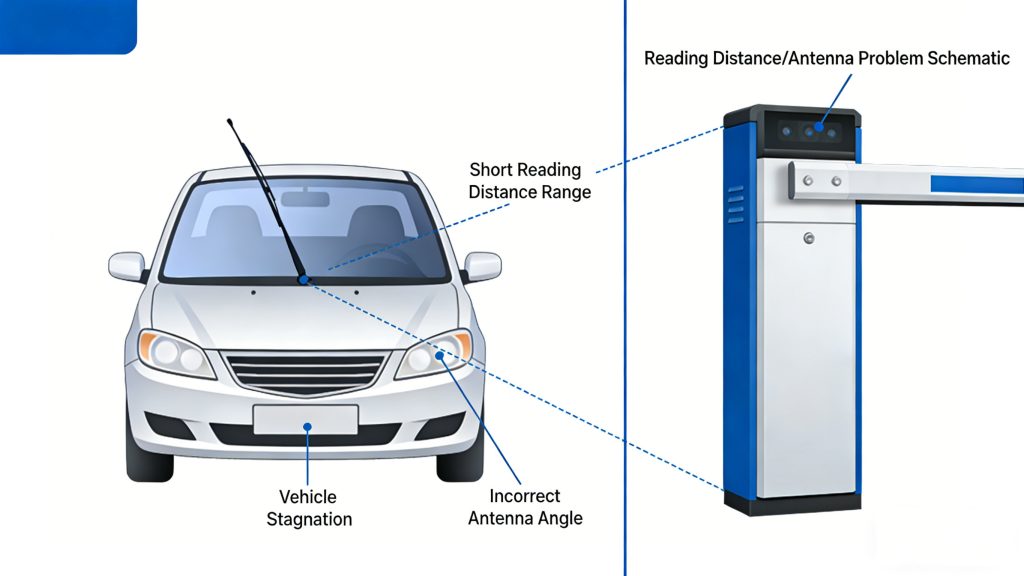
I’ve seen readers mounted too high, too low, or pointed directly at reflective metal gate arms.
Metal structures, barrier housings, and even decorative panels can distort signal behavior. Windshield angle matters too. So does tag placement.
If vehicles hesitate before the gate opens, it’s often not a software issue — it’s geometry.
A small adjustment in antenna angle can change detection reliability dramatically.
Most guides explain wiring well, but practical installation details are often skipped. That’s why reviewing a realistic deployment walkthrough like how to set up an RFID access control system properly is useful before final mounting decisions are made.
You don’t want to troubleshoot hardware that was simply installed at the wrong angle.
Timing matters.
If the system reads the tag only when the vehicle is already directly under the barrier, drivers instinctively brake. Once braking becomes habit, traffic slows permanently — even if detection later improves.
A well-calibrated RFID gate access control system reads early enough to allow natural motion, but not so early that it causes premature gate activation.
It’s a balance between detection zone and gate response speed.
And yes — gate motor speed matters too. Many people focus only on RFID performance while ignoring mechanical delay.
Here’s something rarely discussed.
Sometimes the system works perfectly — but the rule structure creates friction.
Examples:
RFID gate access control systems are powerful because they allow structured logic. But if rules are designed casually, automation simply enforces messy patterns faster.
Good access logic should reflect real traffic behavior — not just security assumptions.
Outdoor vehicle gates are harsh environments.
Heat, rain, dust, constant vibration from passing trucks.
A consumer-grade reader might work fine in testing. But over months of operation, inconsistency appears.
If detection fails even occasionally, drivers lose confidence. They slow down preemptively. That hesitation becomes built-in traffic behavior.
Using a purpose-built industrial RFID gate reader for vehicle access control ensures consistent performance under environmental stress — especially in logistics yards and industrial facilities.
Reliability shapes driver behavior more than people realize.
This one is subtle.
Some properties install RFID systems without studying peak entry times.
Morning shift changes. School hours. Delivery schedules.
If multiple vehicles approach simultaneously but the system is configured for single-lane sequential logic, congestion appears — even though detection works perfectly.
RFID gate access control systems manage identity. They don’t automatically solve lane design problems.
Traffic design still matters.
If your gate system becomes a frequent discussion topic among residents or staff, something isn’t optimized.
The best access control systems are invisible.
Vehicles approach.
Credentials are read.
Barriers respond smoothly.
Logs are recorded quietly.
No drama. No hesitation.

Sometimes, the system just needs tuning.
Before replacing equipment, review:
A well-configured RFID gate access control system rarely needs dramatic upgrades. It needs thoughtful calibration.
RFID doesn’t guarantee speed.
Design does.
The technology is stable. The difference lies in how precisely it’s implemented.
If traffic still slows at your gate, don’t assume RFID failed. Look closer. Most issues aren’t technological — they’re structural.
And once corrected, the improvement is immediate.

Cykeo’s CYKEO-T1D industrial RFID ceiling reader features 500 tags/sec scanning, IP54 protection, and -20℃~60℃ operation for retail/warehouse security. Supports ISO18000-6C and GB/T29768 protocols.
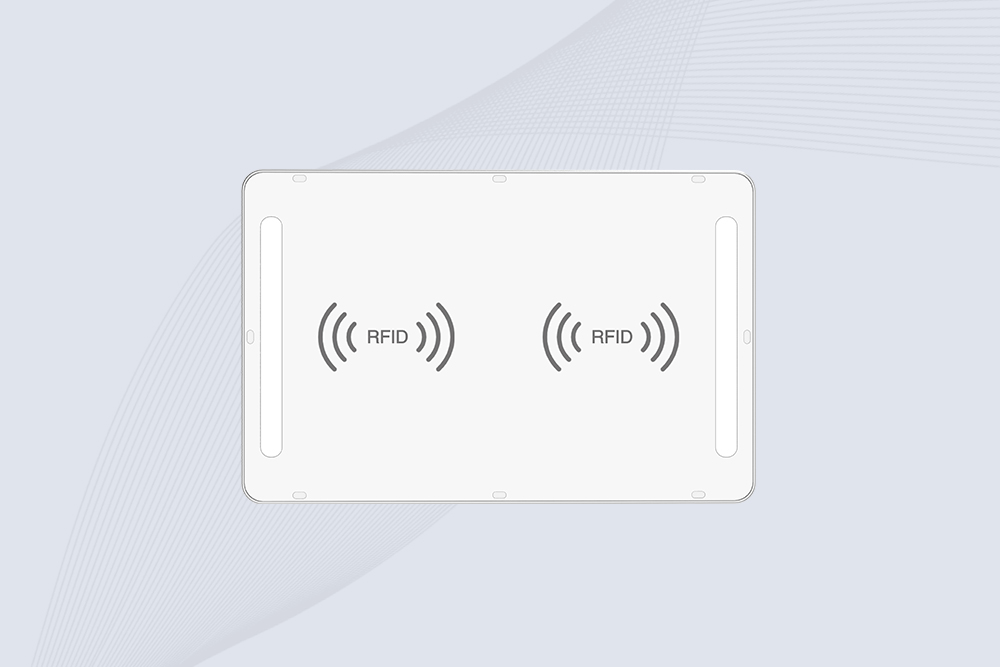
Cykeo’s ceiling-mounted RFID reader enables hands-free 5m inventory tracking with 500 tags/min speed. Features dual alerts, ERP integration, and IP54 rating for warehouse security.
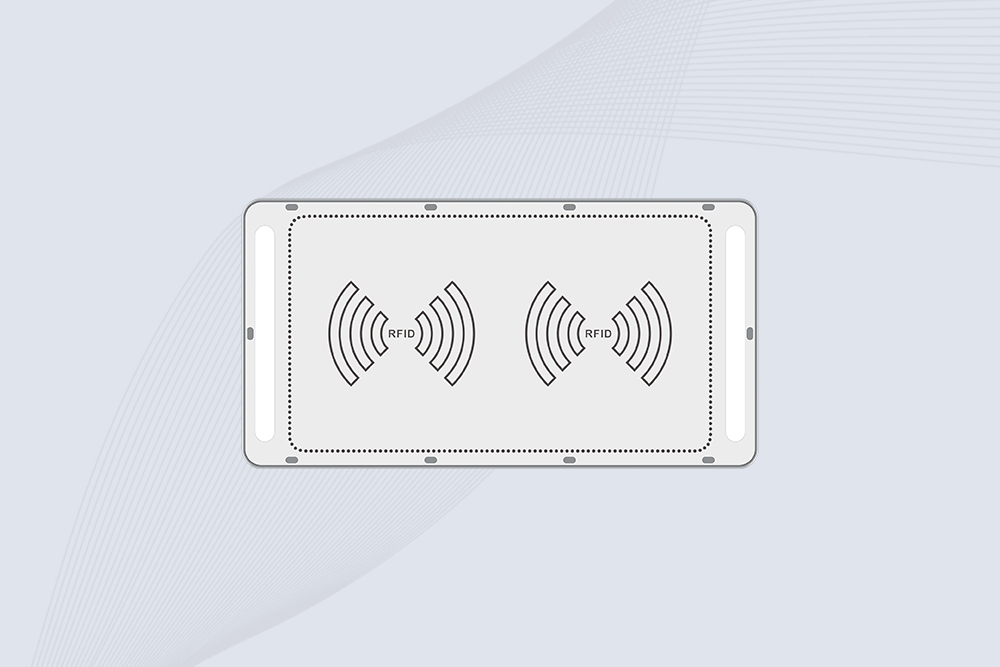
Cykeo CK-T1E RFID gate system features 120° coverage, AI motion filtering, and 5m detection for retail/warehouse security. IP67 rugged design with ERP integration.
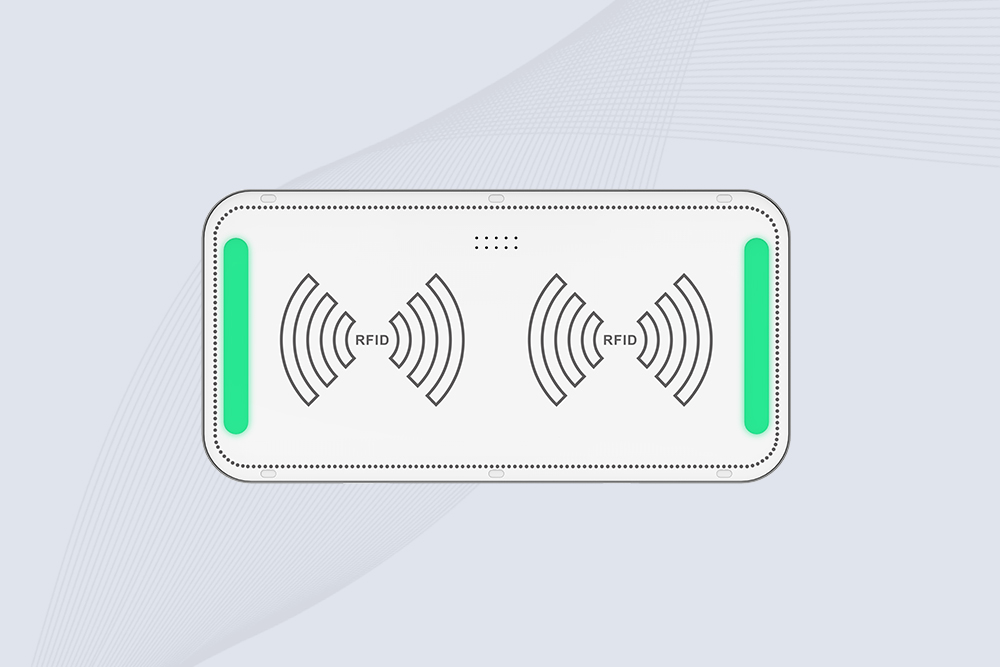
Cykeo CYKEO-T1A industrial ceiling RFID system offers 10-20m read range, 500+ tags/sec speed, and IP65 protection for smart warehousing. Supports multi-protocol integration and real-time inventory alerts.

Need to know how to test RFID module functionality? Follow our practical checklist covering power, communication, antenna, and environment to diagnose a new or faulty unit.
More
Discover how RFID technology slashes retail stockouts by 63%—proven by data from 500 stores. Learn Cykeo’s strategies for real-time inventory accuracy and higher sales.
More
Discover how RFID systems work, from tags and readers to data processing. Learn about RFID components, communication, and Cykeo’s role in scalable solutions.
More
Wondering "can NFC read RFID tags"? Get the clear answer on what works, what doesn't, and why NFC won't help with industrial tracking needs.
More